
 Save 15% on your 1st Autoship learn more

 Email us
 Live Chat
 FAQs
FAQs





Introduction
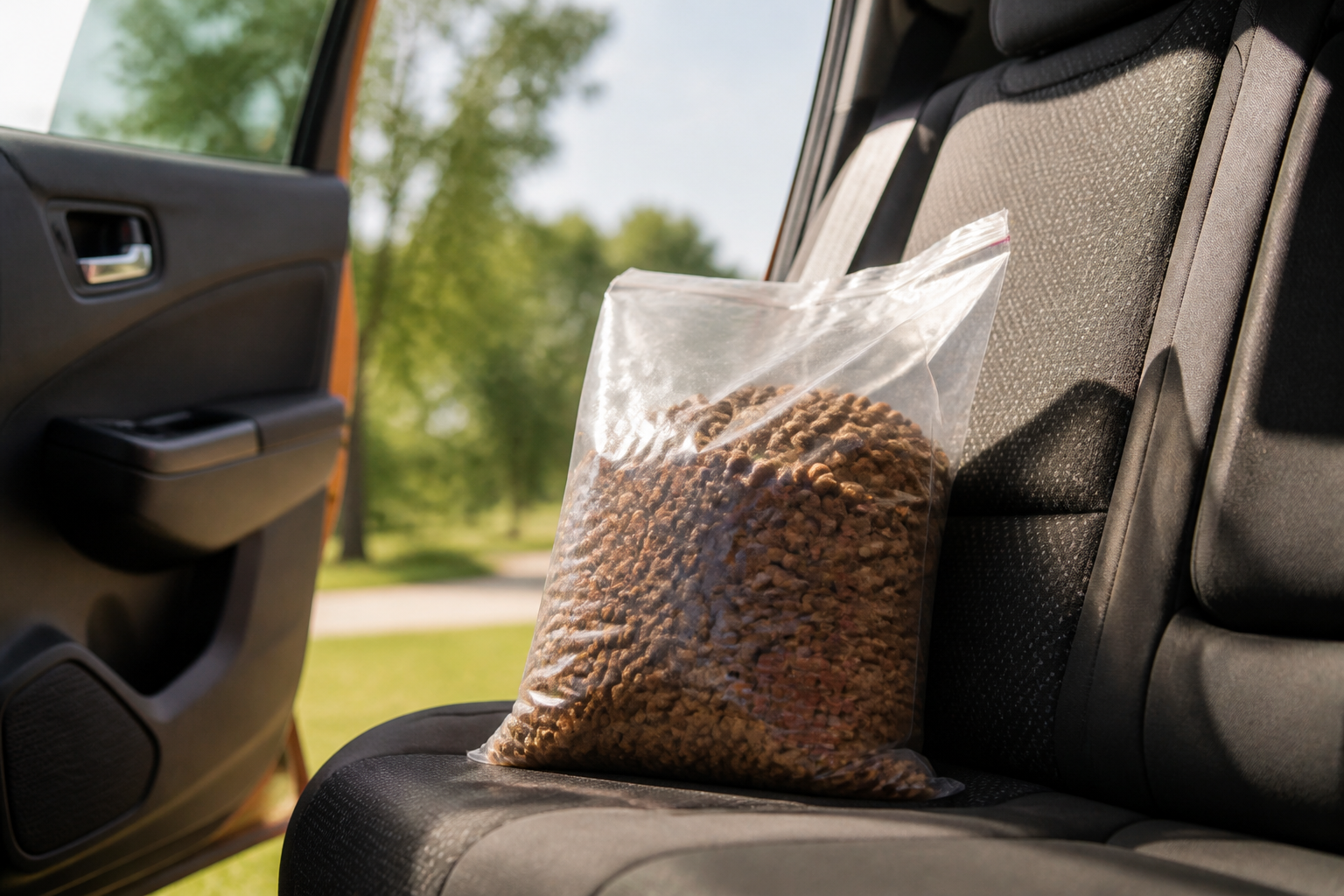
It is a familiar Saturday morning scenario. You stop at the local pet store to pick up a fresh bag of kibble before finishing the rest of your weekend errands. You head to the grocery store, stop for a quick lunch, and maybe visit the hardware store. By the time you return to your vehicle, the interior feels like an oven. You see the bag of food sitting in the trunk or on the backseat and wonder if that intense heat has already done damage.
At BaxterBoo, we understand that you want the best for your dog, and that includes ensuring their meals are safe and nutritious. While dry dog food might look like it can handle anything, it is surprisingly sensitive to temperature changes. This article covers the science of how heat affects kibble, how to tell if a bag has spoiled, and the best ways to transport food during a heatwave. Leaving food in a hot car can quickly compromise its quality and your dog's health.
Quick Answer: You should not leave dry dog food in a hot car for more than 30 to 60 minutes if temperatures are high. Intense heat accelerates fat oxidation, destroys essential vitamins, and can lead to mold growth due to condensation inside the bag.
The Greenhouse Effect: Why Your Car is Dangerous for Kibble
Most pet owners underestimate how quickly a car transforms into a high-temperature incubator. Even on a mild day when it is 70 degrees outside, the temperature inside a parked car can climb to 100 degrees in less than 20 minutes. When the outdoor temperature reaches 80 or 90 degrees, the interior of your car can easily soar to 140 degrees or higher.
Heat is a catalyst for chemical reactions. Dry dog food is designed to be shelf-stable at room temperature, which is generally considered to be between 60 and 75 degrees. When you push those temperatures 40 or 50 degrees higher, the structural integrity of the food begins to fail. The trunk is often the worst place for food because it lacks the airflow found in the cabin.
Sunlight also plays a role if the bag is sitting in the backseat. Direct UV rays can penetrate some types of packaging. This creates a double threat where both radiant heat and light work together to break down the nutrients in the food. Even if the bag feels thick, the energy from the sun is moving through the material and heating the contents directly.
Chemical Changes: What Actually Happens to the Food?
To understand why heat is so damaging, we have to look at the ingredients inside those crunchy nuggets. Dry dog food is a complex mixture of proteins, carbohydrates, and fats. The fats are the most vulnerable component.
The Process of Fat Oxidation
High-quality dog foods often include animal fats or fish oils to provide essential fatty acids like Omega-3 and Omega-6. These fats are highly prone to oxidation. Oxidation occurs when oxygen reacts with the fat molecules, and heat significantly speeds up this process. When fats oxidize, they become rancid.
Rancid fat does more than just make the food taste bad. It can produce toxic compounds that may lead to digestive upset or long-term health issues. If you have ever opened a bag of food and noticed a smell like old paint or wet cardboard, you are likely smelling oxidized fats.
Vitamin Degradation
Many of the vitamins added to dog food are heat-sensitive. This means they break down and lose their potency when exposed to high temperatures. Vitamin A, Vitamin E, and the B-vitamin complex are particularly vulnerable. If a bag of food sits in a hot car for a few hours, the nutritional value is no longer what is stated on the label. Over time, feeding food with degraded vitamins can lead to subtle deficiencies that affect your dog's skin, coat, and energy levels.
Preservative Breakdown
Whether a food uses natural preservatives like tocopherols (Vitamin E) or synthetic ones, these ingredients have a limit to how much work they can do. Extreme heat forces these preservatives to work overtime to fight off oxidation. Once the preservatives are exhausted, the food begins to spoil at a much faster rate. A bag that might have stayed fresh for months at room temperature could go bad in just a few days after being "cooked" in a car.
Key Takeaway: Heat does not just make food old faster. It changes the chemical composition of the fats and destroys the vitamins your dog needs to stay healthy.
The Moisture Problem: Mold and Bacteria
Dry dog food is not completely moisture-free. Most kibble contains about 10 percent moisture. When a bag of food is trapped in a hot car, that moisture begins to move. As the air inside the bag heats up, the moisture turns into vapor.
When the car eventually cools down, that vapor can condense on the surface of the kibble or on the inside of the bag. This creates localized damp spots. Mold thrives in warm, damp environments. Even if you cannot see fuzzy growth on the surface, toxic compounds called mycotoxins can begin to develop. These are produced by certain types of fungi and can be very dangerous for dogs.
Bacteria like Salmonella also prefer warm environments. While the manufacturing process for kibble includes a "kill step" to eliminate bacteria, contamination can happen after the bag is opened or if the packaging has micro-tears. A hot car provides the perfect incubation temperature for any stray bacteria to multiply.
Vet Tip: If your dog shows signs of vomiting, diarrhea, or a sudden loss of appetite after eating food that was left in a car, contact your veterinarian immediately. These could be signs of food poisoning or exposure to mycotoxins.
Signs That Your Dog Food Has Gone Bad
Dogs have a sense of smell that is thousands of times more powerful than ours. However, some dogs are so food-motivated that they will eat spoiled food anyway. It is your job to perform a sensory check before filling the bowl.
- The Sniff Test: Open the bag and take a deep breath. Fresh kibble should smell meaty, nutty, or grain-like. If you detect a sour, metallic, or "chemical" scent, the fats have gone rancid.
- The Texture Check: Feel the kibble. It should be dry to the touch. If it feels unusually greasy, sticky, or "sweaty," the heat has likely caused the fats to migrate to the surface and oxidize.
- The Visual Inspection: Look for clumping. If the kibble is sticking together in the corners of the bag, it is a sign that moisture has moved and settled. This is a high-risk area for mold.
- The Bag Condition: Check if the bag has puffed up. If the bag looks like a balloon, it might be a sign of off-gassing from bacteria or chemical breakdown inside.
For more guidance on recognizing spoilage, read our article on how long dry dog food stays fresh after opening.
What Happens if a Dog Eats Spoiled Food?
Feeding your dog food that has been compromised by heat can lead to a range of health issues. The most common is acute gastroenteritis. This usually presents as vomiting and diarrhea shortly after eating. While some dogs might have a "cast iron stomach," others are much more sensitive to the toxic byproducts of rancid fat.
Long-term exposure to rancid fats can lead to more serious conditions. It can cause inflammation in the body and put extra stress on the liver and pancreas. Furthermore, the lack of viable vitamins means your dog is essentially eating empty calories. If your dog has a pre-existing condition, like inflammatory bowel disease or allergies, spoiled food can cause a major flare-up.
For dogs that require specific nutritional management, we carry a variety of options including prescription diets through our pet pharmacy. If you find yourself needing to replace a bag of specialized food because of heat damage, our pharmacy can help ensure you get exactly what your vet recommended.
Safe Transport Strategies for Hot Days
You do not have to avoid buying dog food in the summer, but you do need a plan for getting it home safely. At BaxterBoo, we recommend these practical steps to keep the kibble cool.
- Make it the last stop: Never start your shopping trip by picking up pet food. Always make the pet store your final destination so the food spends the least amount of time in the car.
- Use the passenger cabin: Never put dog food in the trunk during the summer. The trunk is an unventilated box that traps heat. Place the bag on the floor of the backseat where the air conditioning can reach it.
- Cover the bag: If you must have the food in a sunny spot, throw a light-colored towel or a sunshade over the bag. This prevents the sun from heating the packaging directly.
- Consider a cooler: If you have a long drive home, you can place smaller bags of food inside a large cooler. Even without ice, the insulation of the cooler will slow down the temperature rise.
Shopping Checklist for Warm Weather
- Check the "Best By" date before purchasing.
- Ensure the bag has no visible tears or punctures.
- Plan your route to go straight home.
- Clear a space in the air-conditioned cabin for the bag.
Bottom line: Treat a bag of dog food like a carton of milk or a package of meat during the summer months.
Proper Home Storage for Maximum Freshness
Once you get the food home, the storage environment is just as important as the transport. Many people make the mistake of dumping the kibble directly into a plastic bin. This is actually not the best practice.
Plastic bins can be porous. Over time, the fats from the food soak into the plastic and go rancid. When you pour a fresh bag of food into that bin, the old, rancid oils contaminate the new batch. The best way to store food is to keep it inside the original bag and then place the entire bag inside a sealed container.
The original bag is designed specifically to protect that specific formula. Many are lined with foil or special barriers to keep oxygen out. Keeping the food in the bag also ensures you have the lot number and expiration date in case there is ever a product recall.
- Store the container in a climate-controlled area like a pantry or kitchen.
- Avoid storing food in the garage or a laundry room where humidity and temperatures fluctuate.
- Wash the storage container between every bag of food to remove any dust or stray oils.
- Ensure the lid is airtight to keep out pests and oxygen.
For additional storage guidance, see our article about keeping dry dog food fresh and safe.
If you find it difficult to manage large bags of food or frequently forget to pick them up, our Autoship program is a great solution. We deliver the food directly to your door, which means it spends less time in a hot vehicle and more time in your temperature-controlled home. Plus, you get the benefit of recurring savings and a free MVP Gold membership.
Conclusion
Dry dog food is a significant investment in your pet's health, and protecting it from heat is essential. A hot car can turn a bag of premium kibble into a nutritional void or even a health hazard in a very short amount of time. By understanding the risks of oxidation and moisture, you can take simple steps to ensure every meal you serve is fresh. Always trust your nose and your dog's instincts. If a bag smells off or your dog refuses to eat, it is better to be safe and replace the food.
To make your life easier and ensure your dog never runs out of fresh food, we encourage you to explore our Autoship program. It is the best way to get consistent, fresh deliveries without the stress of managing transport in the heat. For dogs with specific health needs, our pharmacy is always available to provide the medications and prescription diets your vet has ordered.
FAQ
Is dry dog food safe if the bag is still sealed?
A sealed bag provides some protection against outside moisture, but it does not block heat. Heat is energy that moves through the packaging and cooks the contents regardless of the seal. Even an unopened bag can go rancid and lose nutritional value if left in a hot car for several hours.
Can I still use the food if it only smells a little bit?
It is best not to risk it. A slight change in smell is often the first sign that the fats have begun to oxidize. Dogs are much more sensitive to these changes than humans are, and eating even slightly rancid food can cause long-term inflammation or immediate stomach upset.
What temperature is too hot for dog food?
Most manufacturers recommend storing food below 75 degrees Fahrenheit. Once temperatures exceed 85 or 90 degrees, the rate of spoilage increases significantly. If the food reaches 120 degrees or more, which happens quickly in a car, the chemical breakdown of nutrients occurs almost immediately.
Should I store dog food in the refrigerator?
While refrigeration can slow down spoilage, it is not usually necessary or recommended for dry kibble. The main risk with refrigeration is the introduction of moisture and condensation when the bag is moved in and out of the cold. A cool, dry pantry is generally the best environment for dry food.






