
 Save 15% on your 1st Autoship learn more

 Email us
 Live Chat
 FAQs
FAQs





Introduction
You have just finished your weekend errands on a humid July afternoon. The sun is beating down on the pavement and the interior of your car feels like a sauna. In the back seat sits a large bag of premium kibble you picked up an hour ago. You might wonder if that short time in the heat has already started to compromise the quality of your dog's dinner. At BaxterBoo, we know that many pet owners view dry food as a rugged product that can handle almost anything. However, kibble is much more sensitive to temperature than most people realize. This post covers how heat affects the nutritional integrity of dog food, the signs that a bag has gone bad, and the best ways to store your supplies. Understanding these risks is the best way to keep your dog healthy and their meals delicious.
The Science of Spoilage and Heat
Dry dog food is a processed product designed for convenience and shelf stability. Most people assume it stays fresh until the date printed on the bag, but that date assumes the food is kept in ideal conditions. Heat is a catalyst for several chemical and biological processes that degrade food quality.
The primary issue with heat is the oxidation of fats. Most high quality dog foods are rich in animal fats and omega fatty acids. These are essential for your dog's skin, coat, and brain health. When these fats are exposed to high temperatures, they begin to break down. This process is called rancidity. It changes the molecular structure of the fat, making it smell sour and taste bitter.
Rancid fats do more than just make the food unappealing. They can actually lead to digestive distress or long term health complications if consumed over a long period. Natural preservatives like vitamin E (mixed tocopherols) are commonly used in brands we carry like Orijen or Acana. While these are much safer than chemical preservatives, they are also more susceptible to breaking down when the temperature rises.
Quick Answer: Yes, dry dog food can spoil in the heat. High temperatures cause the fats in the food to oxidize and turn rancid, which can lead to digestive upset and a loss of nutritional value.
How Temperature Impacts Nutritional Value
It is not just about the food going bad in a way that makes a dog sick. Heat also robs the food of its nutritional "punch." Vitamins are notoriously sensitive to environmental factors. Essential vitamins such as A, D, E, and K can lose their potency when the bag is stored in a warm environment.
When you buy a bag of food, you are paying for a specific nutritional profile. If that bag sits in a hot garage or a sunny mudroom, your dog might not be getting the levels of vitamins promised on the label. Over months of feeding degraded food, a dog could develop minor deficiencies that affect their energy levels or immune response.
Protein structures can also be affected by extreme heat, though they are generally more stable than fats and vitamins. However, the combination of heat and air is the real enemy. Every time you open a bag that has been sitting in a warm room, you are introducing fresh oxygen that speeds up the degradation process.
For options to compare before your next purchase, explore our dog food category.
The Danger of Humidity and Mold
Heat rarely travels alone. In many parts of the country, high heat is accompanied by high humidity. This combination is particularly dangerous for dry pet food. Kibble is designed to have a very low moisture content, usually around ten percent. This dryness is what keeps bacteria and mold at bay.
When kibble is stored in a humid environment, it can absorb moisture from the air. This happens even more quickly if the bag is not sealed perfectly. Once the moisture level in the kibble rises, it becomes a breeding ground for mold and mildew.
Some types of mold produce mycotoxins. These are toxic substances that can cause serious illness in dogs. Aflatoxin poisoning is a well documented risk in the pet food industry. It often stems from poor storage of grains or finished products in warm, damp conditions. You cannot always see mold on kibble with the naked eye, so preventing the conditions that allow it to grow is vital.
Key Takeaway: The combination of heat and moisture is the biggest threat to kibble safety. Keeping food in a climate controlled environment prevents the growth of invisible but dangerous molds.
For additional storage guidance, read how long dry dog food stays fresh once opened.
Leaving Dog Food in a Hot Car
One of the most common questions we hear is whether it is safe to leave a bag of food in the car while running other errands. The answer depends on the outside temperature and the duration. A car acts like a greenhouse. On an 85 degree day, the temperature inside a parked car can climb to 100 degrees in 10 minutes. Within 30 minutes, it can hit 120 degrees.
- Under 80 Degrees: If the weather is mild, a sealed bag of food is generally fine for a few hours.
- Between 80 and 90 Degrees: Limit the time in the car to under an hour. The fats will begin to warm up and the oxidation process will accelerate.
- Above 90 Degrees: Avoid leaving food in the car for more than 30 minutes.
If you must run multiple errands, make the pet store your very last stop. This ensures the food spends the least amount of time in the vehicle. If you are traveling long distances with your pet, keep the food in the cabin where the air conditioning is running rather than in a hot trunk or a truck bed.
Signs Your Dog Food Has Spoiled
Dogs have a sense of smell that is significantly more powerful than ours. Often, your dog will be the first to tell you that the food has gone off. If your usually enthusiastic eater suddenly turns their nose up at a fresh bowl of kibble, pay attention.
There are several physical signs you can check for yourself:
- The Sniff Test: Fresh kibble should smell like grain or meat. If you notice a sour, paint-like, or "chemical" odor, the fats have likely gone rancid.
- The Touch Test: Rancid kibble often feels excessively oily or even sticky to the touch. This is the result of the fats migrating to the surface as they break down.
- Visual Cues: Look for any signs of fuzzy growth or discoloration. Even a small amount of white or green fuzz means the entire bag should be discarded.
- Pests: Heat and humidity attract pantry moths and weevils. If you see small webs or crawling insects in the bag, the food is contaminated.
Vet Tip: If your dog accidentally consumes spoiled food and begins vomiting or having diarrhea, contact your veterinarian immediately. For dogs with pre-existing conditions or those on prescription diets, even minor food spoilage can cause significant health setbacks.
Learn more about warning signs in this guide to identifying spoiled dry dog food.
Best Practices for Home Storage
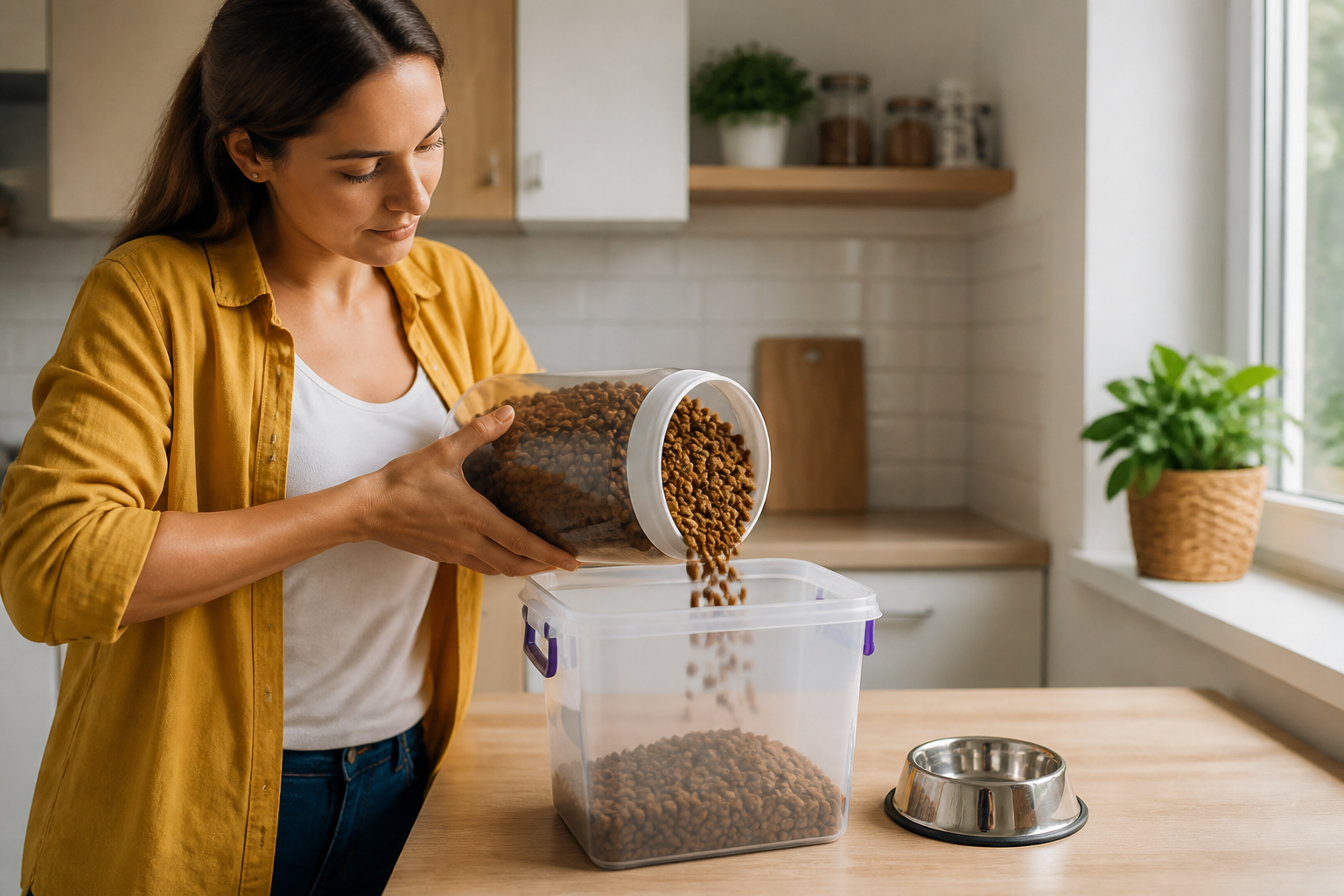
How you handle the food once you get it home is just as important as how you transport it. Many owners make the mistake of pouring the kibble directly into a plastic bin. While this looks neat, it can actually cause the food to spoil faster.
The original bags for premium foods like NutriSource or Stella and Chewy’s are engineered with specific liners. These liners are designed to keep fats inside the kibble and oxygen out. When you pour food into a plastic bin, the plastic can absorb the oils. Over time, these oils go rancid on the walls of the bin and contaminate the next batch of fresh food you pour in.
Instead, place the entire bag inside your storage container. This gives you two layers of protection. It also ensures you have the lot number and expiration date handy in case there is ever a product recall.
- Keep the storage bin in a cool, dark place.
- A pantry or a kitchen cabinet is better than a garage or a laundry room.
- Ensure the temperature stays below 75 degrees if possible.
- Avoid areas near appliances that exhaust heat, such as the back of a refrigerator or a dishwasher.
You can compare available formulas through our selection of NutriSource products.
The Importance of Freshness for Health Conditions
If your dog is managing a chronic health condition, food freshness is not just about taste. It is a critical part of their medical management. Dogs with inflammatory bowel disease or severe allergies are often very sensitive to the byproducts of fat oxidation.
Our pharmacy provides specialized prescription diets through our partnership with Pet's Choice. These foods, like Farmina Vet Life, are formulated to address specific medical needs. Because these diets are a part of your dog's treatment plan, keeping them fresh is essential. If a prescription bag is stored in a hot environment, the therapeutic benefits of the ingredients may be compromised.
If you notice your dog's symptoms returning despite being on a prescription diet, check your storage habits. You can always consult with our pet pharmacy about how to best manage these specialized foods. Our pharmacy carries FDA-approved medications and prescription diets that require a veterinarian's oversight to ensure your pet is getting exactly what they need.
Bottom line: Prescription diets are medical tools that require careful storage to remain effective for your pet’s health.
Transitioning and Buying Habits
If you realize your food has been stored in a hot environment and you decide to replace it, be careful with the transition. Even if the old food was slightly spoiled, a sudden switch to a brand new bag can cause minor digestive upset.
We recommend buying bags that your dog can finish within six to eight weeks. Many people buy the largest bag possible to save money, but if you have a small dog, that bag might sit open for months. The longer the food is exposed to the air, the more it degrades. For owners of small dogs, buying two small bags is often better than one giant bag, even if the price per pound is slightly higher.
Using a program like our Autoship programme can help you manage this. You can set up smaller, more frequent deliveries so you always have a fresh bag on hand. This prevents the need to "stock up" and store extra bags in places like the garage where they might be exposed to heat.
Managing Food During Travel and Summer Outings
Summer is the peak season for camping trips and beach days with dogs. These outings present the highest risk for food spoilage. When you are living out of a tent or a camper, maintaining a consistent temperature is difficult.
For travel, consider using smaller, airtight travel containers. These are easier to keep in a cool spot than a massive 30-pound bag. If you are camping, keep the food container in the coolest part of your vehicle or inside a shaded bear box. Never leave the food container sitting in direct sunlight.
If you use dehydrated or freeze-dried foods like those from The Honest Kitchen, these are often more stable in the heat than traditional kibble because they have even lower moisture content. However, once you add water to these foods, they must be treated like wet food. Any leftovers should be discarded after thirty minutes if they are sitting out in the heat.
For more advice, see how to keep dog food dry while traveling and outdoors.
Why Quality Ingredients Matter
At BaxterBoo, we carefully curate the brands we carry. We look for manufacturers that prioritize high quality ingredients and robust testing. Brands that use high levels of natural antioxidants often have a better "shelf life" in terms of nutritional stability, but they still require your help to stay fresh.
When you invest in premium food, you are investing in your dog's longevity. By protecting that food from heat and humidity, you are ensuring that your investment pays off. A dog that eats fresh, nutrient-dense food is more likely to have a shiny coat, healthy skin, and a strong immune system.
Summary of Storage Steps
To ensure your dog’s food stays safe and nutritious during the warmer months, follow these steps:
Step 1: Check the bag before you buy. / Ensure there are no tears or oily stains on the packaging at the store.
Step 2: Control the transport time. / Bring a cooler bag for smaller bags or make the pet store your last stop on hot days.
Step 3: Use the bag-in-bin method. / Place the original bag inside an airtight container rather than pouring the food out.
Step 4: Monitor your dog’s reaction. / Trust your dog if they refuse a meal and check the food for sour smells or oily textures.
Step 5: Clean your containers. / If you do pour food into a bin, wash it with hot soapy water and dry it completely before adding a new batch.
Key Takeaway: Protecting dog food from heat is a simple but effective way to prevent illness and ensure your pet receives the full nutritional benefit of their diet.
Conclusion
Dry dog food is a staple for most households, but its durability has limits. Heat and humidity are the primary enemies of kibble, leading to rancid fats, vitamin loss, and the potential for dangerous mold growth. By choosing a cool, dark storage spot and keeping food in its original packaging, you can maintain the quality that brands like Royal Canin or NutriSource provide. If you ever have concerns about your dog’s nutrition or need specialized prescription diets, our pharmacy is a great resource. You can also take advantage of the MVP Rewards programme to earn points on every bag of fresh food you buy. Keeping your dog's food safe is one of the easiest ways to show them you care.
FAQ
Can I store my dog's food in the garage if it is in an airtight container? It is generally not a good idea unless your garage is climate-controlled. While an airtight container protects against pests and some moisture, it cannot stop the ambient heat from warming the food inside. Extreme garage temperatures will still cause the fats in the kibble to go rancid over time.
How long does it take for dog food to go bad in a hot car? In temperatures over 90 degrees, dog food can begin to degrade in as little as 30 to 60 minutes. The interior of a car heats up much faster than the outside air, creating an oven-like environment that quickly oxidizes the fats in the kibble.
Is it safe to feed my dog kibble that smells slightly sour? No, a sour or "off" smell is a primary indicator that the fats in the food have turned rancid. Feeding rancid food can cause vomiting, diarrhea, and long-term internal inflammation. It is always safer to discard the bag and start with a fresh batch.
Does unopened dog food spoil in the heat? Yes, even an unopened bag can be affected by extreme heat. While the seal protects against oxygen and pests, the heat can still penetrate the packaging and cause the vitamins to break down and the fats to oxidize. Always store unopened bags in a cool, dry place.






