
 Save 15% on your 1st Autoship learn more

 Email us
 Live Chat
 FAQs
FAQs





Introduction
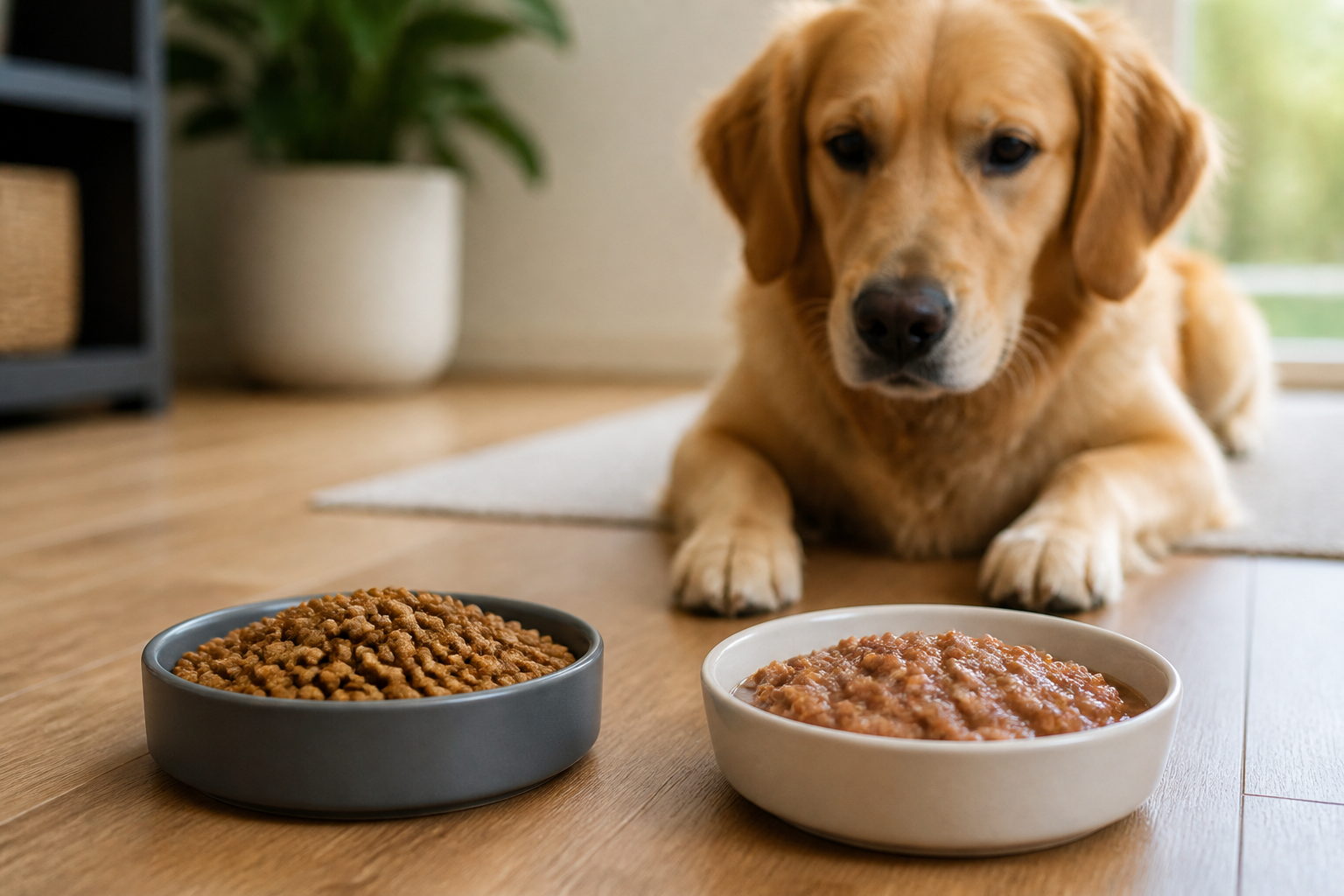
Standing in the dog food aisle can feel overwhelming when you are trying to manage your dog's weight or energy levels. You might look at a small can of rich, meaty wet food and assume it is packed with more calories than a scoop of hard kibble. At BaxterBoo, we help pet parents navigate these nutritional choices every day to ensure their dogs stay healthy and fit. This article explores the specific differences in energy density between wet and dry formats. We will explain how moisture levels change the calorie count and how you can use both types of food to meet your dog's specific health goals. While wet food often looks more indulgent, dry dog food is actually much more calorie-dense than wet food on a per-ounce basis.
Quick Answer: Dry dog food contains significantly more calories per ounce than wet dog food. This is because wet food consists of roughly 75 to 80 percent water, which adds volume without adding calories. Dry kibble is concentrated energy, often containing four times as many calories as the same weight of canned food.
The Science of Calorie Density
Calorie density refers to the amount of energy provided in a specific weight or volume of food. To understand why dry food is more concentrated, you have to look at the manufacturing process. Dry kibble is made by mixing ingredients into a dough, which is then cooked and extruded. Most of the moisture is removed during this process. This leaves behind a shelf-stable nugget that is packed with proteins, fats, and carbohydrates.
Wet food undergoes a different process. The ingredients are mixed with water or gravy and then sealed in a can or pouch before being cooked. This keeps the moisture trapped inside. Because water has zero calories, it dilutes the energy density of the other ingredients. When you hold a can of food, a large portion of that weight is simply water.
Comparing Ounces to Ounces
If you were to weigh out one ounce of average dry kibble and one ounce of average wet food, the caloric difference is striking. Most dry foods contain between 90 and 110 calories per ounce. In contrast, wet food usually contains only 25 to 30 calories per ounce.
This means a dog eating only wet food has to consume a much larger physical volume of food to get the same amount of energy. For a small dog, this is usually manageable. For a giant breed like a Great Dane, eating enough wet food to meet daily energy needs would require many cans every single day.
For a closer look at portion conversions, read our guide to how much wet dog food equals one cup of dry.
The Role of Moisture
Moisture is the primary factor that separates these two food types. Dry dog food typically contains only 10 percent moisture. Wet food usually sits between 75 and 82 percent moisture. This high water content is not just "filler." It serves several functional purposes for the dog's body.
- It helps with hydration for dogs that do not drink enough water.
- It creates a sense of fullness (satiety) without adding excess calories.
- It softens the texture for dogs with dental sensitivities.
Key Takeaway: You cannot compare wet and dry food by looking at the "as-fed" percentages on the label. You must look at the nutrients on a dry matter basis to see the true caloric and protein values.
Why Wet Food is Often Better for Weight Loss
If your dog needs to lose a few pounds, switching to or adding wet food can be a helpful strategy. Many pet owners struggle with weight management because they feel guilty when their dog's bowl looks empty. Because dry food is so concentrated, a "diet" portion of kibble can look very small.
Wet food allows you to provide a much larger portion size while actually reducing the total number of calories the dog consumes. This helps the dog feel physically full. When a dog feels satisfied after a meal, they are less likely to beg for treats or scavenge for extra food between scheduled feedings.
For additional guidance on the tradeoffs between formats, read whether wet dog food is healthier than dry.
Satiety and the "Full" Feeling
The high water and protein content in many wet foods can lead to longer-lasting satiety. When the stomach stretches from the volume of the food, it sends signals to the brain that the dog is full. Kibble does not provide this same immediate physical feedback because it takes up so little space in the stomach.
Managing Obesity with Prescription Diets
For dogs with significant weight issues, a standard over-the-counter food might not be enough. We carry specialized brands like Farmina Vet Life and Royal Canin through our pet pharmacy. These prescription diets are formulated to provide essential nutrients while strictly controlling calorie counts. Our pharmacy provides access to these FDA-approved diets through Pet's Choice, ensuring your dog gets exactly what the veterinarian ordered for their weight loss journey.
Vet Tip: If your dog is consistently gaining weight despite eating the recommended amount on the bag, consult your veterinarian. They can calculate your dog’s exact Resting Energy Requirements (RER) to help you determine the precise number of calories needed per day.
The Advantages of Dry Food for Active Dogs
While wet food is excellent for weight management, dry kibble has clear advantages for high-energy dogs. Working dogs, service animals, or very active puppies need a lot of fuel to keep their bodies going.
Concentrated Energy
Feeding a highly active dog exclusively on wet food can be difficult because of the sheer volume required. A dog that runs miles a day might need 2,000 calories. Meeting that need with wet food would require roughly 60 to 70 ounces of food daily. That is a massive amount of food for a dog's digestive system to process.
Dry food provides that same 2,000 calories in about 20 ounces of kibble. This smaller volume is easier for an active dog to digest without feeling weighed down. Brands like NutriSource, Acana, and Orijen offer high-protein, calorie-dense dry formulas designed specifically for these high-performance needs. You can compare options in our dog food category.
Dental Health and Convenience
Dry food is often praised for its ability to help reduce plaque. The mechanical action of chewing the hard kibble can scrape some debris off the teeth. While this is not a replacement for regular brushing, it provides a small daily benefit.
Kibble is also much more convenient for owners who use food puzzles or slow feeders. You can put dry food into a Kong or a snuffle mat to provide mental enrichment. This is much harder and messier to do with wet food.
Bottom line: Dry food is the most efficient way to deliver high calories to active dogs, while also offering benefits for dental health and mental enrichment.
Reading the Guaranteed Analysis Label
To accurately compare two different foods, you have to look at the Guaranteed Analysis on the back of the packaging. However, the numbers you see there can be misleading if you do not account for the water.
The Math of Dry Matter Basis
If a bag of dry food says it has 25 percent protein and a can of wet food says it has 10 percent protein, the dry food seems much higher. But when you remove the 80 percent water from the wet food, the remaining dry matter might actually be 50 percent protein.
To find the true caloric and nutrient density of wet food, follow these steps:
- Look at the moisture percentage (e.g., 80%).
- Subtract that from 100 to find the dry matter (20%).
- Divide the nutrient percentage by the dry matter.
This calculation shows that wet food is often much higher in protein and fat and lower in carbohydrates than dry food. This profile is often closer to what a dog would eat in the wild.
Calorie Counts on the Label
The FDA requires pet food manufacturers to list the calorie content on the label. It is usually listed as "kcal/kg" and "kcal/cup" or "kcal/can." Always check these numbers rather than guessing based on the weight of the package. Different brands have very different recipes. One cup of a high-end grain-free kibble might have 500 calories, while a budget brand might only have 300 calories per cup.
Benefits of Mixing Wet and Dry Food
Many dog owners find that "topping" or mixing is the best approach. This provides the benefits of both formats while keeping costs manageable. Mixing a small amount of wet food into dry kibble can make the meal much more appealing to picky eaters.
For more practical advice, read how to mix dry dog food with wet.
Encouraging Picky Eaters
Dogs experience the world through their noses. Wet food has a much stronger aroma than dry food. When you add a scoop of wet food to a bowl of kibble, the scent becomes much more enticing. This is especially helpful for senior dogs whose sense of smell may be declining.
Managing Hydration
Adding wet food to the diet is an easy way to increase a dog's daily water intake. This is vital for dogs with a history of urinary tract issues or kidney concerns. By mixing the two, you ensure they are getting the concentrated energy of the kibble and the hydration of the wet food.
How to Mix Without Overfeeding
The biggest mistake owners make when mixing is adding wet food on top of a full serving of dry food. This leads to rapid weight gain. You must substitute, not just add.
- Determine the total daily calories your dog needs.
- Decide what percentage of those calories will come from wet food.
- Reduce the dry food portion by that same caloric amount.
- Monitor your dog's body condition score weekly.
Key Takeaway: Mixing food provides texture variety and hydration, but you must reduce the kibble portion to account for the extra calories in the wet food topper.
Choosing the Right Format for Life Stages
The choice between wet and dry food often changes as a dog moves through different life stages. Puppies and seniors have very different caloric and physical requirements.
Puppies and Growth
Puppies need a high concentration of calories and specific minerals like calcium and phosphorus to support their growing bones. Dry puppy food is often the most practical choice because it provides the necessary energy in small, manageable portions. However, adding some wet food during the weaning process can help puppies transition to solid food more easily.
Senior Dogs and Maintenance
As dogs age, their metabolism slows down, and they may become less active. This makes them prone to weight gain. Senior dogs also frequently deal with dental issues or loss of appetite. Wet food is often the preferred choice for seniors because it is easier to chew and more flavorful.
The high moisture content in wet food also supports kidney health, which is a common concern for aging dogs. Brands like Royal Canin and Farmina Vet Life offer senior-specific formulas in both wet and dry formats to help manage these changing needs.
Health Conditions and Specialized Diets
Sometimes the choice between wet and dry food is dictated by a medical condition. This is where the BaxterBoo pharmacy becomes a valuable resource for pet owners.
Urinary and Kidney Health
Dogs with kidney disease or bladder stones almost always benefit from a high-moisture diet. Increasing water intake helps flush the kidneys and dilute the urine, which can prevent the formation of crystals. In these cases, a veterinarian may prescribe a specific wet food diet.
Food Sensitivities and Allergies
Dogs with skin allergies or sensitive stomachs often do better on limited-ingredient diets. We carry a wide range of these specialized foods from brands like Stella and Chewy's, The Honest Kitchen, and Zesty Paws. Sometimes, the cooking process used for wet food is better tolerated by dogs with extreme digestive sensitivities.
Our partnership with Pet's Choice allows us to provide these prescription-strength medications and foods directly to your door. If your vet has recommended a specific therapeutic diet to manage a health condition, our Autoship programme can help you maintain that regimen easily.
Practical Storage and Cost Considerations
While nutrition is the priority, we know that budget and convenience matter to every household. There is a significant difference in how you store and handle these two types of food.
Cost Per Meal
Dry food is almost always more cost-effective. You can buy large bags of high-quality kibble that last for weeks. Wet food is more expensive per calorie because you are paying for the packaging of many individual cans or pouches. For large dog owners, a 100 percent wet food diet can be cost-prohibitive.
Shelf Life and Safety
Dry food is shelf-stable and can be left out for dogs that prefer to "graze" throughout the day. Once a bag is opened, it should be used within six weeks to ensure the fats do not go rancid.
Wet food must be handled more carefully. Once a can is opened, any unused portion must be refrigerated and used within two to three days. Wet food should never be left out in a bowl for more than an hour or two, as it can quickly attract bacteria and insects.
Bottom line: Dry food wins on cost and convenience for grazing, while wet food requires careful refrigeration and carries a higher price tag per serving.
Finding the Balance for Your Dog
There is no single "best" food for every dog. The right choice depends on your dog's activity level, age, weight, and personal preferences.
If you have an active young dog with a healthy weight, high-quality dry kibble is likely the most efficient and cost-effective choice. If you have an older dog that is starting to put on extra weight or has trouble drinking enough water, incorporating more wet food could significantly improve their quality of life.
At BaxterBoo, we curate our selection to ensure that whether you choose wet, dry, or a combination of both, you are getting products from brands that prioritize animal health. From the high-protein formulas of Ziwi Peak to the balanced nutrition of NutriSource, we have options for every need.
Summary of Feeding Options
| Feature | Dry Dog Food | Wet Dog Food |
|---|---|---|
| Calorie Density | Very High (90-110 kcal/oz) | Low (25-30 kcal/oz) |
| Moisture Content | Low (approx. 10%) | High (75-80%) |
| Cost | More affordable | More expensive |
| Storage | Shelf-stable after opening | Requires refrigeration after opening |
| Dental Benefit | Some mechanical cleaning | None |
| Palatability | Moderate | Very High |
By understanding that dry food has more calories than wet food, you can make better decisions about portion sizes. You can use the volume of wet food to keep your dog satisfied or the concentration of dry food to keep them fueled for adventure. Always remember that any major change to your dog's diet should be done gradually over seven to ten days to avoid upsetting their stomach.
If you are unsure which path to take, our team is always here to help you navigate our 500 plus brands. We offer the MVP Rewards programme that allows you to earn five percent back on your purchases, helping you save money while providing the best possible care for your dog. For those managing chronic health conditions, our pharmacy is a reliable source for the prescription diets and medications your dog needs to thrive.
FAQ
Does wet dog food make dogs gain weight faster than dry?
No, wet food actually has fewer calories per ounce than dry food. Weight gain usually happens because owners add wet food as a topper without reducing the amount of dry food they are already feeding. If you balance the total daily calories correctly, wet food can actually be an effective tool for weight loss.
Why is dry dog food more calorie dense?
Dry dog food is more calorie-dense because nearly all the water has been removed during the cooking and extrusion process. This concentrates the proteins, fats, and carbohydrates into small, energy-packed nuggets. Wet food contains about 80 percent water, which has no calories but adds significant weight and volume.
Can I feed my dog only wet food?
Yes, as long as the wet food is labeled as a "complete and balanced" meal according to AAFCO standards. However, feeding only wet food to a large dog can be very expensive and may require them to eat a very large volume of food. It is also important to maintain a strict dental cleaning routine, as wet food does not provide any mechanical teeth cleaning.
Is it okay to mix wet and dry food every day?
Mixing wet and dry food is a great way to provide variety and extra hydration. Many dogs enjoy the different textures and the enhanced aroma of the wet food. Just be sure to calculate the calories for both portions to ensure you are not overfeeding your dog.






