
 Save 15% on your 1st Autoship learn more

 Email us
 Live Chat
 FAQs
FAQs





Introduction
You might notice your dog standing over their bowl, hesitating to take a bite, or perhaps they are dropping pieces of kibble after trying to chew. For many pet owners, seeing a once enthusiastic eater suddenly struggle with hard food is a moment of real concern. Whether you are caring for a senior dog with dental sensitivity, a puppy transitioning to solid food, or a picky eater who needs a bit more aroma to get started, knowing how to make dry dog food soft is a practical skill that improves your pet's daily life. At BaxterBoo, we see this often with our customers who are looking for ways to support their aging companions or help a dog recovering from a dental procedure. This guide covers the safest and most effective methods to hydrate kibble, the benefits of adding moisture to a canine diet, and when these changes might signal a need for a veterinary visit.
Why You Should Consider Softening Kibble
Hard kibble is convenient and shelf stable, but it is not always the best fit for every dog at every stage of life. The moisture content in standard dry food is usually around 10 percent. By comparison, wet food often sits at 75 percent or higher. Softening the food bridges this gap, providing a texture that is much more manageable for certain physical conditions. If you are comparing meal formats, our dog food category is a helpful place to start.
Dental issues are the most common reason to make the switch. Periodontal disease, broken teeth, or inflamed gums can make the crunch of dry food physically painful. If a dog associates eating with pain, they may begin to skip meals, leading to weight loss and lethargy. Softening the food allows them to swallow without significant chewing, keeping their calorie intake steady. Our dog dental and breath care collection can also support a more comfortable routine.
Hydration is another major factor. Some dogs are simply not great at drinking enough water from their bowls. By adding liquid directly to their food, you ensure they receive a baseline level of hydration with every meal. This is particularly important for dogs with kidney concerns or those prone to urinary tract issues where flushing the system is vital.
Quick Answer: You can soften dry dog food by adding warm water or low-sodium broth and letting it sit for ten to fifteen minutes. This creates a mash-like consistency that is easier to chew and more fragrant for picky eaters.
The Warm Water Method
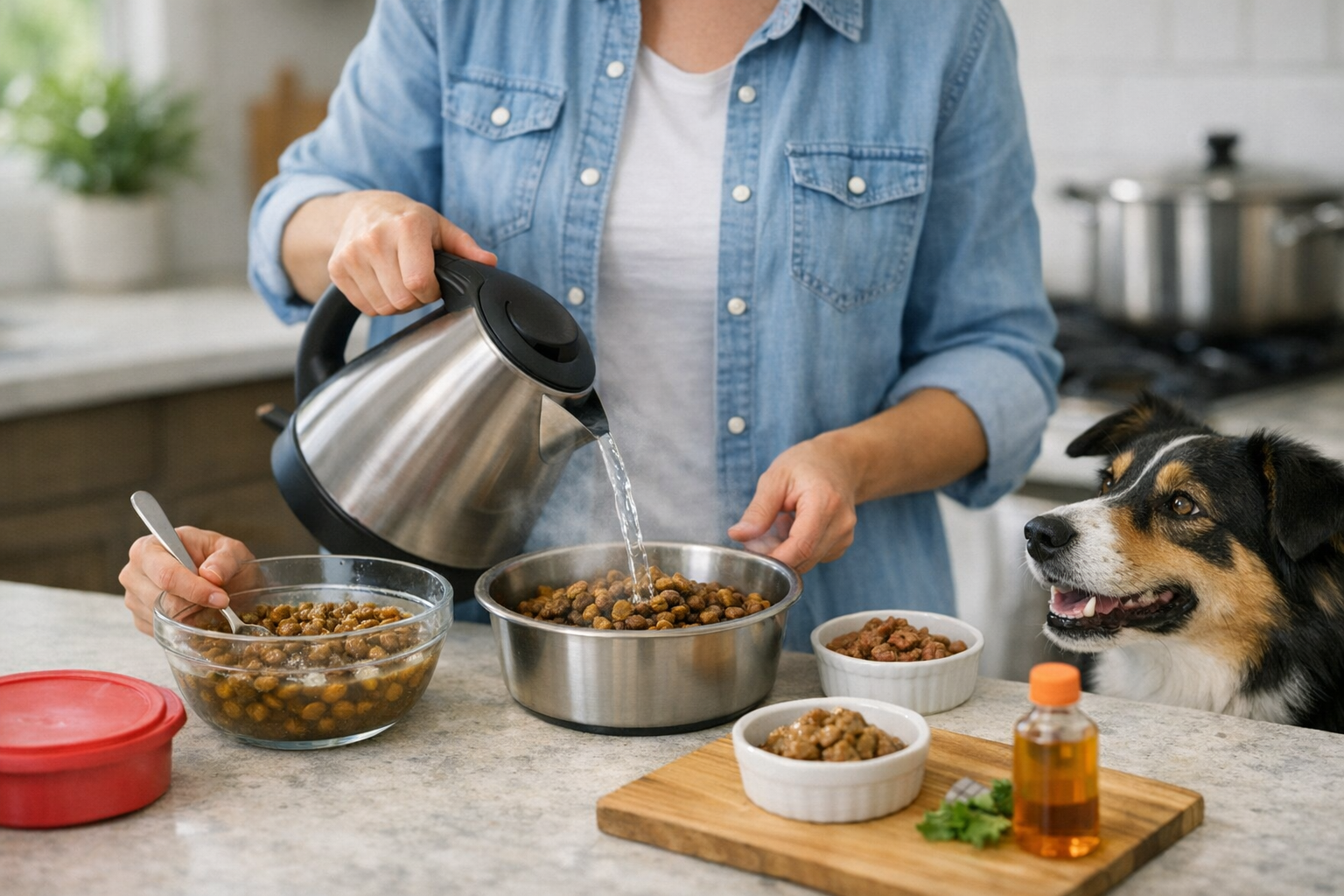
The simplest and most cost effective way to soften kibble is using warm water. It requires no extra ingredients and is generally the safest option for dogs with sensitive stomachs or specific ingredient allergies.
Step 1: Measure the meal. / Place your dog's standard portion of dry food into their usual bowl.
Step 2: Add warm water. / Use a ratio of about one part water to three parts kibble. The water should be warm to the touch but never boiling, as extreme heat can degrade some of the vitamins and probiotics added to the food.
Step 3: Let it soak. / Allow the bowl to sit for 10 to 20 minutes. You will see the kibble expand and the edges become rounded and soft.
Step 4: Stir and serve. / Give the mixture a quick stir to distribute the moisture. If your dog prefers a very smooth texture, you can use a fork to mash the softened pieces further.
Key Takeaway: Warm water not only softens the texture but also releases the fats and aromas in the kibble, making it much more enticing for a dog that has lost some of their sense of smell.
Using Broths and Stocks for Extra Flavor
If water does not do the trick for a stubborn eater, low-sodium broths are an excellent alternative. However, you must be very careful about the ingredients in store-bought stocks. Many broths intended for humans contain onions, garlic, or excessive salt, all of which can be toxic or harmful to dogs.
We recommend using broths specifically formulated for pets, like those from The Honest Kitchen or Stella and Chewy's. These are usually made from high-quality bone or vegetable sources without the dangerous additives. Bone broth in particular is rich in collagen and amino acids, which can provide a small boost to joint health for older dogs. If your dog likes this style of topper, our food topper and broths selection is worth exploring.
When using broth, follow the same soaking process as you would with water. You can even warm the broth slightly to increase the "stink factor" that many dogs love. If you are making your own broth at home, ensure it is strained thoroughly and contains nothing but meat and dog-safe vegetables like carrots or celery.
Mixing Wet and Dry Food
Another effective way to achieve a softer consistency is by mixing dry kibble with canned wet food. This method is often called "topping" or "mixing," and it provides a variety of textures that can keep a dog interested in their bowl.
When you mix wet and dry food, you are not just changing the texture. You are also increasing the caloric density and protein levels of the meal. Because of this, you should adjust the total amount of food to prevent weight gain. A common ratio is to replace a quarter of the dry kibble with an equivalent caloric amount of wet food.
Brands like Farmina, Royal Canin, and NutriSource offer wet versions of their popular dry formulas. Using the same brand for both can help prevent digestive upset since the core ingredients are often similar. If your dog is on a prescription diet for a condition like food allergies or urinary stones, our dog pharmacy can be a useful next step.
Vet Tip: If your dog suddenly stops eating hard food, it is important to have a veterinarian check their teeth and gums. While softening food helps the symptoms, it does not treat underlying dental disease or infections that may require professional care.
Utilizing Toppers and Hydrators
Modern pet nutrition has introduced a category called "meal mixers" or "hydrators." These are designed specifically to be added to kibble to improve nutrition and texture. Freeze-dried raw toppers, such as those from Vital Essentials or Stella and Chewy's, can be crumbled over the food and then hydrated with a little water.
These products are often highly palatable because they are made from real meat. When you add water to a freeze-dried topper, it turns into a savory gravy that soaks into the dry kibble underneath. This is an excellent middle ground for owners who do not want to switch entirely to canned food but need a way to make the dry food more accessible. Our freeze-dried food topper collection makes it easy to compare options.
Another option is goat milk or specialized pet rehydration drinks. Goat milk is generally easier for dogs to digest than cow milk and contains probiotics that support gut health. Pouring a small amount over kibble creates a creamy texture that many dogs find irresistible.
Softening Food for Senior Dogs
As dogs reach their senior years, their nutritional needs and physical abilities change. Aging often brings about a decrease in appetite and a reduced ability to chew. Making food softer is one of the kindest adjustments you can make for an older companion.
Senior dogs often deal with more than just dental pain. They may have a decreased sense of taste and smell, which makes their old dry food seem unappealing. By adding warm liquid or a smelly topper, you help them stay interested in their meals. This is crucial for maintaining muscle mass and preventing the frailty often seen in aging pets. If you want more ideas for aging pets, our senior dog food options are a practical place to browse.
If your senior dog is managing chronic conditions like arthritis or heart disease, they might be on daily medications. Softened food or a "kibble mash" is a perfect vehicle for hiding pills or mixing in powdered supplements like Cosequin or Zesty Paws. Always check with your vet before mixing medications into food to ensure they don't need to be taken on an empty stomach.
Managing Senior Dental Care
If you find yourself constantly needing to soften food due to your dog's dental pain, it might be time to look into therapeutic options. BaxterBoo offers more than just food. We provide access to a full pet pharmacy experience through our site, where you can find prescription items once your vet provides a prescription.
- Check gums for redness or bleeding.
- Look for excessive tartar buildup.
- Note if the dog chews on only one side of their mouth.
- Watch for pawing at the face or mouth.
Bottom line: Softening food is a great temporary or long-term solution for dental discomfort, but it should be paired with regular veterinary dental checkups.
Puppies and the Transition to Solid Food
Puppies have tiny, needle-sharp teeth that are not always ready for the hard crunch of large-breed kibble. When weaning puppies from milk or moving them from soft canned food to dry food, a "gruel" is often the best starting point.
Start by soaking puppy-specific kibble in warm water or puppy milk replacer until it is completely soft and mushy. Over the course of two or three weeks, you can gradually reduce the amount of liquid and the soaking time. This slow transition helps their digestive systems adjust to the new protein sources and prevents the "gulping" that can lead to choking or upset stomachs. If you're looking for more on this transition, our puppy dry food guide is a helpful companion read.
Using a high-quality puppy food from brands like Acana or Orijen ensures they get the DHA and proteins needed for brain and muscle development. Softening these premium kibbles makes them as easy to eat as wet food while maintaining the nutritional balance of a dry diet.
Safety and Hygiene Considerations
When you add water or broth to dry food, you are changing how it needs to be handled. Dry kibble can stay in a bowl for several hours without spoiling, but once you add moisture, it becomes a breeding ground for bacteria.
Never leave softened food out for more than 30 to 60 minutes. If your dog does not finish their meal within that window, you should discard the leftovers and wash the bowl thoroughly with soap and water. Bacteria like Salmonella and Listeria can grow quickly in moist environments, especially if the weather is warm.
If you like to prep meals in advance, you can soften a batch of food and store it in the refrigerator in an airtight container for up to 24 hours. Do not freeze softened kibble, as it changes the texture significantly upon thawing and often becomes unappetizing.
Using the Microwave Safely
Sometimes you are in a rush and need the kibble to soften faster. Using the microwave can speed up the absorption of water, but it carries risks. Microwaves can create "hot spots" in the food that can burn a dog's mouth even if the rest of the bowl feels cool.
If you use the microwave, only heat the mixture for 10 to 15 seconds. Always stir the food thoroughly afterward and test the temperature with your finger. You want the food to be lukewarm, not hot. Most of the time, simply using warm tap water is safer and just as effective as using the microwave.
Key Takeaway: Proper hygiene and temperature control are vital when hydrating food to prevent bacterial growth and mouth burns.
How to Handle Picky Eaters
If your dog is physically capable of eating hard food but simply refuses it, softening might be the answer to their pickiness. Dogs are driven by scent. Dry kibble has a relatively low odor profile compared to wet food. Adding warm water or a savory topper "unlocks" the smells of the ingredients.
For very picky eaters, try the "tea" method. Steep a small amount of freeze-dried liver or a high-quality treat in warm water, then pour that scented water over the kibble. This adds almost no calories but provides a massive boost in aroma.
We also offer a variety of specialized diets at BaxterBoo that are designed for palatability. Brands like Stella and Chewy's or The Honest Kitchen focus on whole-food ingredients that naturally smell better to dogs. Combining these with a bit of hydration can turn mealtime from a chore into the highlight of your dog's day. For more ideas, our how to wet dry dog food guide can help.
The Role of Prescription Diets
In some cases, your dog might need a specific type of soft food for medical reasons. If your pet has a condition like pancreatitis, kidney disease, or severe food allergies, your vet may prescribe a specific diet from brands like Royal Canin or Hill's.
These prescription foods are available in both dry and wet forms. If your dog prefers the taste of the dry version but needs the texture of the wet version, you can use the water-soaking method on prescription kibble just as you would with standard food. Our Autoship programme can make it easier to keep those regular items coming on schedule.
Bottom line: Prescription diets are highly balanced and should only be modified with water or approved broths to ensure the therapeutic benefits remain intact.
Monitoring Your Dog's Progress
After you start softening your dog's food, keep a close eye on their behavior and physical condition. You want to see consistent energy levels, a healthy coat, and stable weight.
If you notice your dog has loose stools after you start adding water or broth, you might be adding too much liquid or introducing a broth with ingredients that don't agree with them. Try reducing the liquid amount or switching back to plain water.
Additionally, keep an eye on their dental health. While soft food is easier to eat, it does not provide the mechanical scraping action that some hard kibbles offer to help reduce plaque. You may need to increase their dental brushing routine or provide dog-safe dental chews from our collection to compensate for the softer diet. If you're interested in a related save-and-repeat option, our MVP Rewards programme is another way to stay stocked.
Conclusion
Making dry dog food soft is a simple yet impactful way to support your dog through various life stages and health challenges. Whether you use warm water, nutritious broths, or a mix of wet food, the goal is to make mealtime comfortable and nourishing. At BaxterBoo, we have been helping pet owners find the right solutions for their dogs since 2006, from premium kibble to the supplies needed to customize every meal. If you find yourself needing specialized food or medications to manage your dog's health, our pharmacy is here to help. Consider setting up Autoship for your favorite wet foods or toppers to save money and ensure you never run out of the supplies your dog needs to enjoy their dinner.
FAQ
How long does it take for dry dog food to get soft?
It typically takes between 10 and 20 minutes for dry kibble to fully absorb warm water or broth. The exact time depends on the size and density of the kibble, as some high-protein, grain-free formulas are more compressed and may take longer. You can speed up the process by using slightly warmer water and stirring the bowl every few minutes.
Can I soften dog food with cold water?
Yes, you can use cold water, but it will take significantly longer for the kibble to soften. Warm water is generally preferred because it breaks down the fats and fibers in the food more quickly and releases aromas that encourage your dog to eat. If you use cold water, expect to wait 30 minutes or more for the same consistency.
Does soaking dog food make it lose its nutritional value?
Soaking dog food in warm water does not significantly change its nutritional profile, as long as you do not use boiling water. Boiling water can damage sensitive vitamins and probiotics that are sprayed onto the kibble after the cooking process. As long as your dog consumes the liquid along with the softened kibble, they are still receiving all the nutrients in the original portion.
Can I leave softened dog food out all day?
No, you should never leave softened dog food out for more than an hour. Once moisture is added to dry food, it can quickly grow bacteria and mold, especially in warm indoor environments. If your dog has not finished their moistened meal within 60 minutes, it is safest to throw the remains away and clean the bowl thoroughly.






