Save 15% on your 1st Autoship learn more

 Email us
 Live Chat
 FAQs
FAQs





Introduction
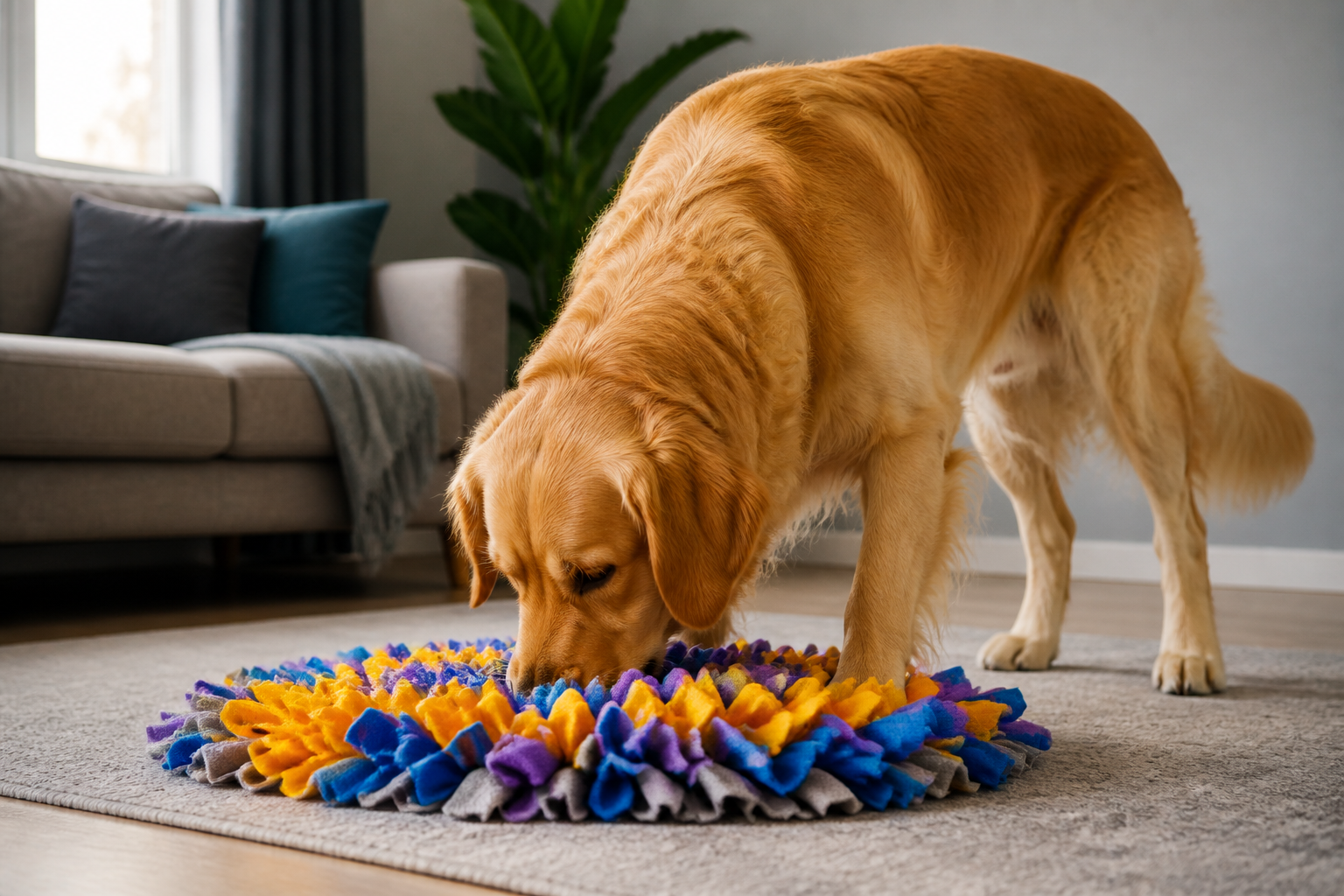
If you have ever watched your large breed dog finish a bowl of kibble in under thirty seconds, you know the mixture of awe and concern that follows. Big dogs often approach mealtime like a race, which can lead to digestive upset or simple boredom when the "hunt" ends too quickly. On days when the weather keeps you indoors, that pent-up energy usually translates into pacing or unwanted chewing. At BaxterBoo, we know that physical exercise is only half the battle for a happy dog. Mental stimulation is just as vital for those bigger frames and active minds. This guide covers how to choose a large dog snuffle mat that stands up to powerful noses, slows down fast eaters, and provides the "brain work" your pet craves. We will look at materials, safety for heavy chewers, and how to integrate these mats into your daily routine.
Quick Answer: A snuffle mat is a fabric puzzle toy designed to hide dry food or treats within layers of felt or fleece. For large dogs, look for mats with a heavy, non-slip base and durable, thick fabric strips that can withstand more vigorous foraging.
The Science of Sniffing for Large Breeds
Large dogs, especially those from working or sporting backgrounds like Labradors or German Shepherds, are hardwired to use their noses. A dog's sense of smell is significantly more powerful than a human's sense. While we rely on sight to navigate the world, dogs use scent to build a map of their environment. When a dog engages in "nose work," they are using a large portion of their brain to process information.
This process is naturally tiring. Ten minutes of intense sniffing can be just as exhausting for a dog as a long walk. This is particularly useful for owners of large dogs who may have mobility issues or for those days when a three-mile hike is not possible. A snuffle mat taps into the instinctive foraging behavior that dogs would naturally use in the wild. Instead of just handing them a bowl of food, you are giving them a job to do.
For more ideas, explore these dog brain games for mental stimulation.
Why Size Matters for Big Dogs
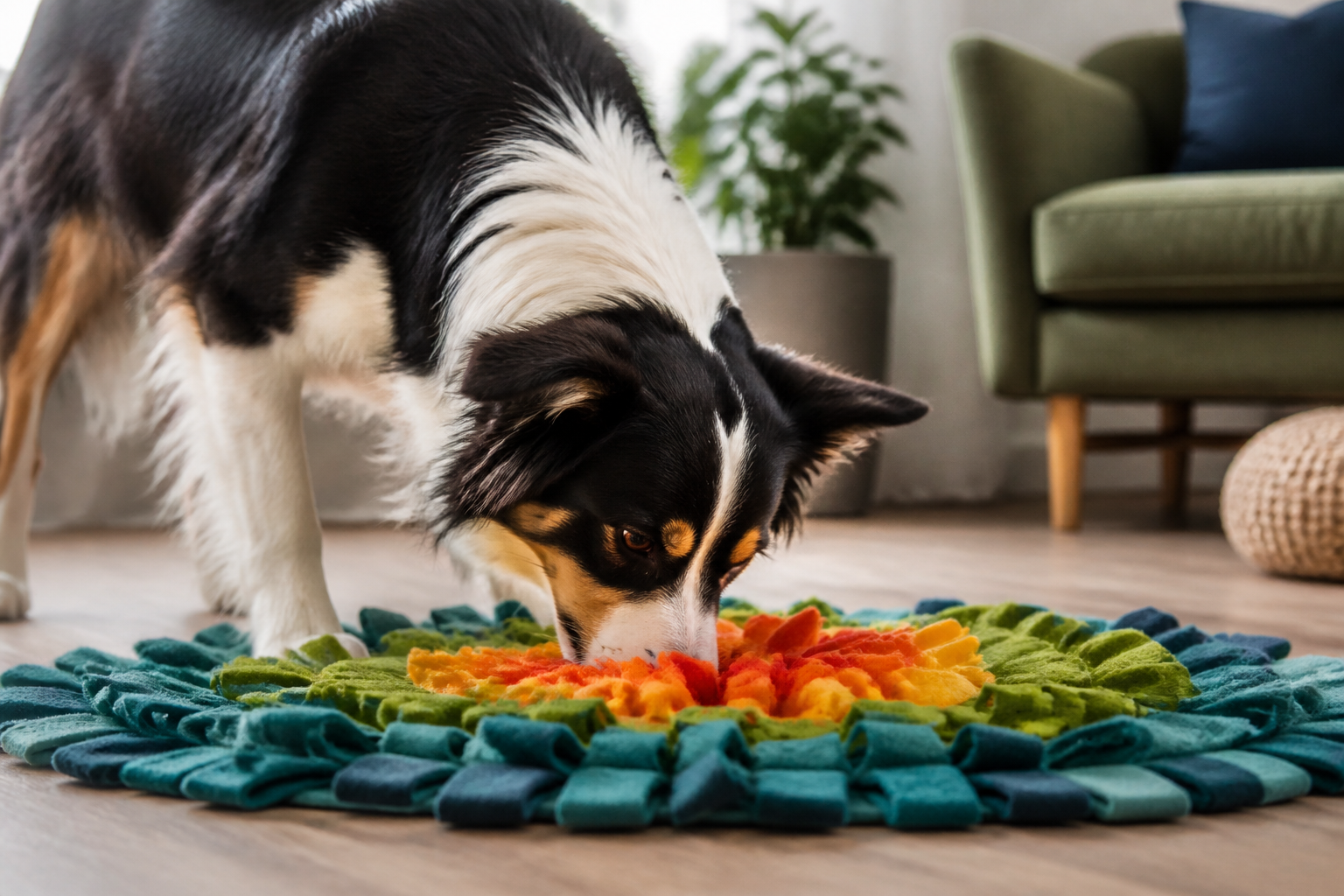
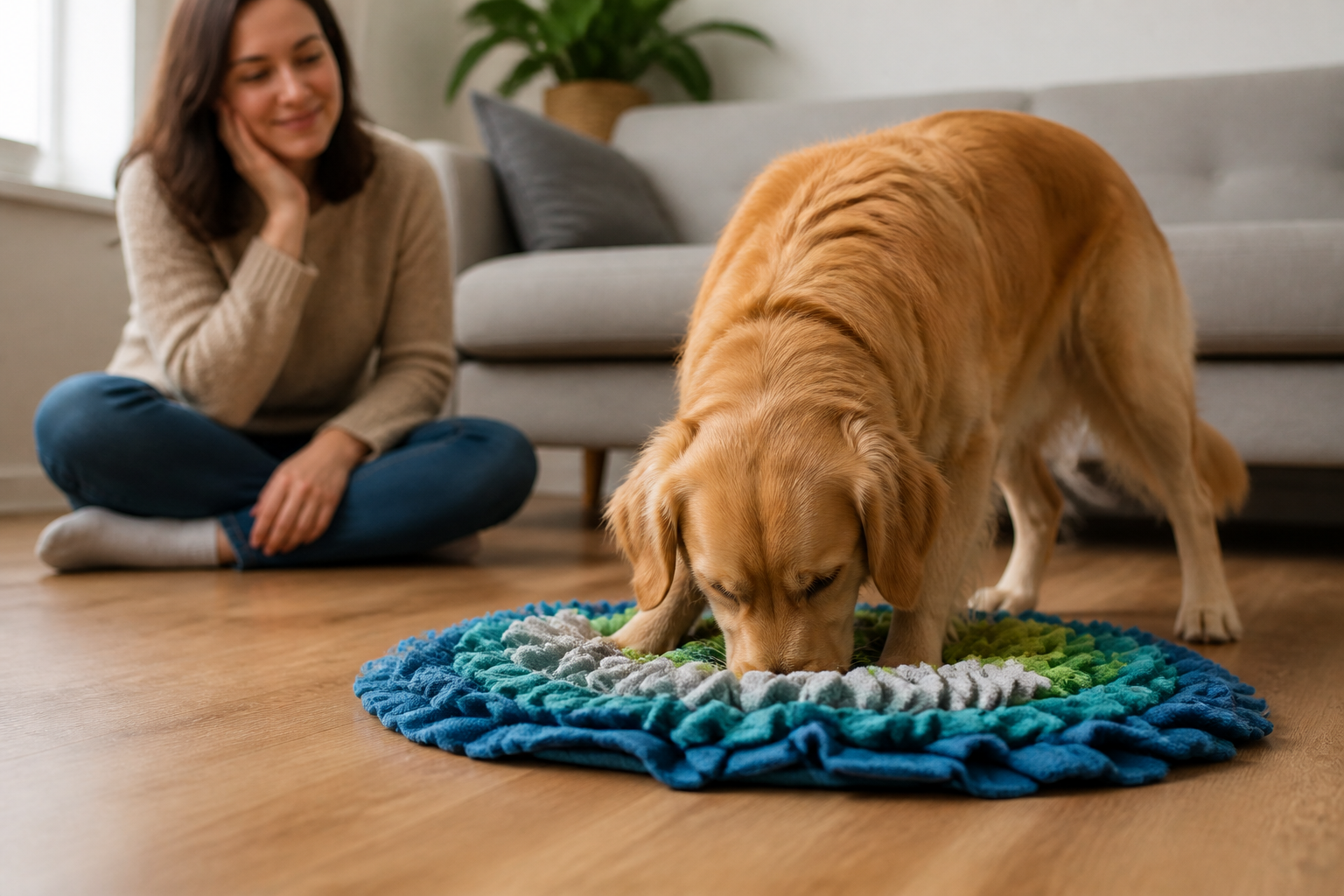
When you search for a snuffle mat, you will see many options designed for small or medium pets. For a large dog, a tiny mat is often frustrating rather than enriching. A large dog snuffle mat provides a wider surface area, which allows the dog to move their head and neck naturally while they search.
A larger mat also means you can hide a full meal’s worth of kibble without the pieces being too crowded. If the mat is too small, a big dog might simply pick up the entire thing and shake it until the food falls out. A substantial mat with a bit of weight to it encourages them to stay grounded and use their nose rather than their strength.
Key Takeaway: Scent work is a biological necessity for dogs that provides high-level mental fatigue, making it an excellent supplement to physical exercise for high-energy large breeds.
Essential Features of a Large Dog Snuffle Mat
Not all mats are created equal. When shopping for a big dog, you need to look beyond the bright colors and focus on the construction. Large dogs have more powerful movements and more saliva, which means the mat needs to be a bit tougher than the average toy.
Browse our dog toys collection to compare enrichment options for active dogs.
Durable Fabric and Construction
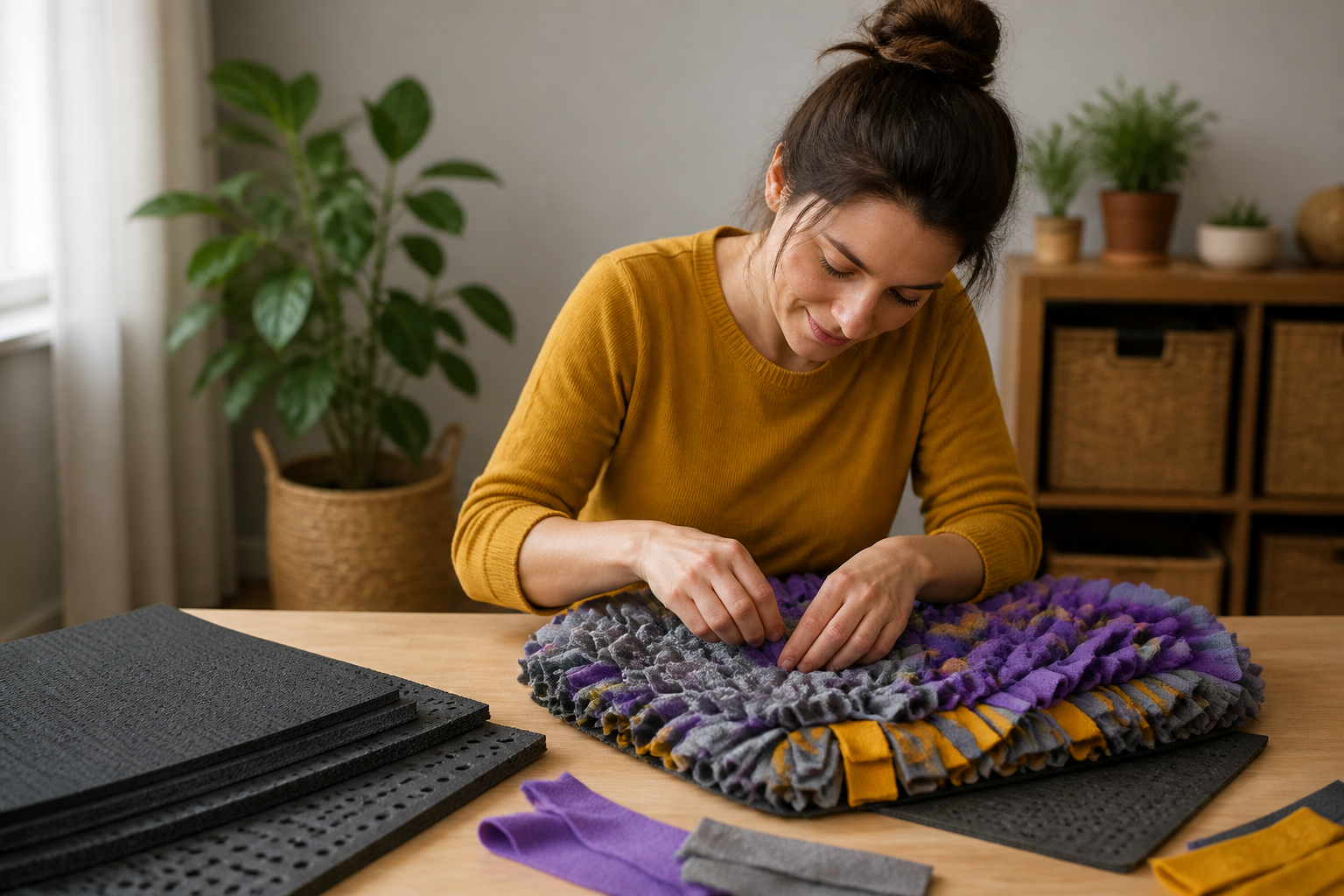
Most mats are made from polar fleece because it is soft on the nose but durable enough to handle some tugging. Look for high-density fleece that is securely attached to the base. For large dogs, the strips of fabric should be wide and thick. If the strips are too thin, they can be easily ripped off or swallowed.
Non-Slip and Weighted Bases
A common issue with using snuffle mats for large dogs is the "slide" factor. As a big dog pushes their nose into the fabric, they can accidentally push the mat across the kitchen floor. We recommend looking for mats that feature a rubberized, non-slip bottom. Some higher-end models even include suction cups for tile or hardwood floors. A weighted base is also helpful because it prevents the dog from flipping the mat over when they get to the last few crumbs.
Machine Washability
Large dogs can be messy. Between the drool and the food particles, a snuffle mat can become a breeding ground for bacteria if not cleaned regularly. Ensure the mat you choose is 100 percent machine washable. Ideally, it should be able to go into the dryer on a low heat setting, though air drying is often better for preserving the integrity of the non-slip backing.
- Look for reinforced stitching at the base of the fabric strips.
- Check for non-toxic materials like BPA-free rubber and pet-safe dyes.
- Prioritize mats that can be rolled up or folded for storage.
- Choose a size that is at least 20 inches by 20 inches for larger breeds.
Using Snuffle Mats to Manage Fast Eaters
If your dog is a "gulper," they are at a higher risk for digestive issues. Eating too fast can cause them to swallow excess air, leading to gas or regurgitation. In some large, deep-chested breeds, rapid eating is a contributing factor to more serious stomach conditions.
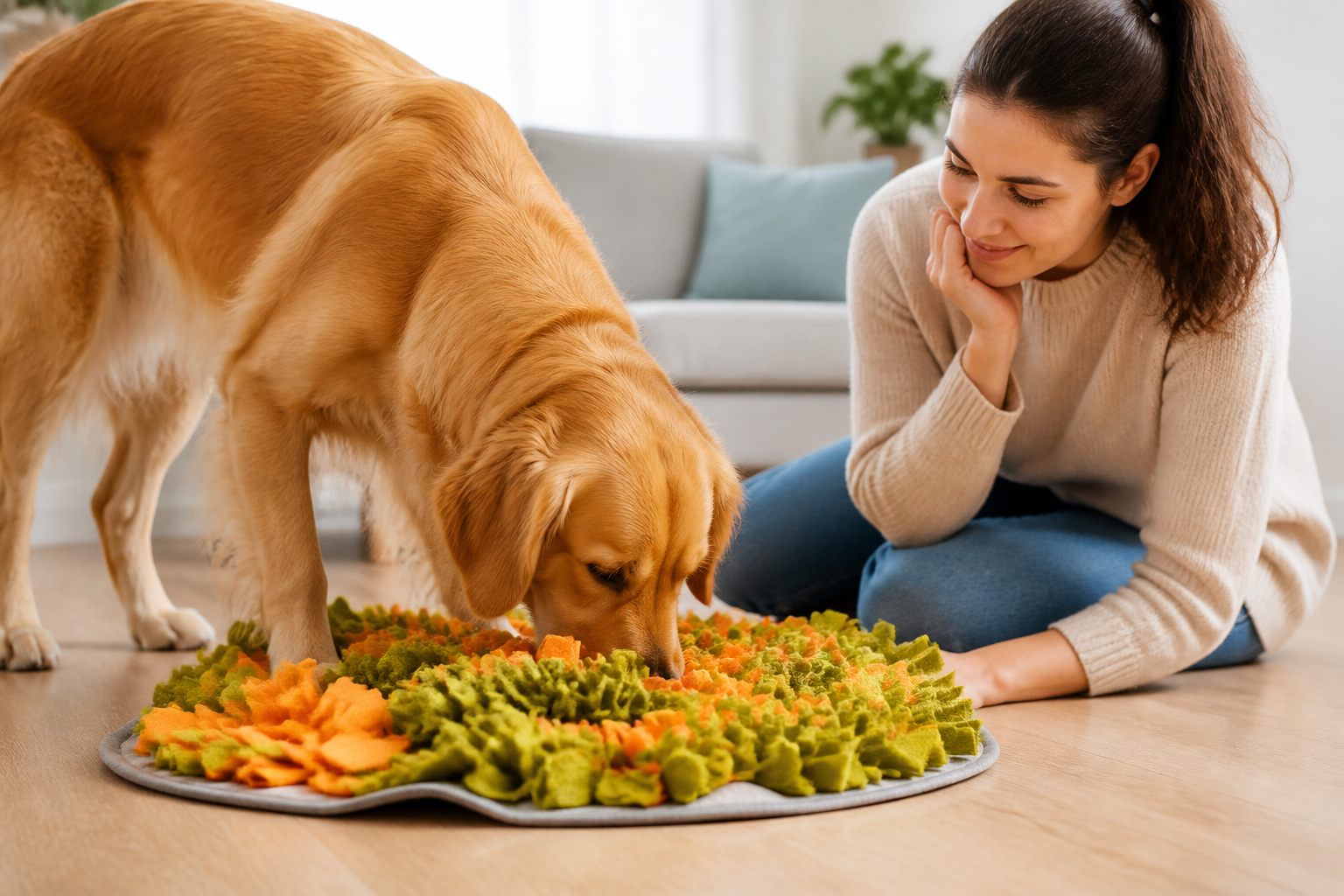
Using a snuffle mat as a slow feeder is a practical way to force your dog to take one or two pieces of kibble at a time. Because they have to move the fabric aside to find each morsel, a meal that usually takes 30 seconds can easily take 10 to 15 minutes. This slow pace gives their brain time to register that they are full and allows their stomach to process the food more effectively.
Vet Tip: If your large dog frequently struggles with digestive upset or rapid eating, consult your veterinarian to rule out underlying health issues. Our BaxterBoo pharmacy, operated through our partnership with Pet's Choice, offers a range of prescription diets and medications for chronic digestive conditions if your vet recommends a specialized approach.
For additional feeding options, see our dog digestive health selection.
How to Introduce the Mat to Your Dog
If your dog has never used a puzzle toy, they might feel a bit confused at first. Some dogs may try to chew the mat or pick it up like a plush toy. Following a gradual introduction helps them understand that the mat is a tool for foraging, not a chew toy.
Step 1: Start with high-value treats. / Place a few very smelly, tasty treats right on top of the fabric where the dog can see them easily. This builds immediate positive association.
Step 2: Hide the treats partially. / Once they understand that food comes from the mat, tuck a few pieces just under the first layer of fleece. Use a command like "find it" to signal the start of the game.
Step 3: Deepen the challenge. / Gradually bury the treats or kibble deeper into the folds and pockets. Eventually, you can replace the treats with their regular dry food for mealtimes.
Step 4: End the session clearly. / When the food is gone, use an "all done" command and pick the mat up. This prevents the dog from getting frustrated and starting to chew on the fabric because they can still smell the food but cannot find any.
For another indoor activity, read these indoor enrichment ideas for dogs.
Safety Considerations for Heavy Chewers
While snuffle mats are excellent for enrichment, they are not indestructible. Large dogs have powerful jaws, and even a well-intentioned dog can accidentally swallow a strip of fleece if they decide to treat the mat like a tug toy.
Supervision is the most important safety rule. You should never leave your dog alone with a snuffle mat, especially during the first few weeks of use. If you notice your dog starting to paw aggressively at the mat or trying to rip the strips out, gently interrupt the behavior. Redirect them to the sniffing action or take the mat away for a few minutes.
If your dog is a known "shredder" who destroys every toy they touch, a traditional fabric snuffle mat might not be the right choice. In those cases, a hard plastic puzzle feeder or a rubber treat-dispensing toy might be a safer alternative. However, for most dogs, consistent supervision and a clear "end of game" routine are enough to keep the mat intact.
Key Takeaway: Always supervise your dog during snuffle sessions to ensure they are using their nose and not their teeth. Remove the mat once the food is gone to prevent destructive chewing.
Cleaning and Maintaining Your Snuffle Mat
Because big dogs produce a lot of saliva, you will likely need to wash the mat more often than you think. Old food dust and saliva can create a sticky residue that smells bad and attracts pests.
We suggest having at least two mats in your rotation. This allows you to have one in the wash while the other is available for use. When washing, use a fragrance-free, pet-safe detergent. Avoid fabric softeners, as the strong scents can be overwhelming for a dog’s sensitive nose and might even discourage them from using the mat.
To keep the mat fresh between deep cleans, you can take it outside and give it a good shake. This helps remove loose crumbs and hair. If you use the mat for "wet" treats like freeze-dried raw food that might leave more residue, you should wash the mat after every two or three uses.
- Wash on a gentle cycle with cold or warm water.
- Place the mat in a mesh laundry bag to protect the fabric strips.
- Air dry whenever possible to keep the non-slip backing from cracking.
- Check for loose threads or detached strips after every wash.
Beyond the Mat: Other Enrichment Options
A large dog snuffle mat is a fantastic tool, but it is just one piece of the puzzle. Variety is the key to preventing boredom. At BaxterBoo, we carry over 500 brands that offer different ways to keep your big dog engaged. You might rotate between a snuffle mat, a lick mat for soothing anxiety, and a heavy-duty rubber toy for physical play.
For senior dogs who might have stiff joints, a snuffle mat is a wonderful way to provide activity without requiring them to jump or run. It keeps their mind sharp as they age. If your senior dog is managing mobility challenges, you might also look into joint supplements or specialized gear in our Medical and Mobility section to keep them comfortable while they forage.
Read more about puzzles, play, and dog boredom busters.
Bottom line: A snuffle mat is a low-impact, high-reward enrichment tool that benefits large dogs of all ages by slowing down their eating and satisfying their natural urge to sniff.
Common Mistakes to Avoid
One of the biggest mistakes owners make is making the mat too difficult too quickly. If a dog cannot find the treats, they may become frustrated and walk away or start biting the mat. Always start easy and increase the difficulty as your dog becomes a "pro" at sniffing.
Another mistake is overfeeding. It is easy to forget that the treats you put in the mat count toward your dog’s daily caloric intake. If you are using the mat for supplemental enrichment rather than a full meal, reduce the amount of food in their bowl accordingly. This helps prevent unwanted weight gain, which is especially important for the joint health of large breed dogs.
Finally, do not forget the "cool down." After a focused sniffing session, your dog might actually be quite thirsty. Ensure they have access to fresh water immediately after they finish their "work."
Selecting the Right Mat at BaxterBoo
When you shop with us, you are choosing from a selection that has been handpicked by people who truly understand pet needs. We have been operating since 2006, and we know that large dogs have different requirements than smaller ones. Whether you are looking for a mat with deep pockets for a challenge or a simple shag-style mat for a senior dog, we focus on quality and value.
Consider the Zanies Sniffari Snuffle Mat Dog Toy - Owl for a dedicated nose-work option.
Our MVP Rewards program is a great way to save on enrichment toys and treats. You can earn up to 5 percent back on your purchases, which makes it easier to keep your dog’s toy bin rotated and fresh. If you find a brand of treats that works perfectly for your snuffle mat, our Autoship program ensures you never run out, saving you time and money on every delivery.
Learn more about our MVP Rewards programme and our Autoship programme.
Conclusion
Investing in a large dog snuffle mat is one of the simplest ways to improve your pet’s quality of life. It addresses the physical need to eat slowly and the psychological need to hunt and forage. By choosing a mat with durable materials, a non-slip base, and a size appropriate for a large breed, you provide a safe and rewarding outlet for their energy. Remember to supervise their play, keep the mat clean, and adjust their meal portions to keep them at a healthy weight.
- Select a mat at least 20"x20" for big breeds.
- Use high-value, dry treats for the best experience.
- Supervise every session to prevent chewing.
- Wash the mat regularly with pet-safe detergent.
Key Takeaway: Mental enrichment through scent work reduces stress and boredom in large dogs, leading to better behavior and a more relaxed home environment.
FAQ
Can a snuffle mat replace a slow feeder bowl?
Yes, a snuffle mat can be an excellent replacement for a traditional slow feeder bowl. It often slows down eating even more effectively than a plastic bowl because the dog must use their nose and paws to move fabric strips. It is particularly helpful for dogs that have learned how to "outsmart" standard slow feeders by flipping them over.
Are snuffle mats safe for dogs that like to chew?
Snuffle mats are safe for most dogs if used under supervision. However, if your dog is a heavy chewer who attempts to eat fabric, you should remove the mat as soon as the food is gone. For extreme chewers, you may need to stick to harder rubber puzzle toys, but many owners find that the mental focus of sniffing actually reduces the urge to chew.
How often should I wash my large dog's snuffle mat?
You should wash the mat at least once a week if it is used daily for meals. If you only use it occasionally for dry treats, every two weeks is usually sufficient. Always wash the mat if it becomes damp with saliva or if you notice any lingering food odors, as this keeps the experience pleasant for your dog's sensitive nose.
What are the best treats to hide in a snuffle mat?
Small, dry, and crunchy treats are best because they do not leave a messy residue on the fabric. You can use your dog's regular kibble, freeze-dried liver bits, or small broken-up biscuits. Avoid using wet food, greasy treats, or anything that could easily smear into the fleece, as this makes the mat difficult to clean and can lead to mold growth.