
 Save 15% on your 1st Autoship learn more

 Email us
 Live Chat
 FAQs
FAQs





Introduction
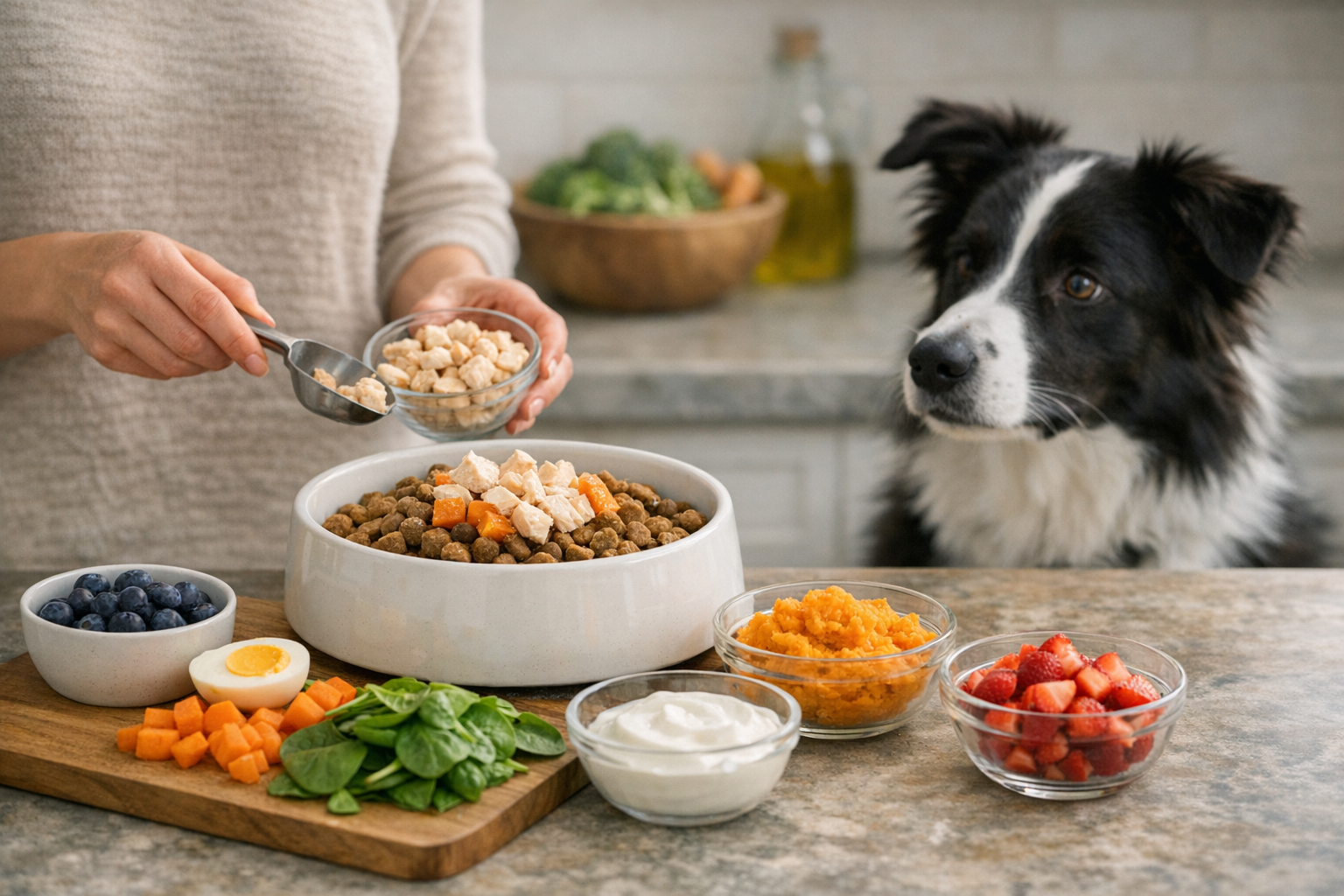
You stand in the kitchen while your dog looks down at a bowl of dry kibble, then looks back up at you with zero interest. We have all been there as pet owners. Even the most high-quality dry food can become a bit boring for a dog after eating it twice a day for months. You want to make mealtime more exciting, but you also want to ensure you are not accidentally making their diet less healthy. At BaxterBoo, we talk to owners every day who want to safely spruce up the bowl without causing weight gain or stomach upset. This guide covers the best liquid, fresh, and commercial toppers to help you figure out what can i mix with my dry dog food. By following a few simple rules, you can turn a basic meal into a nutritional powerhouse that your dog will love.
The Golden Rule of 10 Percent
Before you start raiding the refrigerator, you need to understand the most important rule of supplemental feeding. Professional pet nutritionists generally recommend that "extras" should never make up more than 10 percent of your dog's total daily calorie intake. This is because high-quality commercial kibble is carefully balanced with specific ratios of vitamins, minerals, and amino acids. If you fill half the bowl with unfortified chicken or pumpkin, you dilute those essential nutrients.
If your dog needs 1,000 calories a day, only 100 of those calories should come from your mixers. This ensures the foundation of their diet remains the balanced kibble. If you plan to add more than just a teaspoon of something, remember to slightly reduce the amount of dry food you provide. This prevents unintended weight gain, which is one of the leading health concerns for indoor pets.
Key Takeaway: Always limit mixers and toppers to 10 percent or less of your dog's total daily calories to maintain a balanced diet.
Hydration Boosters and Liquid Mixers
Adding liquid to dry food is one of the easiest ways to improve palatability and health. Many dogs do not drink enough water throughout the day, and kibble only contains about 10 percent moisture. Adding a liquid topper can help support kidney function and urinary tract health, and our food topper collection is a great place to explore those options.
Low-Sodium Bone Broth
Bone broth is a favorite at our warehouse because it is packed with collagen and glycine. It makes the kibble smell much stronger, which is often enough to entice a picky eater. However, you must never use human-grade canned broth from the grocery store. Those products almost always contain onions, garlic, or excessive salt, all of which are dangerous for dogs. Instead, look for bone broths specifically formulated for pets, like the options in our bone broth selection.
Goat's Milk
Often called "universal milk," goat's milk is much easier for dogs to digest than cow's milk. it is loaded with probiotics, which are beneficial bacteria that support a healthy gut. A splash of goat's milk can help dogs with sensitive stomachs or those who have recently finished a course of antibiotics.
Plain Water
If you are in a pinch, never underestimate the power of warm water. Adding warm water to kibble releases the fats and aromas in the food. It also creates a natural "gravy" as the starches in the kibble break down slightly. Let the food sit for five minutes before serving so the kibble softens.
Vet Tip: If your dog is consistently refusing food or seems lethargic, consult your veterinarian before trying to mask the issue with mixers. Pickiness can sometimes be a sign of underlying dental pain or digestive issues.
High-Protein Additions
If your dog is active or needs a little extra muscle support, adding fresh protein is a great choice. These additions are often the most exciting for dogs because of the rich scent of real meat.
Plain Cooked Meats
Unseasoned, boiled chicken breast, lean ground turkey, or lean beef are excellent choices. Ensure all meat is cooked thoroughly and all bones are removed. Never feed cooked bones, as they can splinter and cause internal damage. You should also trim away any visible fat or skin to keep the fat content low.
Eggs
Eggs are a complete protein source and contain essential fatty acids that support skin and coat health. You can serve them scrambled or hard-boiled. Avoid using butter, oil, or salt when preparing them. One large egg contains about 70 calories, so for a small dog, half an egg might be their entire 10 percent allowance for the day.
Canned Fish
Sardines packed in water or wild-caught salmon can provide a massive boost of Omega-3 fatty acids. These fats are great for reducing inflammation and keeping the coat shiny. Always choose fish packed in water rather than oil to avoid digestive upset. Because fish is calorie-dense and high in minerals, a little goes a long way.
- Step 1: Choose a lean protein. / Select unseasoned chicken, turkey, or eggs.
- Step 2: Portion correctly. / Measure the meat to ensure it stays within the 10 percent calorie limit.
- Step 3: Mix thoroughly. / Incorporate the protein into the kibble so your dog does not just "sort" the bowl and leave the dry food.
Fresh Vegetables and Fruits
Vegetables are a low-calorie way to add volume to the bowl. This is especially helpful for dogs that always seem hungry but need to maintain a healthy weight.
Canned Pumpkin
Plain canned pumpkin (not pumpkin pie filling) is a miracle worker for digestion. The soluble fiber in pumpkin can help with both loose stools and constipation. It has a natural sweetness that most dogs enjoy. A tablespoon or two is usually plenty for most medium-sized dogs.
Green Beans
Many owners call green beans "the filler trick." They are very low in calories but high in fiber. If your dog needs to lose weight, replacing a small portion of kibble with steamed green beans can help them feel full without the extra calories.
Blueberries and Apples
Blueberries are tiny antioxidant bombs. They are easy to toss right on top of the food. For apples, ensure you remove every trace of the core and seeds, as the seeds contain small amounts of cyanide. These fruits provide a nice crunch and a dose of Vitamin C.
Quick Answer: You can safely mix many human foods with dog food, including plain cooked chicken, canned pumpkin, green beans, and blueberries. Always avoid toxic ingredients like grapes, onions, garlic, and xylitol.
Using Commercial Toppers and Mixers
Sometimes you want the benefits of fresh food without the prep work in the kitchen. The pet food industry has evolved significantly, and there are now hundreds of high-quality commercial mixers designed specifically for this purpose. At BaxterBoo, we carry a wide variety of these shelf-stable options that make it easy to vary your dog's diet, including our selection of Stella & Chewy's products.
Freeze-Dried Raw Mixers
Brands like Stella and Chewy’s offer "Meal Mixers" which are small morsels of freeze-dried raw meat. These provide the nutritional benefits of a raw diet with the convenience of a bag you can keep in the pantry. You can crumble these over the kibble or feed them whole. They are highly palatable and great for "enticing" dogs that have lost interest in plain dry food.
Dehydrated Base Mixes
The Honest Kitchen makes dehydrated foods that you rehydrate with warm water to create a thick, stew-like consistency. Mixing a scoop of this with dry kibble adds significant moisture and whole-food nutrition. It is an excellent middle ground between dry kibble and a fully fresh diet, and you can find more options in our selection of The Honest Kitchen products.
Wet Food as a Topper
You do not have to switch entirely to canned food to get the benefits. Using a few tablespoons of a high-quality wet food, like those from Farmina or Open Farm, can make the kibble much more appetizing. Wet food often has a stronger aroma and a softer texture that senior dogs find easier to manage, and our selection of Farmina products is a good place to start.
Note: When using commercial mixers, always check the packaging for feeding guidelines. Many are very calorie-dense and require you to reduce the amount of dry kibble significantly.
Specialized Health Support and Pharmacy Needs
Sometimes, what you mix with your dry dog food is about more than just taste. It can be a delivery system for necessary health support. If your dog is managing a chronic condition, the right mix-in can make a world of difference.
For dogs with joint stiffness or mobility issues, adding a liquid glucosamine supplement or a fish oil topper is a smart move. If your veterinarian has prescribed a specific therapeutic diet or medication, mixing it with a small amount of pet-safe "gravy" or canned food can help the medicine go down easier.
Our pharmacy at BaxterBoo offers a wide range of FDA-approved medications and prescription pet foods through our partnership with Pet's Choice. If your dog has severe allergies or a medical condition like kidney disease, your vet might recommend a prescription wet food to mix with their dry diet. This ensures they get the targeted nutrition they need while still enjoying their meal.
Managing Allergies
If your dog has itchy skin or chronic ear infections, be very careful with human food mixers. Common proteins like beef or chicken are frequent allergens. In these cases, sticking to a limited-ingredient topper like those from Zesty Paws or a prescription option from our pharmacy is a safer bet.
Senior Dog Support
Senior dogs often experience a declining sense of smell and taste. They may also have dental issues that make hard kibble painful to eat. Mixing in warm bone broth or a soft canned food can help them stay interested in eating and make the mechanical act of chewing much easier.
Transitioning to a Mixed Diet
Even if an ingredient is healthy, a sudden change in diet can cause a stomach ache. Dogs have different gut bacteria than humans, and they thrive on consistency. If you decide to start adding mixers, do it gradually.
Start with just a teaspoon of the new ingredient for the first few days. Watch your dog's stool quality and energy levels. If everything looks good, you can slowly increase the amount up to that 10 percent limit. This slow transition is especially important for rich additions like salmon, eggs, or goat's milk.
If you are rotating through different mixers—like chicken on Monday and pumpkin on Tuesday—ensure your dog has a "sturdy" stomach. Some dogs handle variety well, while others need a more set routine.
- Days 1-3: Add a very small amount (1 teaspoon) of the mixer.
- Days 4-6: Increase slightly if no digestive upset occurs.
- Day 7 and beyond: Maintain the mixer at the 10 percent calorie level.
Bottom line: Slow transitions and strict portion control are the keys to successfully mixing new ingredients into your dog's dry food.
Foods You Must Never Mix
While we want to focus on the positives, we have to mention the dangers. There are several common kitchen items that are toxic to dogs. Even a small amount mixed into their food can cause serious illness.
- Onions and Garlic: These can damage a dog's red blood cells.
- Grapes and Raisins: These can cause sudden kidney failure.
- Xylitol: This artificial sweetener is found in some peanut butters and "sugar-free" products. It causes a life-threatening drop in blood sugar.
- Macadamia Nuts: These can cause weakness, vomiting, and tremors.
- Cooked Bones: These are a choking hazard and can puncture the digestive tract.
Always check the label of any human food you use. Many "natural" peanut butters now use xylitol (also labeled as birch sugar) to cut calories. Stick to products where the only ingredient is "peanuts."
Enhancing the Feeding Experience
Sometimes the "how" is just as important as the "what." Beyond just mixing ingredients, you can change the way you present the meal to keep your dog engaged.
Puzzle Feeders and Slow Bowls
If you are mixing in something wet, like pumpkin or yogurt, try smearing it into the bottom of a slow-feed bowl or a Kong toy before adding the kibble. This forces the dog to work for the tasty treat and slows down their eating. This is great for mental stimulation and preventing bloating in fast eaters.
Temperature Matters
Most dogs prefer food that is room temperature or slightly warm. If you are taking wet food or broth out of the refrigerator, let it sit out for a few minutes or give it a very quick warm-up. Be careful never to serve food that is hot to the touch, as dogs can easily burn their mouths.
Summary of Mixing Ideas
| Mixer Category | Examples | Best For |
|---|---|---|
| Liquids | Bone broth, Goat's milk, Water | Hydration and scent |
| Proteins | Cooked chicken, Eggs, Sardines | Muscle support and taste |
| Vegetables | Canned pumpkin, Green beans | Digestion and weight management |
| Commercial | Freeze-dried raw, Wet food toppers | Convenience and balanced nutrition |
| Oils | Fish oil, Flaxseed oil | Skin and coat health |
Conclusion
Mixing healthy ingredients with dry dog food is a wonderful way to show your pet some extra love while supporting their health. Whether you choose a splash of bone broth for hydration or a scoop of freeze-dried raw for a protein boost, the variety will keep them excited for every meal. Just remember to stick to the 10 percent rule and avoid toxic ingredients like onions and xylitol. If your dog's pickiness persists or if they have specific health needs, we recommend talking to your veterinarian about specialized diets. You can find all the premium toppers, supplements, and even prescription foods mentioned here at BaxterBoo.
Key Takeaway: Safe mixing involves using unseasoned, dog-friendly whole foods or commercial toppers while keeping the total addition to 10 percent of the meal.
Check out our full collection of healthy dog food toppers and mixers to start boosting your dog's bowl today. You can even set up an Autoship order for your favorite mixers to save time and money while keeping your pup’s pantry full. If you like earning extra value on repeat purchases, the MVP Rewards programme can also help you make the most of your routine shopping.
FAQ
Can I mix wet and dry dog food every day?
Yes, mixing wet and dry food is a common and safe practice for most healthy dogs. It provides the dental benefits of crunchy kibble along with the hydration and flavor of wet food. Just ensure both foods are "complete and balanced" for your dog's specific life stage to maintain proper nutrition.
Is it okay to put human food in my dog's kibble?
You can add certain human foods as long as they are plain and safe for dogs, such as boiled chicken, steamed carrots, or plain pumpkin. However, these should be treated as toppers and not a replacement for balanced dog food. Avoid any foods with seasonings, salt, butter, or toxic ingredients like garlic and onions.
Will adding mixers to dry food make my dog gain weight?
It can if you do not adjust the portion of the dry food. Any time you add calories through a mixer or topper, you should slightly reduce the amount of kibble you feed. Stick to the rule that all extras should make up no more than 10 percent of the daily caloric intake to keep your dog at a healthy weight.
What should I do if my dog only eats the "good stuff" and leaves the kibble?
This is a common issue with "picky" eaters who learn to sort through their bowls. To prevent this, try mixing the additions thoroughly so they coat every piece of kibble. Using a liquid like bone broth or mashing soft food into the dry pieces makes it much harder for your dog to pick out only the toppers.
For more feeding guidance, you may also find it helpful to read How Many Cups of Dry Dog Food Per Day for Your Dog and What Dry Dog Food Is Best for Picky Eaters: A Practical Guide. If you are deciding whether wet food or mix-ins fit your routine, Is Dry Food Enough for Dogs? Choosing the Best Nutrition is a helpful next step.






