
 Save 15% on your 1st Autoship learn more

 Email us
 Live Chat
 FAQs
FAQs





Introduction
You are standing in the pet food aisle or browsing online when you notice a bag of dog food that feels surprisingly light. You open it to find nuggets or patties that are dry and crunchy, yet the label insists the food is raw. It is a confusing moment for many pet owners who are used to raw food being frozen or refrigerated. You might wonder how meat can stay safe on a shelf without being cooked or filled with chemicals. At BaxterBoo, we believe that understanding how your pet’s food is produced is the first step toward better health. This article covers the scientific process of sublimation, the safety measures used to kill bacteria, and why this method preserves more nutrients than traditional kibble. Understanding the freeze drying process helps you make informed choices for your dog's long term wellness.
The Core Science of Sublimation
The magic of freeze drying lies in a scientific process called sublimation. In standard food processing, moisture is removed using high heat. This often changes the texture and destroys sensitive vitamins or enzymes. Freeze drying takes a completely different path by turning ice directly into vapor.
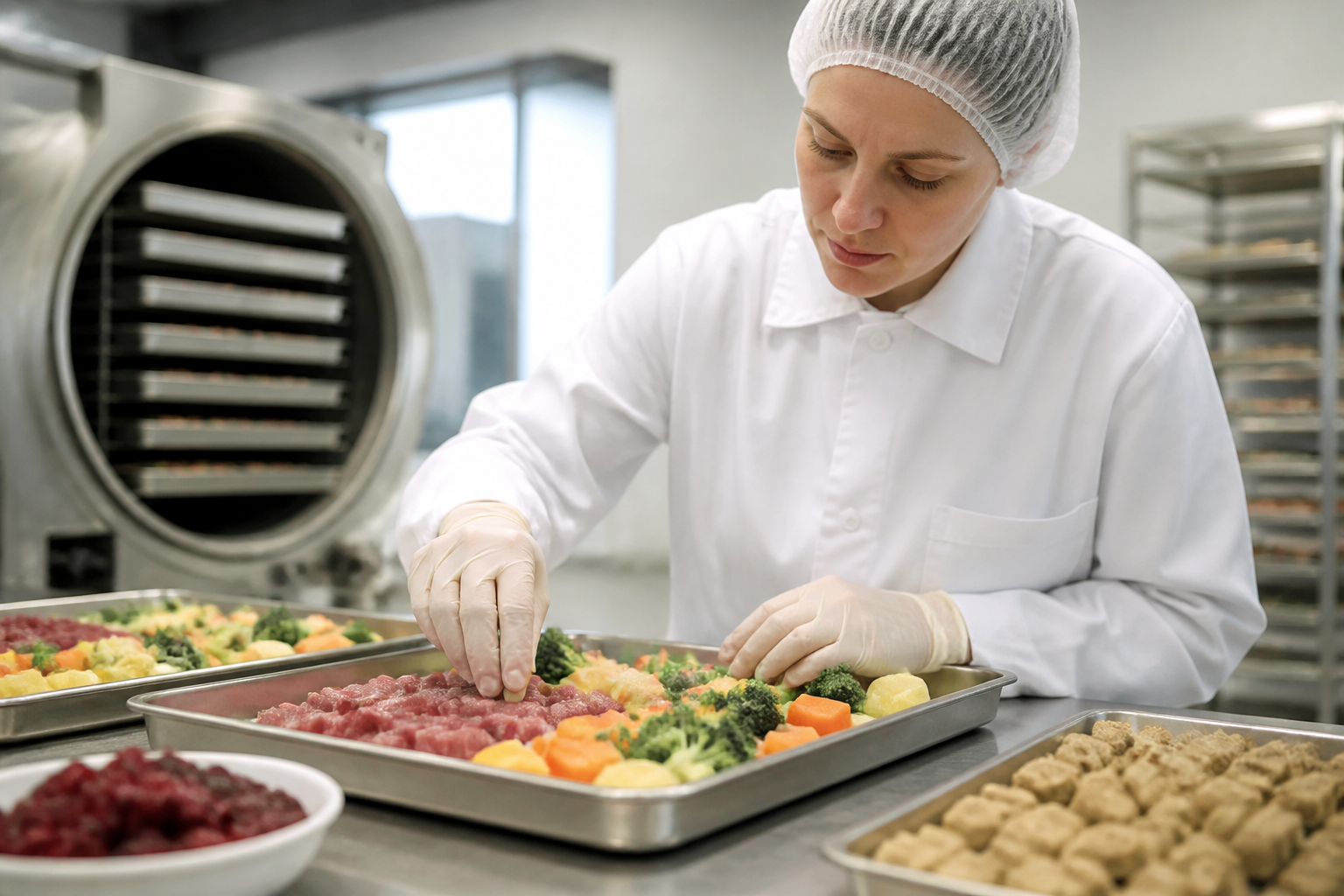
This happens inside a specialized machine called a lyophilizer. By creating a powerful vacuum, the machine lowers the atmospheric pressure around the food. In this environment, water does not melt into a liquid when it warms up. Instead, the frozen water molecules jump straight into a gas state. This allows the moisture to escape the meat without ever getting the food wet or hot.
Because the food never reaches high temperatures, the cellular structure remains intact. This is why a freeze dried strawberry or piece of beef looks almost exactly like its fresh counterpart. It keeps its shape, color, and most importantly, its nutritional profile. For a closer look at available options, browse our freeze-dried dog food collection.
Quick Answer: Freeze dried raw dog food is made through sublimation, a process that removes moisture by turning ice directly into vapor under a vacuum. This preserves 97 percent of the original nutrients without using the high heat found in traditional kibble production.
Step by Step: From Raw Meat to Shelf Stable Nuggets
Making high quality freeze dried food is a slow and expensive process. It requires precision to ensure the food is safe to sit in your pantry for months. Most premium brands follow a specific set of steps to maintain quality.
Step 1: Ingredient Preparation and Grinding
The process begins with high quality raw ingredients. This usually includes muscle meat, organ meat, and ground bone. Some recipes also include organic fruits and vegetables like blueberries or spinach. These ingredients are ground and mixed to ensure a balanced nutritional profile in every bite.
Step 2: Flash Freezing
Once the ingredients are mixed and shaped into patties or nuggets, they are flash frozen. This is a critical step. Standard home freezers freeze food slowly, which creates large ice crystals. These crystals can tear the cell walls of the meat and ruin the texture. Flash freezing happens almost instantly, creating tiny ice crystals that protect the integrity of the whole food.
Step 3: Primary Drying in a Vacuum
The frozen food enters the vacuum chamber. As the pressure drops, a very small amount of heat is applied. This heat is not enough to cook the food. It is just enough to encourage the ice to turn into vapor. This stage removes about 95 percent of the water content.
Step 4: Secondary Drying or Adsorption
Even after the primary drying, a few stubborn water molecules remain bonded to the food at a molecular level. The machine uses a secondary drying process called adsorption to break these final bonds. This ensures the food is truly dry, which is what makes it shelf stable.
For additional background on the production process, read our guide to making freeze-dried dog food.
Key Takeaway: The multi stage drying process ensures that almost 99 percent of moisture is removed. This lack of water prevents bacteria and mold from growing, allowing the food to stay fresh without artificial preservatives.
The Role of High Pressure Processing (HPP) in Safety
Safety is a common concern when dealing with raw meat. Many pet owners worry about salmonella or E. coli. To address this, many brands we carry at BaxterBoo use High Pressure Processing, often called HPP.
HPP is a cold pasteurization technique. The sealed food is placed in a chamber and subjected to incredible amounts of water pressure. This pressure is often as high as 87,000 pounds per square inch. This massive pressure crushes the cell walls of harmful bacteria like Listeria or Salmonella.
The best part of HPP is that it does not use heat. It keeps the food raw while making it significantly safer for both the dog and the person handling the food. Most manufacturers also use a "test and hold" method. They send samples from every batch to an independent lab and will not ship the food until it tests negative for pathogens.
Our dog pharmacy can also help you find prescription products when your veterinarian recommends medication or a therapeutic option for your dog.
Vet Tip: Even though freeze dried food is shelf stable and often treated with HPP, it is still a raw meat product. Always wash your hands, bowls, and countertops with hot soapy water after every feeding to prevent cross contamination in your home.
Freeze Dried vs Dehydrated: Knowing the Difference
It is common to see freeze dried and dehydrated foods sitting next to each other on the shelf. While they might look similar, the processes are very different. Dehydration uses low heat and flowing air to evaporate moisture.
Because dehydration uses heat, it can actually cook the proteins slightly. This heat often destroys the live enzymes that help a dog digest their food. Dehydrated food also tends to lose its shape and becomes shriveled. For a broader comparison, see whether freeze-dried dog food is good for dogs.
Freeze drying is considered the gold standard because it is a "cold" process. It retains about 97 percent of the original nutrients, whereas dehydration typically retains about 60 to 75 percent. If you want a diet that is as close to a fresh, ancestral raw diet as possible, freeze dried is the superior choice.
| Feature | Freeze Dried | Dehydrated |
|---|---|---|
| Temperature | Very low (Cold) | Low to Medium (Warm) |
| Nutrient Retention | Approx. 97% | Approx. 60-75% |
| Texture | Light and porous | Hard and leathery |
| Shelf Life | Very long | Long |
| Enzyme Integrity | Fully intact | Partially destroyed |
Why Ingredient Quality Still Matters
The process of freeze drying is impressive, but it cannot fix poor ingredients. A bag of food is only as good as the meat and produce that went into the machine. When you are looking for a high quality option, you should check the label for specific details.
Look for animal proteins listed by name as the first ingredient. This includes muscle meat, heart, and liver. Avoid labels that use vague terms like "meat meal" or "poultry byproduct." High quality brands usually source their meat from USDA inspected facilities.
Many premium freeze dried recipes also include natural sources of vitamins. Instead of a long list of synthetic additives, you might see carrots, squash, or kelp. These whole food ingredients provide the antioxidants and fiber your dog needs for healthy digestion and a shiny coat. You can compare recipes and formats in our freeze-dried food selection.
Key Takeaway: Quality starts with the source. Look for responsibly sourced meats and organic produce to ensure your dog is getting the full benefit of the freeze drying process.
The Practical Benefits of a Freeze Dried Diet
There are several reasons why pet owners are moving toward this format. It offers a middle ground between the convenience of kibble and the nutritional power of raw frozen food.
- Convenience for Travel: You do not need a cooler or ice packs to feed raw on the road. A bag of freeze dried food fits easily in a backpack or suitcase.
- Shelf Stability: Unlike frozen raw food, you do not have to worry about power outages or limited freezer space. It can stay in your pantry for months.
- High Palatability: The process concentrates the natural aroma and flavor of the meat. This makes it a fantastic choice for picky eaters who turn their noses up at dry kibble.
- Minimal Processing: Because it is not extruded at high heat, it contains fewer fillers like corn, wheat, or soy. This often leads to smaller, firmer stools and better weight management.
If your dog has specific health concerns like allergies or chronic skin issues, a minimally processed diet can be very helpful. Our pharmacy at BaxterBoo, operated through our partnership with Pet's Choice, can help you manage these conditions with prescription diets or medications if your vet recommends them.
How to Serve Freeze Dried Food Properly
While it is tempting to just pour the dry nuggets into a bowl, that is not always the best way to feed a full meal. Freeze dried food is extremely dry, often containing only 2 percent moisture. In comparison, fresh meat contains about 70 percent moisture.
For a complete meal, it is best to rehydrate the food. You can add warm water, bone broth, or even goat milk. Let the food sit for a few minutes until it absorbs the liquid. This helps with digestion and keeps your dog hydrated. If you are only using the food as a meal topper or a treat, feeding it dry is perfectly fine. For more serving guidance, read our freeze-dried dog food feeding guide.
Step 1: Measure the correct portion based on your dog's weight. / Use the chart on the back of the bag as a starting point.
Step 2: Crumble the nuggets or patties. / This increases the surface area for faster absorption.
Step 3: Add warm liquid. / Use about one tablespoon of water or broth for every small nugget.
Step 4: Wait three to five minutes. / Allow the food to soften and expand before serving.
Bottom line: Rehydrating freeze dried food is the best way to support your dog's kidney health and ensure they stay properly hydrated during a raw diet.
Conclusion
Understanding how freeze dried raw dog food is made reveals why it is such a powerful tool for pet health. By using the science of sublimation and high pressure processing, manufacturers can create a product that is safe, shelf stable, and packed with live enzymes. At BaxterBoo, we curate our selection to include brands that prioritize these rigorous standards. Whether you are looking for a complete meal or a high value treat, this format provides the benefits of raw nutrition without the mess of thawing frozen meat.
- Freeze drying uses a vacuum and low heat to preserve 97 percent of nutrients.
- HPP and lab testing ensure the food is safe from harmful bacteria.
- Rehydrating the food supports better digestion and hydration.
- The shelf stable nature makes it the most convenient way to feed a raw diet.
If you are ready to upgrade your dog's nutrition, consider starting with a small bag to use as a topper. You can earn points on every purchase through our MVP Rewards programme, helping you save while providing the best possible care for your pet.
FAQ
Does freeze drying kill all the bacteria in raw dog food?
Freeze drying itself is not a kill step for pathogens because it does not use high heat. However, most reputable manufacturers use High Pressure Processing (HPP) before the freeze drying starts to eliminate harmful bacteria like Salmonella. This process uses extreme pressure instead of heat to make the food safe while keeping it raw.
Do I have to add water to freeze dried dog food?
If you are feeding it as a complete meal, it is highly recommended to add water, bone broth, or goat milk. Because the food is so dry, it can be taxing on a dog's digestive system to process it without moisture. If you are only using it as a treat or a small topper, you do not need to rehydrate it.
How long does a bag of freeze dried dog food last once opened?
Most bags will stay fresh for about 30 days after opening if they are stored in a cool, dry place. You should always keep the bag tightly sealed to prevent moisture from the air from getting inside. For the best results, look for packaging with a high quality zip closure or transfer the food to an airtight container.
Is freeze dried dog food better than standard kibble?
Many experts consider freeze dried food superior because it is minimally processed and lacks the heavy starches needed to make kibble. It retains more natural vitamins, minerals, and enzymes that are often destroyed by the high heat extrusion process used for dry food. However, it is also more expensive, so many owners use it as a topper to balance cost and nutrition.






