
 Save 15% on your 1st Autoship learn more

 Email us
 Live Chat
 FAQs
FAQs





Introduction
You likely know the satisfying sound of a brand-new bag of kibble being unsealed for the first time. The crunch is fresh. The aroma is strong. Your dog is likely right at your feet, waiting for that first scoop. But as the days turn into weeks, you might start to wonder if that last bowl of food is just as good as the first. Most pet owners realize that food safety is critical for their own meals, but it is equally vital for our canine companions. At BaxterBoo, we want to help you make sure every meal you serve is safe, nutritious, and delicious. This guide will explain how long dry dog food stays fresh and why your storage method makes all the difference. Understanding these basics helps you prevent waste and protect your dog from illness.
The Timeline of Freshness
The shelf life of dry dog food is shorter than many people realize. An unopened bag of premium kibble can often last anywhere from six months to a year and a half. This depends entirely on the manufacturer and the type of preservatives used. Natural preservatives like tocopherols (vitamin E) generally have a shorter lifespan than synthetic ones. Once you break the factory seal, the clock starts ticking much faster.
Most experts agree that opened dry dog food should be consumed within six weeks. Some high-quality brands may push this to eight weeks if stored perfectly. However, after the 30-day mark, the nutritional value begins to decline significantly. Even if the food does not look spoiled, the vitamins and healthy fats are likely degrading.
For a deeper look at the warning signs, see our blog post on dry dog food spoilage and freshness tips.
Quick Answer: Once opened, dry dog food typically lasts 4 to 6 weeks in an airtight container. While it may stay safe to eat for up to 8 weeks, the nutritional quality and flavor begin to drop after 30 days.
The Three Enemies of Pet Food
To understand why airtight storage is so important, you have to know what destroys kibble. Three main environmental factors work together to spoil your dog's dinner. These are air, moisture, and heat.
Air is the primary culprit behind oxidation. When oxygen hits the fats in the dog food, those fats begin to turn rancid. This process changes the smell and taste of the food. More importantly, it can make the food toxic over time. Moisture is the second enemy. High humidity or a stray drop of water can lead to mold growth. Some molds are invisible to the naked eye but can produce dangerous mycotoxins.
Finally, heat accelerates the breakdown of nutrients. It also provides a breeding ground for bacteria like Salmonella. Storing food in a warm spot, such as near an oven or in a sunny laundry room, can cut the shelf life in half.
Why Airtight Storage is the Best Choice
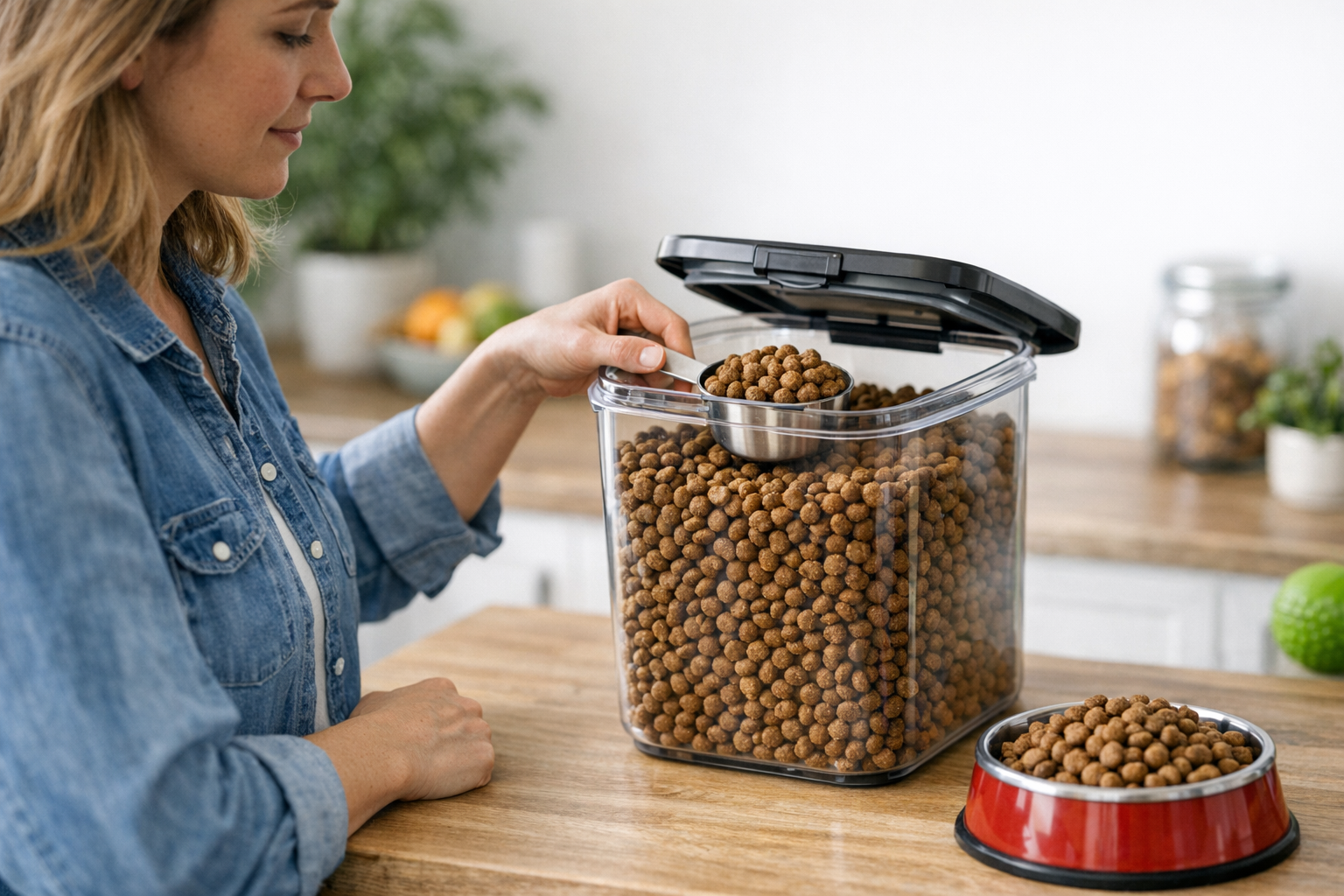
An airtight container is your first line of defense against these three enemies. Standard kitchen bins or plastic bags with a simple clip are often not enough. A true airtight seal uses a rubber or silicone gasket to create a vacuum-like environment. This seal keeps oxygen out and prevents humidity from seeping in.
For storage gear that helps protect kibble from air, moisture, and pests, browse our dog food storage collection.
Airtight containers also provide a physical barrier against pests. Ants, moths, and even rodents can be attracted to the smell of open kibble. These pests do more than just eat the food. They can introduce parasites and bacteria that could make your dog very sick. By using a heavy-duty container with a locking lid, you ensure that only your dog gets to enjoy their meals.
Key Takeaway: Proper storage is not just about keeping the crunch. It is about preventing chemical oxidation and biological contamination that can lead to serious health issues.
The Pro Secret: The Bag in Bin Method
One of the most common mistakes pet owners make is pouring kibble directly into a plastic storage bin. While it looks neat, it is actually less effective than keeping the food in its original packaging. Premium pet food companies spend millions of years developing bags that act as high-tech barriers. These bags are often lined with materials designed to keep oils in and oxygen out.
When you pour food directly into a plastic bin, the oils from the kibble can seep into the plastic over time. These oils eventually turn rancid. Even if you wash the bin, the residue can remain in tiny scratches on the surface. This old oil then contaminates the fresh food you pour in later.
Instead, we recommend the bag in bin method. Simply roll the original bag down tightly after every feeding. Use a sturdy clip to keep it closed. Then, place the entire bag inside your airtight container. This gives you two layers of protection. It also keeps your container clean and ensures you always have the lot number and expiration date handy.
If you want to compare popular options while you shop, our Orijen selection is a helpful place to start.
Benefits of Keeping the Original Bag
- Safety Information: If there is ever a product recall, you will need the lot number and UPC code found on the bag.
- Oil Protection: The specialized liners prevent fats from soaking into your storage container.
- Ingredient Reference: Having the label allows you to quickly check ingredients if your dog develops a new allergy.
- Double Barrier: Two seals are always better than one when it comes to keeping out moisture and pests.
Identifying Spoiled Dog Food
Your dog cannot tell you if their food tastes a bit off, but they might show you. One of the first signs of spoiled food is a sudden refusal to eat. If your usually hungry dog turns their nose up at a fresh bowl of kibble, take a closer look. They can often smell rancid fats or mold long before we can.
For more details on what to watch for, read our guide on how to tell if dry dog food has gone bad.
Pick up a handful of the kibble and give it a sniff. Fresh dog food should have a mild, grainy, or meaty scent. Spoiled food often smells sour, metallic, or like old paint. You should also look for physical changes. Is the food darker than usual? Does it feel oily or sticky? Are there any small crumbs that look like "dust" which could actually be storage mites?
Signs of Spoilage Checklist
- Sour or "Off" Odor: This is the most common sign of fat oxidation.
- Visible Mold: Look for any fuzzy patches or white, thread-like structures.
- Pest Activity: Check for small moths or tiny crawling insects in the bottom of the bag.
- Texture Changes: Kibble that has lost its crunch or feels damp should be discarded.
- Greasy Residue: If the food looks exceptionally oily, the fats may be breaking down.
Vet Tip: If your dog accidentally consumes spoiled food and shows signs of vomiting, diarrhea, or lethargy, contact your veterinarian immediately. For ongoing digestive support, our pet pharmacy carries a range of prescription diets and other wellness solutions.
The Dangers of Feeding Spoiled Kibble
Feeding expired or poorly stored food is not just a matter of poor taste. It can lead to significant health problems. Rancid fats can cause stomach upset in the short term. Over time, consuming oxidized fats can lead to more serious issues like vitamin deficiencies or organ stress.
Mold is perhaps the biggest danger. Certain molds produce aflatoxins. These are highly toxic and can cause liver failure in dogs. Because dogs often eat the same food every day, they are more susceptible to the cumulative effects of these toxins. Bacterial contamination is also a concern. Salmonella and E. coli can thrive in bags of food that have been exposed to moisture or high heat. These bacteria are dangerous for your pet and can also be passed to the humans in your household during handling.
Choosing the Right Storage Location
Where you put your container is just as important as the container itself. Many people keep dog food in the garage or a backyard shed to save space. This is rarely a good idea. Garages are subject to massive temperature swings. In the summer, the heat will bake the nutrients right out of the food. In the winter, condensation can form inside the bag as the temperature changes.
The ideal spot is a cool, dark, and dry area inside your home. A kitchen pantry or a dedicated closet is usually the best choice. Try to keep the container off the floor if possible. This helps prevent moisture from the subfloor from affecting the bottom of the container. It also makes it harder for crawling insects to find a way in.
Maintenance: Keeping the Container Clean
If you do choose to pour kibble directly into your container, you must be diligent about cleaning. Never pour a new bag of food on top of the old crumbs at the bottom. These old crumbs are the most likely to be rancid or contaminated. They will quickly spoil your fresh supply.
Every time the container is empty, wash it thoroughly with hot, soapy water. Use a mild detergent and avoid harsh chemicals that could leave a scent behind. Make sure the container is completely dry before adding new food. Even a tiny amount of trapped moisture can cause a mold outbreak within days.
Steps for a Clean Container
Step 1: Empty the container completely. / Remove all crumbs and dust from the corners. Step 2: Wash with warm soapy water. / Use a clean sponge to scrub the sides and the lid gasket. Step 3: Rinse and dry thoroughly. / Let the container air dry for several hours to ensure no moisture remains. Step 4: Inspect the seal. / Check the rubber gasket for cracks or debris that might prevent a tight seal.
Bottom line: A clean container and the "bag in bin" method provide the ultimate protection for your dog's health and your wallet.
Shopping Strategies for Maximum Freshness
Freshness starts at the store. When shopping at BaxterBoo, always check the "best by" dates on the back of the bag. We work hard to keep our inventory rotating so you get the freshest product possible. However, the biggest bag is not always the best value.
If you have a small dog, a 40-pound bag might seem like a bargain. But if that bag takes four months to finish, the food will be stale and nutritionally empty long before you reach the bottom. It is better to buy smaller bags more frequently. This ensures that the food stays within that ideal six-week window of freshness.
You might also consider our Autoship programme. This allows you to set a schedule for your food deliveries. You can time the deliveries so that a fresh bag arrives just as the old one is hitting the 30-day mark. This saves you money on the first order and ensures your pup never has to eat stale kibble.
How to Handle Wet Food Storage
While this guide focuses on dry food, many owners mix in wet food. Once a can of wet food is opened, the rules change completely. Wet food should never be left in a bowl for more than two hours. If your dog does not finish it, the leftovers must be covered and refrigerated immediately.
If you want to compare mixed-feeding options, our blog post on feeding wet and dry dog food together is a helpful next read.
Opened cans should be used within three to five days. You can find specialized silicone can lids that provide an airtight seal in the fridge. This prevents the food from drying out and keeps the smell from spreading to your own leftovers. If you cannot finish a can within a few days, consider buying smaller cans or even individual pouches to reduce waste.
Environmental Impact and Waste Reduction
Proper storage is also a win for the environment. When food goes bad, it ends up in the trash. This is a waste of the ingredients and the energy used to produce and ship the food. By investing in a quality airtight container and following these storage tips, you significantly reduce your household's pet food waste.
If you find that you consistently have leftover food that goes stale, it may be time to re-evaluate your dog's portion sizes. Overfeeding is a leading cause of pet obesity. Our pharmacy can provide guidance on prescription weight management diets if your pup has put on a few extra pounds. Using a standard measuring cup and keeping the food fresh ensures your dog gets exactly what they need without the extra waste.
Summary of Best Practices
Caring for your dog involves more than just picking a high-quality brand like Orijen or Royal Canin. It involves protecting that investment through proper handling. By keeping air, moisture, and heat away from your dog's food, you are directly contributing to their longevity and happiness.
We recommend using an airtight container, keeping the food in its original bag, and storing it in a cool, dark place. Remember to wash your containers between bags and always buy a size that your dog can finish within six weeks. These small steps make a huge difference in the quality of every meal.
Key Takeaway: Maximize food safety by using the "bag in bin" method inside an airtight container and purchasing only what your dog can eat in 4 to 6 weeks.
At BaxterBoo, we carry a wide selection of airtight storage solutions and the premium food brands your dog loves. Whether you are managing a senior dog's specific nutritional needs or starting a new puppy on the right track, we are here to help. Our MVP Rewards programme also helps you earn points on every bag of food you buy, making it easier to prioritize freshness.
FAQ
Is it better to store dog food in plastic or metal containers?
Both materials work well as long as they have a true airtight seal with a gasket. Metal containers are often more durable and can be better at blocking out light, while plastic containers are lighter and often easier to clean. Regardless of the material, keeping the food in its original bag inside the container is the best way to prevent oils from affecting the bin.
Can I freeze dry dog food to make it last longer?
Yes, you can freeze dry dog food to extend its shelf life for several months. However, you must ensure the food is in an airtight freezer bag to prevent freezer burn and moisture accumulation. When you take it out, let it reach room temperature before opening the bag to prevent condensation from forming on the kibble.
Does the "best by" date still matter if the bag is unopened?
Yes, the "best by" date is a guide for the nutritional integrity of the food. Over time, even in a sealed bag, vitamins and minerals slowly degrade. If a bag is past its date, it may not provide the full nutritional balance your dog needs. It is generally best to use the food before that date for the best results.
Should I wash my dog food container every time I buy a new bag?
Yes, you should wash the container every time it becomes empty. Old oils and crumbs can harbor bacteria or go rancid, which will then contaminate the fresh food you pour in. Use hot, soapy water, rinse well, and make sure the container is completely dry before you put a new bag inside.






