
 Save 15% on your 1st Autoship learn more

 Email us
 Live Chat
 FAQs
FAQs





Introduction
You might recognize the exact moment the question hits you. You reach into the pantry to grab your dog’s dinner and notice the bag has been open for quite a while. Perhaps the kibble feels a bit more oily than usual. Maybe the smell is slightly sharper than the day you bought it. At BaxterBoo, we talk to pet owners every day who want to ensure their dogs are getting the freshest nutrition possible. While dry food is convenient and shelf-stable, it does not stay fresh forever once the seal is broken. In this article, we will explain the timeline for opened kibble and the best ways to keep it safe. We will also cover how to spot spoilage and why proper storage is a non-negotiable part of pet care. Understanding these basics helps you protect your dog’s health and your household budget.
Quick Answer: Most opened dry dog food stays fresh for 4 to 6 weeks. While the "best by" date on the bag applies to unopened food, oxygen and moisture begin degrading the kibble the moment you open the seal.
The Difference Between Best By Dates and Freshness
Every bag of dog food comes with a date stamped on the packaging. This is usually a "best by" or "use by" date. It is important to remember that this date is intended for unopened bags. Manufacturers determine this date based on how long the preservatives can keep the food stable in a sealed environment. When the food is at the factory, it is packed in bags designed to keep out light and air.
Once you tear that bag open, the environment changes. Oxygen enters the bag. Humidity from your home seeps in. These factors immediately begin to break down the nutrients. Even if the bag says it is good for another year, that timeline no longer applies to the food inside an open bag. You should aim to have your dog finish a bag within about six weeks of opening it.
Why Dry Food Eventually Goes Bad
It is easy to think of kibble as a "forever food" because it is hard and crunchy. However, kibble contains fats and oils that are essential for your dog’s skin, coat, and energy levels. These fats are the first things to fail. This process is called oxidation. When oxygen hits the fats in the food, it causes them to turn rancid.
Rancidity is not just a matter of bad taste. It actually changes the chemical structure of the food. Over time, oxidized fats can lead to health issues if consumed regularly. Moisture is another major enemy. Most dry food is processed to have a very low moisture content, usually around 10 percent. This low moisture keeps bacteria and mold at bay. If the food is stored in a humid area, it can absorb water from the air. This creates a breeding ground for invisible spores.
Identifying the Signs of Spoiled Kibble
Your dog’s nose is much more sensitive than yours. Often, a dog will refuse to eat before a human even notices a problem. If your usually hungry dog suddenly turns their nose up at their bowl, pay attention. They might be smelling rancid fats that you cannot detect yet.
There are several visual and physical signs you can look for:
- A strong, sour, or "paint-like" chemical smell.
- Visible mold or fuzzy growth on the kibble.
- A change in texture, such as the food feeling soft, damp, or extra crumbly.
- The presence of grain mites or small insects inside the bag.
- An oily film on the inside of the bag that smells off.
If you see any of these signs, it is time to discard the food. Do not try to pick out the "good" parts. Mold and bacteria are often microscopic before they become visible to the eye.
Key Takeaway: Always trust your dog’s instincts if they refuse to eat. Spoiled food may not always look bad to the human eye, but it can still cause significant digestive upset.
The Best Ways to Store Dry Dog Food
Many pet owners make the mistake of pouring the kibble out of the bag and into a large plastic bin. While this looks tidy, it can actually make the food go bad faster. Plastic bins can develop tiny scratches over time. These scratches trap fats and oils that eventually turn rancid. When you pour fresh food into a bin with old, rancid oils on the walls, you contaminate the new batch immediately.
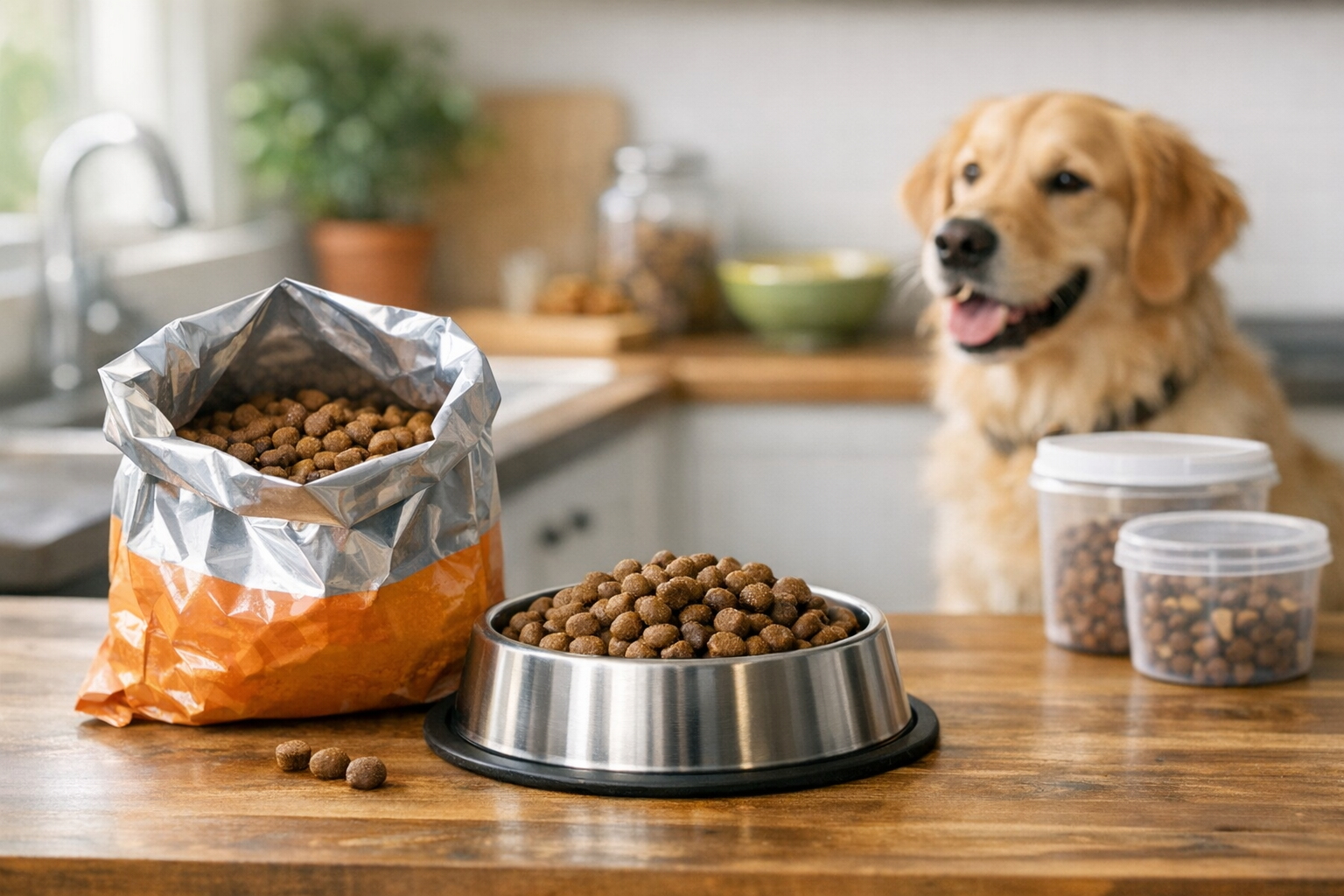
The "bag-in-a-bin" method is the gold standard for storage. Keep the food inside its original packaging. Roll the top of the bag down tightly and secure it with a heavy-duty clip. Then, place the entire bag inside an airtight plastic or metal container. This provides a double layer of protection. The original bag is designed specifically to act as a grease barrier and protect against oxidation. The outer bin keeps out pests and prevents the bag from being ripped.
For more storage ideas, our dog food storage collection has practical options that help keep kibble fresher for longer.
Where You Store the Food Matters
Temperature and light are just as important as air. You should store your dog’s food in a cool, dry place. A pantry inside your home is usually the best spot. Many people store large bags of food in the garage or a mudroom. However, these areas often experience high heat and humidity.
If dog food gets too hot, the fats will oxidize at a much faster rate. High humidity can lead to mold growth before you even reach the bottom of the bag. Aim to keep the food in an area that stays below 80 degrees Fahrenheit. If you live in a very humid climate, using a dehumidifier in your pantry can help extend the life of your pet’s meals.
Avoiding Common Storage Mistakes
One of the most frequent errors we see at BaxterBoo is the "topping off" method. This happens when an owner has a few scoops of old food left in a bin and pours a brand-new bag right on top. This is a recipe for spoilage. The old food at the bottom is already nearing the end of its shelf life. By mixing it, you are introducing older bacteria and rancid oils to your fresh supply.
Always finish the old bag completely before starting a new one. If you use a storage bin, wash it with hot, soapy water and let it dry completely between every bag. This ensures that no old residue remains to spoil the next batch. Another mistake is leaving the food bowl out all day. While dry food can sit out longer than wet food, it still starts to go stale within a few hours of being exposed to the open air.
If you want a deeper refresher on shelf life basics, our blog post on how long dry dog food lasts is a helpful companion read.
The Health Risks of Expired Food
Feeding your dog food that has gone bad is more than just an unpleasant experience. It can lead to real medical concerns. When fats turn rancid, they can destroy the vitamins in the food. This means your dog might not be getting the nutrition they need, even if they are eating a full meal. Vitamin E and Vitamin A are particularly susceptible to being destroyed by oxidation.
In more serious cases, spoiled food can cause food poisoning. Bacteria like Salmonella or E. coli can grow in improperly stored bags. Moldy food can contain mycotoxins, which are highly dangerous for dogs. Symptoms of eating bad food include vomiting, diarrhea, lethargy, and a loss of appetite.
Vet Tip: If your dog shows signs of a sudden stomach upset or refuses to eat for more than 24 hours, consult your veterinarian. Always keep the original food bag or take a photo of the lot number and "best by" date in case your vet needs to investigate a potential food issue.
Nutrition and Preservation
Not all dog foods are preserved the same way. Premium brands often use natural preservatives like mixed tocopherols (Vitamin E) or rosemary extract. These are excellent for your dog’s health, but they do not last as long as synthetic preservatives. If you buy a high-quality, natural food, you must be even more diligent about storage.
Synthetic preservatives like BHA or BHT last a very long time, but many owners prefer to avoid them due to health concerns. We carry a wide range of brands at our warehouse that prioritize natural preservation. If you are unsure about which food is right for your dog's specific health needs, our team can help you find options that balance nutrition with shelf stability.
If you are comparing premium formulas, our selection of Orijen products, Acana products, and NutriSource products is a good place to start.
Managing Health with Prescription Diets
Some dogs require specialized nutrition for chronic conditions like kidney disease, allergies, or urinary issues. These prescription diets often have different formulations that require careful handling. Because these foods are essential for managing your dog's health, ensuring their freshness is vital.
Our pet pharmacy for dogs provides access to prescription options through a convenient online experience. If your veterinarian has prescribed a specific diet, you can have it shipped directly to your door. Managing a chronic condition is a long-term commitment, and we want to make that process as simple as possible. Using our Autoship programme for these specialty diets ensures you always have a fresh bag on hand without having to worry about running out or feeding old kibble.
Tips for Buying the Right Amount
It can be tempting to buy the largest bag of food available to save money. However, if you have a small dog, that 40-pound bag might last for three or four months. By the time you get to the end of the bag, the food will likely be stale and less nutritious.
- Calculate how much your dog eats per day.
- Buy a bag size that will be finished in 4 to 6 weeks.
- For very small dogs, consider buying two smaller bags instead of one large one.
- Check the "best by" date before leaving the store or upon delivery.
- Look for bags that are free of rips, tears, or oily stains.
For more on portion planning, our guide on how much dry food to feed a dog can help you match bag size to real-world feeding needs.
Using Technology and Programs to Stay Fresh
One of the easiest ways to ensure your dog always has fresh food is to automate your purchases. Instead of buying a massive bag that sits in your pantry for months, you can set up smaller, more frequent deliveries. Our Autoship programme allows you to choose the exact frequency of your deliveries. This means you can receive a fresh bag right as you are finishing the current one.
When you use Autoship, you can also pair it with the MVP Rewards programme to add extra value to repeat purchases. This is a practical way to manage your pet’s nutrition while keeping the food at peak freshness. You can adjust the timing at any time if you find your dog is eating faster or slower than expected.
If budget is part of your food plan, our article on discounted dog food is worth a look next.
The Role of Packaging in Food Safety
The bag your dog's food comes in is a high-tech piece of equipment. Manufacturers spend a significant amount of money developing these bags to be grease-proof and airtight. Some bags even use one-way valves to let air out without letting it in.
When you buy food from us, you are getting products from trusted brands like Orijen, Acana, and NutriSource. These companies take great care in their packaging. When you get your bag home, treat it with care. Avoid dragging it across rough surfaces that could cause micro-tears. Even a pinhole-sized rip can let enough oxygen in to start the oxidation process. If you notice a hole in the bag when you first receive it, it is best to contact the retailer for a replacement.
If you are deciding between meal styles, our post on whether you should feed your dog wet and dry food can help you compare options.
Cleaning Your Storage Gear
If you use a bin to hold your dog's bag of food, you still need a cleaning routine. Dust, hair, and moisture can collect at the bottom of the bin. Once a month, take everything out and wipe the bin down. Use a mild soap and ensure it is completely dry before putting a new bag inside.
If you use a plastic scoop to dish out the kibble, wash that regularly too. The oils from the food build up on the scoop, and these oils can go rancid just like the food in the bag. A clean scoop and a clean storage area go a long way in maintaining the quality of your dog’s meals.
Handling Pet Food Recalls
While nobody wants to think about a product recall, they do happen. This is another reason why keeping the original bag is so important. The lot number and manufacturing code are printed directly on the packaging. If a recall is issued, you will need this information to see if your bag is affected.
If you pour the food into a generic container and throw away the bag, you lose that trail of information. In the event of a recall or if your dog gets sick, having that bag allows you to provide essential details to your vet or the manufacturer. It is a simple safety step that can save a lot of stress in an emergency.
Summary of Best Practices
Caring for a dog involves many small daily decisions that add up to their overall wellness. Storing food correctly might seem like a minor detail, but it ensures your dog stays nourished and safe. By keeping the food in its original bag, sealing it tightly, and storing it in a cool place, you are doing your part to keep their tail wagging.
Bottom line: Buy food in quantities your dog can finish within six weeks and keep it in the original bag inside an airtight container for maximum safety.
If you are looking for a more convenient way to manage your dog's supplies, our Autoship programme is a great next step. It helps you keep fresh food in the pantry while earning rewards through our MVP Rewards programme. Whether you need standard kibble or prescription diets through our pet pharmacy, we are here to help you provide the best for your pet.
FAQ
Can I store dry dog food in the garage to save space?
It is generally not recommended to store dog food in a garage because of temperature fluctuations. High heat can cause the fats in the food to turn rancid very quickly, while humidity can encourage mold growth. It is much safer to keep the food in a climate-controlled area like a kitchen pantry or a closet.
Is it okay to pour new dog food over the old food in a bin?
No, you should never mix old and new dog food. The old food at the bottom of the bin has already begun to oxidize and may contain rancid oils or bacteria. Always finish the old bag, wash the container thoroughly, and then add the fresh food to prevent contamination.
My dog’s food doesn’t smell bad, but it’s past the "best by" date. Is it safe?
The "best by" date is a manufacturer's estimate of peak quality. While the food might not be immediately dangerous the day after that date, the vitamins and minerals start to degrade. For the safety of your pet, it is best to discard food that is significantly past its expiration date or shows any change in texture or smell.
Should I refrigerate dry dog food to make it last longer?
While refrigeration can slow down the oxidation of fats, it is often not practical for large bags of dry food. More importantly, taking a bag in and out of the fridge can cause condensation to form inside the bag. This added moisture is a major risk for mold growth, so a cool, dry pantry is usually a better choice.






