
 Save 15% on your 1st Autoship learn more

 Email us
 Live Chat
 FAQs
FAQs





Introduction
You likely know the feeling of lugging a massive bag of kibble from your car to the pantry. It feels like a great value to buy in bulk. But as the weeks go by and the bag remains half full, you might wonder if those last few scoops are still good. Keeping your dog healthy starts with the quality of what goes into their bowl. At BaxterBoo, we talk to pet owners every day who want to balance saving money with providing the freshest possible meals. This article explains the actual shelf life of opened kibble and how you can prevent spoilage. We will cover storage techniques, signs of rancid food, and why the original bag is your best friend. Proper storage ensures your dog gets the nutrients they need without the risk of bacterial growth or digestive upset.
The Six Week Rule for Opened Kibble
Once you break the seal on a bag of dry dog food, the clock starts ticking. While unopened bags can last a year or more, opened food has a much shorter lifespan. You should aim to finish a bag within four to six weeks of opening it. This timeframe is the industry standard for maintaining peak nutritional value and flavor. If you are comparing options, browse our dry dog food category for different formulas and bag sizes.
The moment air hits the kibble, a process called oxidation begins. This is particularly true for the fats and oils used to coat the biscuits. These fats provide essential energy and make the food taste good to your dog. However, they are also the most sensitive parts of the formula. Over time, oxygen breaks down these fats and causes them to turn rancid.
You might notice that your dog becomes less interested in their meals toward the bottom of a large bag. This is often because the smell and taste have changed. Even if the food is not technically spoiled yet, the vitamins are starting to degrade. Feeding your dog food that has been open for three months means they are getting fewer nutrients than they were on day one. For help planning portions, read our guide on how much dry food to feed a dog.
Why Oxygen and Light Are the Enemies
Oxygen is the primary factor in food spoilage. When oxygen reacts with the ingredients in dog food, it alters the chemical structure of the nutrients. This is why many premium brands use specialized packaging with one-way valves or thick foil linings. These features are designed to keep air out for as long as possible.
Light is another concern that many owners overlook. If you store your dog food in a clear plastic bin near a window, the UV rays can accelerate the breakdown of nutrients. Heat also plays a role in this process. A warm environment provides the perfect breeding ground for mold and bacteria. Most experts recommend keeping food in a climate controlled area. Avoid garages or damp basements where temperatures fluctuate and humidity stays high.
Key Takeaway: Oxygen, heat, and light are the three main factors that steal freshness from your dog's food. Keeping the bag in a cool, dark, and dry pantry is the best way to fight back.
The Importance of the Original Bag
It is a common habit to pour kibble directly into a plastic storage bin. While this looks tidy, it is actually one of the biggest mistakes you can make. The original packaging for high quality dog food is specifically engineered to keep the food fresh. These bags usually have an oil resistant liner that prevents fats from soaking into the paper or plastic.
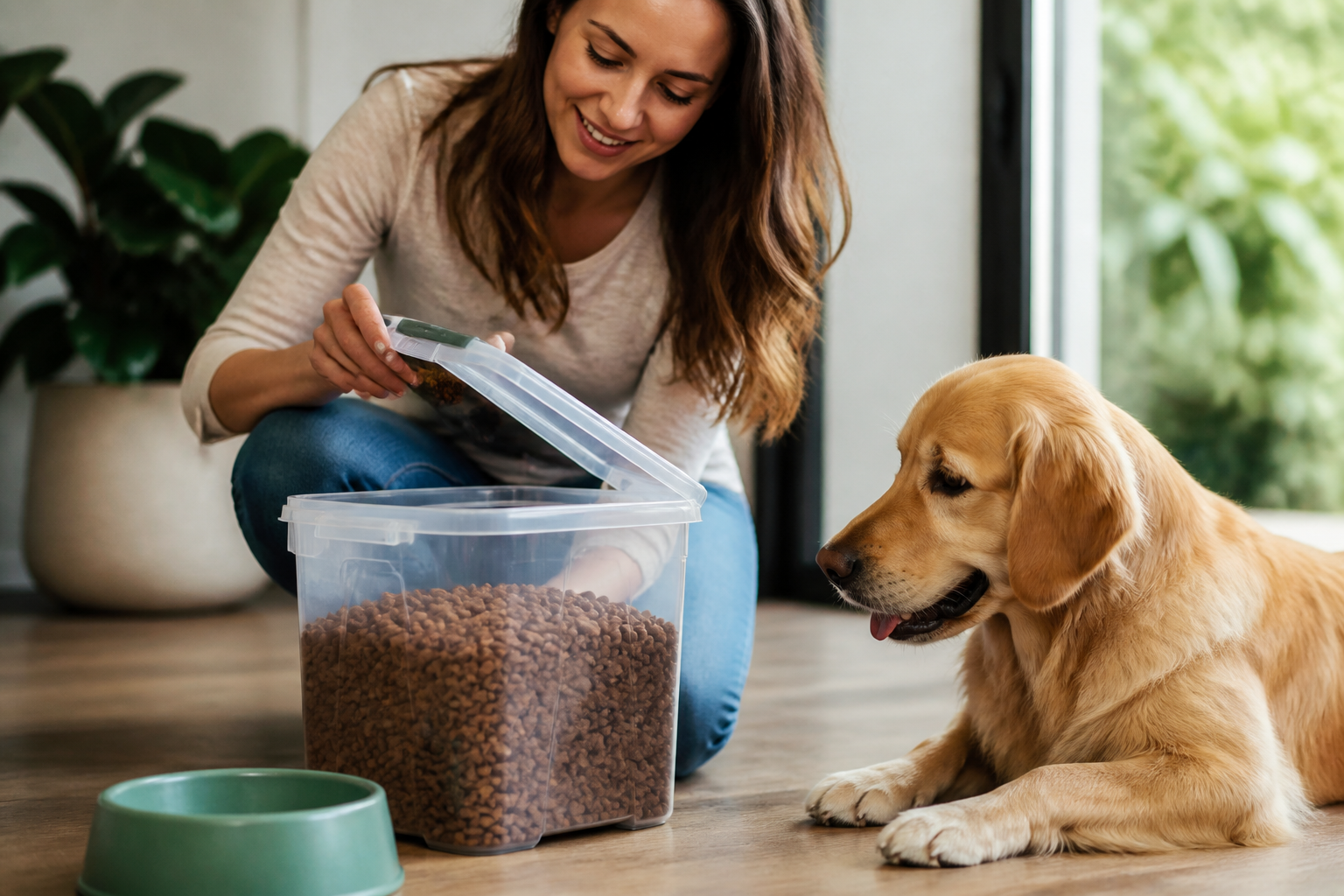
When you pour food into a plastic bin, the oils from the kibble eventually coat the sides of the container. These leftover oils can turn rancid very quickly. If you do not scrub the bin with hot, soapy water between every single bag, the old, rancid oils will contaminate the new, fresh food. For supplies that can help organize your feeding area, browse our dog food storage collection.
There is another practical reason to keep the bag. If there is ever a product recall, you will need the lot number and the "best by" date. This information is printed on the bag, not on your plastic bin. Having this data handy can be vital if your dog shows signs of illness and you need to check the safety of the batch.
Better Storage Methods
Step 1: Keep the food inside its original bag. / This preserves the protective barrier designed by the manufacturer.
Step 2: Squeeze out as much air as possible. / Roll the top of the bag down tightly after every meal.
Step 3: Use a heavy duty clip. / A strong bag clip or a large binder clip creates a better seal than just folding the top over.
Step 4: Place the entire bag into an airtight container. / This gives you a double layer of protection against air, moisture, and pests like ants or mice.
How to Tell if Dry Dog Food Has Gone Bad
Your dog's nose is much more sensitive than yours. If they suddenly stop eating a brand they usually love, they might be telling you something is wrong. Always pay attention to a change in appetite. It could be a sign of pickiness, but it could also be a warning that the food has turned.
The sniff test is your first line of defense. Rancid dog food often has a sour, paint like, or chemical odor. It will lack the rich, meaty smell of a fresh bag. You should also look for physical changes. If the kibble feels oily to the touch or looks darker than usual, the fats may have oxidized.
Mold is another serious concern, especially in humid climates. Mold can look like white or grey fuzz, but it can also appear as a fine dust on the kibble. Do not try to pick out the moldy bits. If you see mold in one part of the bag, the entire bag is contaminated and must be thrown away.
Vet Tip: Feeding spoiled or moldy food can lead to mycotoxin poisoning or bacterial infections like Salmonella. If your dog experiences vomiting, diarrhea, or lethargy after eating, contact your veterinarian immediately for a checkup.
Health Risks of Expired or Stale Food
Feeding stale food is not just about a bad taste. It can have real consequences for your dog's health. The most immediate risk is a lack of nutrition. Vitamins like A and E are very sensitive to oxygen. If these vitamins break down, your dog is not getting a complete and balanced diet. This can lead to a dull coat, dry skin, and a weakened immune system over time.
Bacteria can also thrive in old food, especially if moisture gets into the bag. Salmonella and E. coli are the most common culprits. These can make your dog very sick and can even be passed to the humans in your household. This is why washing your hands after handling dog food is always a smart move.
If your dog has a sensitive stomach or a chronic health condition, the risks are even higher. Some dogs require prescription diets to manage issues like kidney disease or food allergies. Our pet pharmacy offers specialized prescription pet foods. Because these diets are formulated for specific medical needs, keeping them fresh is even more critical for your pet's ongoing wellness.
Quick Answer: Opened dry dog food typically lasts 4 to 6 weeks. After this point, the nutritional value drops and the risk of the fats going rancid increases significantly.
Choosing the Right Bag Size
It is tempting to buy the 40 pound bag to save ten dollars. However, if you only have one small dog, that bag might last you three or four months. By the time you get to the bottom, you are feeding your dog stale, low nutrient biscuits.
To choose the right size, look at the feeding guidelines on the back of the bag. Calculate how many cups your dog eats per day. Then, check the total weight of the bag. Most brands provide an estimate of how many cups are in the bag. If the math shows the bag will last more than six weeks, buy a smaller size.
Buying smaller bags more frequently ensures your dog always gets fresh food. We offer our Autoship programme that makes this easy to manage. You can schedule regular deliveries of smaller bags so you never run out, and the food stays within that ideal six week window. This also saves you the physical strain of carrying massive bags that take up too much space in your pantry.
Managing Multiple Pets and Flavors
If you have multiple dogs on different diets, storage becomes even more complex. It is important to label your containers clearly if you are using the "bag in a bin" method. Never mix different brands or formulas in the same container. This can lead to cross contamination, which is a problem if one of your dogs has a specific allergy.
Some owners like to rotate flavors to keep their dogs interested. If you do this, avoid having multiple bags open at the same time. Open one bag, finish it within the six week limit, and then open the next flavor. This keeps the rotation fresh and prevents three different bags from all going stale at once. If your dog becomes reluctant to eat dry food, our tips for getting dogs to eat dry food may offer useful ideas.
If you have a dog that is a very light eater, consider buying the smallest bags available. You might even look into brands that offer individual portion pouches. These are sealed until the moment you use them, ensuring every single bite is as fresh as the manufacturer intended.
Common Storage Myths
There are several myths about dog food storage that can actually lead to faster spoilage. One common belief is that freezing dry dog food is a good way to keep it fresh for months. While freezing can slow down fat oxidation, it introduces a new problem: moisture. When you take the food out of the freezer, condensation can form inside the bag. This moisture can lead to mold growth very quickly.
Another myth is that "natural" preservatives are not as effective as synthetic ones. While natural preservatives like tocopherols (Vitamin E) or rosemary extract have a shorter shelf life than chemicals like BHA or BHT, they are very effective for that four to six week window. If you prefer natural ingredients, you just have to be more diligent about your storage habits.
Some people believe that a garage is a fine place for food if the bin is airtight. However, garages are usually the hottest part of a home in the summer and the coldest in the winter. These extreme temperature swings are hard on the stability of the food. Always try to find a spot inside your home where the temperature stays consistent.
The Role of the Food Bowl
Storage does not stop at the bag. The bowl you use and how you clean it also matters. If you "top off" your dog's bowl without washing it, you are leaving old oils and bacteria behind. These can contaminate the fresh kibble you just poured.
Try to get into the habit of washing your dog's bowl daily with hot water and dish soap. This prevents the buildup of a biofilm called "slime," which is a colony of bacteria. Stainless steel or ceramic bowls are better than plastic. Plastic bowls can develop tiny scratches over time where bacteria like to hide.
Also, avoid leaving food out all day. This is called free feeding. When food sits in a bowl for twelve hours, it is exposed to the air and any pests in your home. It can also attract fruit flies or pantry moths. Set a meal schedule, let your dog eat for 15 to 20 minutes, and then pick up the bowl. For another perspective on feeding choices, read our guide to dry and wet dog food.
Bottom line: Proper storage is a cycle that goes from the store shelf to the airtight bin and finally to a clean bowl.
Cleaning Your Storage Gear
If you use a secondary container, you must clean it regularly. Do not just dump a new bag of food into a bin that still has crumbs from the previous bag. Those crumbs are likely several weeks old and are on the verge of turning rancid.
Once a month, empty your storage bin and wash it thoroughly. Use a mild detergent and make sure the container is completely dry before putting a new bag inside. Any lingering moisture will be trapped in the bin and can cause the new food to rot.
If you use a scoop to measure your dog's food, wash that once a week as well. Your hands have oils and bacteria that transfer to the scoop, and the scoop transfers them to the food. Keeping your gear clean is a simple step that goes a long way in maintaining food safety.
FAQ
Is it safe to feed dog food past the expiration date?
It is generally not recommended to feed food past the "best by" date printed on the bag. While it may not be immediately toxic, the nutritional quality will have dropped significantly. The fats are also much more likely to be rancid, which can cause stomach upset.
Can I mix old kibble with a fresh bag to save money?
You should avoid mixing old kibble with a new bag. The older food can introduce rancid oils and bacteria to the fresh batch, causing the entire container to spoil faster. Finish the old bag completely, wash the container, and then start the new one.
Does grain free dog food spoil faster than grain inclusive food?
The spoilage rate is usually determined more by the fat content and the preservatives used than the presence of grains. However, some grain free foods use higher levels of fish oils or animal fats, which can oxidize quickly. Always stick to the six week rule regardless of the grain content.
What should I do if I find bugs in my dog's food?
If you find weevils, moths, or ants in the food, you should discard the entire bag. Insects can carry bacteria and their waste products can contaminate the kibble. To prevent future infestations, ensure your storage container has a high quality airtight seal.






