
 Save 15% on your 1st Autoship learn more

 Email us
 Live Chat
 FAQs
FAQs





Introduction
You are standing in your kitchen holding a new 16 oz bag of freeze-dried food and noticing how light it feels. If you are used to heavy bags of traditional kibble, the weight can be confusing. You need to know how many scoops are actually in that bag to plan your dog's meals and manage your budget. At BaxterBoo, we understand that precise measurements are the key to maintaining a healthy weight for your pet. This guide will explain the math behind freeze-dried portions and help you calculate your bag's yield. We will also cover why density varies between brands and how to measure these lightweight morsels correctly. Understanding these numbers ensures you never run out of food unexpectedly.
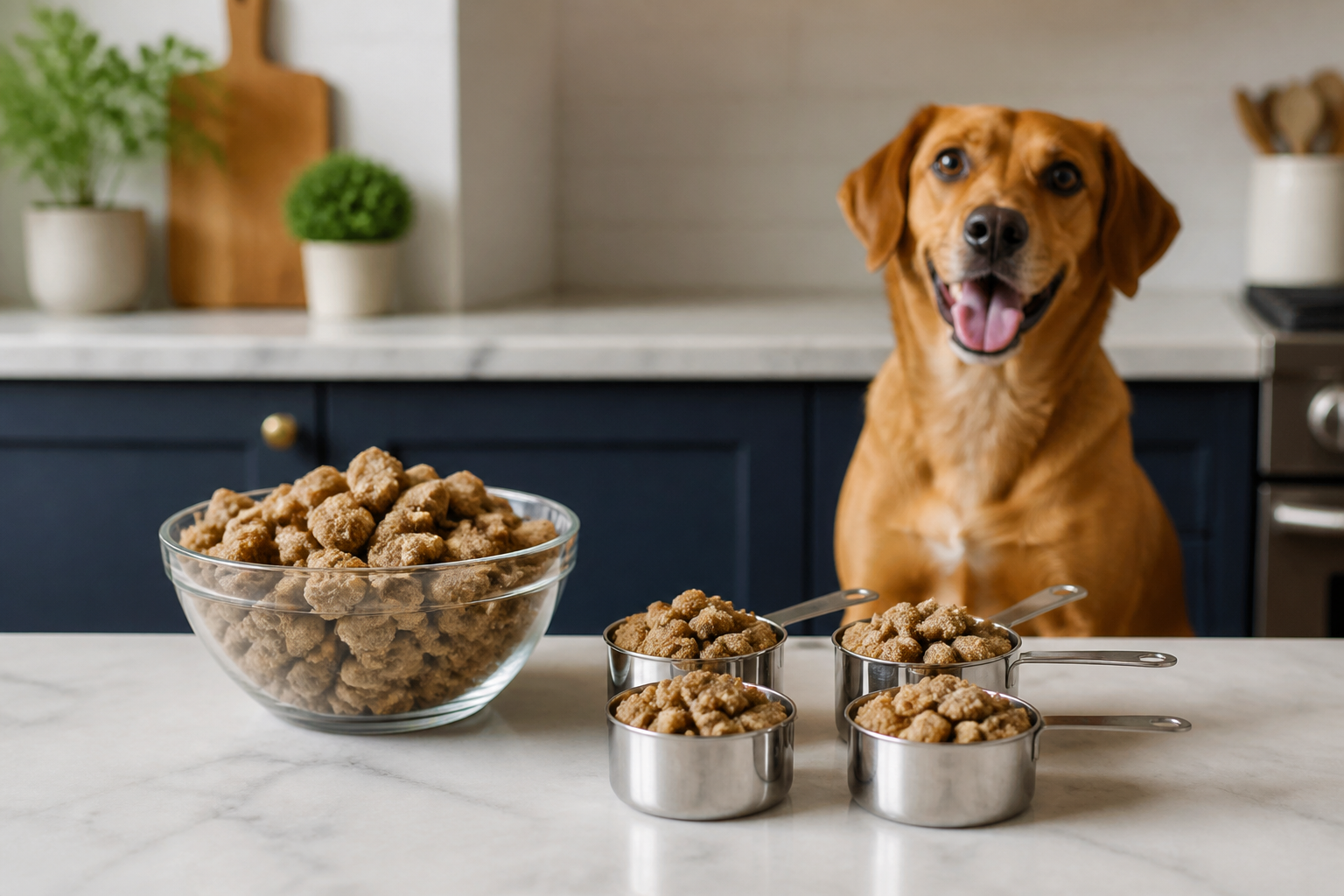
Quick Answer: A 16 oz bag of freeze-dried dog food typically contains between 8 and 10 cups. This is because the freeze-drying process removes moisture and makes the food much lighter and more voluminous than standard kiln-dried kibble.
The Difference Between Weight and Volume
Many pet owners confuse weight ounces with fluid ounces. A standard measuring cup holds 8 fluid ounces of liquid. However, when measuring dry goods like dog food, the weight depends entirely on the density of the product.
Standard dry kibble is heavy and dense. In a traditional bag, 16 oz of weight usually equals about 4 cups of food. Freeze-dried food is different because the moisture has been removed. This leaves behind a light, airy structure. Because the food is less dense, it takes up more space in the bag. This is why 16 oz of weight results in roughly double the volume compared to kibble.
Calculating the Yield of a 16 oz Bag
While the exact number can vary by brand, most premium freeze-dried recipes follow a similar ratio. We see that many popular brands, such as Dr. Marty or Stella and Chewy's, produce about 8.5 to 9 cups per 1 pound bag. You can compare available options in our freeze-dried dog food collection.
If your dog eats one cup of food per day, a 16 oz bag should last you about nine days. If you use the food as a topper rather than a full meal, it will last significantly longer. Always check the specific calorie count on the back of your bag. Some formulas are more calorie-dense than others, which might change how much you need to scoop.
Estimating by Brand and Shape
- Small morsels or pellets: These pack more tightly and usually yield about 8 cups per 16 oz.
- Large nuggets or "patties": These have more air gaps and may yield closer to 10 cups per 16 oz.
- Crumbled or powdered formulas: These are the densest and might yield only 7 cups per 16 oz.
Key Takeaway: Always measure your freeze-dried food by volume using a dry measuring cup. A 16 oz bag provides a high volume of food despite its light weight.
Why Density Varies in Freeze-Dried Food
Not all freeze-dried foods are created equal. The ingredients used in the recipe play a major role in the final volume. For example, a recipe that is very high in organ meats and muscle meat will be denser than one with more vegetable fillers or fiber.
The freeze-drying process itself also impacts the size. This method locks the food in its original shape while pulling out the water. This prevents the shrinking that usually happens during traditional cooking. Because the food stays the same size but loses its water weight, you get more "food" per ounce of weight. This is one of the reasons freeze-dried food is considered a high-value, nutrient-dense option.
For another look at portioning and preparation, read our freeze-dried dog food feeding guide.
The Importance of Proper Measuring
Using the wrong measuring tool can lead to overfeeding or underfeeding. A liquid measuring cup with a spout is meant for water or oils. For dog food, you should use a nested dry measuring cup.
When you scoop freeze-dried food, do not pack it down into the cup. This can lead to giving your dog too many calories. Instead, scoop the food lightly and level it off at the top. This ensures your dog gets the exact amount of nutrition the manufacturer intended. If your dog has a sensitive stomach or specific health needs, precision is even more important.
Vet Tip: If your dog is managing a health condition like kidney disease or diabetes, consult your veterinarian about exact caloric needs. Our pharmacy offers prescription diets and medications for dogs with specialized medical requirements. Explore our pet pharmacy for dogs.
Feeding Directions and Rehydration
Most freeze-dried foods are designed to be rehydrated with warm water. This is an important step because it helps with digestion and keeps your dog hydrated. When you add water, the volume of the food will increase.
If the bag says to feed 1 cup per day, you should measure that 1 cup while the food is dry. Then, add the amount of water recommended on the packaging. Usually, this is a 1:1 or 2:1 ratio of food to water.
For additional ideas about adding moisture to meals, see our guide to wetting dry dog food.
Steps for a Perfect Meal
Step 1: Scoop the dry food. / Use a dry measuring cup to get the exact amount for your dog's weight. Step 2: Crumble if necessary. / Some larger nuggets benefit from being broken into smaller pieces for better water absorption. Step 3: Add warm water. / Use the ratio suggested on the bag and stir the mixture. Step 4: Wait for absorption. / Let the food sit for 3 to 5 minutes so it fully rehydrates before serving.
Managing Your Supply and Costs
Because freeze-dried food is a premium product, you want to make sure you are getting the best value. Buying in 16 oz bags is often more cost-effective than smaller 6 oz bags. However, you should only buy what your dog can eat within 30 to 60 days to ensure freshness.
At BaxterBoo, we offer several ways to make feeding high-quality food more affordable. Our Autoship programme provides recurring delivery so you never run out of food. It also gives you a discount on your first order and a free MVP Gold membership. This membership helps you earn rewards on every purchase.
You can also compare options from our selection of Stella & Chewy's products.
Bottom line: A 16 oz bag is a versatile size that offers roughly 9 cups of nutrient-dense food for your dog.
Summary of 16 oz Yields
To help you plan your shopping, here is a quick look at how many cups you can expect from different bag sizes.
| Bag Weight | Approximate Cup Count | Estimated Days of Food (for 1 cup/day) |
|---|---|---|
| 6 oz | 3 to 3.5 cups | 3 days |
| 16 oz (1 lb) | 8 to 10 cups | 9 days |
| 32 oz (2 lbs) | 17 to 20 cups | 18 days |
Remember that these are averages. Always refer to the specific feeding chart on your bag, as calorie counts per cup vary between proteins like beef, chicken, or fish.
For more information about serving freeze-dried meals, read our guide to feeding freeze-dried dog food.
FAQ
Is 16 oz of freeze-dried food the same as 2 cups?
No, 16 oz of weight is much more than 2 cups of volume for freeze-dried food. Because the food is very light, 16 oz of weight actually fills about 8 to 10 cups. You should always use a dry measuring cup to ensure you are following the feeding guidelines on the bag.
Should I measure the food before or after adding water?
You should always measure the food while it is still dry. The feeding guidelines on the back of the bag are based on dry measurements. Adding water increases the volume and weight of the food significantly, so measuring after rehydration would lead to underfeeding your dog.
How many calories are usually in a cup of freeze-dried food?
The calorie count varies by brand, but many freeze-dried foods contain between 250 and 300 calories per cup. This is often more concentrated than standard kibble. Because it is so nutrient-dense, your dog may require a smaller volume of food than they did on a traditional diet.
Does a 16 oz bag of freeze-dried food last as long as a 16 oz bag of kibble?
A 16 oz bag of freeze-dried food will actually last longer because it contains more cups of food. While a pound of kibble is only about 4 cups, a pound of freeze-dried food is closer to 9 cups. This means you get more individual meals out of the same weight of freeze-dried food.






