
 Save 15% on your 1st Autoship learn more

 Email us
 Live Chat
 FAQs
FAQs





Introduction
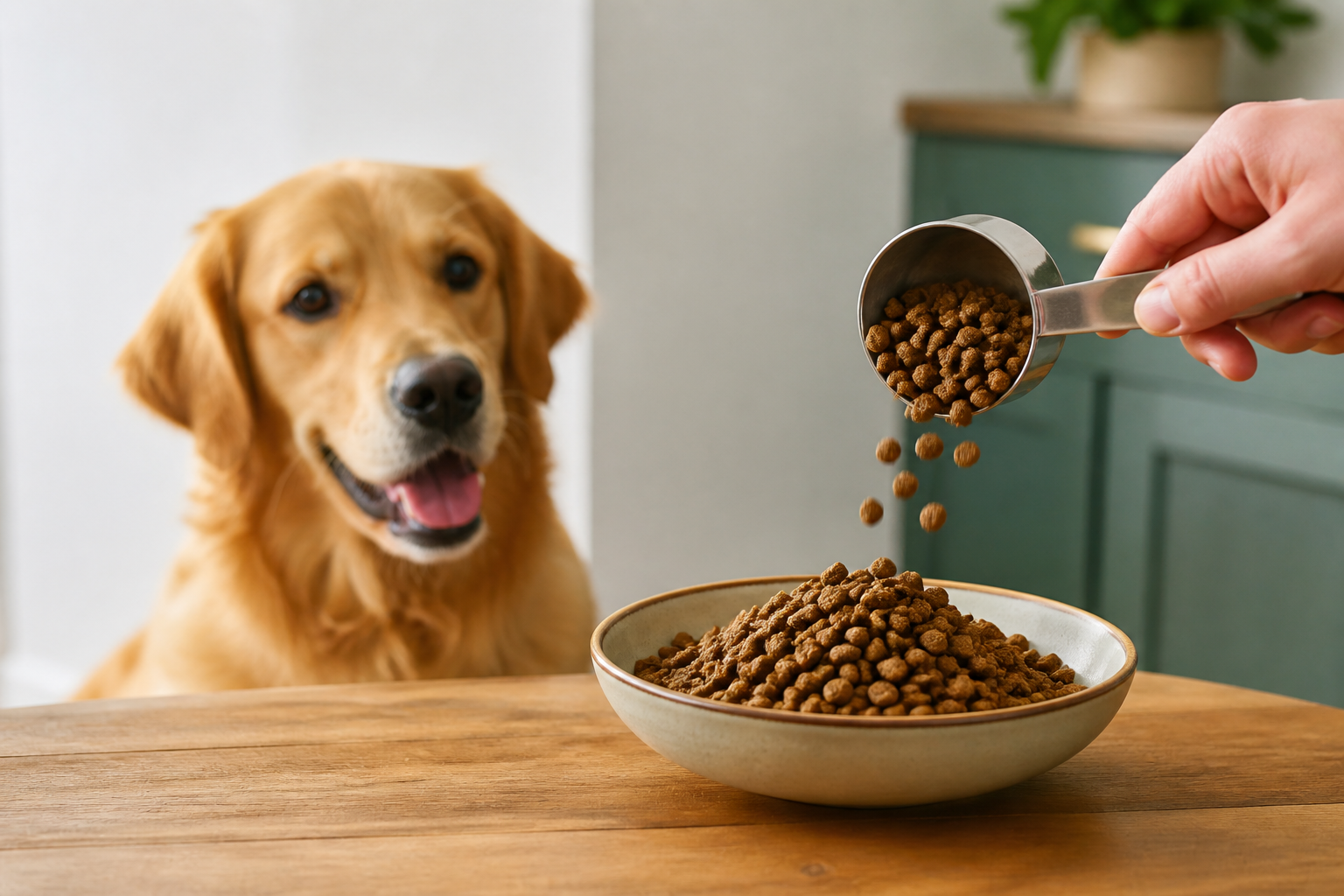
You are standing in the pantry or looking at a fresh delivery and wondering how long that bag will actually last. Measuring by the scoop is the easiest part of your daily routine. However, dog food is sold by weight, which can make budgeting and meal planning a bit of a guessing game. If you are comparing options, our dry dog food category is a good place to start. Understanding how weight translates to volume helps you manage your dog's calories and your household expenses. This guide will help you master the math behind the bowl while accounting for different kibble sizes and shapes. We will explain the standard conversions and why some brands seem to disappear from the bag faster than others. Getting your portions right is one of the most effective ways to support your dog's long term wellness.
Quick Answer: On average, one pound of dry dog food contains approximately 3 to 4 cups of kibble. This estimate applies to standard adult maintenance diets, but dense performance foods or lightweight, airy kibbles can vary significantly from this baseline.
The Science of Weight versus Volume
It is common to confuse weight ounces with fluid ounces. A standard measuring cup holds 8 fluid ounces of liquid. However, dry dog food is measured by weight in pounds and dry ounces. Because kibble is not a liquid, its weight depends entirely on its density. If you fill a cup with lead, it weighs much more than a cup filled with feathers.
The same rule applies to pet food. A heavy, meat-first kibble like our Orijen selection is often denser than a budget brand filled with corn or wheat. This means a single cup of premium, high-protein food might weigh 4.5 ounces. A cup of a lighter, "weight management" formula might only weigh 3 ounces. This is why the 3 to 4 cup rule is a helpful estimate but not a universal law.
Why Kibble Measurements Vary by Brand
Every brand uses a different recipe and manufacturing process. These choices impact how much space the food takes up in your measuring cup. If you switch from one brand to another, you might find that your usual scoop is suddenly providing too many or too few calories.
Kibble Density and Ingredients
The ingredients listed on the back of the bag determine the weight. Meat meals and fats are heavy. Grains and plant fibers are often lighter. Performance formulas designed for active dogs are usually very dense. They pack a lot of energy into a small volume. Conversely, weight-management diets often use "air" or extra fiber to help a dog feel full. You might feed more cups of a light food to reach the same weight as a dense food.
Size and Shape
The physical shape of the kibble creates air pockets in your measuring cup. Small, round pellets (often found in small-breed formulas) pack together tightly. There is very little empty space between the pieces. Large, irregularly shaped kibble like stars, triangles, or large discs creates large gaps. When you scoop a cup of large-breed kibble, you are often measuring a significant amount of air along with the food.
Processing Methods
Most dry dog food is made through extrusion. This process uses heat and pressure to "pop" the kibble like cereal. The more a kibble is puffed, the lighter it becomes. Some brands like our Acana selection or Lotus use baking or air-drying. These methods do not puff the food as much. Baked kibble is often much heavier and smaller than extruded kibble. You may find that a pound of baked food looks like a much smaller pile than a pound of standard kibble.
Key Takeaway: Density is the most important factor in your measurements. Always check the weight listed on the bag and compare it to the calorie count per cup to understand the true value of the food.
Dog Food Bag Size Conversion Chart
Most owners buy food in standard bag sizes. Knowing roughly how many cups are in each bag helps you decide which size to buy and how often to set up your deliveries. Our Autoship article is a good next step if you want to make repeat orders easier.
| Bag Weight (Pounds) | Estimated Total Cups | Estimated Days (2 Cups/Day) |
|---|---|---|
| 5 lb Bag | 15 to 20 cups | 7 to 10 days |
| 12 lb Bag | 36 to 48 cups | 18 to 24 days |
| 15 lb Bag | 45 to 60 cups | 22 to 30 days |
| 25 lb Bag | 75 to 100 cups | 37 to 50 days |
| 30 lb Bag | 90 to 120 cups | 45 to 60 days |
Note: These are estimates based on a standard density of 3.5 cups per pound.
How to Read a Dog Feeding Chart
Every bag of food we carry at BaxterBoo includes a feeding chart. These charts are required by law, but they can be confusing. Most charts list a weight range for your dog and a corresponding amount of food in cups.
It is important to remember that these numbers represent the total amount for the entire day. If the chart says 2 cups and you feed your dog twice a day, you should give 1 cup in the morning and 1 cup in the evening. Many owners make the mistake of feeding the full amount at every meal. This can quickly lead to unwanted weight gain.
Vet Tip: Feeding charts are based on the needs of an average, intact adult dog with moderate activity. If your pet is spayed or neutered, their caloric needs may be 20 to 30 percent lower than the chart suggests. Always consult your veterinarian to determine the exact caloric intake for your dog, especially if they are managing health issues like diabetes or joint pain. If your vet recommends a therapeutic formula, our prescription dry dog food option is one example of a specialized diet.
Factors That Change Your Dog's Needs
The number of cups you feed should change as your dog's life changes. No single measurement stays correct forever.
- Age: Puppies need significantly more calories per pound of body weight than adults to support growth. Senior dogs often have slower metabolisms and require fewer calories to maintain a healthy weight.
- Activity Level: A dog that hikes five miles a day needs more fuel than a dog that enjoys short walks around the block.
- Life Stages: Pregnant or nursing dogs require a massive increase in calories. This is a time when the "cups per pound" math becomes vital for the mother's health.
- Environment: Dogs kept outdoors in cold weather burn more calories just to stay warm. You may need to increase their portions during the winter months.
Tools for Accurate Feeding
If you want to be as precise as possible, your choice of tools matters. Using a random coffee mug or a plastic stadium cup will lead to inconsistent portions.
The Kitchen Scale
The most accurate way to measure food is by weight. Instead of scooping, place the bowl on a digital scale and pour the kibble until you reach the target weight in grams or ounces. This eliminates the issues caused by kibble shape and air pockets. Many professional trainers and veterinarians recommend this method for dogs on a strict weight-loss plan.
Dry Measuring Cups
If you prefer using a scoop, use a standard dry-ingredient measuring cup. These are designed to be leveled off at the top. Liquid measuring cups (the glass ones with a spout) are harder to use for dry food. They often lead to "over-scooping" because there is no flat edge to level the kibble.
Consistent Scooping Technique
If you use a scoop, try to be consistent. A "heaping" cup can contain 20 percent more food than a "level" cup. Over the course of a week, those extra kibbles add up to an entire extra meal. For a small dog, this is enough to cause significant weight gain over time.
- Measuring Checklist:
- Use a dedicated dry measuring cup.
- Level the kibble off with a flat edge.
- Do not pack the kibble down into the cup.
- Check the bag for the weight of a single cup (usually listed in grams).
- Periodically weigh a "scoop" on a scale to check your accuracy.
The Importance of Freshness and Storage
Knowing how many cups are in a pound also helps you manage food freshness. You might be tempted to buy a massive 40-pound bag to save money. However, once a bag of dry food is opened, the fats begin to oxidize. This can lead to a loss of nutritional value and a change in flavor that makes your dog picky.
Most experts recommend finishing a bag of dog food within 30 to 45 days of opening. If your dog only eats one cup a day, a 30-pound bag will last about 100 days. This is too long. If you want more storage tips, our guide to dry dog food freshness is a helpful follow-up. In this case, buying two 15-pound bags is a better choice for your dog's health.
We recommend keeping the kibble inside its original bag. Then, place that bag inside an airtight container. The bags are designed to keep oxygen out and fats in. Pouring the food directly into a plastic bin can lead to rancidity as oils seep into the plastic over time.
Transitioning Between Different Foods
When you switch brands, the "cups per pound" math changes. Even if the weight of the bags is the same, the nutrient density might be different. If you are comparing portions for an active dog, our daily dry food feeding guide can help you keep the numbers in perspective.
Step 1: Compare the calorie counts. / Look for the "kcal/cup" listing on both the old and new bags. Step 2: Start the transition slowly. / Mix 25 percent of the new food with 75 percent of the old food for the first few days. Step 3: Adjust based on volume. / If the new food is 400 calories per cup and the old food was 350, you will need to feed slightly less of the new food. Step 4: Watch your dog's weight. / Check their body condition every week for a month after a transition.
Feeding for Weight Management
Obesity is a common health concern for dogs in the United States. It can lead to heart disease, mobility issues, and a shorter lifespan. If your dog needs to lose weight, accuracy in the kitchen is your best tool.
When a veterinarian prescribes a weight-loss plan, they usually give a daily calorie target. Knowing how many cups of food reach that target requires knowing the weight of the food. If you are struggling to help your dog slim down, we carry several weight management formulas from brands like Royal Canin and Farmina. For dogs with more severe needs, our pharmacy offers prescription weight management diets through our partnership with Pet's Choice.
Bottom line: Accuracy in measuring kibble by weight or consistent volume is the most effective way to prevent overfeeding and maintain a healthy weight.
Budgeting for Your Dog's Meals
By calculating the cups per pound, you can determine your daily cost of feeding. This is helpful when comparing a "cheaper" bag of food to a premium one. Often, premium foods are denser and higher in calories. You might find that you need to feed two cups of a budget brand but only one cup of a premium brand.
In many cases, the premium brand actually costs less per day because the bag lasts twice as long. At BaxterBoo, we aim to provide value by offering high-quality brands that provide more nutrition per scoop. Our MVP Rewards programme also helps you earn points on every bag, which can be used for future savings on treats or toys.
Conclusion
Understanding how many cups are in a pound of dog food is more than just a math problem. It is a fundamental part of being a responsible pet owner. While 3 to 4 cups is the standard average, factors like kibble shape, density, and processing change the results for every brand. By using consistent measuring tools and checking the feeding guidelines on the bag, you can ensure your dog stays at an ideal weight.
Remember to monitor your dog's body condition regularly and adjust their portions as they age or change their activity levels. Whether you are managing a growing puppy or a senior dog with joint needs, the right amount of food makes all the difference. If your dog requires a specialized diet for a health condition, explore our pharmacy for prescription options. For everyone else, our premium dry dog food collection and the convenience of our Autoship article make it easy to keep the pantry stocked.
FAQ
Does a pound of small-breed kibble have more cups than large-breed kibble?
Generally, yes, a pound of small-breed kibble often results in more cups because the smaller pieces pack together more tightly with less air between them. Large-breed kibble is usually bigger and more irregularly shaped, creating air pockets that take up volume without adding weight. This means you might get 4 cups in a pound of small kibble and only 3 cups in a pound of large kibble.
Should I use a different measuring cup for wet and dry food?
It is best to use a dry measuring cup for kibble and a liquid measuring cup for water or wet food toppers. Dry measuring cups allow you to level off the top for a precise volume. Liquid cups are designed to be filled to a specific line, which is much harder to do accurately with solid pieces of kibble.
Why does my new bag of food look less full than the last one?
Bags are filled by weight, not by volume. If the manufacturer changed the kibble shape or if this specific batch was extruded to be denser, the food will take up less space in the bag. Even though it looks like there is less food, the weight and total calories in the bag remain the same.
How do I know if I am feeding too many cups?
The best way to tell is by checking your dog's body condition. You should be able to feel their ribs easily under a thin layer of fat, and they should have a visible waist when viewed from above. If the ribs are hard to find or the waist is gone, you are likely feeding too many cups and should consult your vet about a weight-management plan.






