
 Save 15% on your 1st Autoship learn more

 Email us
 Live Chat
 FAQs
FAQs





Introduction
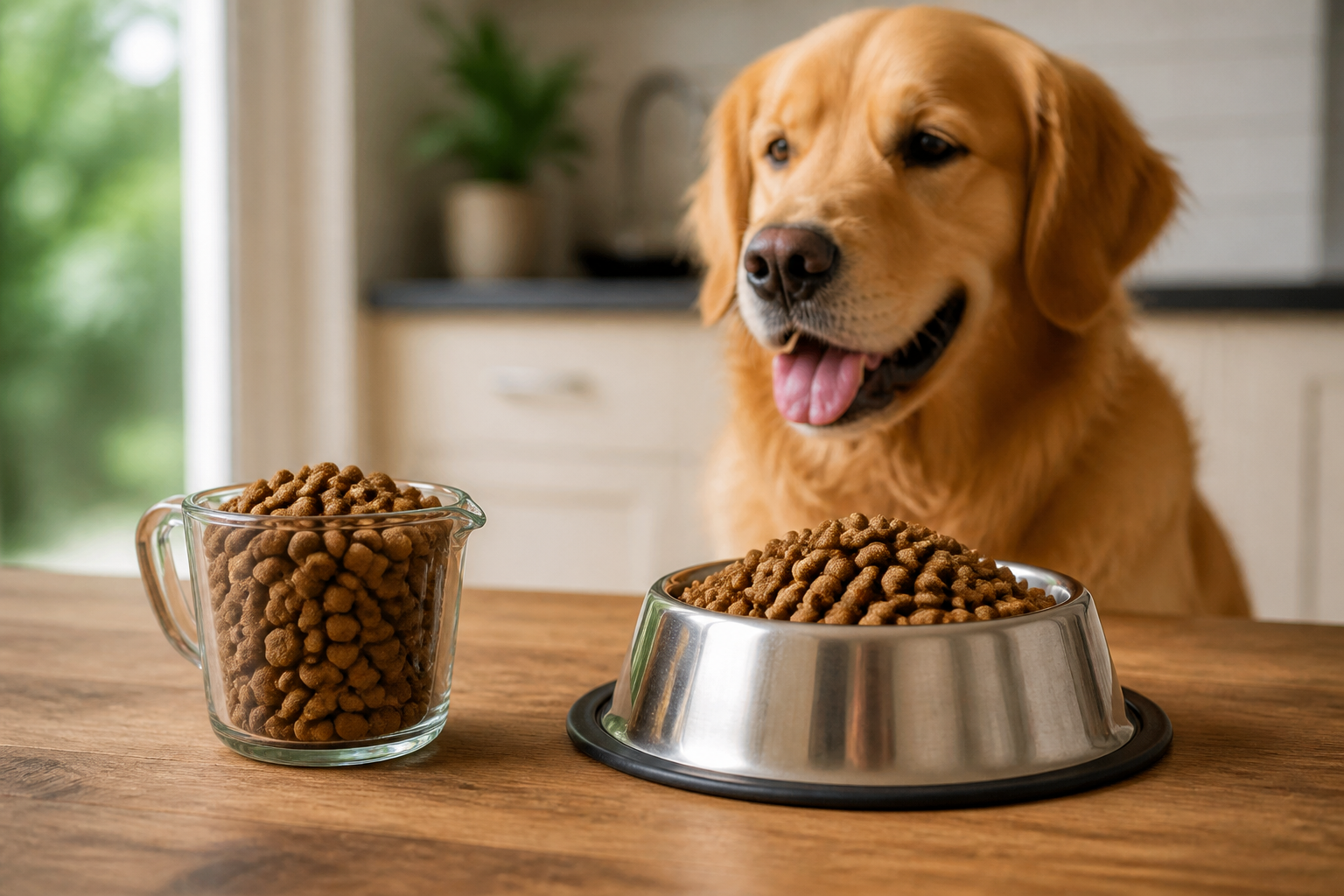
You are standing in your kitchen, peering into the bottom of a heavy bag of kibble. You need to know if there is enough left for dinner, or if a trip to the store is in your immediate future. Most dog food bags list their contents by weight in pounds, but the feeding instructions on the back are almost always given in cups. This disconnect makes it difficult to know exactly how much food you are buying or how long a bag will last. At BaxterBoo, we hear this question from pet owners every day. We want to help you take the guesswork out of mealtime by providing clear, practical math for your dog's diet. This guide covers standard weight-to-volume conversions, why different brands vary, and how to choose the right measuring tools for accuracy. Understanding these numbers helps you manage your budget and, more importantly, your dog’s health.
Quick Answer: On average, one pound of dry dog food contains approximately 4 cups of kibble. This number can range from 3 to 5 cups depending on the density, size, and shape of the individual pieces.
The Standard Rule of Thumb
Most standard dry dog foods follow a consistent weight-to-volume ratio. For a typical medium-sized kibble, you can safely assume that one pound of food equals 4 level cups. This is the most common baseline used by manufacturers when they design their packaging and feeding charts. If you are using a standard 8-ounce measuring cup, the math is relatively straightforward.
However, it is important to remember that weight and volume are not the same thing. A cup measures space, while a pound measures mass. Think of the difference between a cup of lead and a cup of feathers. They take up the same amount of room in a measuring cup, but their weights are drastically different. Dog food works the same way. Some formulas are airy and light, while others are dense and heavy.
Dog Food Bag Size Conversion Chart
To help you plan your shopping trips and storage needs, we have calculated the estimated number of cups in the most common bag sizes. These estimates use the standard 4-cups-per-pound rule. If you are comparing formulas, browse our dry dog food category for available options.
| Bag Weight (Pounds) | Total Estimated Cups | Estimated Days (2 Cups/Day) |
|---|---|---|
| 5 lb Bag | 20 Cups | 10 Days |
| 10 lb Bag | 40 Cups | 20 Days |
| 15 lb Bag | 60 Cups | 30 Days |
| 20 lb Bag | 80 Cups | 40 Days |
| 30 lb Bag | 120 Cups | 60 Days |
| 40 lb Bag | 160 Cups | 80 Days |
Key Takeaway: Using 4 cups per pound is a reliable starting point for most standard kibbles. Always check the specific density of your brand for more precise calculations.
Why Kibble Density Changes the Math
The reason you might find 3 cups in a pound of one brand and 5 cups in another comes down to density. Several factors influence how much space a pound of food occupies.
Kibble Shape and Air Pockets
If you look closely at different brands, the shapes vary wildly. Some are round, some are triangular, and some are shaped like small stars. Irregularly shaped kibble creates more air pockets in your measuring cup. Larger kibble for giant breeds often has more space between the pieces. Because there is more air in the cup, it takes more cups to reach a full pound of weight.
Ingredients and Formulation
The ingredients themselves play a huge role in weight. Meat-heavy diets, like those from Stella & Chewy's or Orijen, tend to be denser than grain-heavy diets. High-fiber foods or "light" formulas designed for weight loss are often puffed up with air during the manufacturing process. This allows the dog to feel full while consuming fewer calories. In these cases, you might find that a pound of food contains 5 or even 6 cups.
The Extrusion Process
Most dry dog food is made through a process called extrusion. The dough is cooked under pressure and pushed through a die. When it hits the air, it expands. The amount of expansion determines the final density. A "hard" kibble that does not expand much will be very heavy for its size. A "soft" or airy kibble will be much lighter.
How to Calculate Your Daily Needs
Knowing how many cups are in a bag is only half the battle. You also need to know how many cups your dog needs each day. This allows you to determine exactly how long a bag will last before it goes stale or runs out. For additional guidance, read how many cups of dry dog food your dog may need per day.
Step 1: Check the feeding guidelines. / Locate the chart on the back of your food bag. Find your dog’s target weight and identify the suggested daily volume.
Step 2: Adjust for activity level. / Highly active dogs or working breeds may need more than the baseline. Senior dogs or less active pets often require less.
Step 3: Account for treats. / Treats should never exceed 10% of total daily calories. If you give several treats a day, reduce the kibble amount slightly.
Step 4: Do the final math. / Divide the total number of cups in your bag by your dog’s daily portion. This tells you exactly how many days the bag will last.
Vet Tip: If your dog is struggling with weight gain or loss, stop measuring by volume and start measuring by weight. A small kitchen scale is much more accurate than a measuring cup for managing calorie intake.
Accuracy in Measuring Tools
The tool you use to scoop your dog's food matters more than you might think. Many owners grab whatever is nearby, such as a coffee mug or a plastic stadium cup. These are not standardized measurements.
Liquid vs. Dry Measuring Cups
In the world of cooking, there is a difference between liquid and dry measuring cups. Liquid cups have a spout and are designed to be read at eye level. Dry cups are meant to be filled to the top and leveled off. For kibble, always use a dry measuring cup. This ensures you are not overfilling the cup by a quarter-inch every time, which can add up to hundreds of extra calories over a week.
The Problem with Scoops
Many plastic pet food scoops are marked with lines for half-cups and full cups. Over time, these markings can fade. Furthermore, the shape of the scoop can make it difficult to get a level measurement. We recommend using a dedicated, stainless steel measuring cup set. This provides a consistent, repeatable volume every single day. For more detail, see this guide to how much a cup of dry dog food weighs.
Managing Your Food Inventory
Buying the largest bag available is often the most cost-effective choice. However, bigger is not always better for your dog. Once a bag of dog food is opened, the fats inside begin to oxidize when exposed to air. This can lead to a loss of nutritional value and may even cause the food to go rancid.
We suggest purchasing a bag size that your dog can finish within 30 to 45 days. If you have a small dog, a 40-pound bag might last four months, which is far too long for the food to stay fresh. Use the cups-per-pound math to choose a bag size that fits that 30-day window. Our Autoship programme is a helpful way to time these deliveries so a fresh bag arrives exactly when you are reaching the bottom of the old one.
Bottom line: Choose a bag size based on how many cups your dog eats in a month, not just the price per pound.
Health, Weight, and Prescription Diets
Maintaining a healthy weight is one of the best things you can do for your dog's longevity. Obesity in pets is a growing concern that can lead to joint issues, heart disease, and diabetes. Precise measurement is the first line of defense against weight gain.
If your veterinarian has prescribed a specific weight-management diet, such as Farmina Vet Life, accuracy becomes even more critical. These formulas are carefully balanced for specific health needs. Our pet pharmacy offers a wide selection of prescription pet foods through our partnership with Pet's Choice. Whether your dog needs help with weight, allergies, or kidney health, we can help you get the right food delivered to your door.
Vet Tip: Always consult your veterinarian before making major changes to your dog's diet, especially if they have underlying health conditions. A vet can provide a specific calorie count that is more accurate than the general guidelines on a bag.
Calculating for Multiple Dogs
If you have a multi-dog household, the math gets slightly more complex. You should calculate the daily cup requirement for each dog individually based on their weight and activity level. Add these numbers together to find your daily household total.
For example, if you have a Lab that eats 3 cups a day and a Terrier that eats 1 cup a day, your total is 4 cups. Since we know a pound of food is roughly 4 cups, you will go through exactly one pound of food every day. In this scenario, a 30-pound bag will last exactly 30 days. This makes budgeting and inventory management much simpler.
The Role of Calories in the Math
While we talk about cups and pounds, your dog's body actually cares about calories. Every brand has a different calorie count per cup. This is why you cannot simply switch brands and keep the same measurement. For a closer look at portion planning, read this dry dog food feeding guide.
A high-density food might have 450 calories per cup, while a lighter food has only 300. If you switch from the light food to the dense food and keep using the same two-cup scoop, you are suddenly overfeeding your dog by 300 calories every day. This is a common way for dogs to pack on weight after a food change. Always re-calculate your measurements whenever you switch brands or formulas.
Value and Selection at BaxterBoo
Finding the right balance of quality and value is part of being a great pet owner. At BaxterBoo, we carry over 500 trusted brands, including NutriSource, Royal Canin, and Acana. We have been operating since 2006, and our team handpicks every product we stock. We believe in providing pet owners with the information they need to make the best choices for their animals.
Whether you are looking for a dense, grain-free kibble or a specialized prescription diet from our pharmacy, we are here to help. Our MVP Rewards programme allows you to earn points on every bag of food you buy, helping you save money while keeping your dog healthy. We also offer a hybrid model where you can shop online or visit our warehouse in Vernon Hills, Illinois.
Key Takeaway: Knowing the cups-per-pound ratio is the first step in mastering your dog's nutrition and your household budget.
Summary of Feeding Math
To wrap up, remember that the 4-cups-per-pound rule is a general guideline. Your specific results will depend on the brand you choose.
- Small, round kibble is usually denser and may have fewer cups per pound.
- Large, airy kibble will have more cups per pound.
- Standard bags (30 lbs) usually contain about 120 cups of food.
- Always use a dry measuring cup or a kitchen scale for the best results.
Keeping these figures in mind will help you avoid the frustration of running out of food at the worst possible time. It also ensures your dog stays at their ideal weight, which is the key to a long and active life.
FAQ
How many cups are in a 30-pound bag of dog food?
Most 30-pound bags contain approximately 120 cups of dry kibble. This estimate is based on the average density of 4 cups per pound. If the kibble is very large or oddly shaped, the bag might contain closer to 135 cups.
Is it better to measure dog food by weight or volume?
Measuring by weight with a kitchen scale is much more accurate than measuring by volume with a cup. Kibble can settle in the bag, and air pockets in a cup can lead to inconsistent portions. Weight ensures your dog gets the exact same amount of calories every single meal.
Does the brand of dog food change how many cups are in a pound?
Yes, the brand and specific formula significantly change the density of the food. High-protein, grain-free diets are often heavier and denser than budget-friendly brands that use more fillers. Always check the caloric density listed on the bag to adjust your portions.
How long will a 15-pound bag of dog food last for a medium dog?
A medium dog eating 2 cups per day will finish a 15-pound bag in about 30 days. This assumes the bag contains the standard 60 cups of food. If your dog is more active and eats 3 cups a day, the same bag will only last about 20 days.






