
 Save 15% on your 1st Autoship learn more

 Email us
 Live Chat
 FAQs
FAQs





Introduction
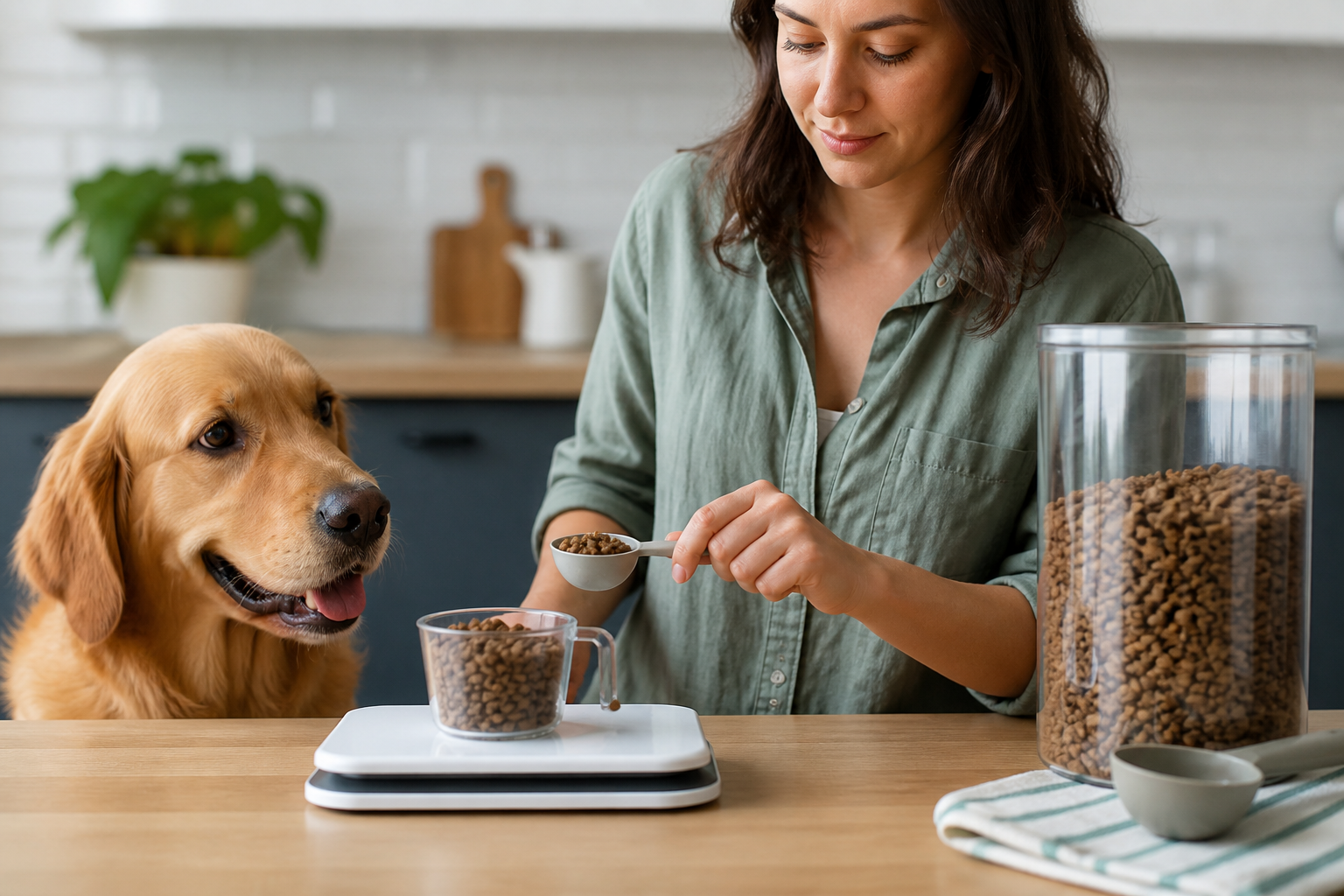
You reach into the bag with a plastic scoop, level it off as best you can, and tip it into the bowl. Your dog does a happy dance, and you feel confident that you have provided the exact amount recommended on the packaging. However, that simple "cup" of food can vary significantly in weight depending on the brand, the kibble shape, and even how hard you pack the scoop. At BaxterBoo, we see this struggle often when pet owners try to manage a dog's weight or follow a strict diet plan. Understanding how many grams are in that cup is the secret to moving from guessing to knowing. This guide covers why volume measurements fail, how to calculate grams for your specific brand, and why a kitchen scale is the best tool in your pantry. We will help you master the math of mealtime so your dog stays fit and healthy.
Quick Answer: On average, one standard 8-ounce measuring cup holds approximately 100 to 115 grams of dry dog food. However, this varies widely by brand. Dense or small kibble weighs more per cup than large, airy kibble.
Why a Cup Is Not Always a Cup
The term "cup" is one of the most confusing units in the pet food world. In the United States, a standard measuring cup is 8 fluid ounces. This is a measurement of volume, which is the amount of space something takes up. This works perfectly for water or oil because liquids have a consistent density. Dry dog food is different. Kibble comes in circles, triangles, stars, and large chunks.
When you fill a cup with large, heart-shaped kibble, there are many air pockets between the pieces. When you fill that same cup with tiny, round puppy kibble, the pieces settle much closer together. The volume remains one cup, but the weight in grams will be much higher for the smaller kibble. If you switch from a large-breed formula to a small-breed formula without adjusting your scoop, you might accidentally overfeed your dog by 20 percent or more.
Many pet owners also use non-standard containers. A "cup" might actually be an old coffee mug, a plastic stadium cup, or a yogurt container. These often hold 12 to 16 ounces, which leads to massive overfeeding. Even a slight daily surplus of calories can lead to weight gain over several months.
Calculating Average Grams per Cup
While every brand is different, there are some general rules of thumb for dry food weight. Most standard adult maintenance kibbles weigh between 95 grams and 105 grams per cup. Premium, high-protein foods that are more nutrient-dense often weigh closer to 110 or 120 grams per cup.
Key Takeaway: Never assume the weight of a new bag of food matches the old one. Always check the nutritional label for the weight in grams per cup to ensure your dog is getting the correct caloric intake.
To find the exact weight for your specific food, look at the back of the bag. Find the section labeled Calorie Content or Metabolizable Energy (ME). Most reputable brands like NutriSource, Acana, or Royal Canin will list the calories as "kcal/kg" and then provide a "kcal/cup" measurement.
If you have those two numbers, you can find the grams per cup with simple division:
- Find the kcal/kg (for example, 3,600).
- Find the kcal/cup (for example, 360).
- Divide the kg weight (1,000 grams) by the number of cups in a kg.
- In this example, 3,600 divided by 360 equals 10 cups.
- 1,000 grams divided by 10 cups equals 100 grams per cup.
Factors That Change Kibble Weight
Density is the primary factor that dictates how many grams fit in a cup. This is determined by the ingredients and the manufacturing process.
Moisture and Fat Content
Foods with higher fat content or slightly higher moisture levels tend to be heavier. Baked kibbles often have a different density than extruded kibbles. Extrusion is the process of "popping" the kibble under pressure, which can create a light, airy texture.
Kibble Shape and Air Gaps
The geometry of the food matters more than most people realize.
- Round kibble: Settles fairly tightly with minimal air gaps.
- Cross or Star shapes: Create large air pockets, resulting in a lighter cup.
- Large Breed Chunks: Large pieces often result in a lighter cup because they do not "pack" well.
- Small Breed Bits: These settle into every corner of the cup, making it very heavy.
Settling in the Bag
As a bag of food sits in your pantry or travels in a delivery truck, the kibble at the bottom can get crushed or settle more tightly. The "fines," or small crumbs at the bottom of the bag, are much denser than the whole kibbles at the top. If you scoop from the bottom, you are likely feeding more grams than if you scoop from the top.
The Health Impact of Measuring Errors
Precision is not just for professional trainers or veterinarians. It is a fundamental part of preventative health care. Obesity is the most common nutritional disorder seen in dogs today. It can lead to joint issues, diabetes, and a shortened lifespan.
When we talk about "a little bit extra," it sounds harmless. However, if your dog needs 100 grams of food but you accidentally scoop 110 grams, you are overfeeding by 10 percent every single day. For a small dog, that is the caloric equivalent of a human eating an extra hamburger every day.
Vet Tip: If your dog is struggling to lose weight despite following the feeding guide on the bag, switch to weighing the food in grams. If the weight persists, consult your veterinarian to rule out thyroid issues or to discuss a prescription weight management diet.
If your vet does recommend a specialized diet, we can help. Our pharmacy at BaxterBoo carries a variety of prescription pet foods through our partnership with Pet's Choice. These diets are specifically formulated to manage conditions like obesity, kidney disease, or food allergies. Having your dog's food weighed in grams makes it much easier for your vet to adjust the prescription as your dog progresses.
Transitioning from Scoops to a Scale
Using a digital kitchen scale is the only way to be 100 percent accurate. It eliminates the "human error" of heaping a scoop or failing to level it off. It also saves time once you get used to the rhythm of it.
Step 1: Place the bowl on the scale. Turn the scale on and ensure it is set to "grams."
Step 2: Use the tare function. This zeroes out the weight of the bowl so you are only measuring the food.
Step 3: Pour the food directly into the bowl. Stop exactly when you hit the target number of grams.
Step 4: Record the amount. If you are trying to help your dog lose weight, keep a log of the daily grams to share with your vet.
Using a scale also makes it easier to mix foods. If you use a topper like Stella & Chewy's meal mixers or The Honest Kitchen dehydrated base mix, you can weigh each component to the gram. This ensures the total caloric count remains consistent even when you vary the flavors.
Reading the Feeding Chart Correctly
Feeding charts on the back of the bag are meant as a starting point. They are generally based on un-neutered, active adult dogs living in temperate climates. Most "pet" dogs have lower caloric needs than the "average" dog used for these charts.
When you look at a chart, it will usually give a range, such as "1 to 1.5 cups for a 20-pound dog." This is a huge 50 percent difference. If you know that your food weighs 100 grams per cup, you now know that the range is actually 100 to 150 grams. You can start in the middle at 125 grams and adjust based on your dog's body condition.
Key Takeaway: Use the weight in grams to make small, incremental changes to your dog's diet. Adjusting by 5 or 10 grams is much more precise than trying to eyeball "an eighth of a cup."
For another perspective on volume, weight, and accurate portions, read our guide to how much a cup of dry dog food weighs.
Special Considerations for Life Stages
Different life stages require different levels of precision. Puppies are growing rapidly and need a lot of energy, but overfeeding can cause them to grow too fast. This is especially dangerous for large breed puppies, as it can lead to skeletal deformities. Weighing puppy food in grams ensures they get enough fuel for growth without the risks of excess weight.
Senior dogs often have slowing metabolisms. They may also have decreased mobility due to joint stiffness. For these dogs, every gram counts. Keeping them at a lean weight is the best thing you can do for their comfort. Products like Cosequin or other joint supplements work best when the dog is not carrying extra weight.
If you find that your senior dog is becoming picky or needs a very specific nutrient profile, we carry 500+ trusted brands at our dog food category. Whether you need a low-fat kibble or a high-protein grain-free option, we have curated the best selections for every stage of life.
Managing Multiple Pets
If you have a multi-dog household, the "cup" method is even more prone to failure. One dog might be an athlete while the other is a couch potato. If you use the same scoop for both, the couch potato will quickly become overweight.
By using grams, you can create a specific profile for each pet. You might feed the active dog 250 grams and the less active dog 180 grams. This level of detail is hard to achieve with volume scoops but very easy with a digital scale.
Bottom line: Weighing dog food in grams is the most reliable method to ensure your pet receives the exact nutrition they need for their specific lifestyle.
For additional guidance on daily portions and feeding routines, see our article about how much dry food to feed a dog.
How to Handle Dehydrated and Air-Dried Foods
Brands like Ziwi Peak or The Honest Kitchen are extremely dense compared to traditional kibble. Ziwi Peak air-dried food is almost all meat and organs with very little air. One cup of this food can weigh significantly more than a cup of standard kibble.
Because these foods are so nutrient-dense, the serving sizes are much smaller. When the serving size is small, a measurement error of just a few pieces of food can represent a large percentage of the total meal. For these premium foods, a scale is not just a suggestion; it is practically a requirement for proper feeding.
Our Autoship programme is a great way to ensure you never run out of these premium foods. You can set your delivery schedule based on the exact number of grams you feed per day. This prevents the "emergency trip to the store" where you might have to buy a different, less healthy brand that throws off your dog's digestive system.
Summary of Feeding Steps
To get the most out of your dog's diet, follow this routine. It takes less than a minute once you are set up.
- Check the bag for the kcal/kg and kcal/cup.
- Calculate the exact grams per cup for that specific bag.
- Buy a simple digital kitchen scale that measures in one-gram increments.
- Weigh every meal, including any toppers or mix-ins.
- Monitor your dog's rib cage and waistline weekly.
- Adjust the gram count up or down by 5 to 10 percent if their body condition changes.
By taking these steps, you are providing the best possible care for your dog. You are removing the guesswork and replacing it with a scientific approach to wellness. We have been helping pet owners with these kinds of practical solutions since 2006. Whether you are visiting our warehouse in Vernon Hills or ordering online, we are here to support your journey as a responsible pet owner.
FAQ
Why does my dog's food weigh less than the bag says it should?
Feeding guides are averages. The weight can change due to the kibble being broken during shipping or settling in the bag. Humidity can also affect the weight of dry food. If the weight is significantly off, you should contact the manufacturer to ensure the nutritional density is still correct for your pet's needs.
Can I just use a standard measuring cup instead of a scale?
You can use a standard 8-ounce kitchen measuring cup, but it will never be as accurate as a scale. Studies have shown that even veterinary professionals can be off by 20 percent when using a scoop. If your dog is at a healthy weight and stays there, a cup is fine. If you are managing a health condition or weight issue, use a scale.
How do I know if I am feeding too many grams?
The best way to tell is by looking at your dog. You should be able to feel their ribs easily without pressing hard, and they should have a visible waist when viewed from above. If the ribs are disappearing or the waist is widening into a tube shape, you should reduce the number of grams you feed at each meal.
Does the weight in grams change if I add water to the kibble?
Yes, adding water will increase the weight of the meal, but it does not change the calories. Always weigh the dry kibble first to get your base measurement. Once you have the correct grams of food, you can add as much water or broth as your dog likes without worrying about the extra weight on the scale.
Conclusion
Precision feeding is one of the most effective tools for extending your dog's life and improving their daily comfort. While a "cup" is a convenient shorthand, it is too inconsistent for serious health management. Moving to a gram-based system using a digital scale provides the accuracy your dog deserves. This method accounts for the density of premium brands and the unique shapes of different kibbles. At BaxterBoo, we recommend starting this habit as early as possible. It makes managing transitions between life stages or moving to prescription diets much smoother.
Key Takeaway: Grams measure mass while cups measure space. For a healthy dog, focus on the mass to ensure every calorie is accounted for.
If you are ready to start a more precise feeding routine, check out our selection of dog food and supplements. You can also sign up for the MVP Rewards programme to earn points on every bag of food you buy. For those managing specific health conditions, remember that our pet pharmacy is available for all your prescription diet needs.
FAQ
Is a "cup" of dog food always 8 ounces?
In the context of dog food, a "cup" usually refers to a standard 8-ounce measuring cup by volume. However, because dog food is a dry solid with varied shapes, the actual weight of the food in that cup is usually between 3 and 4.5 ounces (roughly 85 to 125 grams). Never assume a cup of food weighs 8 ounces, as 8 ounces is a measure of liquid weight, not dry kibble weight.
How many grams are in a cup of Royal Canin?
Royal Canin formulas vary in density, but many of their standard adult kibbles weigh approximately 95 to 100 grams per cup. Specific formulas like their weight management or puppy diets may differ. You should always check the "kcal/kg" and "kcal/cup" on the specific Royal Canin bag you are using to calculate the exact weight. You can also compare formulas in our selection of Royal Canin dog food.
Should I weigh my dog's food or use a scoop?
Weighing your dog's food on a digital scale is significantly more accurate than using a scoop. Scoops can lead to overfeeding because it is easy to accidentally pack the food or leave a slight "heap" on top. Using grams ensures your dog gets the exact same amount of energy every single day, which is vital for maintaining a healthy weight.
Why do different brands have different gram weights per cup?
Different brands use different ingredients and manufacturing methods. A grain-free, high-meat food is often much denser and heavier than a food with more plant-based fillers or "puffed" grains. The shape of the kibble also changes how much air is in the cup. This is why you must recalculate the grams per cup every time you switch brands or formulas. For examples of nutrient-dense options, browse our NutriSource dog food selection.






