
 Save 15% on your 1st Autoship learn more

 Email us
 Live Chat
 FAQs
FAQs





Introduction
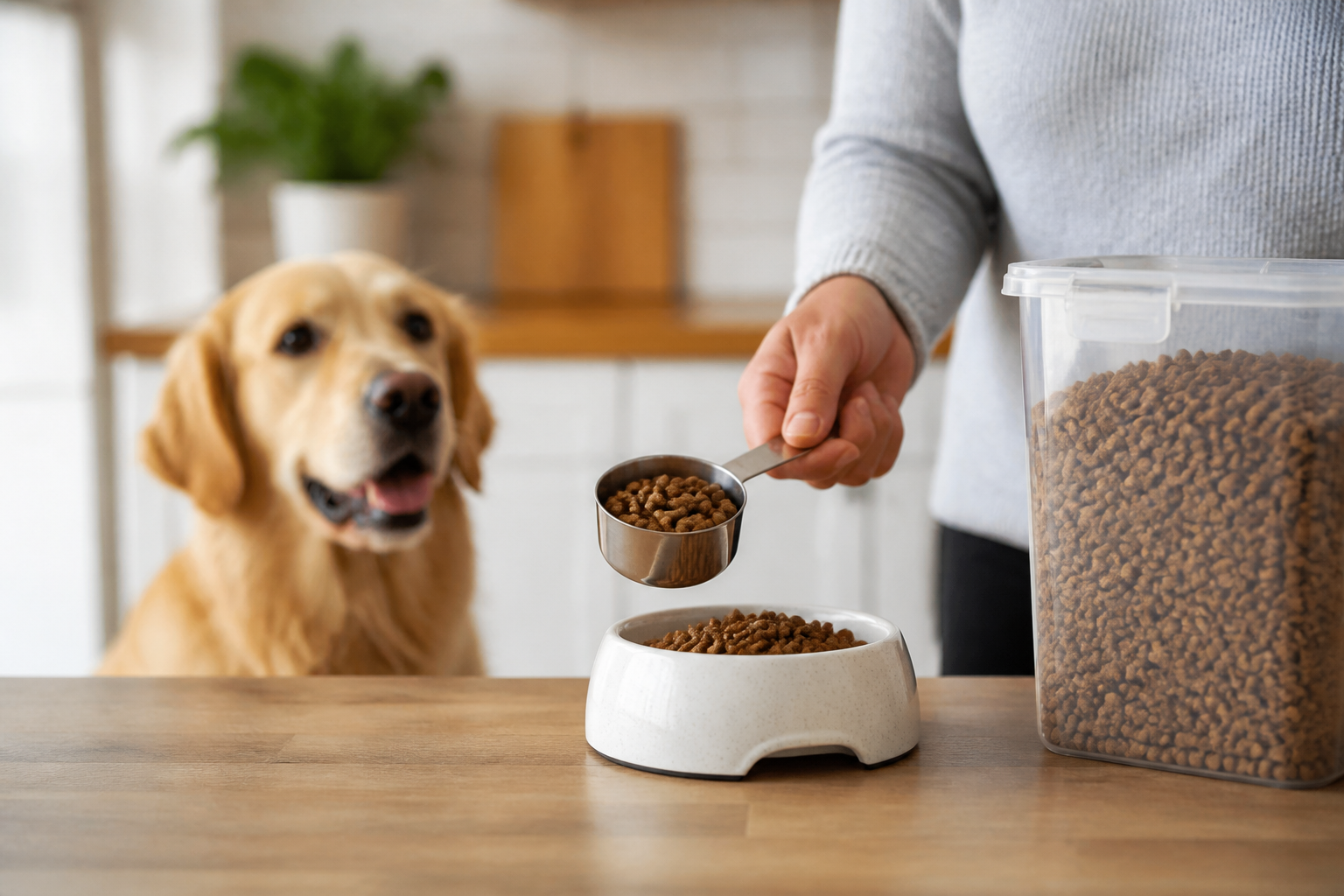
You are standing in your kitchen at six in the morning with a plastic scoop in one hand and a hungry dog nudging your leg. You look at the feeding chart on the back of the bag. It says to feed two cups per day for a dog of your pet's weight. You scoop the kibble and dump it in the bowl. It looks like enough, but you might wonder if those two cups actually provide the nutrition your dog needs. Measuring food by volume is the most common way pet owners handle mealtime. However, it is often the least accurate. At BaxterBoo, we talk to owners every day who are surprised to learn that a cup of one brand can weigh twice as much as a cup of another. This post covers the difference between volume and weight, how to calculate ounces in your specific kibble, and why precision matters for your dog's health.
Quick Answer: A standard 8-ounce measuring cup typically holds between 3 and 5 ounces of dry dog food by weight. Because kibble density and shape vary, you cannot rely on the "8 ounces in a cup" rule used for liquids.
The Volume vs. Weight Confusion
Most people grow up learning that eight ounces make a cup. This is true for water, milk, or juice. It is not true for dry dog food. The "eight ounces" in a standard measuring cup refers to fluid ounces, which is a measurement of volume. Volume tells you how much space something takes up. Weight tells you how heavy it is.
Think about a cup filled with lead pellets versus a cup filled with feathers. Both take up the same amount of space in the cup. One weighs significantly more than the other. Dry dog food works the same way. A large, airy kibble will take up more space in the cup but weigh very little. A small, dense, or oily kibble will pack tightly into the cup and weigh much more.
If you use a coffee mug or a plastic Big Gulp cup to scoop food, you are not measuring a standard cup. Even using a liquid measuring cup meant for baking can lead to errors. These cups often have extra room at the top to prevent spilling. If you fill it to the brim, you are likely overfeeding your dog.
Why Kibble Density Changes Everything
Kibble density is determined by how the food is manufactured. Most dry foods go through a process called extrusion. The ingredients are mixed, cooked under pressure, and pushed through a die to create shapes. Some brands include more air in the kibble to make it crunchier or easier to chew. Others, like Orijen or Stella and Chewy's, may have denser formulations with less air and more concentrated nutrients.
The shape of the kibble also plays a massive role in weight. Consider these factors:
- Round Kibble: Round pieces tend to leave small gaps of air between them in a measuring cup.
- Star or X Shapes: These irregular shapes can interlock or leave large air pockets. This makes it hard to get a consistent weight with every scoop.
- Small vs. Large Kibble: Small kibble packs more tightly. A cup of small breed kibble usually weighs more than a cup of large breed kibble.
Key Takeaway: You cannot compare two different brands of dog food by volume alone. One cup of a high-protein, calorie-dense food might provide more energy than two cups of a budget-friendly, airy kibble.
| Item | Volume | Average Weight |
|---|---|---|
| Water | 1 Cup | 8.3 Ounces |
| All-Purpose Flour | 1 Cup | 4.4 Ounces |
| Average Dry Dog Food | 1 Cup | 3.5 to 4 Ounces |
| Dense/Air-Dried Food | 1 Cup | 5+ Ounces |
How to Calculate Ounces in Your Dog's Food
If you want to know exactly how many ounces are in a cup of your specific food, you can do some simple math using the label. Look for the "Calorie Content" statement on the back of the bag. It will usually list two numbers: kilocalories per kilogram (kcal/kg) and kilocalories per cup (kcal/cup).
Step 1: Find the kcal/kg number. / This represents the calories in 2.2 pounds of food.
Step 2: Divide the kcal/kg by 35.2. / There are roughly 35.27 ounces in a kilogram. This gives you the calories per ounce.
Step 3: Divide the kcal/cup by the calories per ounce. / This final number tells you exactly how many ounces of weight are in one cup of that specific food.
For example, if a bag of food says it has 3,500 kcal/kg and 400 kcal/cup:
3,500 divided by 35.2 equals 99.4 calories per ounce.
400 divided by 99.4 equals 4.02 ounces per cup.
Vet Tip: Always consult your veterinarian to determine the specific caloric needs of your dog. Their age, activity level, and metabolism are more important than the generic feeding chart on the bag.
The Problem with Measuring Scoops
Most of us use a plastic scoop or a measuring cup from the kitchen. While these are convenient, they are prone to human error. A "heaping" cup can contain 20 percent more food than a "level" cup. Over time, that extra 20 percent adds up to significant weight gain.
A study from the University of Guelph found that dog owners mismeasured food by as much as 152 percent. People using large scoops for small amounts of food were the most likely to make mistakes. If you are supposed to feed half a cup but use a two-cup scoop, it is very easy to eyeball the amount incorrectly.
Consistent measurement is the foundation of good health. If multiple people in your house feed the dog, the problem gets worse. One person might scoop loosely while another packs the kibble down. This inconsistency can lead to digestive upset or weight fluctuations.
The Benefits of a Kitchen Scale
The most accurate way to measure dog food is by weight using a digital kitchen scale. This removes the guesswork of air pockets and kibble shapes. Once you know your dog needs four ounces of food per meal, you can set the bowl on the scale and pour until it hits that number.
Using a scale offers several advantages:
- Precision: You give the exact same amount of energy every single day.
- Waste Reduction: You stop overfeeding, which makes your bag of food last longer.
- Health Tracking: If your vet recommends a weight loss plan, you can precisely reduce the intake by half an ounce rather than trying to guess what "seven-eighths of a cup" looks like.
If you do not want to use a scale every day, use it once to calibrate your scoop. Weigh out the correct amount of food and put it in your scoop. Mark the line with a permanent marker. This gives you a much better visual guide for daily feeding.
Health Risks of Inaccurate Feeding
Obesity is a growing epidemic in the pet world. Many owners do not realize their dog is overweight because the gain happens slowly. Extra weight puts a massive strain on a dog's body. It leads to joint issues, heart disease, and a shorter lifespan.
When a dog is overweight, managing their health becomes a long-term commitment. We see many owners through our pharmacy partnership with Pet's Choice who are managing chronic conditions like arthritis. These dogs often require FDA-approved medications for pain or mobility. Often, the first recommendation from a vet is to get the weight off to reduce pressure on the joints.
Our pharmacy carries prescription diets specifically formulated for weight management. These diets are often lower in calorie density. This allows your dog to feel full while consuming fewer calories. If your vet has prescribed a specific diet or medication for weight-related health issues, you can manage those needs through the our pet pharmacy. For additional portion guidance, see our guide to pet weight management.
Key Takeaway: Feeding just ten percent too much food every day can lead to a dog being significantly overweight within a year. Accuracy is a form of preventative medicine.
How to Adjust Portions for Your Dog
The feeding chart on your dog food bag is a starting point, not a rule. Most manufacturers design those charts for active, intact adult dogs. If your dog is spayed or neutered, or if they spend most of the day on the couch, they likely need less than the chart suggests.
To find the right amount, follow these steps:
- Start with the chart: Use the recommendation for your dog's ideal weight, not their current weight.
- Monitor Body Condition: You should be able to feel your dog's ribs easily without a thick layer of fat. When looking from above, they should have a visible waist.
- Adjust slowly: If your dog needs to lose weight, reduce the food by 10 percent and wait two weeks. Do not make drastic cuts without speaking to a vet.
- Track treats: Remember that treats have calories too. If you give a Kong stuffed with peanut butter or several training treats, you must reduce the amount of kibble in the bowl.
Managing Multiple Pets and Specialized Diets
If you have more than one dog, measuring becomes even more critical. Different breeds and life stages have vastly different needs. A senior dog might need a food like Farmina Vet Life for specific health support, while a puppy needs a high-calorie growth formula.
Mixing up the scoops or "eyeballing" the portions can lead to a puppy not getting enough nutrients or a senior dog gaining weight. Keep a dedicated, marked scoop for each bag of food. If you are managing chronic health issues, such as kidney disease or skin allergies, precision ensures your dog gets the therapeutic benefit of their specialized diet.
For owners who use our Autoship programme, consistency in measuring also helps you predict exactly when you will need your next bag. When you know your dog eats exactly 3.5 ounces twice a day, you can calculate the day the bag will go empty. This ensures you never run out of food and keeps your pet on a steady routine.
Tips for Transitioning Food
When you switch to a new brand of dry food, you must recalculate your measurements. Never assume a cup of the new food is equal to a cup of the old food. One might be much denser than the other.
Step 1: Check the kcal/cup on the new bag. / Compare it to your old food.
Step 2: Adjust the volume. / If the new food has 500 kcal/cup and the old had 400, you will need to feed a smaller volume.
Step 3: Mix the foods. / Spend 7 to 10 days gradually increasing the new food while decreasing the old.
Step 4: Watch the scale. / Weigh your dog once a week during a transition to ensure they are maintaining their weight.
If your dog has a sensitive stomach, these transitions are the best time to be extra careful. Sudden changes in calorie density or ingredients can lead to upset. Accurate measuring makes the transition smoother for their digestive system. For more guidance, read how to switch your dog to a new food.
The Role of Dental Health and Kibble Size
The size and weight of kibble also relate to dental health. Some larger kibbles are designed to encourage chewing, which can help scrape away plaque. If you are feeding a dental-specific diet, the pieces are often much larger and airier. A cup of dental kibble might weigh very little compared to a standard kibble.
Always look at the weight on the bag to ensure you are getting the value you expect. A 30-pound bag of airy kibble is a much larger bag physically than a 30-pound bag of dense kibble. However, they both provide the same 30 pounds of weight.
Conclusion
Understanding how many ounces are in a cup of dry dog food is the first step toward better pet health. While a cup is a convenient tool, it is not a precise one. Most dry dog foods weigh between 3 and 5 ounces per cup. This variation is why so many pets struggle with weight issues. By switching to a scale or carefully calibrating your scoop, you take control of your dog's nutrition. Whether you are using premium brands like Acana and NutriSource or managing a health condition with a prescription diet from the our dry dog food category, accuracy is key. Start by weighing your next meal and see how close your scoop really is to the recommended weight.
Bottom line: Weight is the only accurate way to measure dry dog food because volume changes based on kibble size, shape, and density.
FAQ
Is 8 ounces of dry dog food the same as 1 cup?
In the world of dry dog food, 8 ounces of weight is rarely equal to 1 cup of volume. An 8-ounce measuring cup measures volume, while ounces on a food scale measure weight. Most kibbles are light and airy, meaning a cup usually weighs between 3 and 5 ounces.
How do I find out the weight of a cup of my dog's food?
The easiest way is to use a digital kitchen scale to weigh one level measuring cup of the food. If you do not have a scale, look at the calorie content on the bag. Divide the calories per cup by the calories per ounce to find the weight in ounces.
Why does my dog seem hungry even when I feed the recommended amount?
Some dog foods are very dense, meaning a small volume contains a lot of calories. Your dog might feel physically empty even if they have had enough energy. You can talk to your vet about adding low-calorie fibers or switching to a weight-management formula that allows for a larger volume of food.
Can I use a coffee mug to measure my dog's food?
Using a coffee mug is not recommended because mugs come in many different sizes and shapes. A standard mug can hold anywhere from 8 to 16 fluid ounces. This leads to massive inconsistencies in feeding. It is better to use a standard dry measuring cup or, ideally, a kitchen scale.






