
 Save 15% on your 1st Autoship learn more

 Email us
 Live Chat
 FAQs
FAQs





Introduction
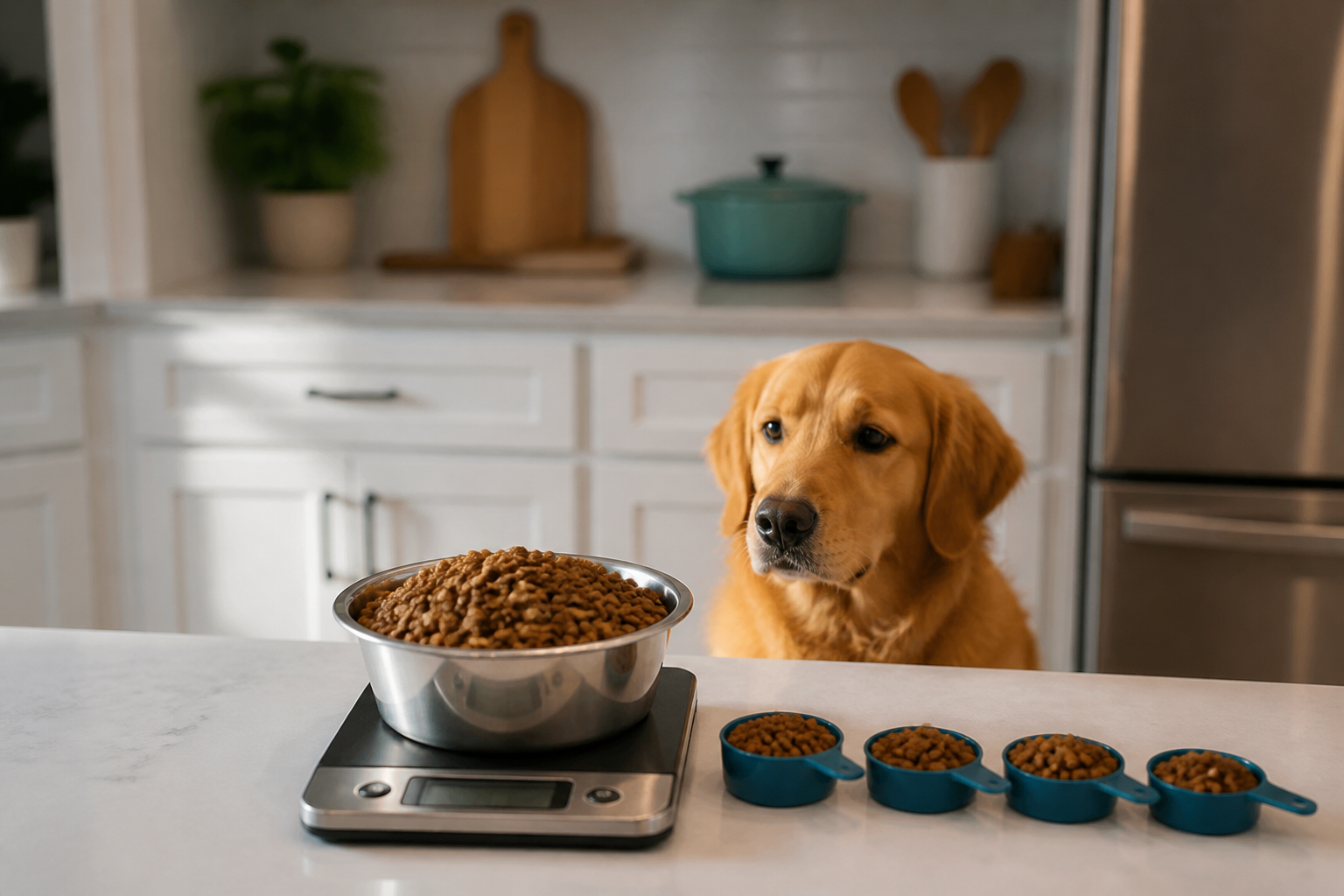
You stand in your kitchen with a plastic scoop in one hand and a hungry dog at your feet. You know the bag says to feed a specific amount, but you start wondering if that "cup" you are using is actually providing the right nutrition. Maybe you are trying to figure out how long a new 20 pound bag of food will last, or perhaps your veterinarian just recommended a precise calorie count for weight management. At BaxterBoo, we talk to pet owners every day who are surprised to learn that a cup of one brand can weigh nearly double a cup of another. While there is a general average, the weight of 4 cups of dry dog food can range anywhere from 14 to 20 ounces. This article explains why density matters, how to get the most accurate measurements for your dog, and why your kitchen scale might be your best friend.
Quick Answer: On average, 4 cups of dry dog food weigh approximately 1 pound (16 ounces), but this varies by brand and kibble size. Most standard kibbles weigh between 3.5 and 5 ounces per cup.
The Variable Nature of Kibble Weight
If you fill a measuring cup with lead pellets and another with feathers, the volume is the same, but the weight is vastly different. Dog food works much the same way. The ingredients, the cooking process, and even the shape of the kibble change how much "stuff" actually fits into a measuring cup.
Most pet owners rely on volume. We use scoops, old coffee mugs, or plastic measuring cups designed for baking. However, volume is an unreliable way to measure dry goods. A "cup" in the pet food world is usually defined as a standard 8 ounce measuring cup by volume, not by weight. When you measure out 4 cups of a dense, protein-rich food like Orijen or Stella & Chewy's, it will likely weigh more than 4 cups of a "light" or weight management formula that has been puffed with air or fiber.
Why Density Changes Everything
Density refers to how much mass is packed into a specific space. In dog food, density is influenced by:
- Fat Content: Higher fat foods often weigh more per cup.
- Fiber Content: Foods high in fiber are often less dense to help dogs feel full without adding too many calories.
- The Extrusion Process: This is how kibble is cooked and shaped. Some processes create "puffed" kibble that contains more air.
- Moisture Levels: Even dry kibble has a small amount of moisture. A slightly "softer" dry food may weigh more than a very hard, crunchy one.
How Much 4 Cups Weighs Across Different Brands
Since every recipe is different, the weight of 4 cups will shift. We carried out a look at common types of food to see how they stack up.
| Food Type | Estimated Weight per Cup | Estimated Weight for 4 Cups |
|---|---|---|
| High-Protein / Grain-Free | 4.2 to 5.0 ounces | 16.8 to 20 ounces |
| Standard Adult Maintenance | 3.5 to 4.0 ounces | 14 to 16 ounces |
| Healthy Weight / Senior | 3.0 to 3.5 ounces | 12 to 14 ounces |
| Small Breed Kibble | 4.0 to 4.5 ounces | 16 to 18 ounces |
As you can see, if you are feeding a high-protein diet, 4 cups might actually be over a pound of food. If you are feeding a senior diet, 4 cups might be significantly less. This is why simply following a "cup" measurement can lead to accidental overfeeding or underfeeding.
Key Takeaway: Never assume that a cup of your old food weighs the same as a cup of a new brand. Always check the bag for the weight-to-volume conversion if it is provided.
The Impact of Kibble Size and Shape
The physical shape of the kibble plays a massive role in how much 4 cups will weigh. Think about a jar filled with marbles versus a jar filled with dice. The marbles have small gaps between them. The dice might have larger, irregular gaps depending on how they land.
Small vs. Large Kibble
Small breed formulas often have tiny, round pellets. These pack together tightly in a measuring cup with very little air between them. Because there is more food and less air in the cup, 4 cups of small kibble usually weigh more than 4 cups of large breed kibble.
Large breed kibbles are often shaped like large discs or triangles. These shapes do not nestle together well. When you pour them into a cup, they leave large pockets of air. You might think you are giving your dog a full meal, but a significant portion of that "cup" is actually just empty space.
The Problem with the Heaping Scoop
We have all done it. You reach into the bag, pull out a scoop, and there is a little mound on top. That extra half inch of food might not look like much. However, if you do that for every one of the 4 cups you feed daily, you could be adding an extra 15 to 20 percent more calories to your dog's diet every single day. Over a month, that is enough to cause noticeable weight gain.
Measuring for Health and Weight Management
Maintaining a healthy weight is one of the most important things you can do for your dog. Obesity in dogs is linked to joint pain, heart disease, and a shorter lifespan. Because kibble weight is so variable, many veterinarians now recommend measuring food by weight in grams rather than by volume in cups.
If your dog is struggling with weight, or if they have a chronic condition that requires a strict diet, we recommend using a digital kitchen scale. It takes the guesswork out of the process. You simply place the bowl on the scale, hit the "tare" button to zero it out, and pour until you hit the exact number of ounces or grams your vet recommended. For more portion-measuring guidance, see our article on how many grams are in a cup of dry dog food.
Vet Tip: If your dog is consistently gaining weight even though you are following the bag guidelines, your "cup" might be too large. Consult your veterinarian to determine your dog's specific caloric needs and consider switching to measuring by weight for better accuracy.
Managing Prescription Needs
For some dogs, standard retail food is not enough to manage their health. If your dog has been diagnosed with a condition like kidney disease, severe allergies, or obesity that requires a therapeutic diet, your veterinarian may prescribe a specific food.
Through our partnership with Pet's Choice, our pet pharmacy carries a variety of FDA-approved prescription pet foods, such as the Farmina Vet Life range. These diets are formulated for very specific medical needs. When feeding a prescription diet, accuracy is even more critical. Because these foods are often more expensive and calorie-controlled, weighing the food ensures you are not wasting product or compromising your dog's treatment plan.
Step-by-Step: How to Calculate Your Dog's Daily Weight
If you want to move away from volume and start feeding by weight, follow these steps.
Step 1: Find the calorie density. / Look on the back of your dog food bag for the "kcal/kg" or "kcal/cup" statement.
Step 2: Determine daily calories. / Ask your vet how many calories your dog needs per day based on their age, weight, and activity level.
Step 3: Convert to weight. / If your dog needs 1,000 calories a day and the food has 400 calories per cup (and the bag says a cup is 4 ounces), you know you need 10 ounces of food daily.
Step 4: Split the portions. / Divide that total weight by the number of meals you feed. If you feed twice a day, you would give 5 ounces per meal.
Step 5: Weigh and verify. / Use your kitchen scale to measure the first few meals to see how it looks in your usual scoop. You will likely find that your "4 cups" was actually weighing much more or less than you thought. Our guide to how many cups are in a 24-pound bag of dry dog food can also help with bag planning.
Factors Beyond the Scoop
While weight is a better metric than volume, remember that your dog's needs change. A dog that spends all day running in a yard will need more food than a dog that naps on the sofa.
Activity Levels
The guidelines on the back of the bag are usually based on an "average" active adult dog. Most household pets are actually less active than this average. If you feed 4 full cups by weight to a sedentary dog, they will likely become overweight. Conversely, a working dog or an athlete might need more than the standard weight to maintain their energy.
Age and Metabolism
Puppies need significantly more calories per pound of body weight because they are building bone and muscle. Senior dogs often have slower metabolisms and may need fewer calories. As your dog ages, you should re-evaluate the weight of their daily portions every six months.
Spay and Neuter Status
It is a well known fact in the veterinary world that spayed and neutered dogs require fewer calories than "intact" dogs. The hormonal changes after the procedure can slow the metabolism. If your dog was just fixed, you may need to reduce the weight of their daily food by 10 to 25 percent to prevent weight gain.
Using the Right Tools
At BaxterBoo, we want to make pet care as straightforward as possible. Having the right tools in your kitchen makes a big difference in your dog's long term health.
- Digital Scale: This is the gold standard for accuracy.
- Standardized Scoops: If you must use a scoop, use one with clear incremental markings and avoid using random household items.
- Airtight Containers: These keep the food fresh and prevent the kibble from drying out, which can slightly alter the weight over time.
Bottom line: Accuracy at mealtime is the simplest way to prevent obesity and ensure your dog gets the exact nutrition they need for their specific life stage.
Transitioning to a New Food
When you switch brands, even if the new bag also says to feed 4 cups, the weight will be different. Always perform a gradual transition over 7 to 10 days. This gives your dog's digestive system time to adjust to the new density and ingredient profile.
- Days 1–3: 25% new food, 75% old food.
- Days 4–6: 50% new food, 50% old food.
- Days 7–9: 75% new food, 25% old food.
- Day 10: 100% new food.
During this time, keep an eye on your dog's stool consistency and energy levels. If you notice any issues, slow down the transition. Since the weights are different, you may find that 25% of the new food looks like a much smaller pile than 25% of the old food. This is normal and is simply a reflection of the different densities.
Conclusion
Determining how much 4 cups of dry dog food weighs is more than just a math problem. It is a vital part of understanding your dog's health. While the average weight is about 16 ounces, the specific density of your chosen brand can change that number significantly. By moving toward measuring by weight rather than volume, you eliminate the risks of overfeeding and ensure your dog stays at their ideal body condition.
- Density varies by brand, ingredient, and kibble shape.
- Standard 8 ounce measuring cups measure volume, not weight.
- 4 cups of kibble generally weigh between 14 and 20 ounces.
- Weighing food on a kitchen scale is the most accurate feeding method.
If you are managing a health condition or need a specific therapeutic diet, our pharmacy is here to help with prescription options through our Pet's Choice partnership. For everyday needs, consider signing up for our Autoship programme to help ensure you never run out of your dog's favorite food while saving on every order.
FAQ
Is a cup of dog food exactly 8 ounces?
In terms of volume, yes, a standard measuring cup is 8 fluid ounces. However, in terms of weight, a cup of dry dog food usually weighs between 3.5 and 5 ounces. You should never assume that "one cup" equals "8 ounces on a scale" when dealing with dry kibble.
Why does my dog seem hungry even though I feed the recommended amount?
If you are feeding a very dense food, the physical volume in the bowl might look small, even if the calorie count is high. You can talk to your vet about adding low calorie "fillers" like green beans or switching to a food with more fiber to help your dog feel full.
How do I find the weight per cup for my specific dog food?
The most accurate way is to weigh one level cup on a kitchen scale yourself. Some manufacturers also list the weight per cup on their website or directly on the bag near the feeding instructions, often in grams. If you are comparing formulas, our dry dog food category offers options with different textures and densities.
Can I use a regular coffee mug to measure my dog's food?
It is not recommended because coffee mugs are not standardized sizes. A typical mug can hold anywhere from 10 to 14 ounces of volume, which would lead to significant overfeeding if you treat it as a "standard" cup. Always use a proper measuring tool or a scale.






