
 Save 15% on your 1st Autoship learn more

 Email us
 Live Chat
 FAQs
FAQs





Introduction
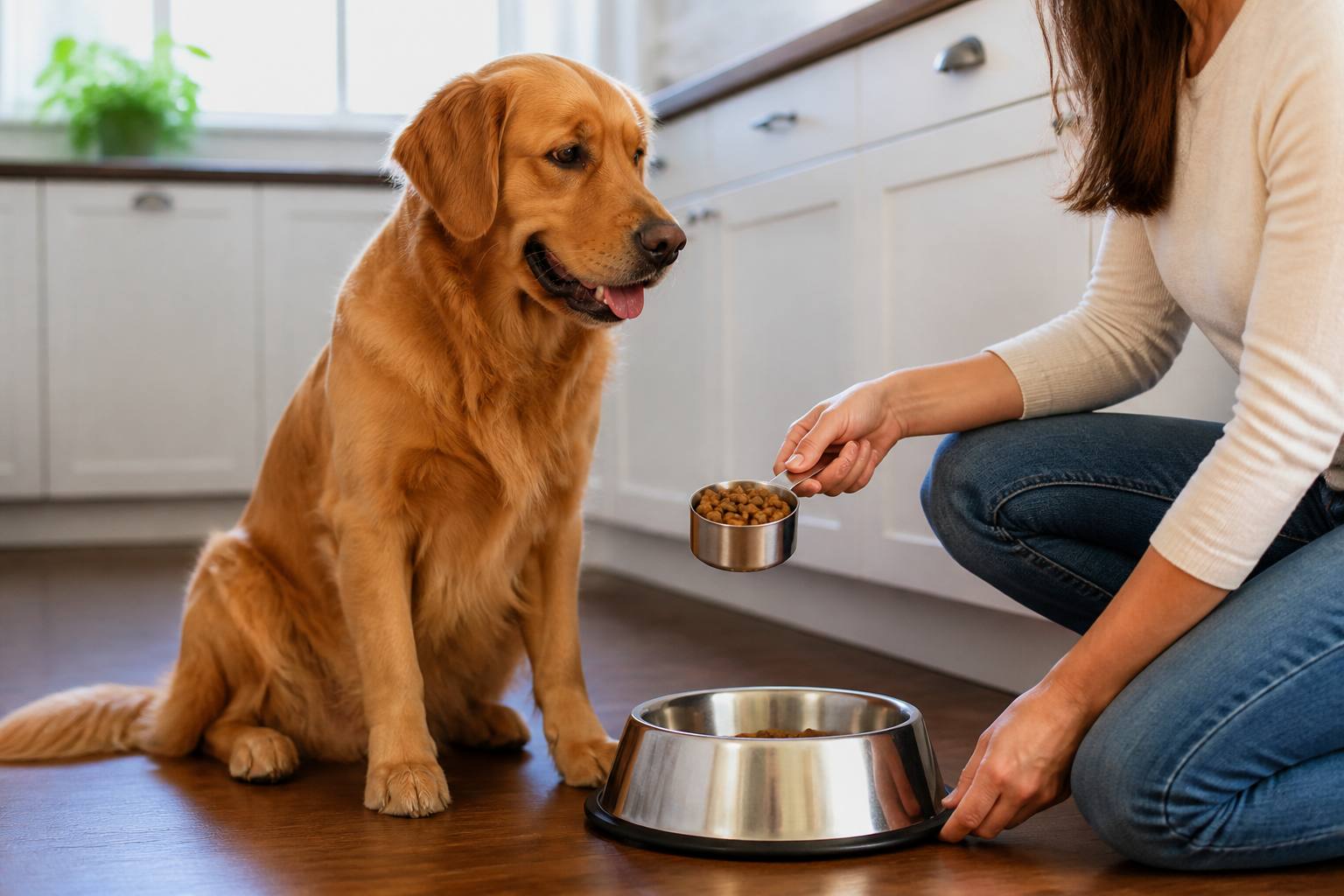
You stand in your kitchen, measuring cup in hand, while your 70 pound dog watches your every move with focused anticipation. It is a familiar scene for any large dog owner. Getting the portion exactly right is one of the most impactful ways we at BaxterBoo help pet parents support long term wellness. This guide breaks down the math behind the bowl so you can feed with confidence. We want to ensure your big companion stays lean, energetic, and healthy for years to come. In the following sections, we will explore calorie density, activity levels, and how to read those sometimes confusing feeding charts. Our goal is to take the guesswork out of mealtime so you can focus on the walks and wagging tails that make pet ownership so rewarding.
Quick Answer: On average, a 70 pound adult dog with moderate activity needs about 3.5 to 4.5 cups of dry food per day. This depends heavily on the calorie count of the specific food, which typically ranges from 1,500 to 1,750 calories daily for a dog of this size.
The Foundation of Large Breed Nutrition
A 70 pound dog is a substantial animal. Whether you have a sturdy Labrador, a sleek Boxer, or a graceful Golden Retriever, these dogs have high metabolic demands compared to toy breeds. However, they are also prone to certain health risks. Large dogs carry more weight on their joints, and even a few extra pounds can lead to early stiffness or mobility issues.
When we look at how much food to provide, we have to look past the volume. One cup of high protein kibble might have 450 calories, while a weight management formula might only have 300 calories per cup. If you simply scoop the same amount when switching brands, you might accidentally overfeed your dog by a massive margin. Explore our dog food category when comparing formulas and calorie densities.
Calculating Caloric Needs
Most veterinarians use a baseline known as the Resting Energy Requirement (RER). This is the amount of energy a dog needs to perform basic functions like breathing and digestion. For a 70 pound dog, the RER is approximately 1,100 calories.
From there, we apply a multiplier based on lifestyle. An average, neutered adult dog usually needs 1.4 to 1.6 times their RER. This brings the daily total to roughly 1,540 to 1,760 calories. If your dog is a "couch potato" who prefers naps to long hikes, they will fall on the lower end of that spectrum.
Key Takeaway: Energy density is more important than the physical amount of food in the bowl. Always check the calories per cup (kcal/cup) on the back of your specific bag to determine the right portion for a 70 pound dog.
Factors That Influence the Daily Portion
Not every 70 pound dog is created equal. A young, intact male hunting dog has vastly different needs than a senior female who has been spayed. We see this often in our warehouse store: two dogs of the identical weight requiring completely different feeding schedules.
Activity Level and Lifestyle
This is the most significant variable. Activity isn't just about how long the walk is; it is about the intensity.
- Low Activity: Less than 30 minutes of slow walking per day. These dogs often need only 3 to 3.5 cups of a standard adult maintenance food.
- Moderate Activity: 30 to 60 minutes of active play or walking. This is the standard "pet" level, usually requiring 3.75 to 4 cups.
- High Activity: Working dogs or canine athletes who run for hours. These dogs may require 5 cups or more, often from a high fat performance formula.
The Impact of Spaying and Neutering
It is a well documented fact that spaying or neutering a dog can lower their metabolic rate. The hormonal changes mean their body does not burn calories as quickly at rest. If your dog has recently had this procedure, you might notice them putting on weight even though you haven't changed their food. Many owners find that reducing the daily portion by about 10% helps maintain a healthy waistline after the surgery.
Life Stage: From Young Adult to Senior
Large breeds are typically considered seniors by the time they reach age seven or eight. As they age, their activity levels naturally drop. Their organs also process nutrients differently. Senior formulas from brands like NutriSource or PureVita often have slightly lower calorie counts but higher fiber and joint support ingredients like glucosamine. For more feeding guidance across life stages, see this guide to daily dry dog food portions.
Vet Tip: If your 70 pound dog is showing signs of joint stiffness or slowing down, consult your veterinarian. They may suggest a prescription joint diet or specific medications. Our pharmacy carries a wide range of FDA-approved treatments through our partnership with Pet's Choice, which can be delivered right to your door.
How to Read a Feeding Chart Correctly
Every bag of food we carry at BaxterBoo includes a feeding chart. These charts are regulated, but they can still be confusing. The most important thing to remember is that these numbers are usually for the total daily amount, not the amount per meal.
Finding the Right Row
Look for the weight category that includes 70 pounds. Usually, you will see a range like "51–75 lbs." The suggested amount will be a range, such as "3 to 4 cups."
- Start at the lower end if your dog is older or less active.
- Start in the middle for a typical family dog.
- Start at the high end only if your dog is very active or struggling to maintain weight.
Splitting the Portions
Large dogs should almost never be fed just once a day. For a 70 pound dog, feeding two or even three smaller meals is much safer. Large, deep-chested breeds are at higher risk for bloat (GDV), a life-threatening condition where the stomach twists. Feeding smaller portions helps reduce the strain on the digestive system.
Step 1: Determine the total daily amount. / If the chart says 4 cups, that is your target for the 24 hour period.
Step 2: Divide by the number of meals. / For two meals, you will scoop 2 cups in the morning and 2 cups in the evening.
Step 3: Measure accurately. / Use a standard 8 ounce measuring cup, not a random plastic container or a coffee mug.
For additional measuring guidance, read how much a cup of dry dog food weighs.
Comparing Different Types of Dry Food
The recipe of the food changes how much you need to scoop. High protein, grain free options like those from Orijen or Acana are very nutrient dense. You will often feed less of these than you would a budget brand full of fillers. You can compare options in our selection of Orijen and Acana dry dog foods.
| Food Type | Average kcal/cup | Suggested Daily Amount for 70 lbs |
|---|---|---|
| High Protein / Performance | 450+ | 3.25 to 3.5 cups |
| Standard Adult Maintenance | 350 - 400 | 3.75 to 4.25 cups |
| Weight Management / Lite | 280 - 320 | 4.5 to 5.5 cups |
| Senior Formulas | 320 - 360 | 4 to 4.5 cups |
Feeding a weight management food can actually be a great strategy for dogs who love to eat. Because the food is less calorie dense, you can give them a larger volume of food to keep them feeling full without overloading them with energy.
Bottom line: Always look for the kcal/cup statement on your dog's food bag before deciding on the final portion size.
Assessing Your Dog’s Body Condition
The scale only tells part of the story. A 70 pound dog might be at their perfect weight, or they might be significantly overweight depending on their frame and height. We recommend using a hands on approach to check their health.
The Rib Test
Place your hands on your dog’s side as if you are giving them a pet. You should be able to feel their ribs easily without pressing hard. They should feel like the back of your hand when your fingers are flat. If you have to dig through a layer of fat to find the ribs, your dog is likely carrying extra weight.
The Waistline Check
Look at your dog from above. They should have a visible "tuck" or waist behind their ribcage. From the side, their abdomen should slope upward toward their back legs. If they look like a solid cylinder from above, it is time to trim the portions back slightly.
Adjusting the Bowl
If you realize your dog is gaining weight, do not make a drastic change. Cut their food back by about 10% and wait two weeks. Rapid weight loss can be hard on a dog's liver. Consistency is the goal. You can also review practical pet weight-management guidance for additional portion-planning ideas.
Key Takeaway: Your dog’s body condition is a better guide than any chart. If they are gaining weight on the "recommended" amount, listen to their body and reduce the portion.
The Role of Treats and Toppers
We all love to spoil our pets, but those extras add up quickly. For a 70 pound dog, a single slice of cheese or a few large biscuits can account for 10% of their daily calories. If you are using treats for training, you must subtract those calories from your dinner bowl. Browse our dog treats category when looking for options to fit into your feeding routine.
A common mistake is adding wet food or "people food" toppers without adjusting the dry kibble. If you add half a can of wet food, you should generally remove about 3/4 of a cup of dry food. Keeping the 10% rule in mind: treats and extras should never make up more than 10% of the total daily intake.
- Choose low calorie treats like frozen green beans or plain carrots.
- Use a portion of their daily kibble for training rewards.
- Avoid high fat table scraps like bacon or buttered crusts.
Health Concerns and Prescription Diets
Sometimes, the amount you feed is less important than what is in the food. Dogs managing chronic conditions like kidney disease, urinary stones, or severe allergies often require specific nutrient ratios that are only found in prescription diets.
If your veterinarian has prescribed a specific brand like Royal Canin Veterinary Diet or Farmina Vet Life, it is crucial to follow their exact feeding instructions. These foods are formulated as medical treatments.
Our pharmacy at BaxterBoo makes it easy to manage these ongoing needs. Through our partnership with Pet's Choice, we can fulfill prescriptions for both medications and specialized foods. This ensures your 70 pound dog gets exactly what they need to manage their condition, backed by the same 4.9-star service you expect from our main warehouse. Visit our pet pharmacy for prescription-related needs.
Vet Tip: Sudden changes in appetite or weight in a large dog can signal underlying health issues. If your dog is suddenly acting hungry all the time or refusing their favorite food, schedule a veterinary exam to rule out issues like diabetes or thyroid dysfunction.
Practical Tips for Feeding Large Dogs
Managing the daily routine for a big dog can be a physical task. A 40 pound bag of food is heavy, and digging for a scoop every morning can be a chore. We have found a few ways to make it easier for our customers.
- Use an Airtight Container: Keeping food in the original bag inside a sealed bin helps maintain freshness and prevents fats from going rancid.
- Elevated Bowls: While the debate on bloat and bowl height continues, many senior dogs with neck or back pain find it much more comfortable to eat from a raised platform.
- Slow Feeder Bowls: If your 70 pound dog inhales their food in seconds, a slow feeder can turn a 30-second meal into a 5-minute activity, which is better for their digestion.
- Autoship Savings: Since a large dog goes through food quickly, our Autoship programme ensures you never run out and saves you money on every order.
Large dogs thrive on routine. Feeding at the same time every day helps regulate their digestion and can even help with house training consistency. It also reduces "begging" behavior because the dog knows exactly when to expect their next meal.
Conclusion
Determining how much dry dog food for a 70 pound dog requires a balance of math and observation. Start with a baseline of about 3.5 to 4 cups, but always adjust based on the calorie density of your specific brand and your dog's activity level. By monitoring their body condition and keeping treats to a minimum, you can prevent the weight related health issues that often affect larger breeds.
- Check the kcal/cup on your bag.
- Adjust for activity level and life stage.
- Divide the daily amount into at least two meals.
- Monitor your dog's waistline regularly.
If your dog has unique health needs or requires a prescription diet, we are here to help. Our pharmacy offers a wide selection of FDA-approved medications and veterinary foods through our partnership with Pet's Choice. You can also save time and earn rewards by joining the MVP Rewards programme or setting up an Autoship for your favorite brands like NutriSource or Stella and Chewy's.
FAQ
Can I just follow the chart on the back of the bag?
The chart is a great starting point, but it is based on an average dog. Factors like your dog's metabolism, whether they are neutered, and their daily exercise levels mean you may need to increase or decrease the suggested amount by up to 20%.
Why does my 70 pound dog seem hungry even after eating?
Some breeds, like Labradors, are genetically prone to feeling hungry. If your dog is at a healthy weight but seems unsatisfied, try a high fiber "weight management" formula or add low calorie bulk like plain canned pumpkin or green beans to their meal.
Is it better to feed my large dog once or twice a day?
It is much better to feed at least twice a day. For large dogs, eating one massive meal increases the risk of bloat (GDV), which is a surgical emergency. Splitting the food into smaller portions is safer and helps maintain steady energy levels throughout the day.
How do I know if my 70 pound dog is overweight?
The easiest way is the rib test. You should be able to feel the ribs easily under a thin layer of skin without having to press your fingers into the side. If you can't feel them, or if your dog has lost their visible waistline when viewed from above, they are likely overweight.






