
 Save 15% on your 1st Autoship learn more

 Email us
 Live Chat
 FAQs
FAQs





Introduction
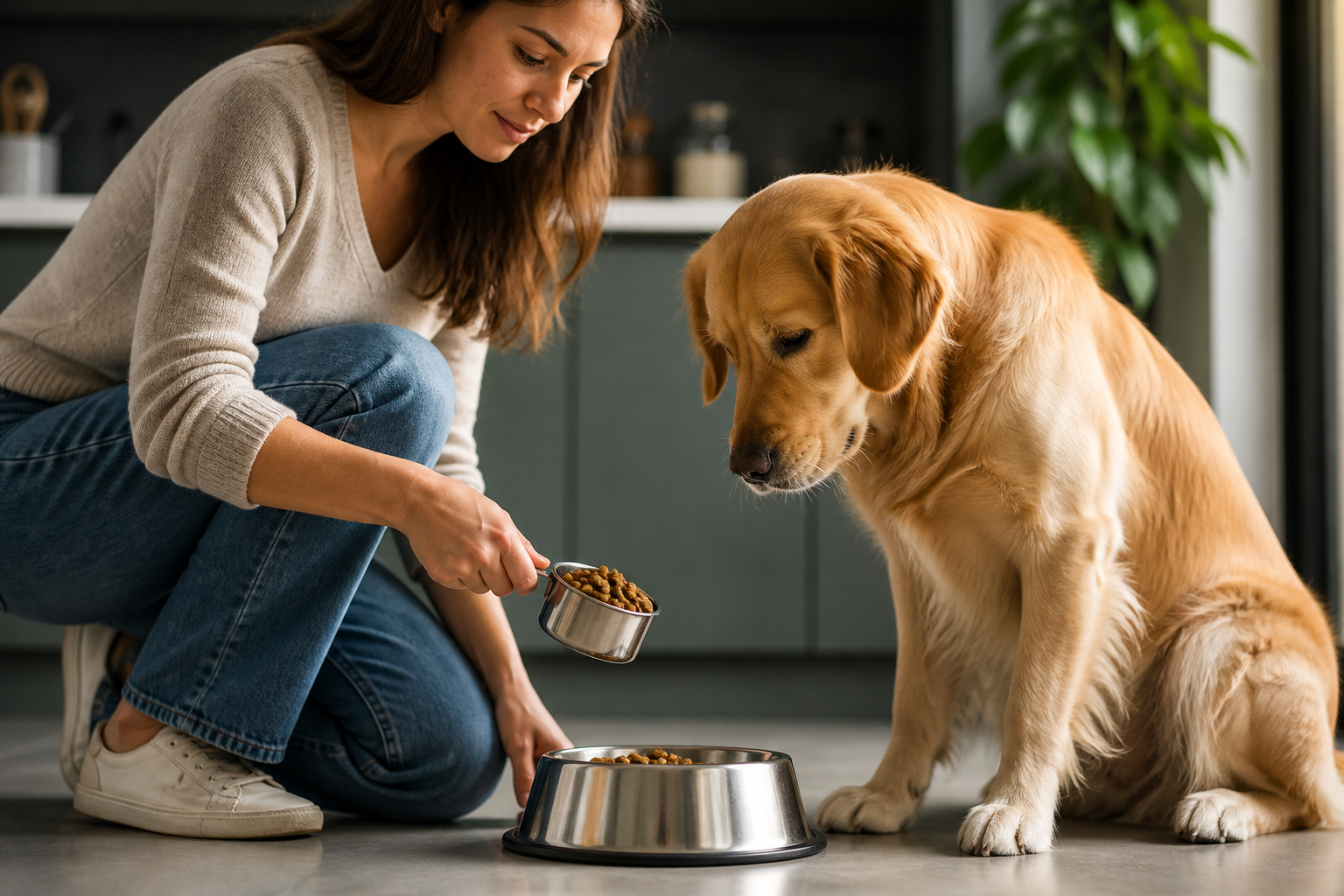
If you have ever stood in your kitchen with a plastic scoop in one hand and a bag of kibble in the other, you know the feeling of uncertainty. You want to give your dog enough energy to stay active, but you also want to avoid the health risks that come with carrying extra pounds. Most pet owners rely on the measuring cup provided in the bag, but volume can be deceptive. A cup of one brand might weigh significantly more than a cup of another, leading to unintentional overfeeding. At BaxterBoo, we know that precision is the key to a long and healthy life for your dog. This guide will walk you through how to determine the correct amount of dry food for your pet using weight as your primary metric. We will cover life stages, activity levels, and how to use professional tools like our pet pharmacy for specialized nutritional needs.
Quick Answer: Most adult dogs require about two to three percent of their ideal body weight in food per day, but this varies based on the caloric density of the kibble. The most accurate way to feed is by weighing the food in grams on a digital scale based on your veterinarian's recommended daily calorie count.
Why Weight Is More Accurate Than Volume
When you measure food by volume, you are measuring how much space the kibble takes up. This is problematic because kibble comes in many shapes and sizes. Large, airy kibble leaves a lot of space in a measuring cup. Small, dense kibble packs together tightly. If you switch from a large-kibble brand to a small-kibble brand and use the same scoop, you might be feeding twenty percent more calories without realizing it.
Measuring by weight removes this margin of error. Grams and ounces do not change based on the shape of the food. Many high-quality brands that we carry, such as Farmina or Ziwi Peak, are very nutrient-dense. This means a small amount of food by weight provides a lot of energy. If you use a standard cup for these premium foods, it is very easy to overserve. For additional perspective on how density affects portions, read how much a cup of dry dog food weighs.
Using a digital kitchen scale is the gold standard for pet nutrition. It allows you to be consistent every single day. This consistency is especially important for small breeds like Chihuahuas or Toy Poodles. For a five-pound dog, even an extra ten pieces of kibble can represent a significant portion of their daily caloric intake.
Factors That Influence Feeding Amounts
No two dogs are exactly the same. Even two dogs from the same litter can have different metabolisms. To find the right starting point, you must look at several individual factors.
Age and Life Stage
Puppies are growing machines. They require significantly more protein and fat than adult dogs to support bone development and tissue growth. A puppy might need twice as many calories as an adult dog of the same weight. Conversely, senior dogs often have slower metabolisms. They may be less active due to joint stiffness or decreased energy.
Activity Level
A dog that spends all day hiking or working on a farm has very different needs than a dog that enjoys short walks around the block. Working breeds like Border Collies or German Shepherds often require higher caloric intake to maintain their muscle mass. If your dog is a couch potato, you will need to scale back the weight of their daily food to prevent weight gain.
Spay and Neuter Status
Research shows that spaying or neutering a dog can lower their metabolic rate. Once a dog is fixed, they typically require fewer calories to maintain their weight. If you do not adjust their food weight after the procedure, you may notice them starting to gain weight within a few months.
Current Body Condition
Veterinarians use a nine-point scale to assess body condition. A score of five is considered ideal. If you can see your dog's ribs, they are likely underweight and need more food. If you cannot feel their ribs at all, they are likely overweight. You should always aim to feed for your dog's "ideal" weight rather than their "current" weight if they need to lose a few pounds.
Key Takeaway: Feeding charts on the back of the bag are only a starting point. You must adjust the weight of the food based on your dog's age, activity, and whether they have been spayed or neutered.
Understanding the Feeding Chart
Every bag of dry dog food is required by law to include a feeding guide. This chart usually lists the dog's weight on one side and the recommended daily amount of food on the other. It is important to remember that these numbers are for the total daily intake. If the chart says two cups and you feed twice a day, you should give one cup per meal.
However, most charts provide a range. For example, it might suggest 1.5 to 2 cups for a twenty-pound dog. This range exists to account for the factors we mentioned earlier, like activity level. If your dog is very active, start at the higher end. If they are older or sedentary, start at the lower end.
If the bag provides the weight of the food in grams alongside the cup measurements, always use the gram measurement. It is far more precise. If the bag only lists cups, you can often find the gram-per-cup weight on the manufacturer's website or by contacting their customer service. You can also compare formulas in our dry dog food category.
Vet Tip: If your dog is consistently leaving food in the bowl or gaining weight on the recommended amount, consult your veterinarian. They can calculate a precise Resting Energy Requirement (RER) for your dog to give you an exact calorie target.
How to Calculate Your Dog's Ideal Weight
To know how much to feed, you must first know what your dog weighs. For large dogs, this usually requires a trip to the vet's office to use their walk-on scale. For small to medium dogs, you can easily do this at home.
Step 1: Step on your home scale and record your own weight.
Step 2: Pick up your dog and step back on the scale.
Step 3: Subtract your weight from the total weight. The result is your dog's weight.
Once you have this number, compare it to the breed standard for your dog. If you have a mixed breed, look at their body shape. You should see a visible waistline when looking down at them from above. From the side, their abdomen should be tucked up behind the ribcage.
Managing Special Health Needs
Sometimes, standard retail food is not enough to manage a specific health condition. Dogs with kidney issues, severe allergies, or significant obesity may require a prescription diet. These diets are formulated with very specific nutrient ratios that must be followed strictly.
Our pharmacy at BaxterBoo offers a wide range of FDA-approved prescription pet foods and medications through our partnership with Pet's Choice. If your veterinarian has prescribed a specific weight-management diet like Royal Canin Satiety or Farmina Vet Life, you can fulfill those needs through our pet pharmacy. These specialized foods often have very specific feeding instructions by weight to ensure the dog loses weight safely without losing muscle mass.
Managing a chronic condition often involves more than just food. It might include supplements for joint support or medications for metabolic issues. Having access to a dedicated pharmacy makes it easier to keep all your dog's health needs in one place.
The Importance of Consistent Weighing
Once you have determined the correct weight of food for your dog, you need to stick to it. This is where many owners struggle. It is easy to add a "little extra" because your dog looks hungry. However, most dogs are opportunistic eaters and will act hungry even if they have had plenty of calories.
A digital scale is your best friend in this process. Place the bowl on the scale, tare it to zero, and pour the kibble until you hit the exact gram count. This takes less than ten seconds and ensures your dog is getting exactly what they need.
If you use treats for training, you must account for those calories too. A good rule of thumb is the ten-percent rule. Treats should never make up more than ten percent of your dog's total daily caloric intake. If you give a lot of treats one day, you should reduce the weight of their dry food that evening.
Checklist for Success
- Purchase a digital kitchen scale that measures in grams.
- Determine your dog's ideal weight with a vet's help.
- Calculate the daily gram amount based on the food's caloric density.
- Divide the total weight into two or three consistent meals.
- Monitor your dog's body condition every two weeks and adjust by five percent if needed.
Transitioning Between Foods
When you switch from one brand of dry food to another, the weight of the food will almost certainly change. Even if the bags are the same size, the ingredients and processing methods differ. A grain-free food like Stella and Chewy's might have a different density than a grain-inclusive formula from NutriSource.
Always do a slow transition over seven to ten days. Start by mixing twenty-five percent of the new food with seventy-five percent of the old food. Gradually increase the new food while decreasing the old. During this time, pay close attention to the weight. Do not just use the same scoop. Check the new bag for its specific feeding guidelines and weight recommendations. For another nutrient-dense option, browse our selection of Open Farm products.
Bottom line: Every brand of dog food has a unique caloric density, so you must recalibrate the weight of the daily serving every time you switch formulas.
Feeding Schedules and Frequency
How often you feed is just as important as how much you feed. For most adult dogs, two meals a day is the standard. This helps maintain steady blood sugar levels and prevents the dog from becoming overly hungry and searching for "scraps" throughout the day.
Puppies have much smaller stomachs and higher energy needs. They should typically be fed three to four times a day. As they reach six months of age, you can usually transition them to two meals. Senior dogs may also benefit from smaller, more frequent meals if they have digestive sensitivities or issues with acidity.
Consistency in timing also helps with house training and digestive regularity. If you feed at the same time every day, your dog's body will fall into a predictable routine for bathroom breaks. If you are feeding a puppy, see how much dry dog food to feed a puppy.
The Role of High-Quality Ingredients
Not all calories are created equal. A low-quality food may require you to feed a larger weight of kibble to meet your dog's nutritional needs because much of it is "filler" that passes through their system. High-quality foods, such as those from Orijen or Acana, are designed for high digestibility.
When you feed a high-quality diet, you often feed a smaller total weight of food. This results in smaller stools and better nutrient absorption. While the bag might be more expensive upfront, the cost per feeding is often comparable because you are using less food each day. At BaxterBoo, we curate our selection to include brands that prioritize real meat proteins and healthy fats over cheap fillers.
If you are looking for ways to save on these premium brands, consider our Autoship programme. It provides recurring delivery so you never run out of food, and it includes a free MVP Gold membership for additional savings. This is a great way to ensure you are always providing the best nutrition without the stress of last-minute trips to the store.
Monitoring and Adjusting
Your dog's needs will change throughout their life. A feeding amount that works in the summer when you are outside playing may be too much in the winter when activity levels drop. You should treat the weight of your dog's food as a living number that can be adjusted.
Check your dog's weight and body condition once a month. If you notice they are feeling a bit rounder, reduce the weight of their food by ten percent for the next month. If they seem too thin or their energy is low, increase it slightly. Small, incremental changes are much safer and more effective than drastic cuts or additions.
If you notice a sudden change in weight despite no changes in your food weight, contact your veterinarian. Sudden weight loss or gain can be a sign of underlying health issues like thyroid problems or diabetes.
Why We Care About Precision
At BaxterBoo, we are pet people first. We work in our warehouse in Vernon Hills, and we see the products we sell every day. We carry over five hundred brands because we know that every pet has unique needs. Whether you are managing a high-energy puppy or a senior dog with mobility challenges, getting the food weight right is the foundation of their care.
We also believe in making high-quality care accessible. Between our MVP Rewards programme and our frequent buyer programs on participating brands, we want to help you provide premium nutrition at a great value. Our goal is to be a partner in your pet's wellness journey for years to come.
Key Takeaway: Precision feeding through weighing food is the most effective way to prevent obesity and ensure your dog receives the exact nutrients they need for their specific life stage.
Conclusion
Determining how much dry dog food to feed by weight is one of the most impactful choices you can make for your pet's health. By moving away from vague volume measurements and toward precise weight in grams, you eliminate the guesswork that leads to weight issues. Remember to consider your dog's age, activity level, and health status when setting their daily portions. Always consult your veterinarian for a target weight and caloric goal, especially if your dog has underlying health conditions.
- Use a digital scale for every meal to ensure accuracy.
- Adjust portions based on life stages and seasonal activity changes.
- Account for treats within the total daily weight.
- Utilize specialized resources like our pharmacy for prescription needs.
If you are ready to start a more precise feeding routine, explore our wide selection of premium dry dog foods and consider signing up for Autoship to keep your routine consistent.
FAQ
Is it better to measure dog food by weight or by a cup?
Measuring by weight is significantly more accurate than using a cup. Kibble size, shape, and density vary between brands, meaning a "cup" of one food might have many more calories than a cup of another. A digital scale ensures your dog receives the exact amount of energy they need every single day.
How do I find out how many grams are in a cup of my dog's food?
Many premium dog food bags now list the weight in grams per cup on the nutritional label. If your bag does not have this information, you can weigh one level measuring cup of the food on a kitchen scale. You can also check the manufacturer’s website for the caloric density and weight specifications of that specific formula.
Should I change how much I feed my dog as they get older?
Yes, you should regularly reassess your dog's food weight. Puppies need a higher weight of food relative to their size to support growth, while senior dogs often require fewer calories due to a slower metabolism. If your senior dog becomes less active, you will likely need to reduce the weight of their daily kibble to prevent obesity.
Does my dog's spay or neuter status affect how much they should eat?
Spaying and neutering can lower a dog's metabolic rate, which means they often require fewer calories than intact dogs. If your dog has recently been fixed, it is a good idea to monitor their weight closely and potentially reduce their food intake by ten to fifteen percent. Your veterinarian can help you determine the best adjustment for your specific pet.






