
 Save 15% on your 1st Autoship learn more

 Email us
 Live Chat
 FAQs
FAQs





Introduction
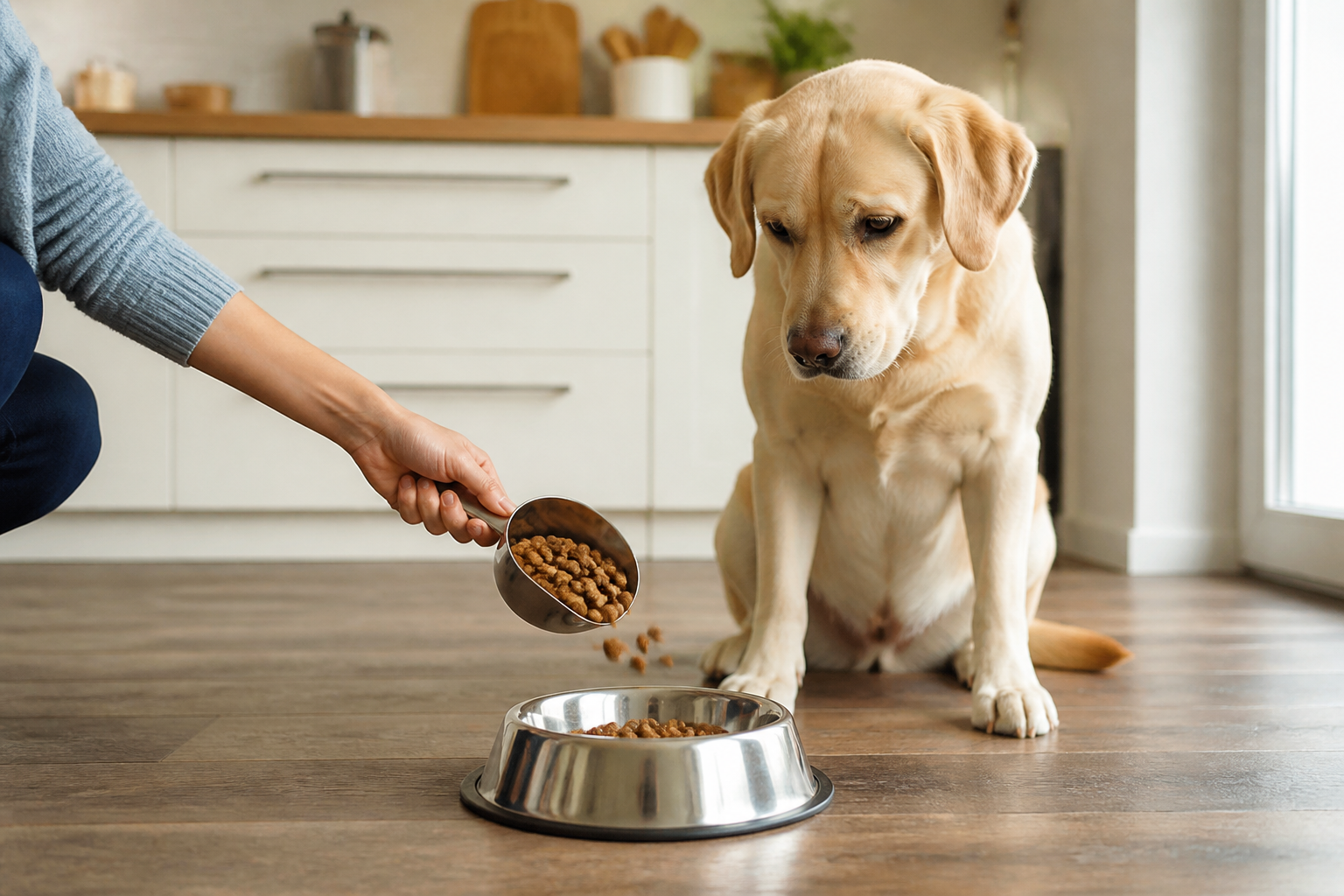
You stand in the kitchen with a measuring scoop in one hand and your dog’s bowl in the other. You want to provide enough fuel for their daily adventures without overfilling the bowl and risking their health. It is a common moment of uncertainty for every pet owner. Determining the exact amount of dry food your dog needs is not a simple one size fits all calculation.
At BaxterBoo, we know that every dog is an individual with unique metabolic needs. This guide explains how to calculate the right portion for your dog based on their age, weight, and lifestyle. We will look at how to read feeding charts and how to adjust those numbers for your specific pet. Our goal is to help you feel confident that you are nourishing your companion correctly.
The Factors That Determine Daily Food Intake
Determining how much to feed depends on several variables. No two dogs burn energy at the exact same rate. Even two dogs of the same breed and weight may have different requirements based on their daily habits.
Age and Life Stage
Puppies are in a state of constant growth and development. They require significantly more calories per pound of body weight than adult dogs. Their food must be nutrient dense to support bone, muscle, and organ growth. Conversely, senior dogs often have slower metabolisms. They may be less active and require fewer calories to maintain a healthy weight.
Body Weight and Size
A ten pound Toy Poodle has a very different caloric requirement than an eighty pound Golden Retriever. However, it is not just about their current weight. You must consider their ideal weight. If your dog is currently overweight, you should feed them based on the weight they should be, not the weight they are now.
Activity Level
A dog that runs three miles a day with their owner needs more fuel than a dog that spends the afternoon napping on the couch. Working dogs or those involved in agility training have much higher energy demands. If your dog’s activity level changes with the seasons, their food intake should also change.
Reproductive Status
Spayed or neutered dogs typically have lower energy requirements than intact dogs. Hormonal changes after these procedures can slow the metabolism. This makes them more prone to weight gain if their portions are not monitored closely.
Quick Answer: Most adult dogs require between 1/2 cup and 4 cups of dry food per day. This amount varies wildly based on their weight, age, and activity level. Always start with the manufacturer feeding guide and adjust based on your dog’s physical condition.
Understanding the Feeding Chart on the Bag
Every bag of dry food comes with a feeding chart. This chart is a legal requirement and serves as a helpful baseline. However, these charts are often based on "average" dogs. Many pet food companies use a generous estimate to ensure no dog is underfed. If you are comparing formulas, our dog food category offers options for different sizes and life stages.
How to Read the Chart
Most charts list the dog's weight in one column and the total daily amount of food in the other. This total amount is for the entire 24 hour period. If you feed your dog twice a day, you must divide that number in half for each meal.
Caloric Density
Different brands have different calorie counts per cup. One brand might have 300 calories per cup while another has 500. This is why you cannot use the same measuring cup for every brand of food. If you switch from a grain inclusive food to a high protein grain free option, the portion size will likely decrease.
The Importance of Using a Real Measuring Cup
Many owners "eyeball" the amount or use a coffee mug. This leads to significant overfeeding. A few extra kibbles every day can lead to several pounds of weight gain over a year. Use a standard kitchen measuring cup to ensure accuracy.
Key Takeaway: The feeding guide on your dog’s food bag is a starting point, not a strict rule. Monitor your dog’s weight and adjust the portion size up or down by 10 percent if you notice changes in their body condition.
Evaluating Your Dog’s Body Condition
Since every dog’s metabolism is different, the best way to know if you are feeding the right amount is to look at the dog. Veterinarians use a tool called the Body Condition Score. You can perform a version of this at home.
The Rib Test
You should be able to feel your dog’s ribs easily without pressing hard. However, the ribs should not be visible. If you cannot feel the ribs through a layer of fat, your dog is likely being overfed.
The Waistline
Look at your dog from above. They should have a visible waistline that tucks in behind the ribs. If your dog looks like a solid cylinder from above, they are likely carrying extra weight.
The Abdominal Tuck
Look at your dog from the side. The chest should be closer to the ground than the belly. A healthy dog has an "upward" slope from the chest to the hind legs.
Signs of Underfeeding
- Visible ribs, spine, or hip bones.
- A dull or brittle coat.
- Lethargy or lack of interest in play.
- Excessive shedding.
Vet Tip: If your dog is struggling to maintain a healthy weight despite proper feeding, consult your veterinarian. They can check for underlying issues like thyroid dysfunction or diabetes. Our pet pharmacy offers prescription diets and medications through our partnership with Pet's Choice if your vet recommends a medical approach to weight management.
Nutritional Needs by Life Stage
As your dog moves through life, their nutritional needs will shift. Feeding the wrong life stage formula can lead to health complications.
Feeding Puppies
Puppies usually need to eat three to four times a day. Their small stomachs cannot handle large meals. They need a steady supply of energy to prevent blood sugar drops, especially in toy breeds. Most puppies transition to adult food around twelve months of age. Large and giant breeds may stay on puppy food longer to ensure their bones do not grow too quickly. If you are feeding a young dog, our puppy collection can help you compare life-stage options.
Feeding Adults
Most adult dogs do well with two meals a day. This helps maintain steady energy levels and aids in digestion. During this stage, the focus is on maintenance. You want to balance their protein, fats, and carbohydrates to keep their muscle mass high and their fat stores low.
Feeding Seniors
Senior dogs often benefit from foods with lower calories but higher fiber. This helps them feel full without packing on weight. Some senior dogs also need specific nutrients to support joint health or cognitive function.
Bottom line: Match your dog's food to their specific life stage to ensure they receive the correct balance of vitamins and minerals for their age.
The Role of Treats and Toppers
Many owners forget to count treats when calculating daily food. This is a common cause of weight gain. Treats should never make up more than 10 percent of your dog's daily caloric intake. You can compare reward options in our dog treats collection.
Calculating Treat Calories
If you give your dog a high calorie dental chew or a handful of biscuits, you must reduce their dry food portion. Even healthy toppers like fresh blueberries or green beans add calories.
Using Kibble for Training
If you are doing a lot of training, use part of your dog's measured daily dry food as rewards. This ensures they get the positive reinforcement they need without exceeding their daily limit.
High Quality Brands
We carry several trusted brands at BaxterBoo that offer nutrient dense recipes. Brands like Acana, Orijen, and Stella and Chewy’s focus on high quality proteins. When feeding these premium foods, you often find that your dog needs less volume to feel satisfied.
For more guidance on food preferences and transitions, read what dry dog food is best for picky eaters.
How to Transition to a New Food
If you realize you need to change your dog's food or the amount they eat, do it slowly. A sudden change can lead to an upset stomach or diarrhea.
The Seven Day Transition
- Days 1 and 2: Feed 75 percent old food and 25 percent new food.
- Days 3 and 4: Feed 50 percent old food and 50 percent new food.
- Days 5 and 6: Feed 25 percent old food and 75 percent new food.
- Day 7: Feed 100 percent new food.
Monitoring the Results
Watch your dog's stool during this time. If it becomes soft, slow down the transition. You should also watch their energy levels. It can take a few weeks to see the full impact of a new diet on their coat and weight.
For another perspective on changing diets, see how to feed freeze-dried dog food.
Managing Weight Through Nutrition
If your dog needs to lose weight, simply cutting their food in half is not the best approach. This can lead to nutritional deficiencies. Instead, look for a food formulated for weight management.
Prescription Diets
Sometimes a standard "light" food is not enough. Your veterinarian might suggest a prescription weight loss diet. These are designed to be high in fiber and protein to keep the dog satisfied while cutting calories.
Our pharmacy carries FDA approved prescription pet foods through our partnership with Pet's Choice. If your vet provides a prescription for brands like Royal Canin or Farmina Vet Life, we can help you get those delivered to your door.
Weight Management Checklist
- Measure every meal with a standard cup.
- Limit treats to 10 percent of daily calories.
- Increase physical activity slowly.
- Monitor body condition every two weeks.
- Keep a food log if multiple people feed the dog.
You can also explore our dog health category for related health and wellness supplies.
Frequency and Timing of Meals
While the amount of food is vital, how you deliver it also matters. Most experts recommend a consistent schedule.
Scheduled Feeding vs. Free Feeding
Free feeding is the practice of leaving a full bowl of food out all day. This is generally discouraged for most dogs. It makes it difficult to monitor how much they are eating. It also removes a key indicator of health. A dog that suddenly stops eating their scheduled meal is often a dog that needs a vet visit.
Benefits of Scheduled Meals
- Helps with house training for puppies.
- Reduces the risk of obesity.
- Allows you to monitor appetite changes.
- Creates a routine that reduces anxiety.
Feeding Before or After Exercise
Avoid feeding your dog immediately before or after heavy exercise. This is especially important for deep chested breeds. Large meals near exercise can increase the risk of bloat, which is a life threatening emergency. Wait at least 30 to 60 minutes between eating and vigorous play.
Using Technology and Tools for Better Feeding
In the modern age, there are many tools to help you stay on track.
Automatic Feeders
These can be helpful if you work long hours. They ensure your dog gets the exact portion at the exact time every day. However, they are not a substitute for human interaction and monitoring.
Slow Feeder Bowls
If your dog gulps their food in seconds, they may not feel full. Slow feeder bowls use ridges and patterns to make the dog work for their food. This improves digestion and gives the brain time to register that the stomach is full.
Scales for Food
For the most precise measurement, use a digital kitchen scale. Measuring by weight in grams is much more accurate than measuring by volume in a cup. Kibble size and shape can change how much fits in a measuring cup. Weight remains constant.
Conclusion
Feeding your dog the right amount of dry food is an act of love and care. It requires a balance of science and observation. Start by reading the label on your dog's food and adjusting for their age and activity. Remember to keep treats in check and monitor their body condition regularly.
If your dog has specific health concerns that impact their diet, your veterinarian is your best resource. We invite you to explore our selection of premium foods and health supplies at BaxterBoo. You can even set up our Autoship programme to ensure you never run out of your dog’s favorite recipe. Taking these steps today helps ensure your dog stays happy and healthy for years to come.
FAQ
How do I know if I am feeding my dog too much?
The clearest sign of overfeeding is weight gain and a loss of a visible waistline. You should be able to feel your dog's ribs under a thin layer of skin. If you cannot feel them without pressing firmly, or if your dog becomes lethargic, you should reduce their portion size.
What should I do if my dog always seems hungry?
Some dogs are naturally food motivated and will act hungry even when they have had enough calories. You can try adding low calorie fillers like green beans or canned pumpkin to their meals to help them feel full. If the hunger is sudden and intense, consult a vet to rule out issues like parasites or malabsorption.
Is it better to feed my dog once or twice a day?
Most veterinarians recommend feeding adult dogs twice a day. This keeps their metabolism steady and prevents the stomach from being empty for too long. For puppies, three to four small meals are usually necessary to support their high energy needs and smaller stomach capacity.
Does my dog need more food in the winter?
If your dog spends a significant amount of time outdoors in the cold, they may need more calories to maintain their body temperature. However, many pet dogs actually become less active in the winter because they go on fewer walks. Always adjust their food based on their actual activity level and body condition rather than the season alone.






