
 Save 15% on your 1st Autoship learn more

 Email us
 Live Chat
 FAQs
FAQs





Introduction
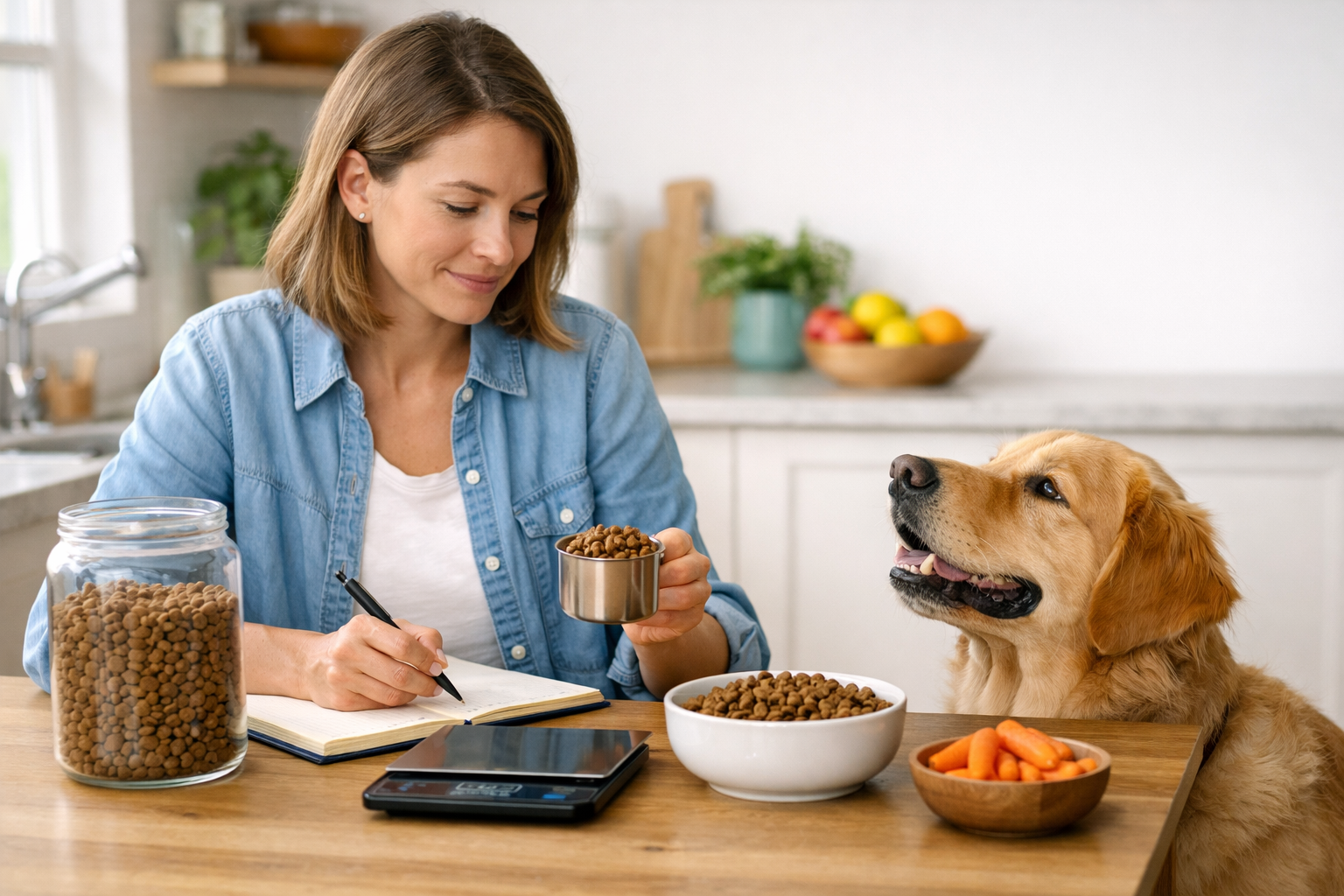
You are standing in your kitchen with a measuring cup in one hand and a bag of kibble in the other. Your dog is looking up at you with those expectant eyes. You want to provide enough energy for their daily adventures. At the same time, you worry about overfeeding and the health risks of extra weight. Finding the exact amount of food for your dog can feel like a guessing game. It is a question we hear often at our warehouse in Vernon Hills. Every dog has a unique metabolic rate. Their needs change based on age, activity level, and overall health. This guide will help you navigate feeding charts and calorie counts. You can also start by browsing our dry dog food category. You will learn to tailor portions to your dog’s specific life stage. You will learn to recognize the signs of a healthy weight so you can feed with confidence.
Understanding the Feeding Chart on the Bag
Every bag of dry dog food comes with a feeding guide. These charts are the most common starting point for pet owners. They usually list a weight range and a corresponding cup measurement. However, these numbers are just averages. They are designed for a typical adult dog with a moderate activity level. Most manufacturers base these numbers on intact dogs who exercise regularly. If your dog is more of a couch potato, these suggestions might be too high.
The chart is a baseline, not a rule. You should look at the calorie content per cup. This is often listed as kcal/kg or kcal/cup. One brand might have 350 calories per cup, while another has 500. This is why you cannot use the same measuring cup amount when you switch brands. If you move from a standard kibble to a nutrient dense brand like Stella and Chewy's or Open Farm, you may need to feed less volume to provide the same energy.
Quick Answer: Most adult dogs need between 20 and 30 calories per pound of body weight daily. This amount changes based on their metabolism and activity. Always start with the lower end of the bag's recommendation and adjust based on your dog's body condition.
Factors That Change the Baseline
Several variables will push your dog’s needs above or below the chart. A working dog like a Border Collie will need more fuel than a Pug. A dog living in a cold climate might burn more calories just to stay warm. Even the simple act of spaying or neutering changes things. This procedure can lower a dog's metabolic rate. This means they may require up to 20 percent fewer calories than an unaltered dog of the same weight.
- Current weight versus ideal weight
- Metabolic rate and breed genetics
- Spay or neuter status
- Daily exercise and "job" requirements
- Environmental temperature
Feeding by Life Stage
A dog's nutritional needs are not static. They shift dramatically as they move from a fast growing puppy to a maintained adult and eventually to a slower senior. Feeding the wrong amount for a specific life stage can lead to developmental issues or unnecessary weight gain.
Puppies and High Growth Needs
Puppies are tiny energy machines. They require significantly more protein and fat than adult dogs. They also need more calories per pound of body weight to support bone and muscle development. Large breed puppies are especially sensitive. If they grow too fast, it can put stress on their developing joints. Most puppies should eat three to four small meals a day to keep their blood sugar stable. If you want a more detailed breakdown, see How Much Dry Dog Food to Feed a Puppy.
Adult Maintenance
Once a dog reaches maturity, the goal shifts to maintenance. This is the stage where it is easiest to accidentally overfeed. Many owners continue feeding puppy amounts for too long. For most adult dogs, two meals a day is the standard schedule. This helps with digestion and keeps hunger at bay.
Senior Dogs and Metabolism
As dogs age, their activity levels usually drop. Their metabolism also slows down. Senior dogs may need fewer calories but higher quality protein to maintain muscle mass. Some seniors also manage health conditions like kidney issues or joint stiffness. This is a common time to look at specialized diets. Our pharmacy offers prescription pet foods through a veterinary-style selection for dogs with specific health requirements.
Vet Tip: If your senior dog is losing weight despite eating the usual amount, consult your veterinarian. Weight changes in older pets can signal underlying health issues that need professional diagnosis.
The Role of Activity Levels
Activity is one of the biggest influencers of calorie needs. A dog that walks for twenty minutes a day is considered "low activity." A dog that hikes for two hours or participates in agility is "high activity."
If you have a very active dog, you may need a performance formula. Brands like Acana or Orijen offer recipes with higher fat and protein ratios. This allows you to provide enough energy without making the dog eat a massive volume of food. On the flip side, if your dog's primary exercise is walking to the food bowl, a weight management formula is better. These recipes often include more fiber to help the dog feel full on fewer calories.
Key Takeaway: You must adjust the scoop size based on what your dog actually did that day. If you took a long weekend hike, an extra half scoop is fine. If it rained and you stayed inside, stick to the lower limit.
Measuring Tools and Accuracy
Accuracy matters when dealing with small portions. Many owners use a random coffee mug or a plastic cup from the cupboard. These rarely equal a standard 8 ounce measuring cup. A "cup" in the pet food world is a precise unit of volume. Using a larger cup can lead to overfeeding by 10 to 20 percent every single meal. Over a year, that adds up to significant weight gain.
We recommend using a dedicated kitchen scale if you want to be truly precise. Weighing the food in grams is the most accurate way to ensure your dog gets the same amount every time. Kibble size and shape can change how much fits in a measuring cup. Large, airy kibble takes up more space than dense, small pieces. Weighing the food removes that inconsistency.
How to Measure Correctly
Step 1: Determine the daily caloric need. / Work with your vet or use the food bag to find the total calories per day.
Step 2: Divide by the number of meals. / If your dog eats twice a day, cut the total daily amount in half for each serving.
Step 3: Use a standard measuring tool. / Use a level 8 ounce dry measuring cup or a kitchen scale. Avoid "heaping" scoops.
Step 4: Account for treats. / Subtract the calories from treats from the total meal amount to avoid overages.
Bottom line: Precise measuring is the easiest way to prevent obesity in household pets.
Incorporating Treats and Toppers
Treats are a major source of "hidden" calories. It is easy to forget the two biscuits given after a walk or the bit of cheese used for training. Most experts recommend that treats should make up no more than 10 percent of a dog's daily caloric intake. If you give a lot of treats, you must reduce the amount of dry food in the bowl.
Toppers like wet food, freeze dried raw, or bone broth are great for picky eaters. However, they are also calorie dense. If you add a topper from a brand like The Honest Kitchen or Caru, read the calorie count on the package. Even a small spoonful of wet food can be 30 to 50 calories. For more ideas, check our food topper collection.
Healthy Treat Habits
- Use small, low calorie training treats like those from Zesty Paws or Honest Paws.
- Try fresh vegetables like green beans or carrots for a crunch without the calories.
- Break larger biscuits into smaller pieces.
- Keep a jar of "daily treats" aside so you know exactly how many have been given.
Managing Weight and Body Condition
Since every dog is different, the best way to tell if you are feeding the right amount is to look at the dog. A weight scale tells you a number, but body condition tells you the story. You should be able to feel your dog’s ribs easily without a thick layer of fat over them. When looking from above, your dog should have a visible waistline behind the ribs. From the side, the abdomen should tuck up slightly toward the hind legs.
If your dog is losing their waistline, it is time to cut back. Start by reducing the daily kibble by 10 percent. Monitor their weight for two to three weeks. Weight loss should be slow and steady. If your dog is significantly overweight, your vet may recommend a prescription diet. BaxterBoo provides access to these specialized foods through our pharmacy selection. These diets are formulated to keep dogs satiated while strictly controlling calories.
Key Takeaway: Body condition scoring is more useful than the number on a scale. Check your dog's ribs and waistline every two weeks to stay on track. If you want a deeper refresher, read A Practical Guide to New Year Pet Weight Management.
Common Feeding Mistakes to Avoid
Even well intentioned owners make mistakes. One of the most common is "free feeding." This is the practice of leaving a bowl full of food out all day. While it is convenient, it makes it impossible to track exactly how much the dog is eating. It also removes the structure that many dogs thrive on. Scheduled mealtimes allow you to monitor appetite changes, which are often the first sign of illness.
Another mistake is feeding based on the dog's current weight when they are actually overweight. If your dog weighs 60 pounds but should weigh 50, you should feed for the 50 pound goal. Feeding for the current heavy weight will only maintain the obesity.
- Free feeding: Leads to grazing and weight gain.
- Eyeballing portions: Causes inconsistent calorie intake.
- Ignoring treat calories: Can add hundreds of extra calories a week.
- Feeding for the wrong weight: Prevents necessary weight loss.
When to Consult a Professional
If you have adjusted the food and your dog is still gaining weight, or if they seem constantly hungry and lethargic, a vet visit is necessary. Some medical conditions like hypothyroidism or Cushing’s disease can cause weight gain regardless of food intake. Your vet can perform blood work to rule these out.
If your dog has a chronic condition like diabetes or kidney disease, their feeding requirements are very strict. In these cases, you should never guess. Use the specific plan provided by your veterinarian. Our pharmacy is a resource for these owners, offering FDA approved medications and prescription diets. We carry trusted names like Farmina Vet Life and Royal Canin to help manage these ongoing health needs.
Vet Tip: Sudden changes in appetite or weight should always be discussed with a professional. They can help determine if the issue is nutritional or medical.
Using Rewards and Programs for Value
Caring for a dog is a long term commitment. Since you will be buying dry food for many years, it makes sense to use programs that offer value. Our MVP Rewards program allows you to earn rewards on eligible purchases. This is helpful for stocking up on premium brands like Acana or Orijen.
Many owners also find our Autoship service useful. It ensures you never run out of kibble, and you get savings on your first order. It also includes a free MVP Gold membership. For those who live near Vernon Hills, our warehouse model allows for easy in store pickup or home delivery. This hybrid approach gives you the expertise of a local shop with the convenience of an online retailer.
Summary Checklist for Feeding
To ensure your dog is getting the right amount of dry food, follow this simple routine:
- Check the kcal/cup on your current bag of food.
- Calculate the daily calorie goal based on your dog's ideal weight.
- Use a standard measuring cup or a kitchen scale for every meal.
- Monitor body condition every two weeks (ribs and waistline).
- Limit treats to 10 percent of total daily calories.
- Adjust portions if activity levels change significantly.
By staying consistent and observant, you can help your dog maintain a healthy weight for life. This prevents joint stress and long term metabolic issues. It also ensures they have the energy to enjoy every walk and playtime. If you are comparing formulas, start with our senior dog food category.
FAQ
Why is the feeding amount on the bag different from what my vet recommended?
Pet food companies often provide generous estimates to ensure no dog is underfed. These charts usually target active, intact adult dogs. Your veterinarian considers your dog's specific health, spay or neuter status, and actual activity level. This often results in a lower, more accurate daily calorie goal.
How do I know if I should switch to a weight management food?
If you have reduced your dog's regular kibble portions and they still aren't losing weight, a weight management formula may help. These foods are lower in calorie density but higher in fiber to keep your dog feeling full. Our pharmacy carries several prescription and specialized weight management options through our veterinary-style selection.
Should I feed my dog once or twice a day?
Most veterinarians recommend feeding adult dogs twice a day. This helps maintain steady blood sugar levels and prevents the dog from becoming overly hungry and searching for scraps. For dogs prone to bloating, smaller and more frequent meals may be advised. Always consult your vet for a schedule tailored to your dog's breed and size.
Can I mix different brands of dry food together?
You can mix brands, but you must calculate the calories for both to get the portion right. Since different brands have different calorie densities, simply mixing them half and half might change the total energy intake. If your dog has a sensitive stomach, stick to one consistent formula to avoid digestive upset.






