
 Save 15% on your 1st Autoship learn more

 Email us
 Live Chat
 FAQs
FAQs





Introduction
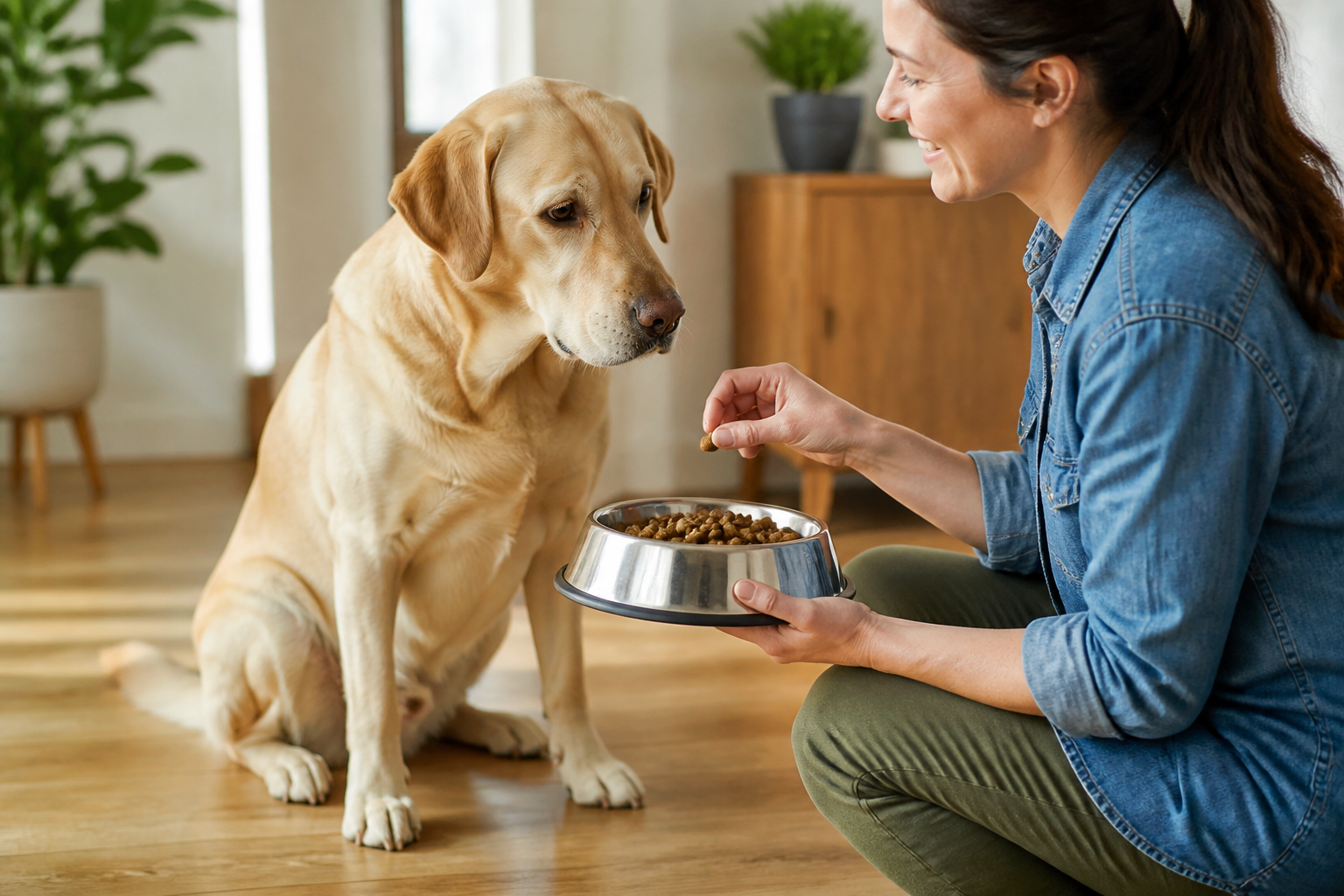
You are standing in your kitchen with a measuring scoop in one hand and a bag of kibble in the other. Your dog is waiting patiently. You know they weigh exactly 70 pounds. You want to make sure you are not overfeeding them or leaving them hungry. This is a common moment for many pet owners who want to get nutrition exactly right. At BaxterBoo, we know that a 70 lb dog sits right at the threshold of being a large breed. This means their caloric needs can vary wildly based on their age and how much they run each day. This guide covers how to calculate the right portion for your dog. We will look at calorie density, activity levels, and how to use feeding charts. Finding the right balance ensures your dog stays lean and energetic for years to come.
Quick Answer: A typical 70 lb adult dog usually needs between 3 and 4 cups of dry food per day. This amount provides roughly 1,200 to 1,600 calories. The exact portion depends on the calorie count of your specific dog food and your dog's activity level.
Understanding Calories for a 70 lb Dog
The most important thing to understand is that we do not feed dogs by volume alone. We feed them for energy. A cup of one brand might have 300 calories. A cup of another brand might have 500 calories. If you switch brands without checking the calories, you could accidentally overfeed your dog by a huge margin.
For a 70 lb dog, veterinarians often look at the Resting Energy Requirement. This is the amount of energy a dog uses just to breathe and digest food while sitting still. For a dog of this size, that baseline is about 1,000 calories. Most dogs are more active than that. We use multipliers to find the real number. A typical neutered adult dog needs about 1,600 calories. An older or less active dog might only need 1,200 calories.
Calories by Activity Level
Activity level is the biggest variable in the equation. A dog that sleeps on the couch all day has a very different metabolism than a dog that goes on five mile hikes.
| Activity Level | Description | Estimated Daily Calories |
|---|---|---|
| Inactive or Senior | Minimal walks and mostly naps | 1,000 to 1,200 kcal |
| Typical Adult | Daily walks and backyard play | 1,400 to 1,600 kcal |
| Active Dog | Running or long hikes daily | 1,800 to 2,000 kcal |
| Working Dog | All day physical activity | 2,200+ kcal |
The Math of the Scoop
Once you know your dog needs 1,600 calories, you must look at the bag. Look for the "kcal/cup" number. If your food has 400 calories per cup, the math is simple. You would feed 4 cups per day. If the food is very rich and has 500 calories per cup, you only need 3.2 cups. Small differences in these numbers add up quickly over a month. You can compare formulas in our adult dog food category when evaluating different calorie densities.
Key Takeaway: Calories matter more than cups. Always check the calorie density of your specific food to avoid accidental weight gain.
Reading the Feeding Chart Correctly
Every bag of dry food has a feeding chart. These charts are required by law. However, they are only a starting point. Most manufacturers base their numbers on active, un-neutered dogs. These dogs burn calories faster than the average family pet. If you follow the bag's high end recommendation, your 70 lb dog might start gaining weight.
Look at the weight range on the chart. For a 70 lb dog, you will often see a range like 3 to 4 cups. If your dog is a couch potato, start at the lowest number. If your dog is an athlete, look at the higher number. Remember that these charts show the total amount for the whole day. You should divide this total into at least two meals.
Why Breed Type Matters
A 70 lb Labrador has a very different metabolism than a 70 lb Poodle mix. Labradors are famous for being highly food motivated. They also tend to gain weight easily. Other breeds may be more naturally lean. If your dog has a thick coat, it is even harder to see weight changes. You have to be more disciplined with the measuring cup for breeds prone to obesity.
Vet Tip: If your 70 lb dog is neutered or spayed, they likely need about 20 percent fewer calories than an intact dog. This is because their metabolic rate changes after the procedure.
The Role of Life Stages
A 70 lb dog is not always an adult. You might have a large breed puppy that has already hit 70 pounds but is still growing. You might also have a senior dog that is slowing down. Both require a different approach to the food bowl.
Large Breed Puppies
If your 70 lb dog is under a year old, they are likely a large breed puppy. These dogs need specific calcium and phosphorus levels. They need enough energy to grow but not so much that they grow too fast. Growing too fast can lead to joint problems later in life. Always use a formula specifically for large breed puppies until they are fully grown. If you are feeding a growing dog, our puppy food selection is a useful place to compare options.
Senior Dogs
As dogs age, their metabolism slows down. A 70 lb senior dog may only need 1,000 to 1,200 calories to stay healthy. Carrying extra weight is very hard on senior joints. Many senior foods are lower in calories but higher in fiber. This helps the dog feel full without packing on pounds. For additional guidance, read our guide to pet weight management.
Bottom line: Adjust the portion size as your dog moves through different life stages to prevent strain on their heart and joints.
Health Conditions and Prescription Diets
Sometimes, a standard bag of dry food is not enough. If your 70 lb dog has specific health issues, their diet becomes a medical tool. This is common for dogs with allergies, kidney issues, or significant weight problems. Our pharmacy at BaxterBoo offers a wide range of prescription pet foods to help manage these conditions.
We partner with Pet's Choice to provide FDA approved medications and prescription diets. If your vet recommends a specific food for weight loss or joint support, you can find options like Farmina Vet Life in our collection. These foods are formulated with precise nutrient levels that standard kibble cannot match. Since we are a hybrid retailer, you can order these online or pick them up at our warehouse store.
When to Seek a Vet's Advice
If you notice your dog is losing weight despite eating 4 cups a day, see a vet. The same applies if they are gaining weight on very little food. This could signal an underlying issue like a thyroid problem or parasites. Always consult your veterinarian before starting a strict weight loss plan. They can help you determine the safest daily calorie count.
Vet Tip: Sudden changes in appetite or weight should always be discussed with a professional. A 70 lb dog can hide symptoms well, so monitoring their food intake is your best way to catch problems early.
Monitoring Body Condition at Home
The scale is a good tool, but it does not tell the whole story. You need to look at your dog's shape. This is called Body Condition Scoring. You can do this at home in about thirty seconds. It is the best way to tell if your 4 cup daily portion is actually working.
The Rib Test
Place both hands on your dog's ribcage. You should be able to feel the ribs easily under a thin layer of skin. You should not have to press hard to find them. If you cannot feel the ribs at all, your dog is likely overweight. If the ribs are visible from across the room, your dog might be underweight.
The Overhead View
Stand over your dog and look down at their back. You should see a clear waistline behind the ribs. The body should narrow before widening again at the hips. If your dog looks like a solid rectangle or an oval from above, it is time to trim the portions.
The Side View
Look at your dog from the side. The chest should be deeper than the stomach. The belly should tuck up toward the hind legs. A sagging or flat belly line on a 70 lb dog usually means they are carrying too much body fat.
Step 1: Feel the ribs. They should feel like the back of your hand, not your knuckles or your palm.
Step 2: Check the waist from above. Look for an hourglass shape.
Step 3: Check the abdominal tuck from the side.
Step 4: Adjust the food by 10 percent if the shape is not ideal.
Treats and Extras
It is easy to forget that treats have calories too. If you give your dog a large marrow bone or several biscuits a day, you must subtract those calories from their dinner. For a 70 lb dog, treats should not make up more than 10 percent of their daily calories. If your dog needs 1,500 calories, only 150 should come from treats.
Many owners use high value treats for training. If you are in an active training class, your dog might eat 200 or 300 calories in treats. On those days, you should feed a smaller portion of dry food at night. This keeps the total daily energy intake consistent.
Healthy Low Calorie Alternatives
If your dog is always acting hungry, you can use low calorie fillers. Some owners add green beans or plain canned pumpkin to the bowl. These are high in fiber and low in calories. They help the dog feel full while you are cutting back on the kibble portion. Our dog treats category can also help you compare options for training and rewards.
Bottom line: Treats are often the hidden cause of weight gain. Always account for them when calculating your dog's daily dry food portion.
Creating a Feeding Routine
Consistency is key for a dog's digestion. Most 70 lb dogs do best with two meals per day. This prevents them from getting too hungry and helps stabilize their energy. It also reduces the risk of bloat, which is a serious concern for larger dogs. Bloat can occur when a dog eats one massive meal too quickly.
Use a standard measuring cup. Do not use a coffee mug or a random plastic scoop. Even a small overage of a quarter cup can lead to several pounds of weight gain over a year. If you want even more precision, consider using a kitchen scale to weigh the food in grams. This is the most accurate way to ensure every meal is the same.
The Importance of Fresh Water
Dry food has very little moisture. Your 70 lb dog will need to drink a significant amount of water to stay hydrated and digest their kibble. Always make sure their water bowl is clean and full. If you notice they are drinking significantly more than usual, it may be worth a trip to the vet.
Transitioning to a New Food
If you decide to switch brands or formulas, do it slowly. A 70 lb dog can have a sensitive stomach. A quick change can lead to digestive upset. For another perspective on choosing a formula, read our guide to selecting dry dog food.
Step 1: Mix 25 percent of the new food with 75 percent of the old food for two days.
Step 2: Mix 50 percent of each food for another two days.
Step 3: Mix 75 percent of the new food with 25 percent of the old food for two days.
Step 4: Feed 100 percent of the new food.
Key Takeaway: A slow transition helps prevent diarrhea and ensures your dog actually likes the new flavor and texture.
Value and Selection at BaxterBoo
Feeding a 70 lb dog can get expensive. We carry over 500 trusted brands to help you find the best balance of quality and price. Brands like NutriSource, Acana, and Open Farm offer high quality proteins that keep your dog satisfied. We also offer ways to save on your regular orders.
Our Autoship program is a great option for owners of large dogs. You can set your food to deliver on a schedule so you never run out. This also earns you a free MVP Gold membership and savings on your first order. If you are a new customer, you can even get a 10 dollar reward on your first order over 39 dollars when you sign in at checkout. We have been helping pet owners since 2006, and our 4.9 star Google rating shows how much we care about your experience. Learn more about how Autoship works before setting up recurring deliveries.
Conclusion
Feeding your 70 lb dog the right amount of dry food is an ongoing process. It starts with a baseline of 3 to 4 cups, but it changes as your dog grows and ages. By checking the calorie count on the bag and monitoring your dog's body shape, you can make smart adjustments. Remember to account for treats and keep a consistent schedule to support their digestion. If your dog has specific health needs, lean on the expertise of your veterinarian and our pharmacy services. Providing the right nutrition is one of the best ways to show your dog you love them.
- Check the kcal/cup on your food bag.
- Divide the daily total into two separate meals.
- Keep treats under 10 percent of total calories.
- Use the rib test once a month to check weight.
Bottom line: Start with 3.5 cups for a 70 lb adult dog and adjust based on their activity and body condition.
FAQ
How many cups of food should a 70 lb dog eat a day?
Most 70 lb dogs need between 3 and 4 cups of dry food daily. This depends on the calorie density of the specific brand you choose. If the food is high in fat and protein, you will need less. If it is a weight management formula, you might need more.
Is 2 cups of food enough for a 70 lb dog?
For most 70 lb dogs, 2 cups is likely not enough and could lead to weight loss and nutrient deficiencies. However, if the food is exceptionally calorie dense or the dog is very senior and inactive, it might be closer to the correct amount. Always check the calories per cup on your bag to be sure.
How often should I feed my 70 lb dog?
It is best to feed a 70 lb dog twice a day, once in the morning and once in the evening. This helps prevent hunger and can reduce the risk of bloat, which is common in larger breeds. Scheduled meals are generally better for weight management than leaving food out all day.
How many calories does a 70 lb dog need?
A typical, moderately active 70 lb adult dog needs roughly 1,400 to 1,600 calories per day. This number will be lower for senior dogs or those that have been neutered. Active working dogs may need 2,000 calories or more to maintain their weight.






