
 Save 15% on your 1st Autoship learn more

 Email us
 Live Chat
 FAQs
FAQs





Introduction
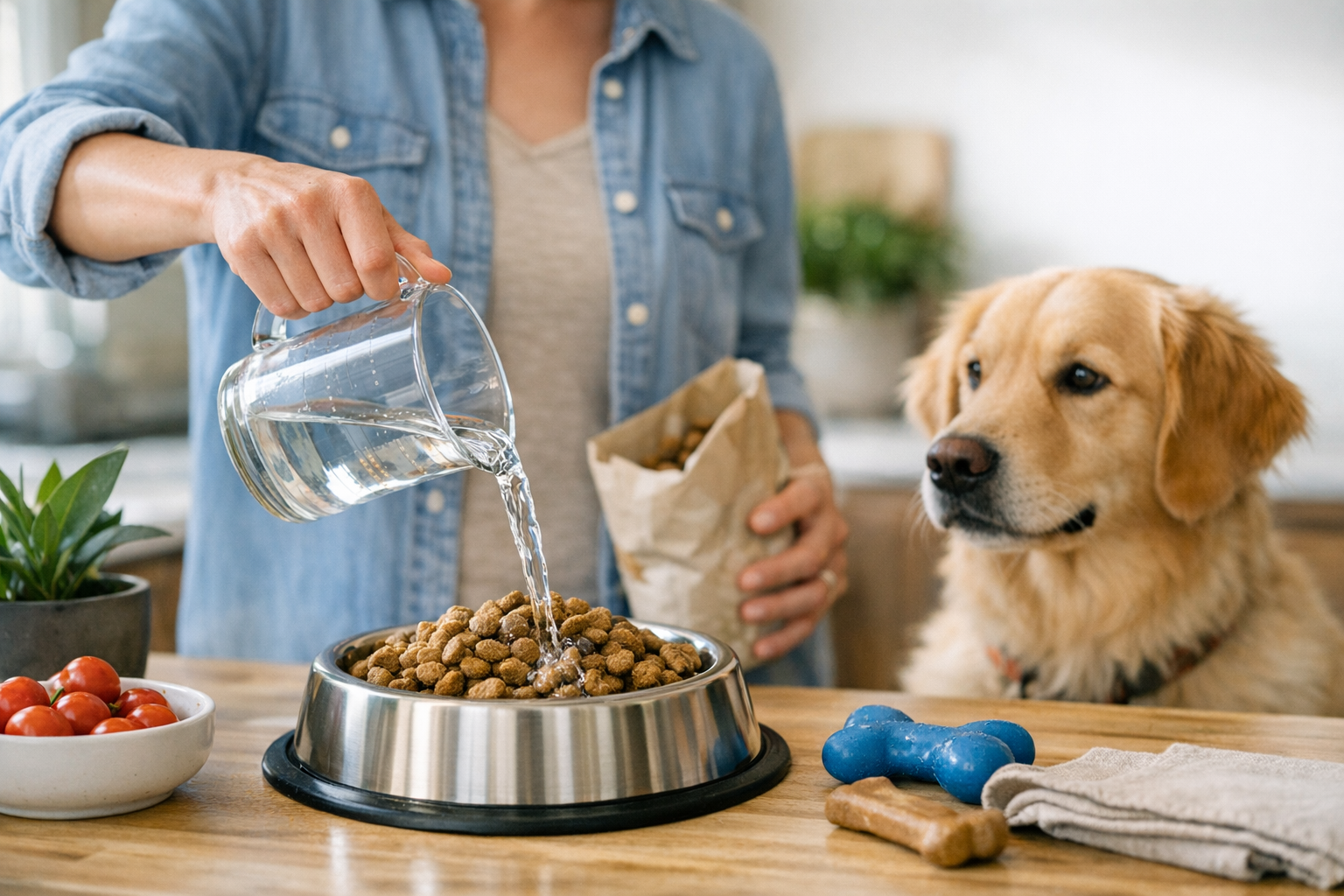
You are standing in your kitchen at mealtime. Your dog is waiting patiently while you scoop dry kibble into their bowl. You might notice how dusty or hard those pieces look and wonder if they need a little help. It is a common moment of doubt for many pet owners who want to ensure their dogs stay hydrated and healthy. Adding water to dry food is a simple change that can make a huge difference in how your pet digests their meal.
At BaxterBoo, we have helped pet owners find the best nutritional solutions since 2006. If you want to compare options while you fine-tune mealtime, our adult dog food selection is a helpful place to start. We know that the right amount of moisture can turn a boring meal into a hydrating feast. This post covers the ideal water to kibble ratios and the health benefits of soaking food. You will learn the best methods for different life stages to keep your dog thriving. Adding water to dry food is one of the easiest ways to support your dog’s long term wellness.
Quick Answer: The standard recommendation is to add 1/4 cup of water for every 1 cup of dry kibble. This creates a light gravy and softens the food without making it overly soggy or mushy.
The Ideal Water to Kibble Ratio
Finding the right balance is important for your dog’s enjoyment. You are not trying to make a soup or a watery mess. You want to provide enough moisture to help the kibble break down. For most healthy adult dogs, a 1:4 ratio of water to kibble works best. This means for every cup of food, you add about two ounces of liquid.
This ratio allows the water to soak into the outer layers of the kibble. Most dry dog food is made through extrusion. This process results in a very dry product with only about 10 percent moisture. By adding a measured amount of water, you help unlock the density of the food. It makes the nutrients more accessible to your dog's digestive system.
| Dog Size | Average Kibble Amount | Recommended Water Amount |
|---|---|---|
| Toy / Small | 1/2 Cup | 2 Tablespoons (1/8 Cup) |
| Medium | 1.5 Cups | 1/3 to 1/2 Cup |
| Large | 3 Cups | 3/4 Cup |
| Extra Large | 4+ Cups | 1 Cup or more |
Every dog is an individual. Some might prefer their food with just a splash of moisture. Others might like it soaked until it reaches a soft, oatmeal-like consistency. Watch how your dog reacts to the new texture. If they leave the water behind, try using slightly less next time. If they lap up the liquid first, they might enjoy a bit more.
Why Adding Water Benefits Your Dog
Adding moisture is about more than just making the food easier to eat. It serves several biological functions that dry kibble cannot handle alone. In the wild, a dog’s diet would naturally be much more hydrated. Modern kibble is convenient for us but it can be taxing on a dog's internal systems.
Improving Hydration and Kidney Health
Many dogs are what we call lazy drinkers. They might visit their water bowl a few times a day but they do not always take in enough fluids. This is especially true for active dogs or those living in warm climates. When a dog is even slightly dehydrated, their kidneys must work harder to filter toxins.
By putting water directly in their food, you ensure they get a baseline level of hydration with every meal. This is helpful for breeds prone to urinary tract issues or kidney stones. Our dog pharmacy carries prescription medications and diets through our partnership with Pet's Choice. If your veterinarian has diagnosed your dog with kidney or urinary issues, these specialized foods often require careful hydration to work effectively.
Boosting Digestion and Nutrient Absorption
Dry kibble is highly processed and very compressed. When a dog eats dry food quickly, those hard pieces land in the stomach and begin to soak up the dog's internal fluids. This can cause the kibble to swell significantly inside the stomach. This swelling often leads to gas or a bloated feeling after eating.
Pre-hydrating the food starts the breakdown process before the food is even swallowed. If you want a deeper look at that approach, our guide on mixing dry dog food with water covers the basics. When the kibble is already softened, the stomach can begin absorbing nutrients immediately. You might notice that your dog has smaller and firmer stools. This is a sign that their body is actually processing more of the food rather than letting it pass through undigested.
Key Takeaway: Adding water to dry food supports kidney function and improves nutrient absorption by starting the digestive process early.
Enhancing Palatability for Picky Eaters
If your dog has started to turn their nose up at their bowl, the problem might not be the flavor. It might be the lack of aroma. A dog’s sense of smell is much stronger than their sense of taste. Dry kibble does not have a very strong scent when it is cold and bone dry.
Adding warm water to kibble creates a gravy effect. The heat releases the fats and aromas trapped in the dried food. This makes the meal smell much more enticing. For picky eaters or dogs recovering from an illness, this simple change can be the difference between a full belly and a skipped meal.
You can also use healthy toppers to increase interest. Our The Honest Kitchen selection includes meal toppers and food options that pair well with a bit of water. These additions provide extra protein and flavor while the water ensures the meal remains easy to chew.
The Step-by-Step Guide to Soaking Kibble
If you are new to this routine, follow a simple process to ensure the best results. You want to avoid making the food too mushy by letting it sit for too long.
Step 1: Measure the dry food. / Use your dog's standard portion. Consistency is key for maintaining a healthy weight.
Step 2: Add warm water. / The water should be warm to the touch but never boiling. Boiling water can destroy sensitive vitamins and probiotics added to the kibble.
Step 3: Let it sit. / Allow the bowl to sit for about five to ten minutes. This gives the kibble time to absorb the moisture without falling apart completely.
Step 4: Stir and serve. / Give the food a quick stir to distribute the moisture. Serve it to your dog immediately while it is still fresh.
Step 5: Clean the bowl. / Pick up the bowl as soon as your dog is finished. Wet food residue can grow bacteria much faster than dry crumbs.
Vet Tip: If your dog is a fast eater, adding water can help slow them down. However, if your dog shows signs of severe bloating or distress after eating, consult your veterinarian immediately as this can be a medical emergency.
Special Considerations for Senior Dogs
As dogs age, their dental health often declines. Senior dogs may have missing teeth or sensitive gums that make crunching hard kibble painful. You might notice an older dog taking one piece of food at a time or dropping kibble on the floor. These are signs that the physical texture of the food is becoming a hurdle.
Softening the food with water allows senior dogs to continue eating the brands they love, such as NutriSource or Farmina, without discomfort. It also helps with the natural decline in thirst that some senior pets experience. If your senior dog needs more intensive joint support or cognitive care, our pharmacy offers a range of supplements and medications. These can be easily mixed into softened food for stress-free dosing.
Managing the Risk of Spoilage
The biggest concern with adding water to food is how quickly it can spoil. Dry kibble is shelf stable because it lacks moisture. Once you add water, you have essentially turned it into fresh food. This means the clock starts ticking the moment the water hits the bowl.
Never leave moistened kibble out for more than 30 to 60 minutes. If your dog has not finished their meal within that window, you should throw the remains away. Bacteria thrive in warm and moist environments. A bowl of soggy kibble sitting in a sunny kitchen is a recipe for an upset stomach.
- Wash food bowls with soap and hot water after every wet meal.
- Discard uneaten portions after one hour.
- Only hydrate the amount of food your dog will eat in one sitting.
- Avoid prepping hydrated meals in advance unless you store them in the refrigerator.
The Myth of Kibble and Dental Health
Many people believe that dogs must eat dry kibble to keep their teeth clean. The idea is that the hard texture scrapes away plaque as the dog chews. This is largely a myth for most dogs. Most pets swallow kibble whole or break it into only a few pieces. The food does not spend enough time against the teeth to provide any real cleaning benefit.
In fact, some high carb kibbles can leave a sugary residue that actually contributes to plaque. For more on that topic, our dog dental breath care collection offers helpful options for daily oral care. The best way to manage your dog’s dental health is through regular brushing and professional cleanings. Adding water to the food will not harm your dog's teeth and the hydration benefits far outweigh the minimal mechanical cleaning of dry kibble.
Alternatives to Plain Water
While plain filtered water is the easiest choice, you can use other liquids to add even more nutrition. This is a great way to help dogs who need extra calories or those with very low appetites.
- Bone Broth: Use a pet-safe bone broth without added salt, onions, or garlic. The Honest Kitchen is one brand that offers easy meal toppers for this purpose.
- Goat Milk: This is highly digestible and packed with probiotics. It is a great option for puppies or dogs with sensitive stomachs.
- Plain Low-Sodium Broth: If you use human grade broth, ensure it contains no toxic ingredients like onion powder.
Always introduce new liquids slowly. A sudden change in diet can cause digestive upset. Start with a small splash and see how your dog's stomach handles the new addition over a few days.
Managing Weight with Hydrated Food
If your dog needs to lose a few pounds, water is your best friend. Adding water increases the volume of the food without adding any calories. This helps your dog feel full and satisfied on a smaller portion of kibble. It is a simple trick to prevent the constant begging that often comes with a weight loss plan.
For dogs with significant weight issues, your vet might suggest a prescription weight management diet. Our Farmina selection includes veterinary-focused options that can support more targeted feeding plans. These formulas are designed to be nutrient dense while helping with weight control. Adding water to these meals makes the transition to smaller portions much easier for your pet.
Bottom line: Using water to add volume to meals is a calorie free way to help your dog feel more satisfied during weight loss.
Conclusion
Adding water to dry dog food is a simple yet powerful way to improve your pet's life. It supports vital kidney function and helps with digestion. It also makes meals much more appealing for picky eaters and seniors with dental issues. By following the 1:4 ratio and using warm water, you can ensure your dog gets the most out of every scoop of kibble.
Remember to keep things clean and never leave wet food out for too long. If you notice your dog's drinking habits changing drastically, always consult your veterinarian. They can help rule out underlying health issues that might require a prescription diet or medication.
To make your routine even easier, consider signing up for our Autoship programme. You can get your favorite kibble brands delivered on a schedule so you never run out. Plus, our MVP Rewards programme lets you earn points on every purchase to save on future orders.
- Start with a 1:4 water to kibble ratio.
- Use warm, filtered water to release aromas.
- Clean bowls immediately after feeding to prevent bacteria.
- Check our pharmacy for prescription diets if your dog has specific health needs.
FAQ
Does adding water to dry dog food cause bloat?
Adding water actually helps prevent bloat for many dogs. It stops the kibble from expanding rapidly inside the stomach after it is eaten. If you want to read more about that risk, our guide to dogs prone to bloat is a useful follow-up. However, for breeds highly susceptible to bloat, you should always consult your vet about the best feeding practices.
Can I add cold water to my dog's food?
Yes, you can use cold water, but it will not release the aromas as effectively as warm water. It also takes much longer for the kibble to soften. Warm water is generally preferred because it makes the meal more enticing and easier to digest.
How long should I let the kibble soak?
Five to ten minutes is usually the perfect amount of time. This allows the water to penetrate the kibble without making it completely fall apart. If you have a senior dog with very few teeth, you may want to let it sit for fifteen minutes to ensure a very soft texture.
Can I use tap water for my dog's food?
If your tap water is safe for you to drink, it is generally safe for your dog. If you live in an area with very hard water or high chlorine levels, filtered water is a better choice. Dogs have a sensitive sense of smell and may reject food if the water has a chemical scent.






