
 Save 15% on your 1st Autoship learn more

 Email us
 Live Chat
 FAQs
FAQs





Introduction
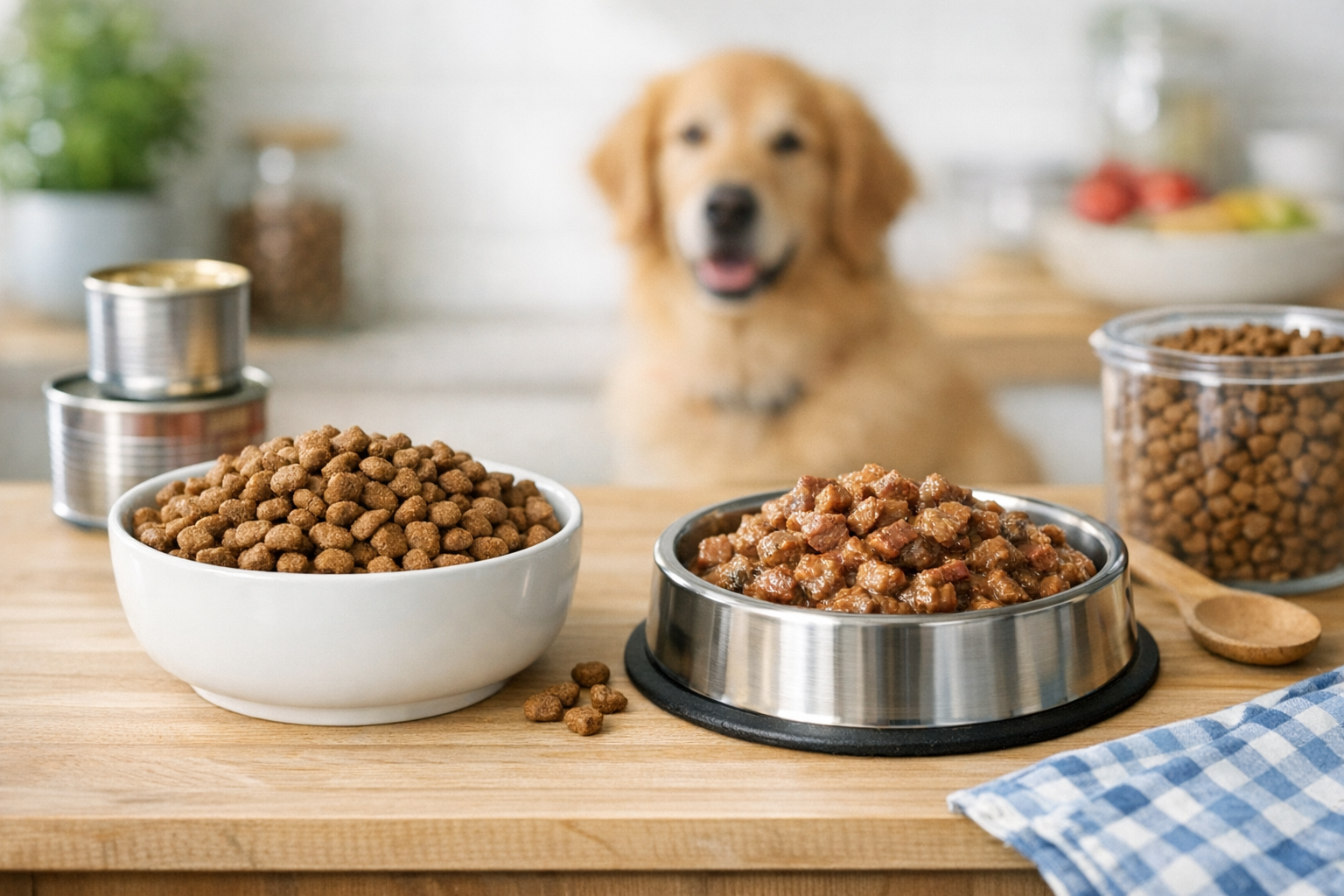
You are standing in the kitchen with a half-empty bag of kibble and a stray can of food. Perhaps your dog has suddenly become a picky eater. Maybe you are trying to stretch your current bag of dry food until your next delivery arrives. We see this situation often at BaxterBoo. Understanding the conversion between wet and dry food is more than just a kitchen convenience. It is a fundamental part of maintaining your dog's long-term health and weight. If you swap these foods cup-for-cup, you might accidentally underfeed or overfeed your pet. This guide will teach you how to calculate the correct portions using calories rather than volume. We will help you navigate labels and find the right balance for your dog's unique needs, starting with our dog food category.
The Core Difference Is Water
The biggest reason you cannot simply swap a cup of kibble for a cup of wet food is the moisture content. Dry kibble is highly concentrated. Most dry foods contain only about 10 percent water. This means the rest of the bag is packed with nutrients, proteins, and fats. It is a dense energy source that provides a lot of fuel in a small package.
Wet dog food is the opposite. It usually contains between 75 and 80 percent moisture. While this is fantastic for hydration, it means the actual nutrients are diluted by water. If you look at a bowl of wet food, most of what you see is liquid. This is why a dog needs to eat a much larger volume of wet food to get the same amount of energy they would from a small scoop of kibble. If you want to compare the two more closely, our post on should you feed your dog wet and dry food? is a helpful next read.
Quick Answer: On average, one 13.2-ounce can of wet dog food is nutritionally equivalent to about 1 cup of dry kibble. If you are measuring by weight, it typically takes 3 to 4 ounces of wet food to provide the same calories as 1 ounce of dry food.
Why Calories Matter More Than Volume
Many pet owners make the mistake of feeding by volume. They see a full bowl of food and assume the dog is satisfied. However, "full" and "nutritiously fed" are two different things. If you replace one cup of dry food with one cup of wet food, your dog will experience a massive calorie deficit. Over time, this leads to weight loss and a lack of energy.
Conversely, if you add a can of wet food as a topper without reducing the kibble, you are essentially giving your dog an extra meal. This is a common cause of pet obesity. We always recommend looking at the calorie count on the label. This is listed as kcal. Every brand we carry, from Farmina to Royal Canin, provides this information on the packaging.
Understanding Kcal Units
- Kcal per cup: This is how many calories are in a standard 8-ounce measuring cup of dry food.
- Kcal per can: This tells you the total energy in one full can.
- Kcal per kilogram: This is a weight-based measurement often used for more precise calculations.
Key Takeaway: Always match the calories, not the size of the scoop. Check the kcal information on every new bag or can you buy to ensure accuracy.
The General Conversion Rule of Thumb
While every brand has a slightly different formulation, there is a standard baseline you can use. This helps when you are in a hurry or do not have a calculator handy. Most high-quality dog foods follow a predictable ratio.
- The Can-to-Cup Ratio: One standard 13.2-ounce can usually equals 1 cup of dry kibble.
- The Small Can Ratio: One 5.5-ounce can usually equals about 1/3 to 1/2 cup of kibble.
- The Weight Ratio: You generally need 3.5 ounces of wet food to replace 1 ounce of dry food.
| Dry Food Amount | Equivalent Wet Food (Approx. Weight) | Equivalent Standard Cans (13.2 oz) |
|---|---|---|
| 1/4 Cup | 3.3 oz | 1/4 Can |
| 1/2 Cup | 6.6 oz | 1/2 Can |
| 1 Cup | 13.2 oz | 1 Full Can |
| 2 Cups | 26.4 oz | 2 Full Cans |
Step-by-Step Conversion Guide
If you want to be exact, follow these steps to ensure your dog’s diet remains consistent. This is especially important if your dog is on a weight management plan.
Step 1: Find the daily calorie target. / Check your current dry food bag to see how many calories your dog is supposed to eat per day based on their weight.
Step 2: Read the wet food label. / Locate the kcal count for the specific can or pouch you plan to use.
Step 3: Calculate the portion. / If your dog needs 400 calories for dinner and the wet food has 400 calories per can, you feed the whole can.
Step 4: Adjust for mixing. / If you want to feed half wet and half dry, take 50 percent of the calories from the kibble and 50 percent from the wet food.
Vet Tip: If your dog has a chronic health condition like kidney disease or diabetes, always consult your veterinarian before changing their food ratio. Our pet pharmacy carries many prescription diets that require precise portioning.
The Benefits of a Hybrid Diet
You do not have to choose only one type of food. Many owners find that a mix of wet and dry food provides the best results. This is often called a hybrid diet. It combines the convenience and dental benefits of kibble with the hydration and taste of wet food.
Better Hydration
Some dogs are notorious for not drinking enough water. This can lead to urinary tract issues or kidney stress over time. Since wet food is mostly water, it acts as a built-in hydration supplement. This is particularly helpful for senior dogs or those living in hot climates.
Palatability for Picky Eaters
As dogs age, their sense of smell can decline. Wet food is much more aromatic than dry kibble. The strong scent of fats and proteins can entice a dog to eat when they might otherwise turn their nose up at a bowl of plain dry food.
Weight Management
Wet food can actually help some dogs lose weight. Because it is high in volume but lower in calorie density, it helps a dog feel "fuller" on fewer calories. This can reduce begging behavior between meals. If you like using toppers to make meals more appealing, our food topper collection is worth exploring.
Transitioning Your Dog Safely
A sudden switch in food can wreak havoc on a dog's digestive system. Their gut bacteria need time to adjust to new textures and moisture levels. If you move too fast, you might deal with diarrhea or vomiting. We recommend a slow transition over at least seven days.
- Days 1-2: 75% old food, 25% new food.
- Days 3-4: 50% old food, 50% new food.
- Days 5-6: 25% old food, 75% new food.
- Day 7: 100% new food.
Watch your dog’s stool during this time. If it becomes loose, slow down the process and stay at the current ratio for a few extra days. For a more detailed breakdown, see Can You Mix Dry Dog Food With Wet?.
Common Myths About Wet vs. Dry Food
There are several misconceptions that can lead pet owners astray. It is important to separate fact from fiction when planning your dog's meals.
Myth 1: Dry Food Is All You Need for Dental Health
While the crunch of kibble can help scrape away some plaque, it is not a substitute for brushing. Most dogs swallow kibble whole or break it into only two pieces. Do not rely on dry food alone to keep teeth clean. You still need regular dental checkups and proper grooming.
Myth 2: Wet Food Causes Weight Gain
Wet food only causes weight gain if you feed too many calories. Because it looks like a "treat," owners often add it on top of a full portion of kibble. If you account for the calories and reduce the dry food accordingly, wet food will not make your dog fat.
Myth 3: All Cans Are the Same Size
Standard cans are 13.2 ounces, but many premium brands use 12.5-ounce or 13-ounce cans. Always check the net weight. A small difference in weight can add up to a significant calorie gap over a month of feeding.
Key Takeaway: Precision prevents obesity. Use a digital kitchen scale to weigh food if you want the most accurate results for your dog's health.
Special Considerations for Senior Dogs
As dogs enter their golden years, their nutritional needs change. Many seniors suffer from dental disease or missing teeth. For these dogs, dry kibble can be painful to chew. Wet food provides a soft texture that is easy to manage.
Furthermore, senior dogs often face cognitive decline or a reduced appetite. Brands like Senilife offer support for aging brains, but the food itself must be enticing. Mixing a high-quality wet food from Royal Canin or Farmina into their diet can ensure they get the calories they need to maintain muscle mass. If you are planning meals around this life stage, our guide on should senior dogs eat wet or dry food? offers a useful companion read.
If your senior dog is on medication for joints or heart health, our pharmacy can help. Many owners find that hiding pills in a tablespoon of wet food is the easiest way to ensure their dog takes their medicine.
Puppy Nutrition and Conversion
Puppies have much higher energy requirements than adult dogs. They are growing rapidly and need concentrated nutrients. When converting wet to dry for a puppy, you must be extremely careful. Puppies have small stomachs, so they cannot always eat the large volume of wet food required to meet their calorie needs.
For puppies, we often recommend using kibble as the base and adding wet food as a supplement. This ensures they get the calorie density of the dry food while benefiting from the hydration of the wet food. Always look for brands that specify they are "complete and balanced" for growth or "all life stages."
- Check for AAFCO statements on the label.
- Avoid "intermittent or supplemental use only" foods for puppies.
- Ensure the calcium-to-phosphorus ratio is correct for large breed puppies.
Storage and Safety Tips
Once you open a can of wet food, the clock starts ticking. Unlike dry food, which can sit in a dispenser for weeks, wet food is highly perishable.
- Refrigeration: Any unused wet food must be covered and refrigerated immediately. It generally stays fresh for 2 to 3 days.
- Room Temperature: Never leave wet food in your dog's bowl for more than 30 to 60 minutes. Bacteria can grow quickly in moist environments.
- Dry Food Storage: Even dry food can spoil. Keep your kibble in its original bag inside an airtight container. This protects the fats from oxidizing and turning rancid.
Bottom line: Treat open wet dog food exactly like you would treat your own leftovers to avoid foodborne illness.
How BaxterBoo Can Help Your Routine
Managing your dog's diet is easier when you have the right tools and a reliable supply. At BaxterBoo, we have been helping pet owners since 2006. Our warehouse in Illinois is stocked with over 500 brands to ensure you find exactly what your dog needs.
If you find a combination of wet and dry food that works, consider using our Autoship programme. You can schedule regular deliveries so you never run out of either. You will save on your first order and receive a free MVP Gold membership. This makes it easy to maintain the consistent portions your dog requires for a healthy life.
For those managing chronic conditions through diet, remember that we offer more than just standard retail. Our pharmacy gives you access to prescription options when your dog needs them most.
Summary: Your Conversion Checklist
Before you scoop that next meal, run through this quick checklist to ensure your math is right.
- Check the kcal per cup on your dry food bag.
- Check the kcal per can on your wet food.
- Calculate the total daily calories your dog needs.
- If mixing, subtract the wet food calories from the dry food total.
- Use a measuring cup or scale for every single meal.
- Monitor your dog's weight and body condition weekly.
Key Takeaway: Consistency is the goal. Small errors in portioning lead to large health problems over time.
FAQ
Can I leave wet dog food out all day like kibble?
No, you should never leave wet food out for more than an hour. Because of its high moisture content, it is a breeding ground for bacteria at room temperature. If your dog does not finish their meal within 30 minutes, pick up the bowl and refrigerate the remaining portion or throw it away.
Is wet food better than dry food for dogs with kidney issues?
Wet food is often recommended for dogs with kidney disease because the extra moisture helps flush toxins from the body. However, the specific protein and phosphorus levels are even more important than the texture. You should consult your vet and check our pharmacy for prescription kidney diets specifically formulated for this condition.
Why does my dog have diarrhea after I gave them wet food?
Diarrhea is usually caused by a transition that happened too quickly. Wet food is much richer and higher in fat than most kibble. If you do not introduce it slowly over a week, it can upset the delicate balance of bacteria in your dog's gut.
How do I know if I am overfeeding my dog when mixing foods?
The best way to tell is by feeling your dog's ribs. You should be able to feel the ribs easily under a thin layer of fat, but they should not be visible. If you can no longer feel the ribs without pressing hard, you are likely feeding too many calories and need to adjust your wet-to-dry ratio.






