
 Save 15% on your 1st Autoship learn more

 Email us
 Live Chat
 FAQs
FAQs





Introduction
You are standing in the kitchen, watching your dog sniff at a bowl of dry kibble before walking away. Or perhaps you have noticed your senior dog taking longer to crunch through those hard pellets, maybe even dropping pieces on the floor. At BaxterBoo, we know that mealtime is about more than just filling a bowl. It is about providing the right nutrition in a way your dog can easily enjoy. Adding water to dry dog food is one of the simplest ways to improve your dog's daily routine. This post covers the benefits of hydration, the correct ratios to use, and how to keep the process safe and sanitary. By the end, you will understand how a little extra moisture can transform your dog's digestion and enthusiasm for their dinner. If you are comparing options, start with our dry dog food category.
Quick Answer: To add water to dry dog food, use a ratio of roughly one part water to three or four parts kibble. Use warm water to release aromas and let the food soak for several minutes until it reaches your dog's preferred texture.
The Importance of Hydration in a Dry Diet
Most dry kibble contains only about 10 percent moisture. This is a significant difference compared to canned wet food, which can be up to 80 percent water. While many dogs are good at drinking from their water bowls, some are chronically under-hydrated. This lack of fluid can put unnecessary stress on the kidneys and the urinary system. For more ways to support your dog’s wellness, explore our dog health category.
When you add water directly to the food, you ensure that your dog is consuming moisture with every bite. This is especially helpful for dogs that do not have a strong thirst drive. Proper hydration is essential for every metabolic process in the body. It helps with nutrient transport, temperature regulation, and joint lubrication.
Vet Tip: If your dog is showing signs of increased thirst, frequent urination, or lethargy, consult your veterinarian before making dietary changes. These can be signs of underlying health issues like diabetes or kidney disease that require professional diagnosis.
Why You Should Consider Soaking Kibble
Adding moisture to dry food is not just about hydration. It fundamentally changes how the food interacts with your dog's body. From the moment the food enters the mouth to the way it is processed in the gut, water plays a helpful role.
Improved Digestion and Bloat Prevention
When a dog eats dry kibble quickly, the food hits the stomach and begins to expand as it absorbs digestive juices. For some dogs, this can lead to discomfort or a more serious condition known as bloat or gastric dilatation-volvulus. By pre-soaking the kibble, you allow that expansion to happen in the bowl rather than in the stomach. For more background, see our article on bloat prevention.
Soaked food is also easier for the body to break down. The digestive enzymes in the stomach can move through the softened food more efficiently. This can lead to better nutrient absorption and smaller, firmer stools. If your dog frequently has gas or an upset stomach after eating, softening the food might provide some relief.
Enhancing Palatability for Picky Eaters
Dogs rely heavily on their sense of smell to determine if something is worth eating. Dry kibble often has a muted scent because the fats and proteins are locked inside a hard, dry structure. Adding warm water helps to release these aromas.
The heat from the water vaporizes the fats on the surface of the kibble, creating a much stronger scent that can entice even the most stubborn eaters. This is particularly useful for dogs that are recovering from an illness or older dogs whose sense of smell may be fading.
Satiety and Weight Management
If you have a dog that always seems hungry, water can be a secret weapon for weight management. Adding water increases the volume of the meal without adding a single calorie. A bowl that looks half-full with dry kibble looks like a feast when the kibble is plumped up with water. This can help your dog feel fuller after eating, which may reduce begging between meals.
Key Takeaway: Adding water to kibble improves hydration, aids digestion by pre-expanding the food, and makes meals more appealing by releasing natural food aromas.
How to Add Water to Dry Dog Food Properly
The process is simple, but there are a few best practices to ensure you are getting the most out of the meal. You do not want to turn the food into a tasteless soup, nor do you want to leave it so crunchy that the benefits are lost.
The Step-by-Step Soaking Process
Follow these steps to create a consistent and appetizing meal for your dog:
Step 1: Measure the dry food. / Use your standard measuring cup to put the correct caloric amount of kibble into a clean bowl.
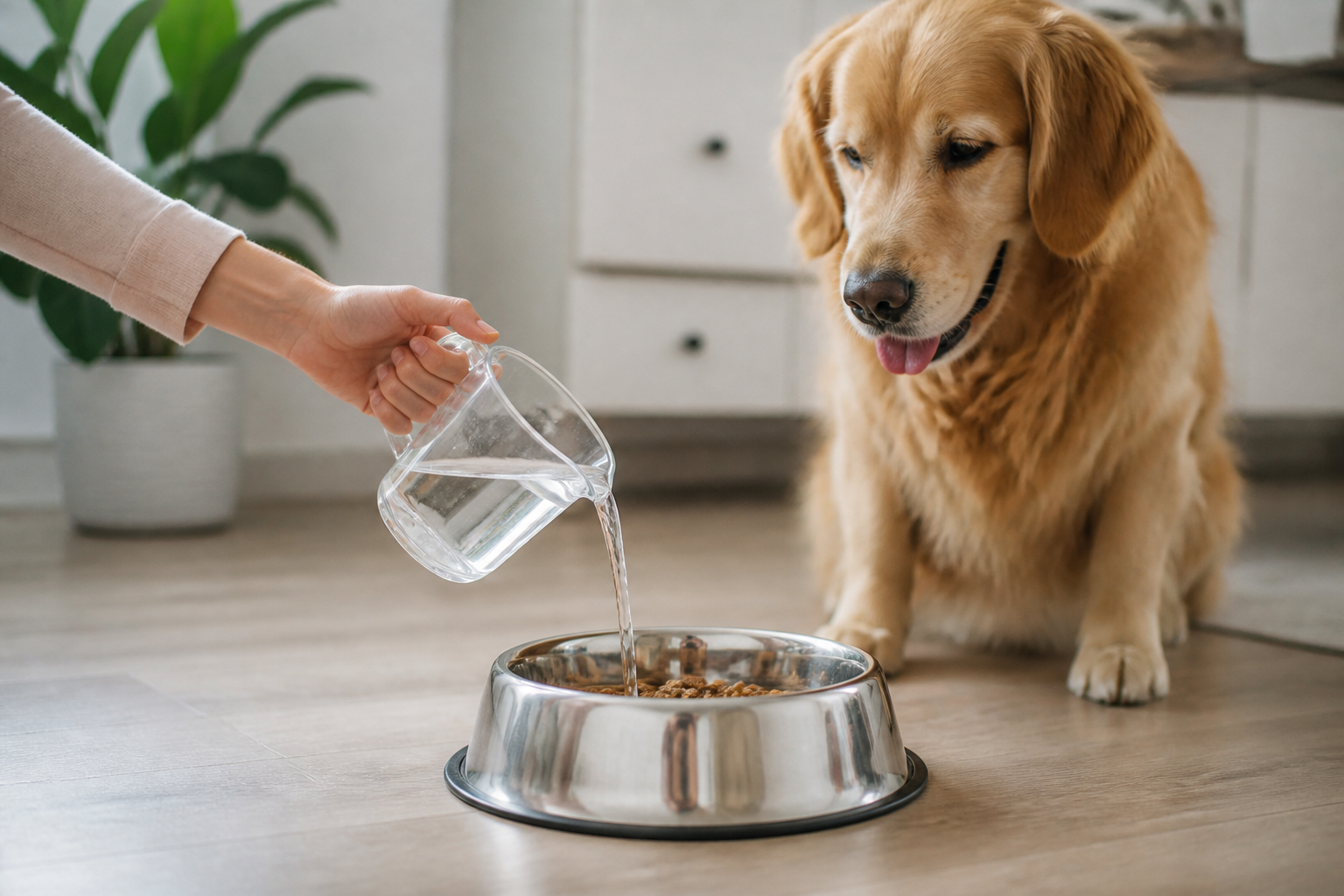
Step 2: Add warm water. / Pour warm, filtered water over the kibble. Do not use boiling water, as this can destroy some of the heat-sensitive vitamins and probiotics in premium foods.
Step 3: Stir and wait. / Give the bowl a quick stir to ensure all the pieces are coated. Let it sit for two to five minutes depending on how soft you want the kibble to be.
Step 4: Serve immediately. / Once the water has been mostly absorbed or has formed a light gravy, offer the meal to your dog.
The Best Temperature and Ratios
Finding the right balance is key. Most pet owners find success with a ratio of one part water to three parts kibble. For example, if you feed one cup of dry food, add one-fourth to one-third of a cup of water.
The temperature should be warm to the touch, similar to a baby's bottle. Cold water will not release the aromas as effectively, and it will take much longer to soften the hard outer shell of the kibble. If the water is too hot, it could burn your dog's mouth or throat. Always test the temperature with your finger before putting the bowl down.
For dogs at different life stages, our puppy shop is a helpful place to start comparing age-appropriate options.
- For Puppies: Use more water to create a very soft, mash-like consistency. This helps with the transition from milk to solids and is easier on sensitive puppy teeth.
- For Seniors: A medium-soft texture is usually best. It provides enough resistance to be interesting but is soft enough to accommodate dental issues or missing teeth.
- For Fast Eaters: A "soupier" consistency can actually slow them down, as they have to lap up the liquid rather than gulping down dry pebbles.
Potential Drawbacks and Safety Tips
While adding water is generally beneficial, it does require a bit more attention to hygiene than dry feeding. Dry kibble is shelf-stable, but as soon as you add moisture, you create an environment where bacteria can grow.
The Spoilage Rule
You should never leave moistened kibble sitting out for long periods. Unlike dry food, which can sit in a bowl for a day, wet kibble should be discarded if it is not eaten within 40 to 60 minutes. Bacteria and mold thrive in warm, damp environments. If your dog is a "grazer" who likes to eat a few bites every hour, adding water may not be the best strategy unless you are willing to pick the bowl up and clean it frequently.
Dental Health Considerations
There is a common myth that dry kibble cleans a dog's teeth by scraping off plaque. In reality, most kibble is quite starchy and can actually stick to the teeth, contributing to dental issues. However, if you are using a specific dental-formula kibble designed to be abrasive, adding water will eliminate that intended benefit.
If your dog is on a special dental diet, talk to your vet before soaking it. For most other dogs, the hydration and digestive benefits of adding water far outweigh any minor dental cleaning they might have received from dry crunching.
Clean Your Bowls
Moist food leaves behind a sticky residue that dry food does not. It is important to wash your dog's bowl with hot, soapy water after every single meal if you are adding water. This prevents the buildup of biofilm and harmful bacteria that could make your dog sick over time.
Beyond Plain Water: Nutritional Mixers
Once your dog is used to having moisture in their food, you can experiment with other liquids to provide a nutritional boost. We carry a variety of toppers and mixers at our warehouse that can be used instead of or in addition to water.
- Bone Broth: High-quality bone broths from brands like The Honest Kitchen or Open Farm are packed with collagen and amino acids that support joint health and gut integrity.
- Goat Milk: This is a fantastic source of probiotics. Many dogs find the taste of goat milk irresistible, and it is much easier to digest than cow's milk.
- Wet Food Mixers: Adding a spoonful of canned food from brands like Farmina or Stella & Chewy's can provide a variety of protein sources and textures.
Using these mixers is a great way to add functional nutrition. For example, if you have a senior dog, using a broth rich in glucosamine can support their mobility.
Bottom line: While water is the most cost-effective option, using broths or goat milk can provide targeted health benefits and even better palatability.
When to Consult Your Veterinarian
Changing how you feed your dog is usually a safe process, but some situations require professional guidance. This is particularly true if your dog is on a prescription diet. Many therapeutic foods are formulated with very specific mineral balances to manage conditions like bladder stones or kidney disease. Adding too much of certain liquids could potentially dilute these benefits.
Our pharmacy for dogs provides a wide selection of prescription diets like Royal Canin Veterinary Diet or Farmina Vet Life. If your dog is eating one of these foods, ask your vet about the best way to add moisture without compromising the diet's effectiveness.
- Consult a vet if your dog has chronic digestive issues that do not improve with softened food.
- Seek advice if your dog is on a strict weight-loss plan to ensure you are calculating portions correctly.
- Talk to a professional if your dog refuses to eat food once it has been moistened.
Summary of Benefits
Adding water to dry dog food is a simple, no-cost way to improve your pet's life. It bridges the gap between the convenience of dry food and the nutritional benefits of wet food.
- Hydration: Supports kidney and urinary health.
- Digestion: Reduces the risk of bloat and makes nutrient absorption easier.
- Taste: Releases fatty acid aromas that excite picky eaters.
- Comfort: Softens food for puppies, seniors, and dogs with dental pain.
- Weight Management: Increases satiety by adding volume to the meal.
If you are looking for more ways to enhance your dog's diet, consider signing up for our Autoship programme. It is a convenient way to ensure you never run out of your favorite kibble or hydrating toppers, and it pairs well with the MVP Rewards programme. Whether you stick to plain filtered water or upgrade to a premium bone broth, your dog will likely appreciate the extra care you put into their bowl.
FAQ
Does adding water to dog food cause dental problems?
Adding water does not directly cause dental problems, but it does remove the crunch that some believe helps scrape teeth. However, since most kibble contains starches that can stick to teeth anyway, the hydration benefits usually outweigh the loss of texture. You should still maintain a regular tooth-brushing routine regardless of how you feed your dog.
Can I use hot water to soak my dog's kibble?
It is best to use warm water rather than hot or boiling water. Extremely hot water can degrade certain vitamins, minerals, and probiotics that are sprayed onto the kibble after the baking process. Warm water is sufficient to release aromas and soften the food without damaging the nutritional value or risking a burn to your dog's mouth.
How long should I let the dog food soak before serving?
For most kibble brands, two to five minutes is the ideal soaking time. This allows the water to penetrate the hard outer shell and begin softening the core. If you have a dog with severe dental issues, you can let it soak for up to ten minutes to create a very soft, mash-like consistency.
Is it okay to add water to a puppy's dry food?
Yes, adding water to puppy food is often recommended, especially during the weaning process or when they are losing their baby teeth. Softened food is easier for their smaller mouths to manage and ensures they stay hydrated during a critical period of growth. Just be sure to discard any uneaten portions quickly to keep their feeding area sanitary. For more puppy feeding guidance, see our guide to when puppies can eat dry dog food.






