
 Save 15% on your 1st Autoship learn more

 Email us
 Live Chat
 FAQs
FAQs





Introduction
You fill the bowl with high quality kibble, but your dog just stares at it. They might give it a single sniff before walking away with a heavy sigh. This moment is incredibly frustrating for any pet owner. You worry about their nutrition, their energy levels, and whether something is actually wrong. At BaxterBoo, we talk to pet parents every day who are navigating the exact same challenge. Getting a dog to enjoy their daily meals should not feel like a battle of wills.
This post covers the most effective strategies for encouraging your pup to finish their dinner. We will look at why dogs become picky, how to rule out health concerns, and practical ways to make dry food more enticing. Our goal is to help you build a stress-free feeding routine that works for your household. Understanding the reason behind the refusal is the first step toward a solution. If you are starting from scratch, our dog food category is a helpful place to browse.
Quick Answer: To get a dog to eat dry food, start by ruling out dental or medical issues with a veterinarian. If they are healthy, try adding warm water or a meal topper, and establish a strict 20-minute feeding window to discourage picky behavior.
Rule Out Medical and Dental Issues First
Before you assume your dog is just being stubborn, you must consider their physical health. A sudden loss of appetite is often the first sign that a dog is not feeling well. This is especially true if your dog used to be a great eater and suddenly stopped. If they are turning their nose up at dry food but still want soft treats, the problem might be their mouth. For related support items, our dog healthcare category can help you narrow down options.
Dental Pain and Oral Health
Dry kibble is hard. If a dog has a cracked tooth, inflamed gums, or an abscess, crunching down on that hard food can be painful. You might notice them drop food out of their mouth or chew only on one side. Some dogs will even approach the bowl eagerly because they are hungry, but then back away once they realize the pain involved in eating. Regular dental checkups are vital. We recommend looking for signs of redness or bad breath as early indicators of trouble.
Digestive Upsets and Sensitivities
Sometimes a dog stops eating dry food because that specific recipe makes them feel poorly. If a food causes gas, bloating, or mild nausea, the dog will eventually associate the bowl with discomfort. This is not always a full-blown allergy. It could be a simple sensitivity to a specific protein or a filler ingredient. If you notice lethargy, vomiting, or changes in their stool alongside the food refusal, it is time for a professional opinion.
Vet Tip: Always consult your veterinarian if your dog refuses food for more than 24 hours or shows signs of weight loss. They can perform a physical exam and blood work to rule out underlying conditions like kidney disease or gastrointestinal issues.
Understanding Behavioral Pickiness
If your vet gives your dog a clean bill of health, the issue is likely behavioral. Many dogs are simply holding out for something better. If they know that refusing kibble eventually leads to a piece of cheese, a dollop of wet food, or table scraps, they will wait. They are training you just as much as you are training them.
The Treat Trap
It is very easy to over-treat a dog. If your pup gets treats for coming inside, treats for sitting, and treats just for being cute, they might not be hungry when mealtime rolls around. Treats are often much higher in fat and flavor than standard dry food. A dog that has filled up on biscuits throughout the afternoon has very little incentive to eat a bowl of plain kibble at 6:00 PM.
Table Scrap Competition
Feeding your dog from the table is the fastest way to create a picky eater. Human food is seasoned and highly aromatic. Compared to a piece of roast chicken or a bit of steak, dry kibble is boring. Once a dog develops a taste for human grade protein, they may go on a "hunger strike" to see if they can convince you to share your dinner again.
Environment and Stress
Dogs thrive on routine. A move to a new house, a new baby, or even a change in where their bowl is located can cause anxiety. Some dogs are social eaters and want you to be in the room while they eat. Others are easily distracted by the television or children playing. If the environment is too chaotic, they may feel too stressed to focus on their food.
Key Takeaway: Picky eating is often a learned behavior. By limiting treats and eliminating table scraps, you can reset your dog's expectations and help them focus on their balanced dry food.
Practical Strategies to Increase Kibble Appeal
Once you have identified the cause, you can start testing different methods to make the food more attractive. You do not always need to switch brands to see a change. Sometimes, small adjustments to the presentation make all the difference. If you want a broader mix of meal-enhancing options, our freeze-dried pet food collection is worth a look.
Add Warmth and Moisture
Dry kibble does not have a very strong scent. A dog's sense of smell is their primary way of experiencing food. By adding a small amount of warm water or low-sodium broth, you release the fats and aromas in the kibble. This makes it smell much more like a real meal. Let the water soak in for a few minutes to create a soft texture. This is especially helpful for senior dogs who might find the hard crunch a bit taxing.
Use High Quality Meal Toppers
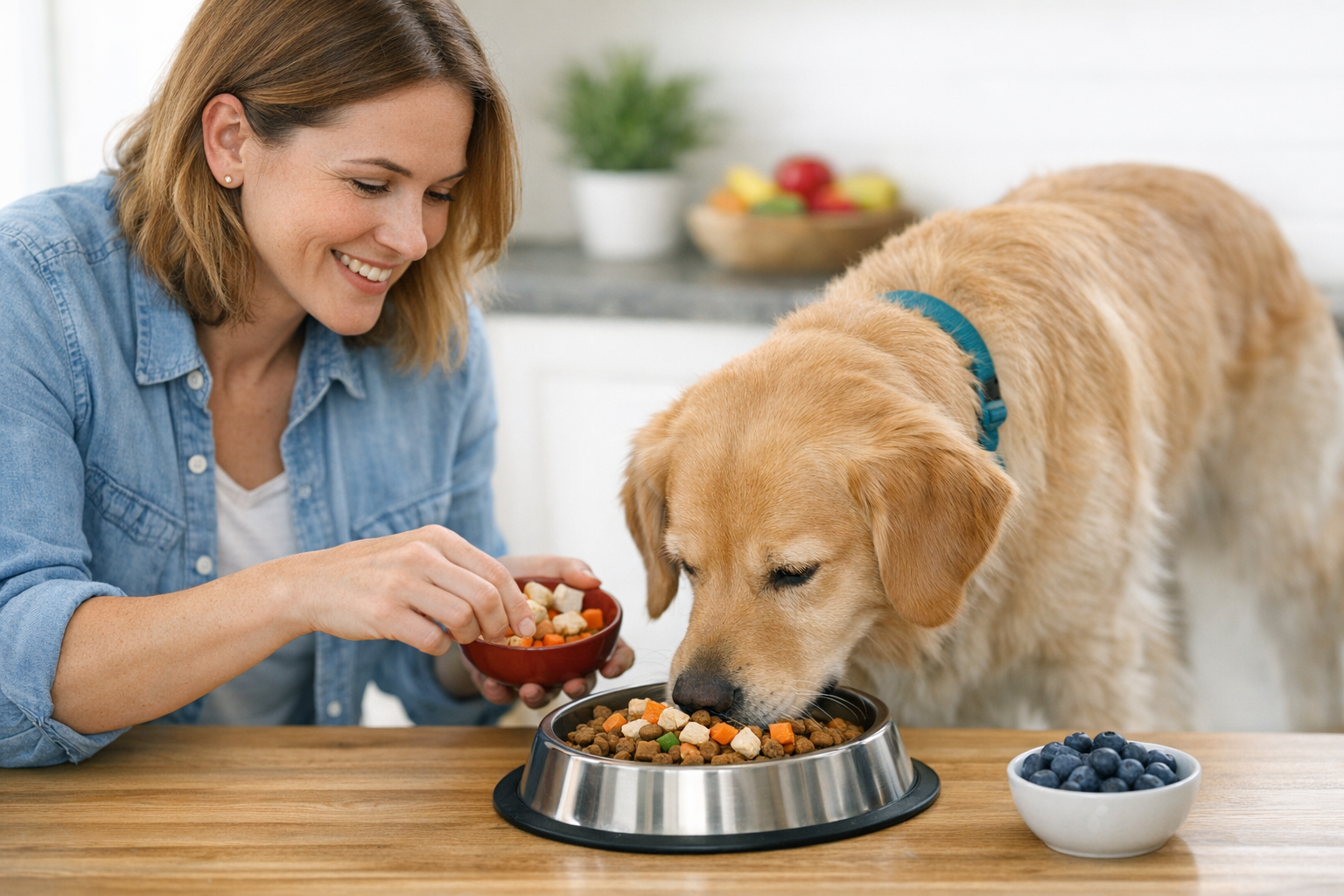
If water is not enough, a healthy topper can bridge the gap. You do not need to fill the bowl with wet food. A tablespoon of plain canned pumpkin, unsweetened yogurt, or a specialized freeze-dried topper can work wonders. Our selection of Stella & Chewy's products includes several options that can help make dry food more appealing.
Step 1: Measure your dog's standard portion of dry food.
Step 2: Add one to two tablespoons of a healthy topper or wet food.
Step 3: Mix it thoroughly so the topper coats the kibble. This prevents the dog from just licking the "good stuff" off the top.
If you want another topper-focused option, our selection of The Honest Kitchen products also fits this kind of mealtime boost.
The 20 Minute Rule
One of the most effective ways to handle a picky eater is to control the availability of food. If you leave the bowl down all day, the food becomes "background noise." The dog knows they can eat whenever they want, so there is no urgency.
Instead, put the bowl down and leave it for exactly 20 minutes. If the dog has not eaten it by then, pick the bowl up and put it away. Do not offer any treats or alternative meals until the next scheduled feeding time. Most healthy dogs will learn within two or three days that they need to eat when the food is available.
Checklist for a Better Mealtime
- Wash the food bowl daily to remove bacteria and old fat odors.
- Stick to a consistent schedule (e.g., 7:00 AM and 6:00 PM).
- Ensure the food is fresh and stored in an airtight container.
- Provide a quiet, low-traffic area for feeding.
- Exercise your dog 30 minutes before a meal to build an appetite.
Choosing the Right Dry Food
Sometimes the problem really is the food itself. Not all kibble is created equal. If the bag has been open for more than a month, the fats may have gone rancid. Dogs can smell that long before we can. Additionally, lower-quality foods often rely on heavy grain fillers that are not particularly tasty. If you are comparing stronger protein-forward options, our selection of Orijen products is a good example of a brand page that can help narrow the search.
Look for Real Protein Sources
Check the ingredient label on your bag. The first ingredient should always be a specific animal protein like chicken, beef, or lamb. If the first ingredient is a "by-product" or a grain like corn, your dog might be less interested. Premium brands like Open Farm, Acana, or Orijen use high percentages of fresh meat which naturally increases the palatability of the food.
Consider Kibble Size and Shape
Small dogs often struggle with large, hard nuggets. Conversely, large dogs might find tiny kibble frustrating to pick up. If you have a toy breed, ensure you are buying a "Small Breed" formula. These recipes have smaller, easier-to-chew pieces that are specifically designed for smaller mouths.
Rotational Feeding
Some dogs simply get bored. Imagine eating the exact same cereal every single day for three years. You would probably lose interest too. Rotational feeding involves switching flavors within the same brand. For example, you might buy a bag of beef kibble this month and a bag of salmon kibble next month. As long as you stay within the same high-quality brand, most dogs handle these transitions well without stomach upset.
Bottom line: A fresh, meat-first kibble that matches your dog's size is much easier to sell to a picky eater than a stale, grain-heavy alternative.
When Prescription Diets are Necessary
In some cases, a dog refuses dry food because of a chronic health condition that requires a specialized diet. Issues like kidney disease, urinary crystals, or severe food allergies often require precision nutrition that standard retail bags cannot provide. This is where a veterinary-approved diet becomes essential.
Our pharmacy page offers a wide range of prescription pet foods and medications. Through our partnership with Pet's Choice, we help owners manage these ongoing health needs conveniently. Brands like Farmina Vet Life offer specialized formulas for weight management and digestive support. If your vet has prescribed a specific diet to help your dog feel better, following that plan is the most important step you can take. These foods are formulated not just for health, but for taste, to ensure that sick dogs keep eating.
The Role of Exercise and Mental Stimulation
A tired dog is a hungry dog. If your dog spends the whole day lounging on the couch, their caloric needs are very low. They might not feel the biological drive to eat because they haven't burned any energy. Increasing their daily activity can naturally boost their metabolism.
Pre-Meal Walks
Try to time your longest walk of the day for about 30 minutes before dinner. The physical exertion triggers hunger signals in the brain. When you come home and put the bowl down, the dog's body is actively looking for fuel to recover.
Making Work for Food
Some dogs find a standard bowl boring. They are natural hunters and scavengers. Using a puzzle feeder or a slow-feed bowl can turn mealtime into a game. If your dog has to push a ball around to get the kibble to fall out, the mental stimulation makes the food more rewarding. This is a great way to engage high-energy breeds that might otherwise be too distracted to eat.
| Method | Best For | Pros |
|---|---|---|
| Adding Warm Water | Seniors and Picky Eaters | Enhances aroma, softens texture |
| Puzzle Feeders | High Energy Dogs | Provides mental stimulation, slows down fast eaters |
| Timed Feeding | Behavioral Pickiness | Creates a routine, discourages grazing |
| High-Quality Toppers | Very Finicky Dogs | Dramatically increases flavor and moisture |
Transitioning to a New Routine
If you decide to change your dog's food or feeding style, do it slowly. A sudden change to a new brand can cause diarrhea or vomiting, which will only make the dog more hesitant to eat.
Step 1: Mix 25% of the new food or method with 75% of the old for three days.
Step 2: Move to a 50/50 split for the next three days.
Step 3: Increase to 75% of the new food for the final three days.
Step 4: Offer 100% of the new food or method.
This gradual shift gives the digestive system time to adapt. It also gives the dog's palate time to get used to a new flavor profile. During this time, stay consistent. Do not jump between five different solutions in one week. Pick a strategy and give it at least seven to ten days to work.
Managing the Senior Dog's Appetite
As dogs age, their senses often dull. Their sense of smell and taste might not be as sharp as they once were. This can lead to a gradual loss of interest in dry food. For these dogs, making the food smell as strong as possible is the key.
Warming the food is particularly effective for seniors. You can also look for "Senior" specific formulas that have higher levels of omega fatty acids and joint support. If your senior dog is also managing cognitive decline, brands like Senilife can support brain health, which sometimes helps with appetite and routine.
BaxterBoo carries a variety of supplements and gear designed specifically for the needs of aging pets. Whether it is a raised feeder to help with neck strain or a specific joint supplement, small changes to their physical comfort can have a big impact on their willingness to stand at the bowl and eat. For more routine-based feeding ideas, our how to feed freeze-dried dog food for better health guide is a useful related read.
Conclusion
Getting a dog to eat their dry food requires a mix of patience, observation, and firm boundaries. Start by ensuring there is no underlying pain or illness. Once health is confirmed, focus on creating a high-value experience. Use toppers, warmth, and exercise to make the meal the highlight of their day. Avoid the temptation to give in to every whim with table scraps, as this only reinforces the pickiness.
- Rule out dental pain or GI issues with a vet.
- Limit treats and stop all table scraps immediately.
- Add warm water or a high-quality topper like Stella & Chewy's.
- Stick to a strict 20 minute feeding window.
Key Takeaway: Consistency is your best tool. Most dogs will not starve themselves and will eventually accept their dry food once they realize no "better" options are coming.
If your dog requires a specific diet for a medical condition, remember that our Autoship programme can make repeat orders easier to manage. For healthy pups, consider browsing our collection of premium dry foods and toppers to find a flavor they truly love. Joining our MVP Rewards programme is a great way to save on these essentials while ensuring your dog gets the very best nutrition. If you want more feeding strategy ideas, our guide to what dry dog food is best for picky eaters is a helpful next step.
FAQ
How long can a dog go without eating dry food?
A healthy dog can typically go 24 to 48 hours without eating before it becomes a major medical concern. However, if your dog is also refusing water or seems lethargic, you should contact a veterinarian immediately. For puppies or senior dogs, you should seek advice much sooner as they have fewer energy reserves.
Can I mix wet food with dry food every day?
Yes, mixing wet and dry food is a great way to increase moisture and flavor. Just be sure to adjust the total calories so you are not overfeeding your dog. Many owners find that a 75% dry and 25% wet split provides the perfect balance of dental benefits from the crunch and palatability from the wet food.
Why does my dog eat treats but refuse their kibble?
Treats are usually much higher in salt, fat, and artificial flavorings than balanced kibble. Your dog has essentially learned that if they hold out on the "healthy" meal, they might get the "junk food" instead. To fix this, significantly reduce or stop all treats until your dog is back to eating their regular meals consistently.
Does the temperature of the food matter?
Temperature plays a big role in how food smells. Warming kibble with a little hot water or a few seconds in the microwave (if it is moistened) helps release the fatty acid aromas. This makes the food much more enticing to a dog's powerful nose, which is often more important to them than the actual taste.






