Save 15% on your 1st Autoship learn more

 Email us
 Live Chat
 FAQs
FAQs





Introduction
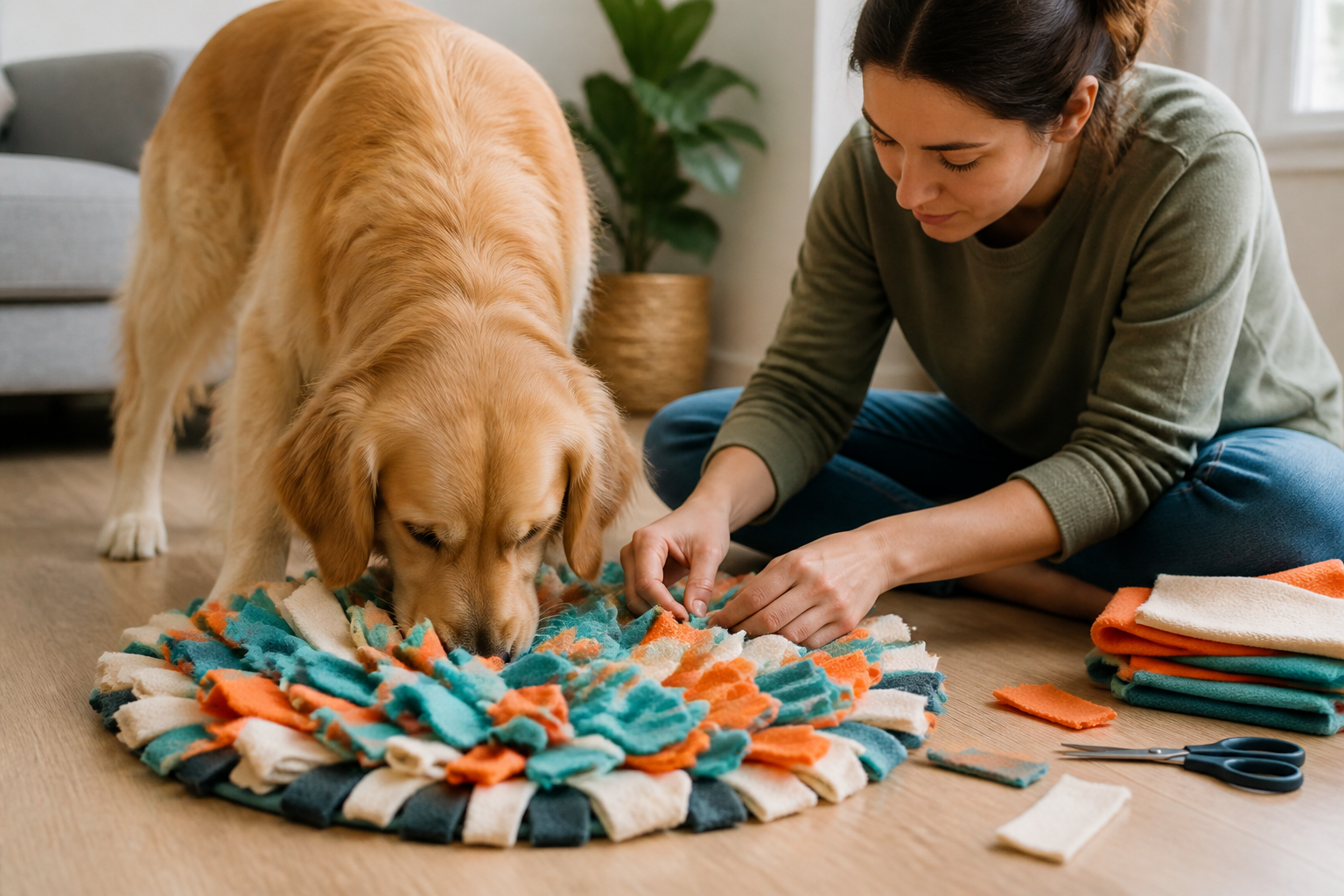
You probably know the feeling of watching your dog inhale their dinner in roughly three seconds flat. Maybe you are dealing with a high-energy puppy who seems bored with every toy in the house. This is a common hurdle for many pet owners, and at BaxterBoo, we believe that mental exercise is just as important as a walk around the block. A snuffle mat is a simple, effective tool that uses your dog’s natural foraging instincts to turn mealtime into a brain-teasing game. This post covers exactly how to build your own mat from scratch, the best materials to use, and how to introduce it to your dog safely. You will learn how to turn a few yards of fleece and a rubber mat into an enrichment powerhouse.
Why Your Dog Needs a Snuffle Mat
Dogs experience the world primarily through their noses. While humans rely on sight, a dog's sense of smell is remarkably powerful. When a dog spends ten minutes sniffing and searching for food, it can be as mentally tiring as an hour of physical exercise. This is why "nose work" has become such a popular activity for trainers and behaviorists.
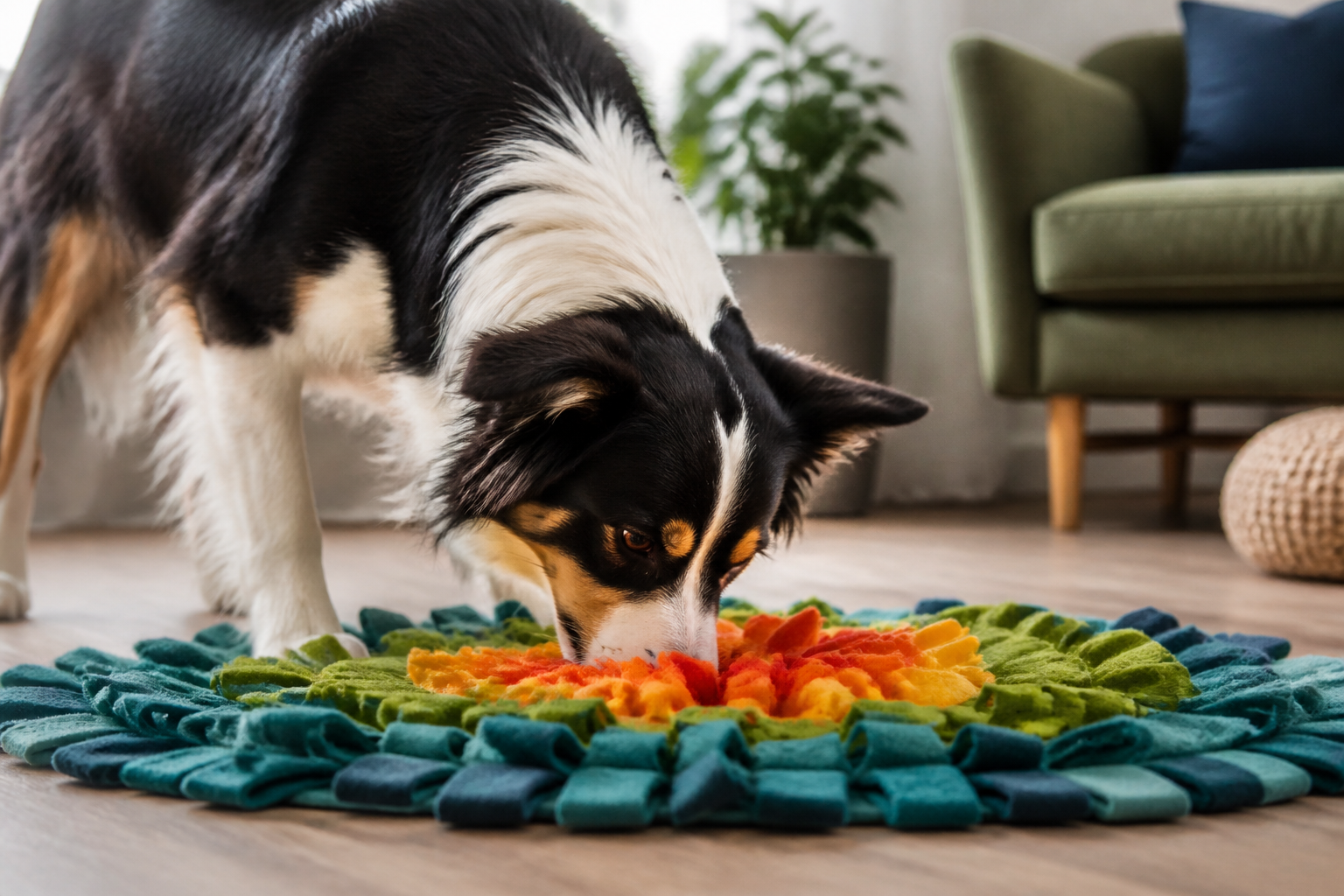
A snuffle mat encourages a behavior called foraging. In the wild, animals spend a significant portion of their day searching for food. Our pets usually have their meals handed to them in a bowl, which removes that natural challenge. By hiding kibble or treats inside long strips of fleece, you force your dog to work for their reward. This slows down fast eaters and provides a healthy outlet for pent-up energy. For more ideas, explore these dog brain games and scent-based activities.
Quick Answer: A snuffle mat is a DIY enrichment toy made by tying fleece strips to a rubber base. It provides mental stimulation by mimicking natural foraging behaviors and helps slow down dogs that eat too quickly.
Gathering Your Supplies
You do not need a lot of expensive equipment to make a high-quality mat. Most of these items can be found at a local craft store or even a dollar store. Since we have been helping pet owners find the right gear since 2006, we know that durability matters. Choosing the right base and fabric will ensure your mat lasts for years of snuffling.
The Base
The most common base for a snuffle mat is a rubber sink mat. These are usually found in the kitchen section of a department store. Look for a mat with holes that are large enough to thread fabric through but sturdy enough that they will not tear. A heavy-duty rubber mat is better than a thin plastic one because the weight keeps the mat from sliding across the floor while your dog works.
The Fabric
Fleece is the gold standard for snuffle mats. It is soft on your dog’s nose, it does not fray when you cut it, and it is machine washable. You will need about 1.5 to 2 yards of fleece fabric. You can use one solid color or mix several colors to create a bright pattern. Many pet owners use "anti-pill" fleece because it stays looking new even after multiple washes.
Tools for the Job
- A sharp pair of fabric scissors or a rotary cutter.
- A ruler or measuring tape.
- A steady workspace like a kitchen table.
- A laundry basket to hold your cut strips.
Step-by-Step Instructions
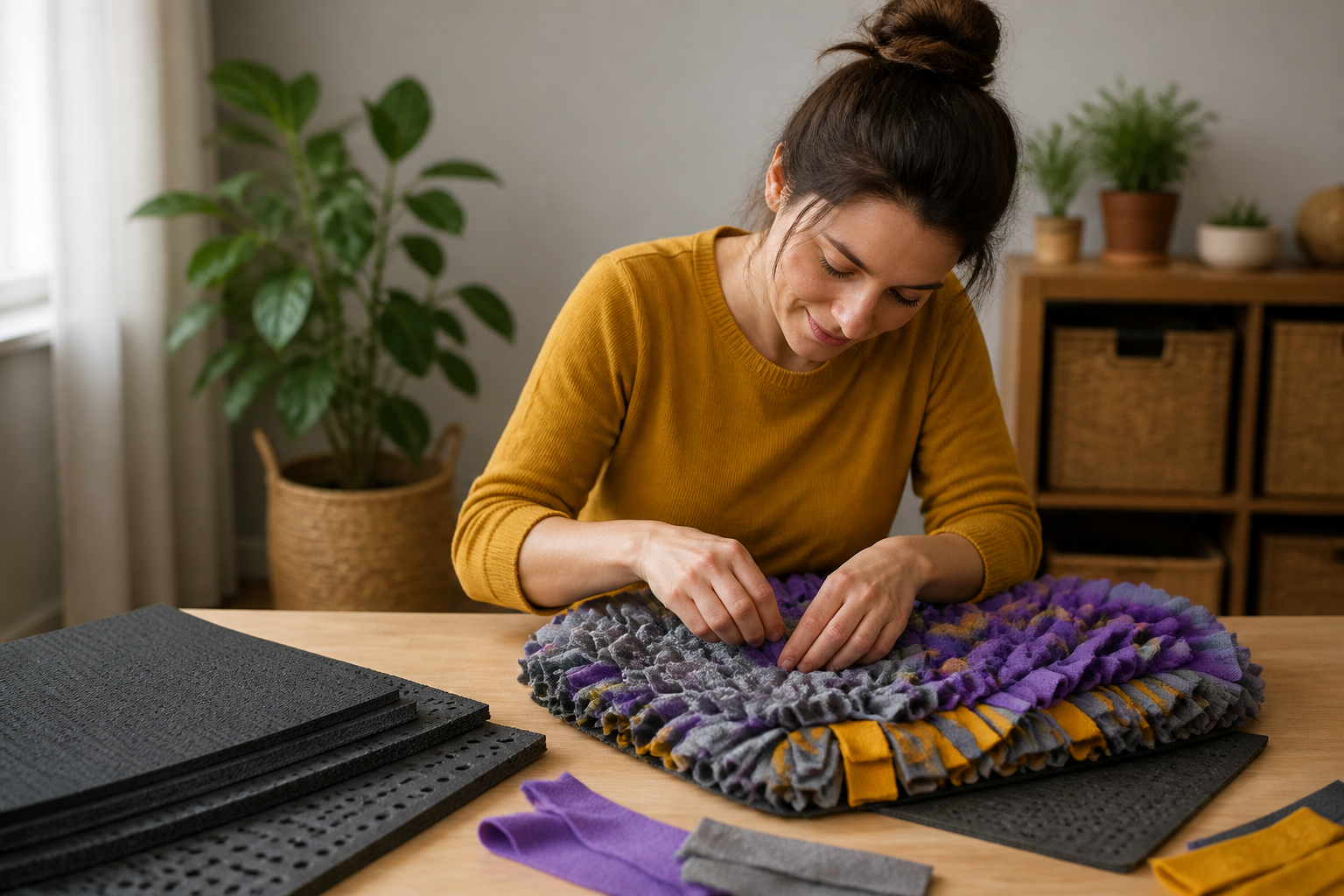
Making the mat is not difficult, but it is time-consuming. It is a great project to work on while you are listening to a podcast or watching a movie. Expect the process to take about two hours for a standard-sized sink mat.
Step 1: Prepare the Fabric Strips
Start by cutting your fleece into long, narrow strips. For a standard rubber sink mat, the ideal size for a strip is 1 inch wide and 7 to 8 inches long. If the strips are too short, they will be hard to tie. If they are too long, the mat will become a floppy mess and it will be too easy for the treats to fall out. You will likely need between 200 and 300 strips depending on the size of your base.
Step 2: Thread the First Row
Take your rubber mat and place it flat on your workspace. Take one strip of fleece and push one end through the first hole in the corner. Take the other end and push it through the hole right next to it. Flip the mat over and tie the two ends together in a single overhand knot. You do not need to double-knot the fleece. The fabric is bulky enough that it will stay secure with just one tight tie.
Step 3: Complete the Vertical Rows
Continue this process along the first row of holes. Thread a strip through the second and third holes, then the third and fourth, and so on. Once you finish the first row, move to the second row and repeat. Do this until every hole has a vertical strip tied through it. At this point, the mat will look somewhat full, but there will still be gaps where food could slip through to the floor.
Step 4: Fill in the Horizontal Gaps
To make the mat truly dense, you need to tie strips horizontally across the rows you just finished. Take a strip and thread it through the first hole of row one and the first hole of row two. Tie it firmly. This cross-hatching creates a thick forest of fleece that holds treats securely. Continue this across the entire mat until every possible connection between holes is filled with a fleece strip.
Step 5: The Final Fluff
Once you have finished tying every strip, flip the mat over so the knots are on the bottom and the loose ends are on the top. Use your hands to fluff up the fleece. You should not be able to see the rubber base at all. If you see any bald spots, add a few more strips in those areas.
Key Takeaway: A dense snuffle mat is more effective than a thin one. Filling every vertical and horizontal gap ensures the treats stay hidden, which increases the time your dog spends searching.
Choosing the Right Treats
The success of a snuffle mat depends heavily on what you put inside it. If you use treats that your dog does not care about, they will lose interest quickly. However, you also want to be mindful of calories. You can browse our dog treats collection for small rewards that fit inside the fleece folds.
Small, dry treats work best. If the treats are too large, they will sit on top of the fleece rather than sinking down into the folds. If they are too moist, they will leave a mess on the fabric that is hard to clean. Dry kibble is usually the perfect choice, especially if you are using the mat to replace a standard food bowl.
If your dog is on a specific diet for health reasons, you can still use the mat. Our pharmacy at BaxterBoo offers a wide range of prescription diets through our partnership with Pet's Choice. These specialized foods can often be used as the "reward" in the mat, ensuring your dog stays on their veterinary-approved plan while still getting the mental stimulation they need.
Introducing the Mat to Your Dog
Do not just drop a loaded snuffle mat on the floor and walk away the first time. Some dogs might get frustrated and try to chew the mat or flip it over to get the food out. You want to teach them that "snuffling" is the goal.
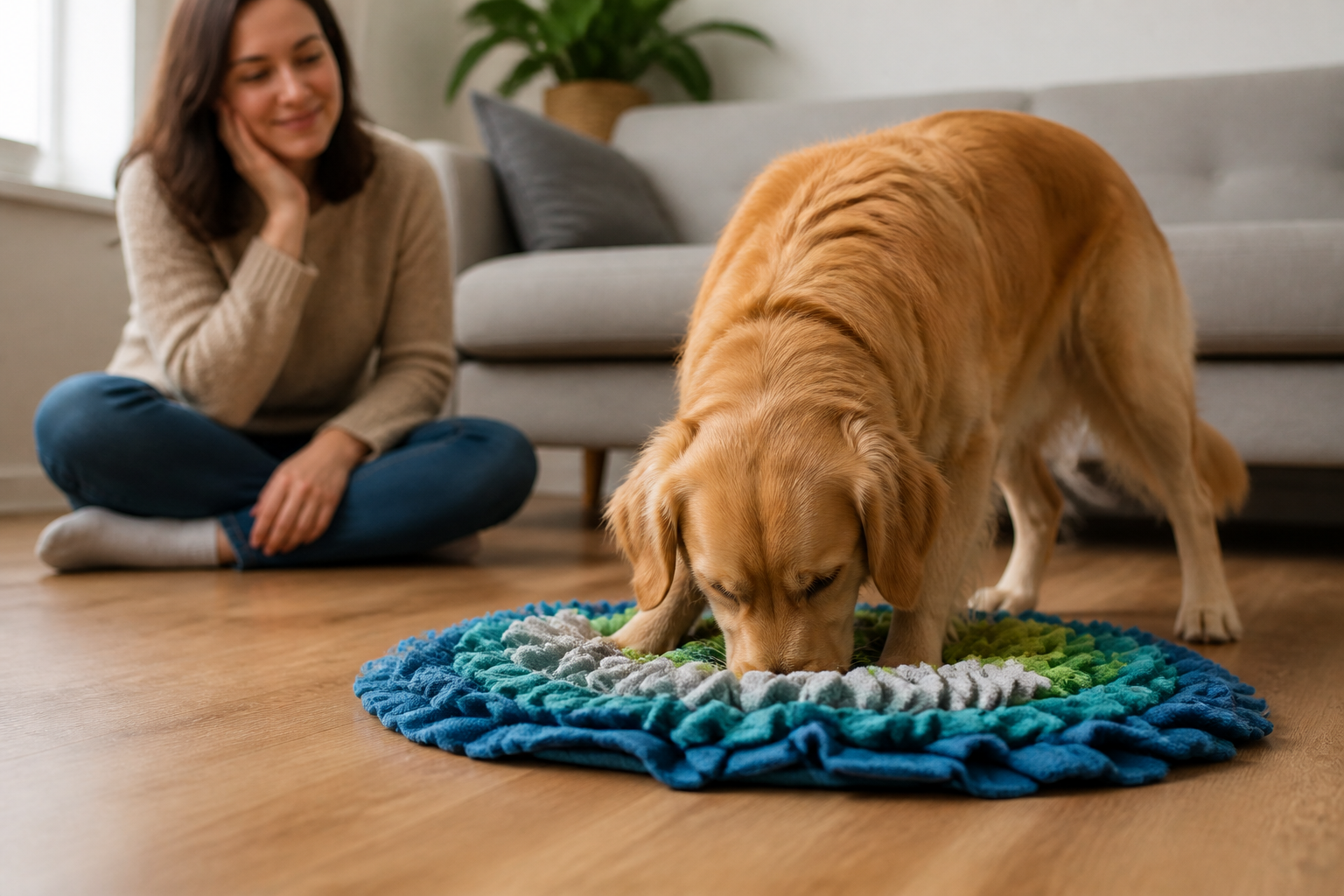
- Start Easy: For the first few sessions, place the treats on top of the fleece where your dog can see them. This builds immediate success and teaches them that the mat is a source of good things.
- Increase Difficulty: Gradually start tucking the treats deeper into the strips. Eventually, you can bury them all the way at the base of the mat.
- Use a Command: Use a specific phrase like "find it" or "get to work" when you put the mat down. This helps your dog understand that it is time to use their nose.
- Supervise the Session: Always watch your dog while they use the mat. If they start digging at the rubber or trying to tear the fleece, gently redirect them.
Vet Tip: If your dog has a history of swallowing non-food items, use the snuffle mat with extreme caution. Always supervise the activity and put the mat away in a cupboard when the session is over to prevent the dog from chewing on the fleece or rubber base.
Health Benefits of Slow Feeding
Using a snuffle mat is not just about fun; it can be a vital tool for your dog’s physical health. Many dogs, especially larger breeds, are prone to eating too fast. This can lead to digestive upset, gas, and a dangerous condition called bloat. For additional wellness products, visit our dog healthcare category.
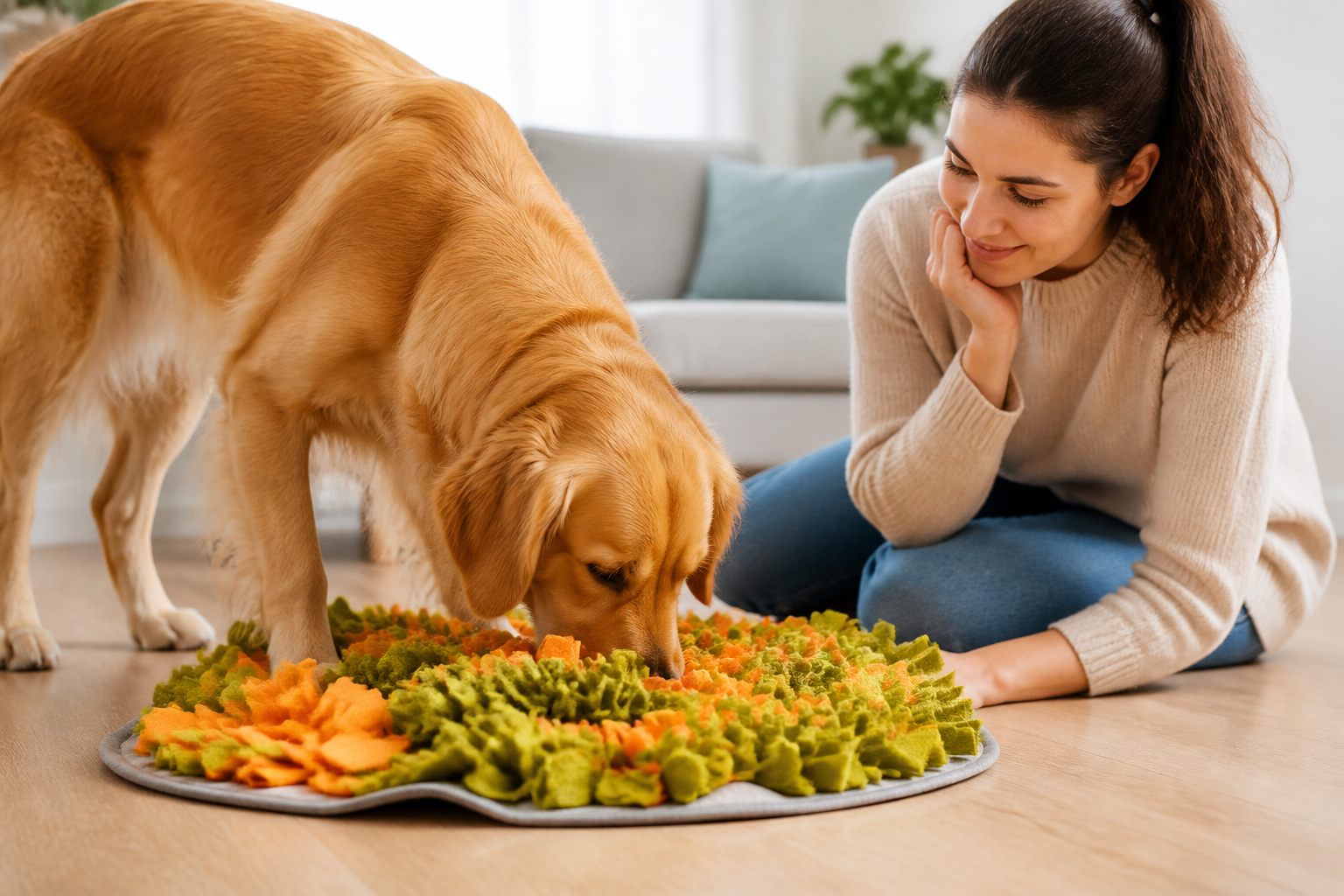
When a dog eats from a snuffle mat, they are forced to take small bites as they find each individual piece of kibble. This naturally slows their pace. It also gives their brain time to register that they are full, which can help with weight management. If you are struggling with a dog that is consistently overweight, slowing down their eating is a great first step.
For senior dogs with limited mobility, a snuffle mat provides a way to exercise their minds without putting stress on their joints. It keeps them engaged and prevents the depression or cognitive decline that can sometimes affect older pets. If your senior dog needs extra support, we carry many supplements and mobility aids that can be used alongside enrichment activities like this.
Bottom line: Slowing down mealtime through foraging can improve digestion and provide low-impact mental exercise for dogs of all ages.
Cleaning and Maintenance
Because the mat will be covered in food particles and dog saliva, it needs to be cleaned regularly. A dirty mat can harbor bacteria or mold, which is not safe for your pet.
Most DIY snuffle mats are machine washable if you used a rubber sink mat and fleece. Place the mat inside a pillowcase or a mesh laundry bag to protect the strips from getting caught in the machine's agitator. Use a mild, pet-safe detergent and run the machine on a gentle, cold cycle.
Do not put the snuffle mat in the dryer. High heat can damage the rubber base or cause the fleece to lose its texture. Instead, hang it up or lay it flat to air dry. Make sure it is completely dry before you use it again, as damp fleece can develop a sour smell.
- Weekly Clean: Shake the mat out after every use to remove crumbs.
- Monthly Deep Clean: Wash the mat in the laundry at least once a month.
- Inspect Regularly: Check for any loose strips or pieces of rubber that might have broken off.
Managing a Multi-Dog Household
If you have more than one dog, snuffle mats require a bit of management. Food-based enrichment can sometimes lead to tension or resource guarding. Even the friendliest dogs can get competitive when high-value treats are involved.
The best way to handle this is to give each dog their own mat in a separate area of the house. You might put one dog in the kitchen and another in the living room. This allows each dog to focus on their task without feeling like they have to watch their back. If your dogs are particularly prone to guarding, you may even want to put them in separate rooms with the door closed.
Once the dogs are finished, pick up the mats immediately. This prevents any "mopping up" behaviors where one dog tries to steal leftover crumbs from another dog's mat. It also keeps the mats special. If the mats are always on the floor, they become just another piece of furniture. If they only come out for specific sessions, they remain a high-value activity.
Troubleshooting Common Issues
Sometimes a DIY project does not go exactly as planned. Here are a few ways to fix common snuffle mat problems:
The mat is too light and the dog flips it over. This usually happens with thin plastic bases. You can fix this by attaching the mat to a heavier piece of plastic or by using two sink mats zipped-tied together to add weight. You can also try holding the edge of the mat for your dog until they learn to sniff rather than flip.
The treats all fall to the bottom. This means your strips are too far apart. You need to go back and add more horizontal or vertical strips to increase the density. A good snuffle mat should be so thick that you have to push the fabric aside to see the base.
The dog is bored with the mat. If your dog has mastered the mat, it might be time to change the rewards. Try using a more pungent treat, like small pieces of dried fish or freeze-dried liver. You can also try hiding the mat in a different room so they have to find the mat before they can start the game. For more options, see our dog toys collection.
Conclusion
Creating a snuffle mat is a rewarding way to improve your dog’s quality of life without spending a lot of money. By following our guide, you can build a durable, washable tool that provides daily mental stimulation and supports healthy eating habits. Whether you have a zooming puppy or a quiet senior, the act of "snuffling" is a natural joy for any dog. At BaxterBoo, we love seeing owners take an active role in their pet's wellness and happiness. Once your mat is finished, consider checking out our selection of premium dog treats or join the MVP Rewards programme to earn points on every future supply run.
Key Takeaway: A DIY snuffle mat is a cost-effective, practical solution for boredom and fast eating that taps into a dog's most powerful sense.
FAQ
Can I use a snuffle mat for my cat?
Yes, cats can also benefit from snuffle mats. While the keyword focuses on dogs, many cats enjoy foraging for dry kibble or catnip treats. You might want to make the strips slightly shorter or use a smaller mat base to better suit a cat's smaller size and different hunting style.
How often should my dog use a snuffle mat?
Most dogs can use a snuffle mat every day. Many owners use it for one or both of their dog's daily meals to ensure they eat slowly and get consistent mental exercise. Just be sure to monitor your dog's weight and adjust their total daily food intake if you are adding extra treats to the mat. If you regularly restock food or treats, consider our Autoship programme.
Is the snuffle mat a replacement for physical walks?
No, a snuffle mat is a supplement to physical exercise, not a replacement. While it is great for mental tire-out, your dog still needs opportunities to move their body, explore the environment, and socialise. It is especially useful on rainy days or during times when you cannot go for a long walk. For more indoor ideas, read 10 genius ways to create your own indoor enrichment.
What should I do if my dog tries to eat the fleece?
If your dog starts chewing or trying to swallow the fabric strips, remove the mat immediately. This behavior usually means they are frustrated or have finished the food and are looking for something else to do. Use a "settle" command and try again later under closer supervision to ensure they only focus on the food. You can also explore more dog boredom-busting activities.