
 Save 15% on your 1st Autoship learn more

 Email us
 Live Chat
 FAQs
FAQs





Introduction
It happens every evening at dinner time. You set the bowl down with a clatter. Your dog walks over, takes one sniff, and turns away. This moment of rejection can be incredibly stressful for a pet owner. At BaxterBoo, we talk to people every day who are worried about their dog’s sudden lack of interest in kibble. It leaves you wondering if they are sick or just holding out for something better. This post covers why dogs become picky and how you can fix it. We will share practical tips to entice your dog and explain when a trip to the vet is necessary. Understanding the psychology of canine appetite is the first step to a clean bowl every night. If you are comparing meal options, start with our dry dog food category.
Rule Out Medical Issues First
Before you assume your dog is being stubborn, you must check for underlying health problems. A sudden change in appetite is often the first sign that something is wrong. Pain, nausea, or systemic illness can make even the best kibble look unappealing.
If your dog stops eating for more than twenty four hours, call your veterinarian. This is especially true if you notice other symptoms like lethargy or vomiting. A professional can rule out serious issues like kidney disease or gastrointestinal blockages. Sometimes a dog wants to eat but finds it physically difficult.
Vet Tip: If your dog refuses dry food but tries to eat soft treats, they may have dental pain. Broken teeth or gum disease make crunching hard kibble very painful.
Our pet pharmacy offers a range of FDA approved medications and prescription diets. If your vet determines your dog needs a specialized medical grade diet, we can help you fulfill that prescription. Managing a health condition often starts with the right nutrition.
Address Dental Health and Mouth Pain
Dental disease is one of the most common reasons a dog stops eating dry food. Imagine trying to eat a handful of pretzels with a toothache. Most dogs will choose to go hungry rather than endure that sharp pain. For more guidance, see our dental health guide for dogs.
Check your dog’s mouth for redness or swelling along the gum line. Look for yellow or brown tartar buildup on the teeth. If you see bleeding or smell very bad breath, a dental cleaning is likely required. Once the mouth is healthy, many dogs return to their dry food without any extra persuasion.
- Brush your dog's teeth regularly with dog safe toothpaste.
- Provide dental chews to help reduce plaque.
- Schedule annual oral exams with your veterinarian.
The Problem With Too Many Treats
It is easy to accidentally spoil a dog. If you provide high value treats or table scraps throughout the day, your dog learns to wait for them. Why would they eat plain dry kibble when they know a piece of chicken or a liver treat is coming later?
This behavior is common in smart breeds like Yorkshire Terriers or Chihuahuas. They are excellent at training their owners to provide better options. If you suspect your dog is holding out, you must be firm. Stop all treats and human food for at least one week. This helps reset their palate and reminds them that kibble is their primary source of nutrition. If treats are part of your training routine, browse our selection of Stella & Chewy's products.
Key Takeaway: Treats should never exceed ten percent of your dog's daily caloric intake. Overfeeding treats leads to pickiness and weight gain.
Enhance the Aroma with Heat and Moisture
Dogs rely heavily on their sense of smell to determine if food is worth eating. Dry kibble has a relatively low scent profile compared to wet food or fresh meat. You can make the food much more attractive by simply adding warm water.
Warmth releases the fats and aromas trapped inside the dry nuggets. Use warm water, but never boiling. Let the food sit for a few minutes until it softens slightly. The resulting "gravy" is often enough to convince a picky eater to dive in. For flavor-boosting add-ins, explore our food topper collection.
Quick Answer: To make dry food more appealing, add a splash of warm water or low sodium bone broth. This increases the aroma and creates a softer texture that most dogs find irresistible.
Using High Quality Food Toppers
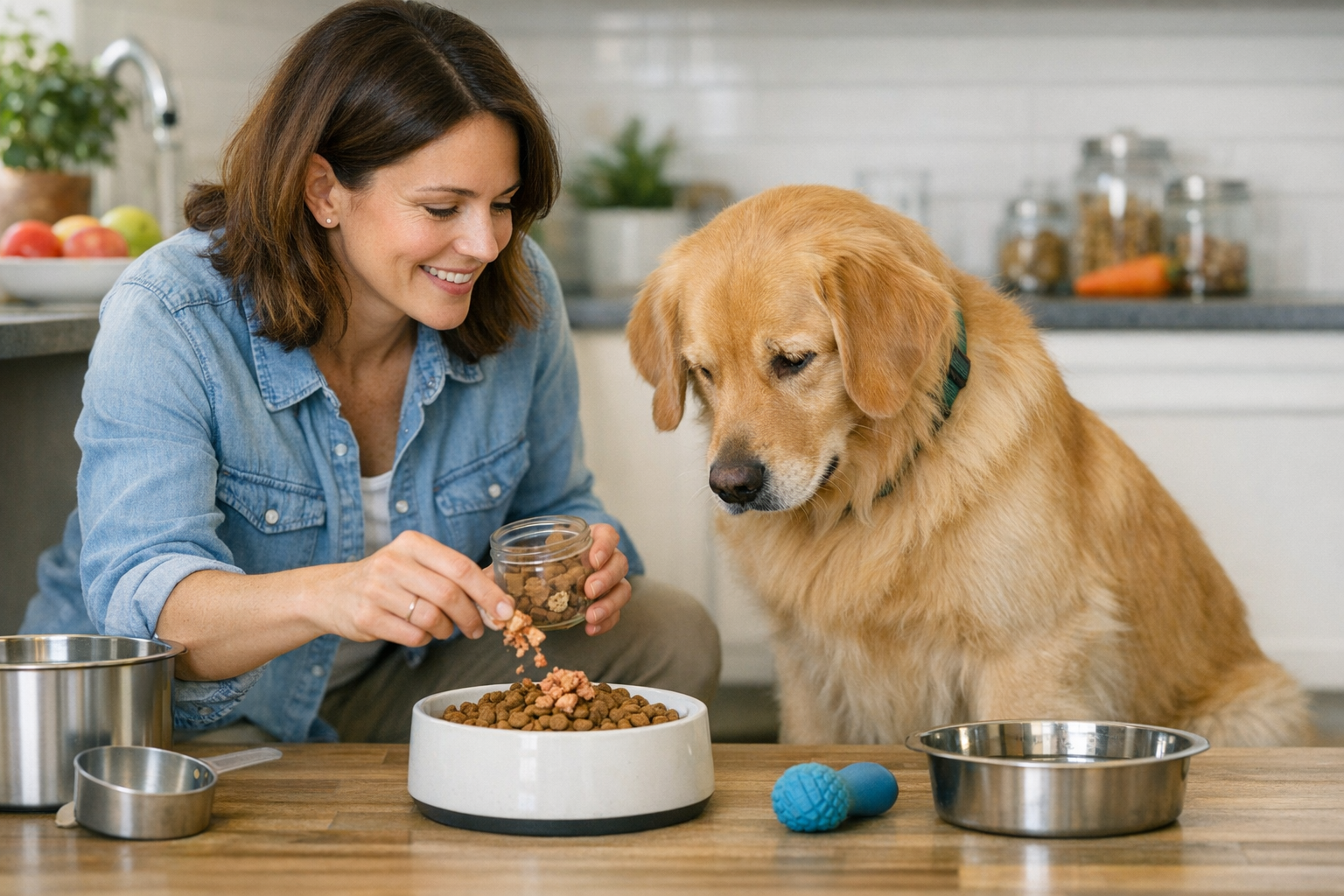
Sometimes a little incentive goes a long way. Food toppers are designed to add flavor and nutrition without replacing the entire meal. Brands like Stella and Chewy's or The Honest Kitchen offer freeze dried morsels that you can crumble over the kibble.
You can also use healthy kitchen staples as toppers. A spoonful of plain, unsweetened canned pumpkin is great for digestion. A bit of plain Greek yogurt provides probiotics. Just make sure any human food you add is free of xylitol, onions, garlic, and excessive salt. If you want a brand-specific topper option, check out our selection of Stella & Chewy's products.
- Choose a topper that matches your dog's protein preference.
- Mix it thoroughly so the dog cannot just pick out the "good parts."
- Slowly reduce the amount of topper once the dog starts eating consistently.
Transition to a Higher Quality Kibble
Not all dry foods are created equal. Many grocery store brands use heavy fillers and artificial flavors that do not taste very good to a dog. If your dog consistently refuses their food, they might simply dislike the ingredients.
Look for foods with real meat as the first ingredient. Brands like Farmina, Acana, and Orijen focus on high protein content and natural fats. These ingredients naturally smell and taste better than lower quality formulas. If you decide to switch brands, do it slowly over seven to ten days. This prevents stomach upset and helps your dog adjust to the new flavor profile. You can start by browsing our selection of Acana products.
Bottom line: Investing in premium kibble with high meat content often solves pickiness because the food is naturally more palatable.
Implement the 30 Minute Rule
Dogs are creatures of habit. If you leave food out all day, it becomes "boring." This is called free feeding. It removes the excitement of mealtime and can lead to a lack of appetite.
Instead, move to a scheduled feeding routine. Put the bowl down and give your dog thirty minutes to eat. If they have not finished by then, pick the bowl up and put it away. Do not offer any food or treats until the next scheduled mealtime. Most healthy dogs will not starve themselves. Once they realize the food is only available for a limited window, they will start eating when the bowl hits the floor.
The Role of Freshness and Storage
Dry food can go stale or even rancid if it is not stored correctly. Once a bag is opened, the fats are exposed to oxygen. This causes them to break down over time. Most bags of kibble stay fresh for about two to three weeks after opening.
If you buy massive bags for a small dog, the food at the bottom may taste like cardboard by the time you reach it. Always keep the food in its original bag and seal it tightly. You can place the entire bag inside an airtight container for extra protection. Never pour the food directly into a plastic bin, as oils can seep into the plastic and turn rancid. For a deeper dive, read our dry dog food storage tips.
- Check the expiration date before purchasing.
- Buy a bag size that your dog can finish within three weeks.
- Keep the food in a cool, dry place.
Enrichment and Puzzle Feeders
Some dogs are not motivated by hunger as much as they are by the "hunt." If your dog seems bored with their bowl, try changing how you deliver the food. Enrichment toys like a Kong or a puzzle feeder can turn mealtime into a game. You can find more interactive options in our dog toys category.
Working for their food stimulates a dog’s brain. It can make the act of eating dry kibble much more rewarding. This is a great strategy for high energy breeds that need a job to do. If they have to roll a toy around to get the kibble to fall out, they may find the process much more engaging than eating from a static ceramic dish.
Key Takeaway: Making your dog work for their kibble using puzzle toys can increase their drive to eat and provide mental stimulation.
Exercise Before Meals
A tired dog is usually a hungry dog. If your dog spends all day lounging on the couch, they may not have built up an appetite by dinner time. Physical activity triggers the body’s need for calories.
Try scheduling a long walk or a vigorous play session about thirty minutes before you serve dinner. This gives your dog time to cool down and settle before eating. The metabolic boost from exercise often makes them much more interested in whatever is in their bowl.
Managing Environmental Stress
Stress is a major appetite suppressant. If your dog’s feeding area is in a high traffic part of the home, they may feel too anxious to eat. Loud noises, other pets, or even a slippery floor can make a dog nervous.
Try moving the food bowl to a quiet corner or a separate room. If you have multiple pets, feed them in different areas so there is no competition or intimidation. Sometimes a simple change in scenery is all it takes to make a dog feel safe enough to focus on their meal.
Vet Tip: Senior dogs may have trouble standing on slick floors while they eat. Placing a yoga mat or a rug under the food bowl can provide the stability they need to feel comfortable.
The Importance of Rotational Feeding
Feeding the exact same recipe for years can lead to boredom. While some dogs thrive on consistency, others enjoy variety. Rotational feeding involves switching between different protein sources within the same brand.
For example, you might feed a beef recipe for one month and a salmon recipe the next. Since you are staying within the same brand family, the base ingredients are usually similar enough to avoid digestive upset. This keeps the flavor profile fresh and ensures a wider range of amino acids in the diet. We carry over 500 brands at BaxterBoo, and you can browse them all in our brands hub.
Conclusion
Making a dog eat their dry food requires a mix of patience and strategy. Start by ensuring there are no medical or dental issues causing the problem. Once health is ruled out, focus on improving the food’s aroma and establishing a strict feeding routine. Using toppers or enrichment toys can add the excitement your dog needs to enjoy their meals again. Remember that high quality ingredients always taste better than cheap fillers. If you need help choosing a new food or finding a prescription diet, our team is here to support you. We have been helping pet owners since 2006 with expert advice and curated products.
Consider joining our MVP Rewards programme to earn points on every bag of kibble you buy. You can also set up our Autoship programme to ensure you never run out of fresh food. If your vet recommends a specialized diet to help manage your dog's health, our pet pharmacy is always ready to assist.
FAQ
Why did my dog suddenly stop eating dry food?
A sudden refusal of food can be caused by dental pain, nausea, or environmental stress. It might also be a sign that the kibble has gone stale or that the dog is holding out for higher value treats. If the refusal lasts longer than twenty four hours, a veterinary consultation is recommended to rule out illness.
Is it okay to mix wet food with dry kibble?
Yes, mixing wet and dry food is an excellent way to increase the flavor and moisture content of a meal. Many owners use a few spoonfuls of wet food as a topper to encourage picky eaters. Just be sure to adjust the total calories to prevent your dog from gaining excess weight.
Can I add human food to my dog's dry food to make them eat?
You can add small amounts of dog safe human food like plain chicken, carrots, or green beans. Avoid using anything with salt, onions, garlic, or seasonings that could be toxic. Be careful not to use too much, or your dog may start refusing plain kibble entirely.
How long should I leave the food bowl down for a picky dog?
It is best to leave the food down for about twenty to thirty minutes. If the dog has not eaten by then, remove the bowl until the next scheduled mealtime. This creates a routine and teaches the dog that food is not available all day, which usually increases their motivation to eat.






