
 Save 15% on your 1st Autoship learn more

 Email us
 Live Chat
 FAQs
FAQs





Introduction
You might find yourself standing over a bowl of crunchy kibble while your dog looks up with little interest. Perhaps your senior dog is struggling to chew because of dental sensitivity. Maybe your pup just returned from a dental procedure and needs a soft diet for two weeks. Buying cases of canned food is an option, but sudden diet changes can lead to upset stomachs and extra costs. At BaxterBoo, we know that many owners prefer to stick with a trusted dry formula while providing the benefits of a moist meal. Transforming dry kibble into a soft, wet consistency is a practical way to boost hydration and make mealtime easier. This guide explains exactly how to turn your dog's regular dry food into a delicious wet meal that maintains their nutritional balance.
Quick Answer: The easiest way to turn dry dog food into wet food is to add warm water or pet-safe broth to the kibble at a one-to-one ratio. Let the mixture soak for at least 30 minutes until the kibble is soft enough to mash with a fork into a pate consistency.
Why You Should Soften Your Dog's Kibble
There are several practical reasons to change the texture of your dog's food. For many, it is a matter of physical necessity. Dogs recovering from oral surgery or those with missing teeth often find hard kibble painful to eat. Softening the food allows them to continue eating their familiar diet without the discomfort of crunching. This is also helpful for senior dogs who may have lost some of the jaw strength they had in their younger years. For more ideas about choosing meals for aging pets, read our guide to whether senior dogs should eat wet or dry food.
Hydration is another major factor. Some dogs are notoriously poor drinkers. By adding moisture directly to the food, you ensure they receive a significant amount of water during their meal. This can support kidney function and overall urinary tract health. It also makes the food smell much stronger. The warmth of the water releases the fats and aromas in the kibble, which can entice a picky eater or a dog with a diminished sense of smell.
Cost is also a common motivator. Feeding a large dog exclusively on premium canned food can be very expensive. By transforming high-quality dry food into a wet consistency, you get the volume and texture of canned food at a much lower price point. This method is also more environmentally friendly because it reduces the number of cans you need to recycle. You can compare options in our dog food category.
Common Scenarios for Softening Food
- Post-operative recovery after dental extractions or jaw surgery.
- Managing senior dogs with gum sensitivity or loose teeth.
- Encouraging hydration in dogs that refuse to drink from a water bowl.
- Helping puppies transition from milk or mush to solid kibble.
- Enticing older dogs who have lost interest in the scent of dry food.
The Standard Water Soaking Method
The most straightforward way to make dry dog food wet is by using warm water. You do not need any special equipment other than a bowl and a fork. The key is patience. The kibble needs enough time to absorb the moisture all the way to the center. If you rush the process, you will end up with soggy outsides and hard, crunchy middles.
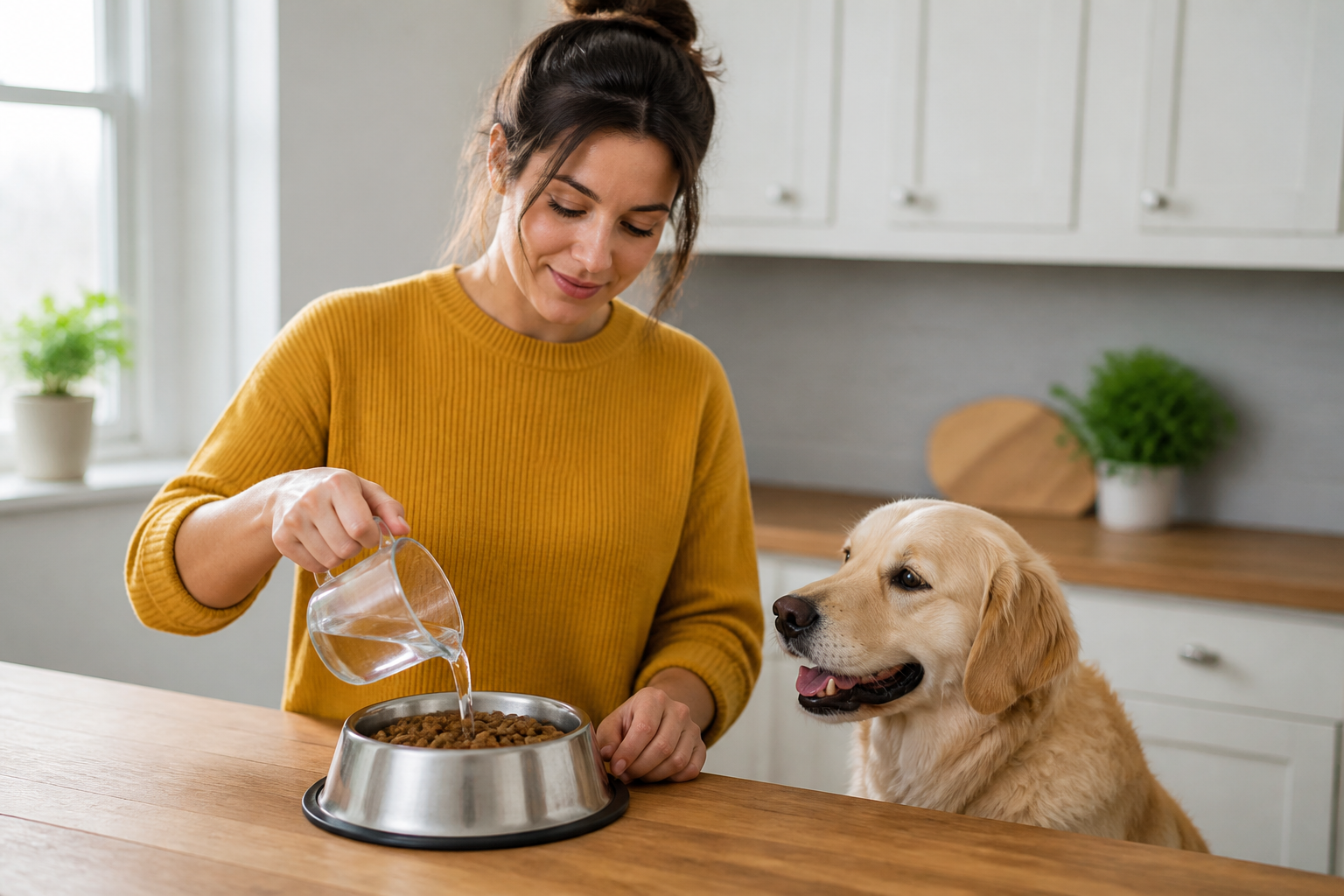
Start by measuring your dog's normal serving of dry kibble into a clean bowl. Add an equal amount of warm water. The water should be warm to the touch but never boiling. Boiling water can actually degrade some of the heat-sensitive vitamins and minerals in premium foods like Farmina or Royal Canin. Let the bowl sit on the counter for about 30 to 45 minutes. You will notice the kibble pieces beginning to swell and lose their defined edges.
Once the water is mostly absorbed, take a fork and press down on a few pieces. If they give way easily, you can begin mashing the entire meal. You want to aim for a consistency similar to a thick pate. If the mixture feels too dry or sticky, add a tablespoon of warm water at a time until you reach the desired texture.
Step-by-Step Soaking Instructions
Step 1: Measure the food. / Place the standard amount of kibble in a large bowl with extra room for expansion.
Step 2: Add warm water. / Use a one-to-one ratio of warm water to kibble to ensure full saturation.
Step 3: Wait for absorption. / Allow the mixture to sit for at least 30 minutes or until the kibble doubles in size.
Step 4: Mash and serve. / Use a fork or potato masher to break up the pieces into a smooth consistency.
Key Takeaway: Warm water is the safest and most effective liquid for softening kibble without adding unnecessary calories or sodium to your dog's diet.
Using Broths for Extra Flavor and Nutrition
If your dog is particularly picky, water might not be enough to get them excited about their meal. In these cases, you can use a pet-safe broth. Broths add a rich aroma and extra nutrients that can be very beneficial for dogs recovering from illness. However, you must be extremely careful with store-bought broths intended for humans. Most chicken and beef broths contain onions, garlic, and high levels of salt, all of which are dangerous for dogs.
Always look for broths specifically formulated for pets, such as those from brands like The Honest Kitchen or Caru. These are usually low in sodium and free from toxic aromatics. You can also make your own broth at home by simmering beef bones or chicken in plain water for several hours. Just be sure to strain the liquid thoroughly to remove all bone fragments before adding it to the kibble. You can also browse our dog food toppers and broth selection.
When using broth, follow the same soaking steps as you would with water. The warm broth will permeate the kibble and infuse it with flavor. This is a great trick for dogs on prescription diets who might find their specialized food less palatable than their old treats. Our pharmacy at BaxterBoo carries a wide range of prescription diets through our partnership with Pet's Choice, and many of our customers use the broth method to help their pets adjust to these necessary dietary changes. Explore our pet pharmacy when prescription foods or medications are part of your dog's routine.
Vet Tip: If your dog has a history of pancreatitis or kidney issues, consult your veterinarian before adding broths to their food. Even pet-safe broths can contain fat or minerals that may interfere with a strictly managed medical diet.
Using a Food Processor for a Smooth Pate
Sometimes, mashing with a fork still leaves small chunks that a dog with severe dental pain might struggle to handle. If you need a completely smooth consistency, a food processor or blender is your best tool. This is often the case for very small dogs or dogs that have had a full mouth extraction.
To use this method, soak the kibble in warm water for about 15 minutes to take the edge off the hardness. Pour the kibble and the remaining water into the food processor. Pulse the mixture until it looks like a thick liquid or a smooth mousse. You may need to add a bit more liquid than the standard soaking method to keep the blades moving.
This "blenderized" food can be particularly helpful for dogs that need to be syringe-fed during a short-term recovery period. It ensures that every bite is easy to swallow and requires zero chewing. Just make sure to wash the food processor thoroughly after every use. Wet dog food can spoil quickly, and you do not want old residue contaminating the next meal.
The Overnight Soak Method
For owners with a busy morning routine, waiting 45 minutes for kibble to soften isn't always practical. The overnight soak is a great alternative. This method results in the softest possible texture because the moisture has many hours to penetrate the dense kibble. It is especially effective for "cold-pressed" or very dense kibble brands like Carna4 or certain Orijen formulas. Carna4 is also available among our dry dog food options.
In the evening, place the morning's portion of food in a container with a lid. Add the water or broth, seal the container, and place it in the refrigerator. By the time you wake up, the kibble will have absorbed all the moisture and will be soft enough to stir into a mush with a spoon. You can then take the portion out of the fridge and let it sit for a few minutes to take the chill off, or add a splash of warm water right before serving.
Bottom line: Refrigerated soaking is the most convenient way to prepare soft food for multiple meals while preventing bacterial growth at room temperature.
Safety and Storage for Softened Kibble
Once you add water to dry dog food, it no longer has the shelf life of kibble. Dry food is processed to have a very low moisture content, which prevents bacteria and mold from growing. When you reintroduce moisture, the clock starts ticking. You must treat softened kibble exactly like canned dog food. For another perspective on safe feeding and storage, read our guide to choosing wet, dry, or combined dog food.
Never leave softened food out in the bowl for more than two hours. If your dog does not finish the meal in one sitting, pick up the bowl and discard the leftovers or refrigerate them immediately. If the weather is warm, this window is even shorter. Bacteria like Salmonella and Listeria can thrive in the moist, protein-rich environment of a wet food bowl.
If you are preparing food in bulk, you can store softened kibble in the refrigerator for up to two or three days. Use an airtight container to keep the food fresh and prevent it from picking up odors from your fridge. If you notice any change in the smell or color of the food, throw it away. It is always better to be safe when it comes to your dog's digestive health.
Handling Tips for Safety
- Wash the food bowl with hot, soapy water after every single meal.
- Only prepare enough food for 24 to 48 hours at a time.
- Never use boiling water, as it can burn your dog’s mouth or damage nutrients.
- Check the temperature of the food with your finger before serving.
- Store any pre-soaked food in the refrigerator in a sealed container.
Enhancing the Meal with Toppings
If your goal is to make the dry food as similar to a premium canned meal as possible, consider adding healthy "mix-ins." This can bridge the gap between dry and wet food while providing extra nutritional support. Brands like Stella and Chewy’s or Vital Essentials offer freeze-dried raw mixers that can be crumbled over the top of softened kibble. Browse our freeze-dried raw dog food collection for topper and meal options.
You can also mix in a small amount of actual canned food. This provides the "gravy" that many dogs crave. When you combine a high-quality dry food like NutriSource or Acana with a bit of canned food and some warm water, you create a complex texture that most dogs find irresistible. This is an excellent strategy for dogs that have become bored with their diet.
For dogs with joint issues, adding a liquid supplement like Honest Paws or Zesty Paws can be done easily once the food is soft. The liquid mixes right into the mash, ensuring your dog gets the full dose of glucosamine or omega fatty acids. We carry a wide selection of these supplements at BaxterBoo to support your senior dog's mobility and comfort.
Transitioning and Monitoring Your Dog
When you change how you feed your dog, even if it is the same brand of food, you should monitor their reaction. Most dogs handle the transition from dry to softened kibble very well because the ingredients remain the same. However, the increased water intake might lead to more frequent bathroom breaks or slightly softer stools initially. If you are comparing feeding formats, our guide to switching from dry to wet dog food offers another useful perspective.
If you are softening the food because of a health issue, keep a close eye on your dog's weight. Sometimes, dogs might eat less if they don't like the new texture, while others might eat more because it is easier to consume. If your dog is on a weight management plan, such as Farmina Vet Life, be sure to measure the dry kibble before adding the water to ensure you aren't accidentally overfeeding.
Always watch for signs of dental pain if that was the reason for the switch. If your dog still hesitates to eat even when the food is soft, it is time for a veterinary check-up. Softened food can manage the symptoms of dental disease, but it does not cure the underlying infection or decay. Our partnership with FIGO Pet Insurance can help cover the costs of these important veterinary visits.
Conclusion
Turning dry dog food into wet food is a simple, effective way to help your dog through life transitions, health challenges, or a simple case of pickiness. Whether you use the basic warm water soak, a flavorful pet-safe broth, or a food processor for a smooth pate, the goal is to make mealtime comfortable and nourishing. Remember to always prioritize safety by handling softened food like a perishable item and keeping your equipment clean. We invite you to explore our selection of dog food, mixers, and broth toppers at BaxterBoo. For those managing chronic conditions that require a specific diet, our pharmacy is a reliable resource for prescription foods and medications. Start with a small batch today and see how a little extra moisture can improve your dog's daily routine.
FAQ
Can I use cow's milk to soften my dog's dry food?
It is best to avoid using cow's milk because many dogs are lactose intolerant. Milk can cause upset stomachs, gas, and diarrhea in adult dogs. Stick to warm water, pet-specific milk replacers, or low-sodium pet broths to safely moisten the kibble.
Will soaking kibble help my dog lose weight?
Soaking kibble doesn't change the calorie count, but it can help with weight management by making the food more voluminous. The added water helps your dog feel full faster and stay satisfied longer. Always measure the dry portion first to ensure you are sticking to your dog's recommended caloric intake.
Does soaking dry food cause more dental plaque?
Crunchy kibble can provide some mechanical scraping of the teeth, but it is not a substitute for regular brushing. If you switch to softened food, you may notice a slight increase in plaque buildup over time because there is no abrasive action. It is important to maintain a regular dental care routine, including brushing and professional cleanings, regardless of food texture.
How long can I leave soaked dog food in the bowl?
You should treat soaked dog food the same way you treat canned food. It should not sit out at room temperature for longer than two hours. After that time, bacteria can begin to grow at a rapid rate, which could make your dog sick. Discard any uneaten portions immediately.






