Save 15% on your 1st Autoship learn more

 Email us
 Live Chat
 FAQs
FAQs





Introduction
You likely know the feeling of watching your dog inhale their dinner in three seconds flat. Maybe you are looking for a way to keep a high energy puppy occupied on a rainy afternoon in Vernon Hills. When a standard walk isn't enough to tire out a curious mind, pet owners often turn to scent work. We have seen firsthand at BaxterBoo how much a little mental stimulation can change a dog's behavior. A snuffle mat is one of the most effective and affordable ways to provide this at home. This post covers exactly how to build one, why the science of sniffing matters, and how to use it safely. By the time you finish reading, you will have a clear plan to create a custom enrichment tool that turns mealtime into a rewarding brain game.
Understanding the Snuffle Mat
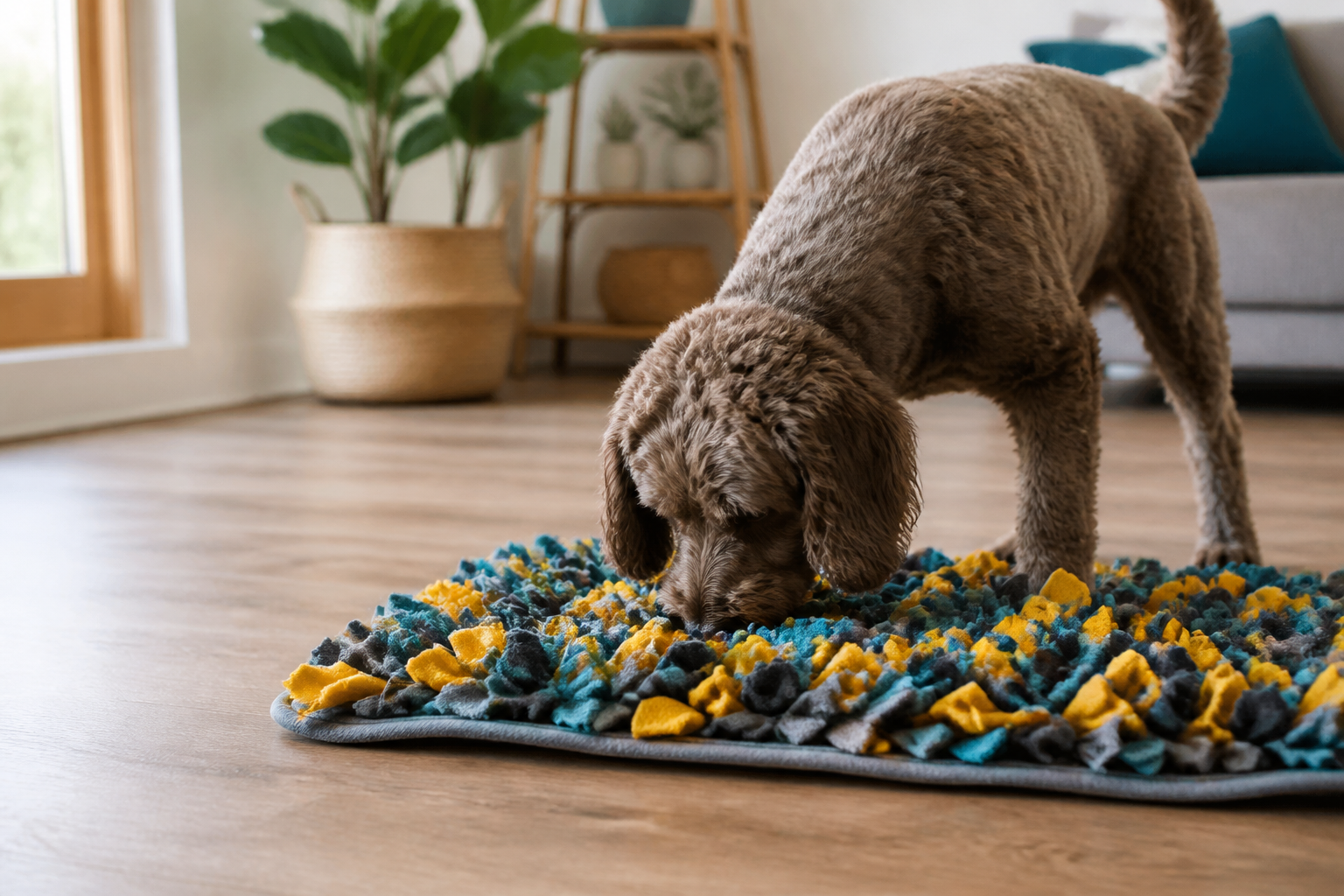
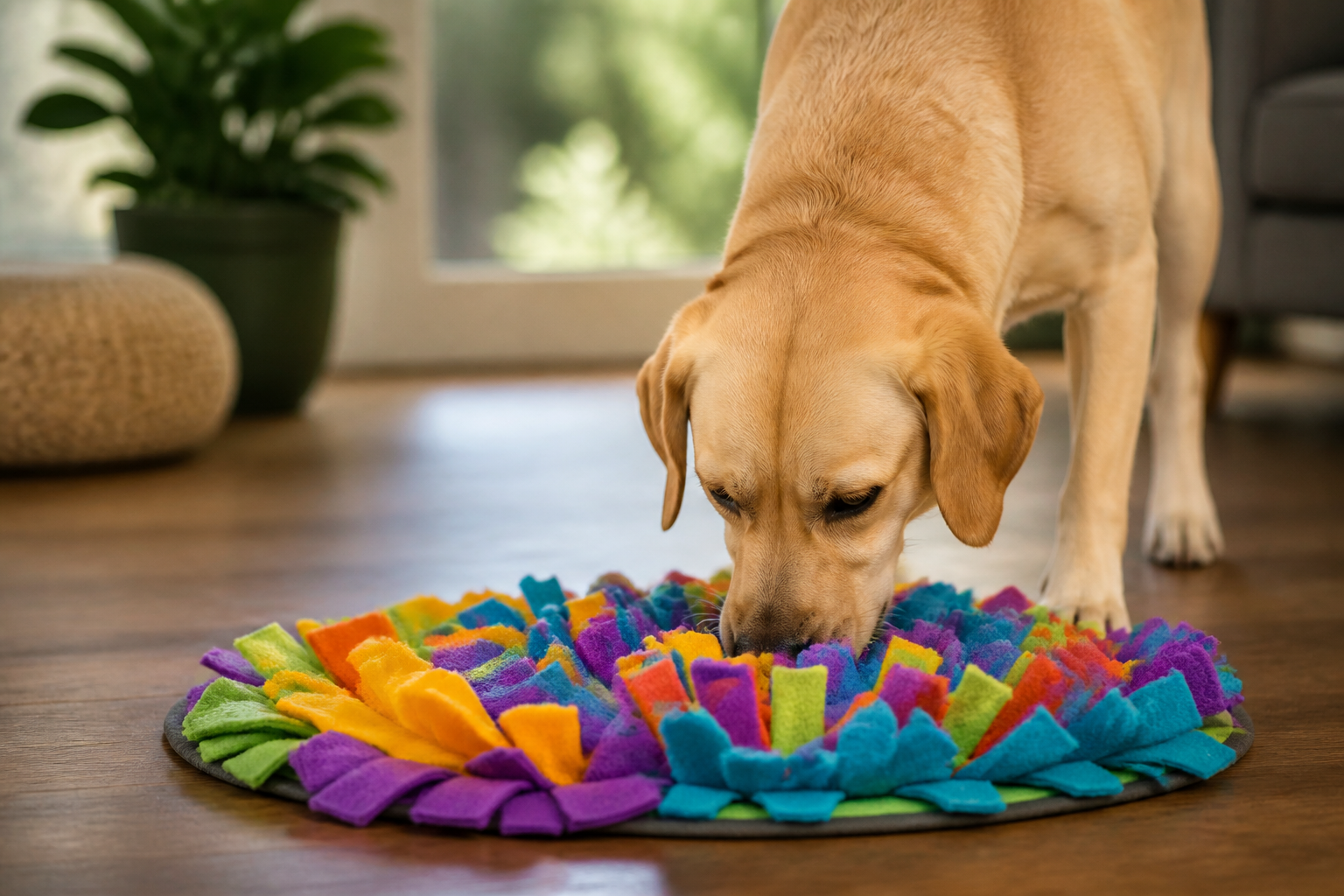
A snuffle mat is a simple enrichment toy made from strips of fleece fabric tied to a sturdy, perforated base. The goal is to mimic the natural foraging behaviors dogs would use in the wild. Instead of eating from a ceramic bowl, your dog must use their nose to find kibble or treats hidden deep within the fabric folds. It is a form of "nose work," which is a sport and training style that builds on a dog's most powerful sense.
The concept is rooted in a behavioral principle called contrafreeloading. Most animals, including dogs, actually prefer to work for their food rather than having it handed to them for free. Searching for hidden treasures provides a sense of accomplishment and satisfies a biological drive. It is a low impact activity that works just as well for a senior dog with limited mobility as it does for a rambunctious Labrador.
The Mental and Physical Benefits of Sniffing
People often focus on physical exercise to tire out their pets, but mental fatigue is just as important. For many dogs, fifteen minutes of intense sniffing can be as exhausting as a long walk around the block. This is because a dog's brain is wired to process smells. They have up to 300 million olfactory receptors in their noses, compared to our mere six million.
Using a snuffle mat offers several specific advantages:
- Slowing Down Fast Eaters: Dogs that "vacuum" their food are at a higher risk for digestive upset or dangerous conditions like bloat. A mat forces them to take one small piece at a time.
- Anxiety Reduction: Sniffing lowers a dog's heart rate and helps them self-soothe. This makes it an excellent tool for dogs who get nervous during thunderstorms or fireworks.
- Senior Support: For older dogs who can no longer go on long hikes, a snuffle mat provides a way to stay engaged and sharp without stressing their joints.
- Puppy Brain Work: It helps puppies learn to focus and solve problems, which can lead to better behavior during formal training sessions.
For more ideas, explore these dog brain games for mental stimulation.
Quick Answer: A snuffle mat is an enrichment tool made of fleece strips tied to a rubber base that hides dry food. It provides mental stimulation by encouraging dogs to use their natural foraging instincts to find their meals.
Choosing Your Materials
You do not need a degree in crafting to make a high quality mat. Most of the supplies can be found at a local craft store or even repurposed from items you have at home.
The Base
The most popular choice for a base is a rubber or plastic sink mat. These are usually found in the kitchen section of a department store. Look for one that has a grid of holes or a honeycomb pattern. It needs to be flexible but heavy enough that your dog cannot easily pick up the entire mat and shake the treats out. If you have a very large dog, you can even use a heavy duty rubber doormat with drainage holes.
The Fabric
Fleece is the gold standard for this project. It does not fray when you cut it, which is vital for safety. It is also soft on your dog's nose and machine washable. We recommend using anti-pill fleece if possible, as it stays looking new longer. You will generally need about 1.5 to 2 yards of fabric. You can use one solid color or mix several colors to create a bright, attractive pattern.
Tools
You will need a sharp pair of fabric scissors. If you want to be very precise, a rotary cutter and a self-healing mat will make the process faster, but they are not required. A ruler or measuring tape will help you keep the strips consistent.
Key Takeaway: Using fleece is essential because it does not fray and is gentle on a dog's sensitive snout. A heavy rubber base prevents the mat from sliding across the floor during a vigorous sniffing session.
Preparing the Fleece Strips
The first real step in the process is cutting your fabric. Consistency is helpful, but do not worry if your cuts are not perfectly straight. Your dog certainly will not mind.
Step 1: Flatten your fabric. / Lay the fleece out on a large table or the floor. If you are using a yard and a half, fold it to make cutting more manageable.
Step 2: Cut the strips. / Aim for strips that are about 1 inch wide and 6 to 8 inches long. If the strips are too short, they will be hard to tie. If they are too long, the mat will look floppy and won't hide the food as well.
Step 3: Organize by color. / If you are using multiple colors, separate them into piles. This makes it easier to create a pattern or ensure an even distribution of colors across the mat.
You will need a lot of strips. For a standard 12 by 15 inch sink mat, expect to cut between 200 and 300 strips. It sounds like a lot, but you can get through it quickly while watching a movie.
Step-by-Step Assembly Instructions
Once your strips are cut, it is time to start tying. This is a repetitive process, but it is also quite relaxing.
The Initial Row
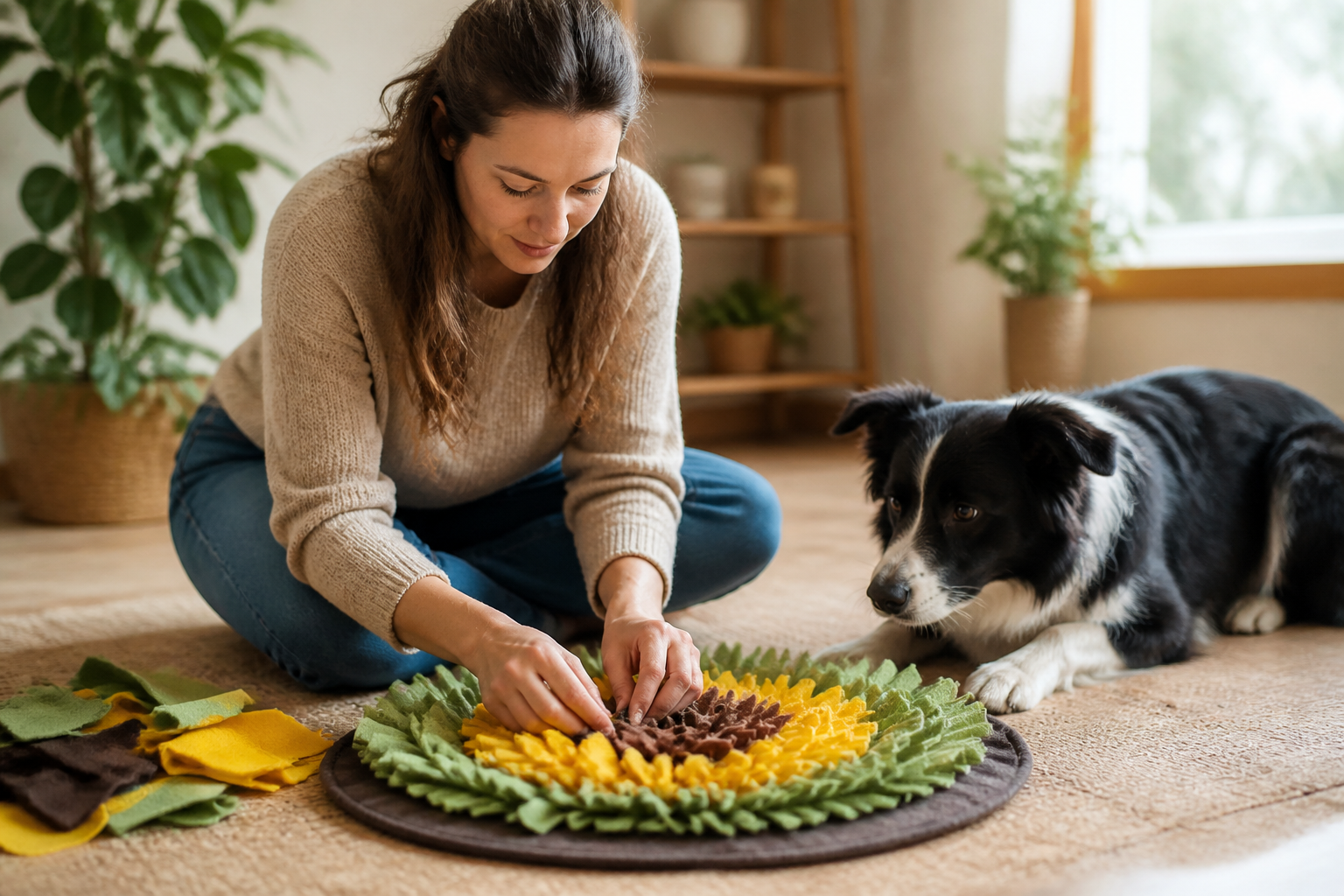
Start at one corner of your rubber mat. Take a strip of fleece and thread one end through the first hole and the other end through the second hole. Pull both ends up so they are on the same side of the mat. Tie them once in a basic overhand knot. There is no need for a double knot; the friction of the fleece against itself and the rubber will keep it secure.
Filling the Grid
Work your way across the first row of holes. Once you finish the horizontal ties, move to the second row. Continue until every pair of holes has a horizontal strip tied through it.
The Vertical Layer
To make the mat truly dense and "snufflable," you need to add a second layer. Go back to the start and tie strips vertically. This means you will thread a strip through a hole in the first row and a hole in the second row. This creates a cross-pattern that fills in any gaps.
Checking for Gaps
After you have finished the horizontal and vertical rows, flip the mat over. Look for any empty holes or areas where the rubber base is still very visible. You can add diagonal strips in these spots to increase the density. A dense mat is a better mat because it keeps the food from just sitting on the surface.
Bottom line: A cross-hatch tying pattern creates a thick, lush surface that provides the best hiding spots for kibble.
Introducing the Mat to Your Dog
Just because you built it does not mean your dog will immediately know what to do with it. Some dogs might be confused or even a little intimidated by the new object.
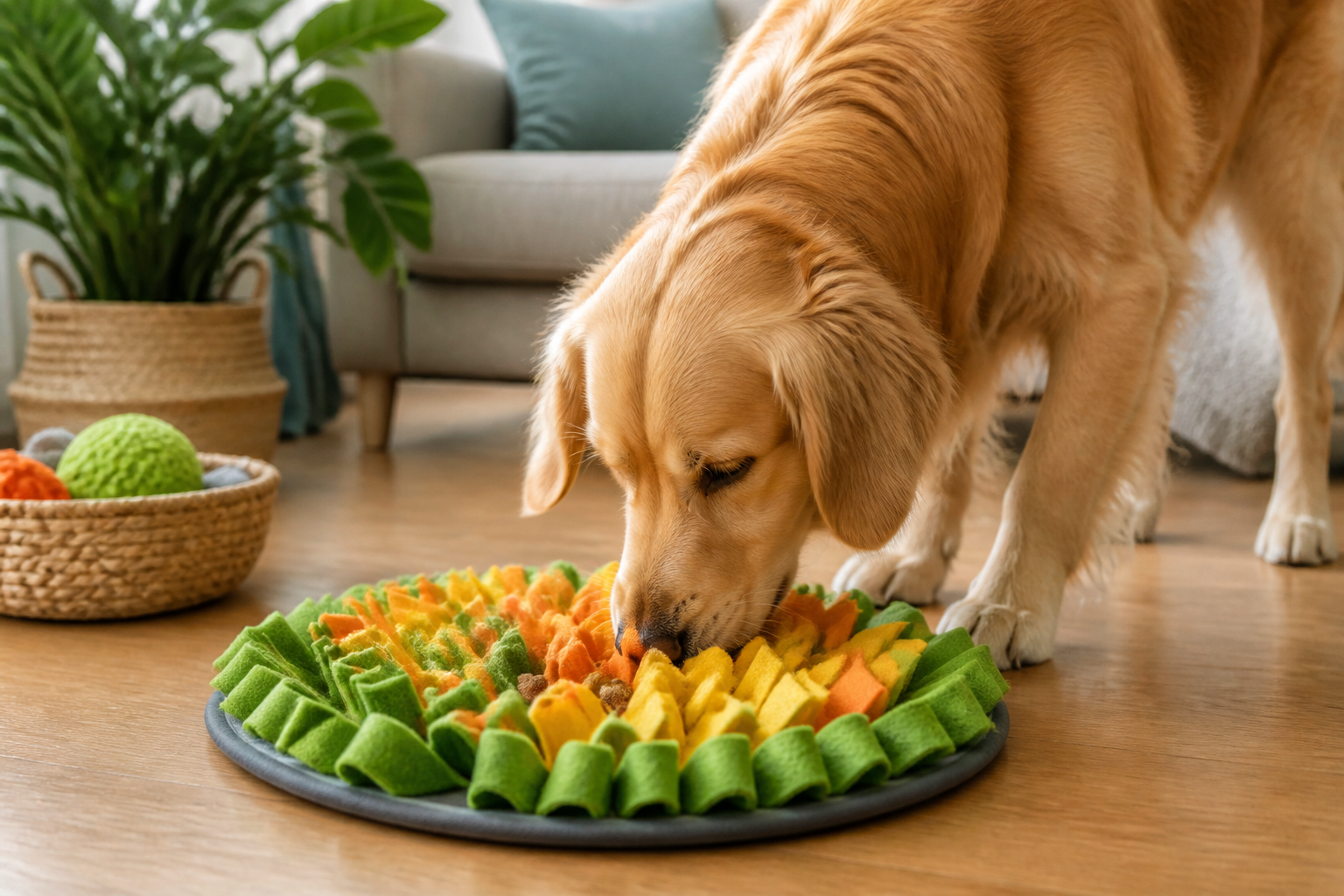
Start easy. Sprinkle a few high-value treats right on top of the fleece strips. Use something with a strong scent, like the Stella & Chewy's freeze-dried dog treats we carry. Let your dog see you put them there. Give them a release command like "find it" or "go work."
Once they understand that the mat equals food, start pushing the treats a little deeper into the fabric. Eventually, you can bury them all the way at the base. If your dog gets frustrated and tries to chew or dig at the mat, take it away for a moment and then restart with easier placements. The goal is a calm, focused sniffing session, not a wrestling match with the fabric.
Using a Snuffle Mat for Full Meals
If your dog is a fast eater, you can transition from using treats to using their regular dry kibble. Brands like Farmina and Royal Canin work perfectly for this because the kibble shapes are consistent and easy to hide.
Simply measure out your dog's normal meal portion and "rake" it into the mat with your fingers. Give the mat a quick shake to help the pieces settle. This can turn a thirty-second meal into a ten-minute activity.
Vet Tip: If your dog is on a prescription diet for weight management or sensitive digestion, check with your veterinarian before adding high-calorie treats to the mat. Our pharmacy offers a wide range of FDA-approved prescription foods through our partnership with Pet's Choice that can be used for enrichment.
Cleaning and Maintenance
Because the mat holds food, it will eventually get dirty. Saliva and small crumbs can lead to bacteria growth or odors.
Most DIY snuffle mats are machine washable. We recommend placing the mat inside a pillowcase or a mesh laundry bag to protect your washing machine from the rubber base. Use a gentle, pet-safe detergent and cold water. Avoid using fabric softener, as the strong scent can be overwhelming for a dog's sensitive nose and might discourage them from using the mat.
Air drying is the safest method. Hanging it over a drying rack or a shower rod allows air to circulate through the strips. Avoid the dryer, as the high heat can melt or warp the rubber base.
Safety and Supervision
While a snuffle mat is a fantastic tool, it is not a "set it and forget it" toy. You should always supervise your dog while they are using it.
Some dogs are "shredders." If your dog decides that the fleece strips are more fun to eat than the hidden treats, you need to intervene. Swallowing fabric or pieces of a rubber mat can lead to serious intestinal blockages. If you notice any strips coming loose or pieces of the base breaking off, it is time to repair or replace the mat.
When the dog is finished sniffing, pick the mat up and put it away. This keeps the item "special" and prevents the dog from using it as a chew toy or a bed. Keeping it out of reach when not in use also ensures that the scent of food remains an exciting cue for the activity.
For additional enrichment options, browse our dog toys.
Beyond the Basics: Advanced Enrichment
Once your dog is a pro at the standard mat, you can vary the challenge. We often suggest people try these variations:
- Variable Strip Lengths: Use some longer strips and some shorter strips to create different depths for the dog to explore.
- Different Textures: While fleece is best for the bulk of the mat, you can occasionally tie in a different fabric to provide a new sensory experience.
- Frozen Treats: On a hot day, you can slightly dampen the fleece and hide cold treats inside, though this will require more frequent washing.
If your dog is using the mat to manage anxiety, consider pairing the activity with calming supplements. We stock several options like Honest Paws or Zesty Paws that support a relaxed state. For dogs with more significant behavioral needs, our pharmacy can provide prescription calming medications through your veterinarian.
You can also find more ideas in this guide to calming dog toys and enrichment activities.
Bottom line: Supervision and regular cleaning are the keys to keeping this DIY project a safe and healthy part of your pet's routine.
Conclusion
Making your own dog snuffle mat is a rewarding project that provides long-term benefits for your pet's mental health. With just a rubber sink mat, some fleece, and a bit of time, you can create a tool that slows down fast eaters and calms anxious minds. We love seeing how simple solutions like this can improve the bond between pets and their owners.
To get started, gather your supplies and follow these steps:
- Cut fleece into 1x7 inch strips.
- Tie strips to the rubber base in horizontal and vertical rows.
- Start with treats on top to build confidence.
- Supervise every session and wash the mat regularly.
If you need the perfect treats to hide in your new mat, or if you want to explore professional enrichment toys, we invite you to browse our dog treats. Our BaxterBoo warehouse in Vernon Hills is always stocked with the best for your dogs and cats. For those looking for the ultimate convenience, our Autoship programme ensures you never run out of the treats and food that make these games possible.
FAQ
Can I use a different fabric besides fleece for a snuffle mat?
Fleece is strongly recommended because it is one of the only fabrics that does not fray when cut into small strips. Other materials like cotton or denim can unravel, leaving long threads that a dog might swallow or get tangled in. Fleece is also soft on the nose, making it the safest and most durable choice for this specific DIY project.
How often should I wash my dog's snuffle mat?
You should aim to wash the mat every week if you use it for daily meals, or every two weeks if it is only used for occasional treats. Small bits of food and saliva can build up quickly, creating an environment for bacteria. Always check the mat for wear and tear after every wash to ensure no strips have come loose.
Is a snuffle mat safe for puppies?
Yes, snuffle mats are excellent for puppies because they provide a safe outlet for their natural curiosity and energy. However, puppies are more likely to try and chew the fabric or the rubber base since they are often in a teething phase. You must provide 100% supervision for puppies to ensure they are sniffing for treats rather than chewing on the mat itself.
My dog just flips the mat over to get the treats. What should I do?
If your dog is a "cheater" who flips the mat, you may need a heavier base. You can try using a heavy rubber kitchen mat or even securing the sink mat to a piece of heavy plastic. Another trick is to start by holding the edges of the mat for them, rewarding them with praise when they use their nose instead of their paws.