
 Save 15% on your 1st Autoship learn more

 Email us
 Live Chat
 FAQs
FAQs





Introduction
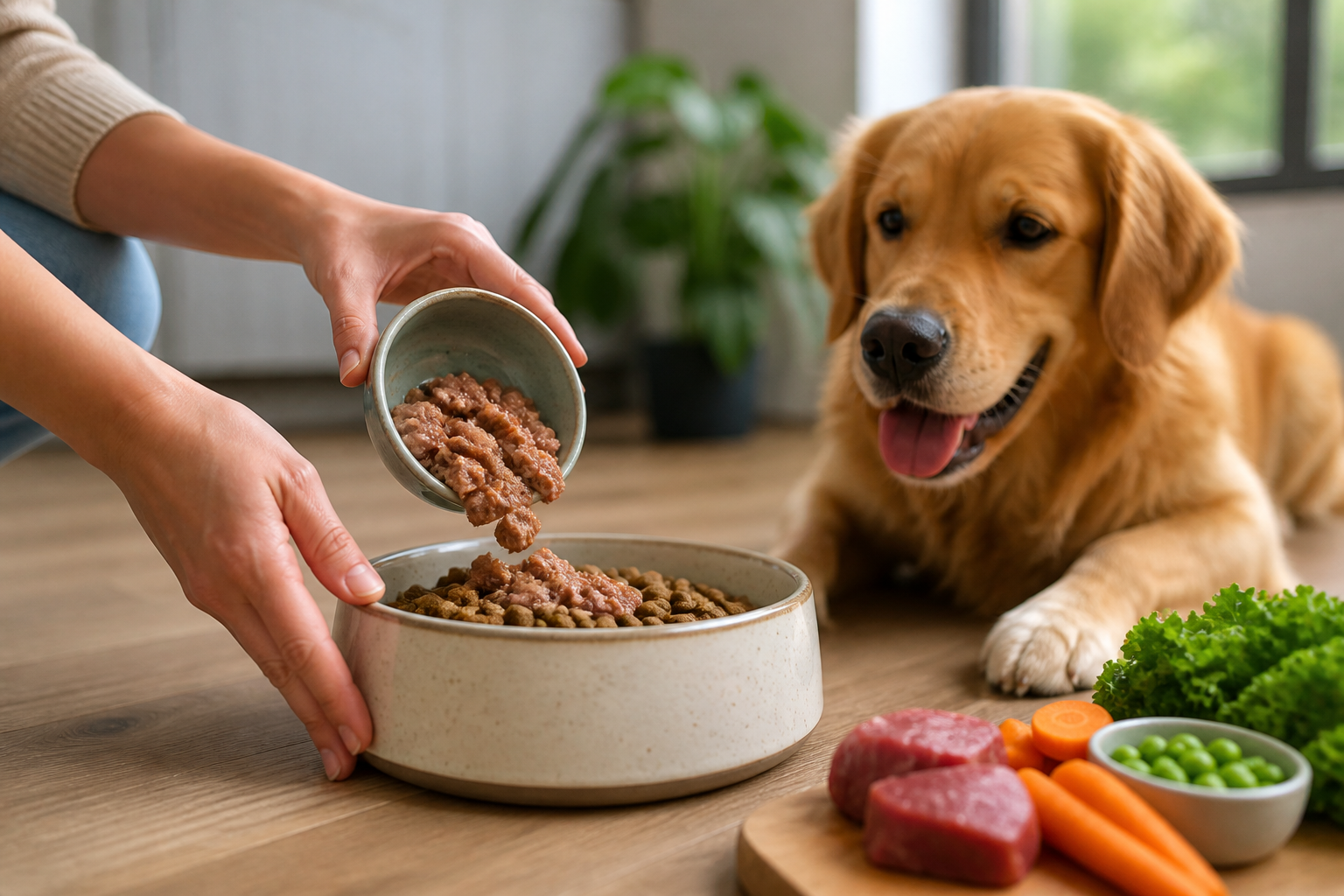
You stand at the kitchen counter while your dog watches with a look of mild disappointment. The bowl of dry kibble sits untouched. Maybe your dog is getting older and struggling with crunchy bits. Perhaps they are just bored of the same flavor every single morning. At BaxterBoo, we talk to pet owners every day who are looking for ways to make mealtime more exciting without breaking the bank or sacrificing nutrition. Mixing wet and dry food is one of the most effective ways to bridge that gap. This post covers the benefits of a mixed diet, how to calculate the right portions, and the safest way to transition your dog to this new routine. Combining textures and aromas can transform a boring meal into a highlight of your dog's day while supporting their overall wellness.
Quick Answer: To mix wet and dry dog food safely, calculate the caloric needs of your dog and replace a portion of the dry kibble with an equivalent amount of wet food calories. A common starting ratio is 75 percent dry food and 25 percent wet food to maintain dental benefits while increasing palatability.
Why Consider Mixed Feeding for Your Dog
Many owners choose a single type of food for convenience or cost. However, a mixed diet offers a middle ground that captures the benefits of both formats. Dry food is famous for its shelf life and the way it helps scrape plaque from teeth. Wet food is praised for its high protein content and intense aroma that appeals to a dog's sense of smell.
Boosting Hydration Naturally
One of the biggest advantages of adding wet food to a dry diet is the moisture content. Standard dry kibble usually contains about 10 to 12 percent water. Wet food can contain up to 80 percent water. For dogs that do not drink enough from their water bowl, this extra moisture is vital for kidney health and urinary tract function. For another hydration option, read our guide to mixing dry dog food with water.
Appealing to Picky Eaters
Dogs experience the world through their noses. Wet food has a much stronger scent than dry kibble. When you mix a small amount of canned food or a savory topper into the bowl, the aroma spreads over the dry pieces. This makes the entire meal more enticing for dogs that have lost interest in their standard fare. You can also explore our selection of Orijen products for additional meal options.
Supporting Weight Management
The high water content in wet food means it is less calorie-dense by volume compared to kibble. This can help a dog feel full without consuming an excessive number of calories. If you have a dog that always seems hungry, adding a portion of wet food can provide more bulk in the bowl.
Key Takeaway: Mixed feeding combines the dental benefits of crunchy kibble with the hydration and flavor of wet food. It is an excellent strategy for picky eaters and dogs that need extra fluids in their diet.
The Basic Math of Mixing Portions
You cannot simply add a scoop of wet food on top of your dog's regular portion of dry food. This leads to overfeeding and weight gain. Instead, you must practice a "substitution" method. This involves removing some dry food to make room for the new wet food.
Understanding Calorie Counts
The most accurate way to mix food is by looking at the calories. This information is usually listed as "kcal/kg" or "kcal/cup" on the packaging. For example, if your dog needs 1,000 calories a day and you want a 50/50 mix, you need 500 calories from dry food and 500 calories from wet food.
The 75/25 Rule
If you are not ready for complex math, many owners start with the 75/25 rule. You feed 75 percent of the recommended daily amount of dry food and 25 percent of the recommended daily amount of wet food.
- Check the feeding guide for the dry food.
- Calculate 75 percent of that amount.
- Check the feeding guide for the wet food.
- Calculate 25 percent of that amount.
- Combine these two portions in the bowl.
Comparing Labels and AAFCO Standards
Before you mix two different brands, check the labels for an AAFCO (Association of American Feed Control Officials) statement. It should say the food is "complete and balanced" for your dog's life stage. If you mix a complete dry food with a topper that is only intended for supplemental feeding, the topper should not make up more than 10 percent of the daily calories. This prevents a nutritional imbalance.
Vet Tip: Always consult your veterinarian before making significant changes to your dog's diet. This is especially important if your dog has underlying health issues like diabetes, kidney disease, or food allergies.
Steps for a Smooth Transition
Dogs have sensitive digestive systems. A sudden change in protein source or fat content can lead to an upset stomach. We see many customers at the BaxterBoo warehouse asking about the best way to introduce new flavors. A slow transition is always the best approach. For more guidance, read about switching from dry to wet dog food.
Step 1: Start with a tiny amount. / Add just one tablespoon of wet food to the regular dry portion for the first two days. Reduce the dry kibble by a small handful to compensate.
Step 2: Monitor for digestive changes. / Watch for loose stools or gas. If your dog seems fine, you can proceed. If they have issues, slow down the process.
Step 3: Increase the wet food ratio. / Move to a 90/10 ratio for a few days, then an 80/20 ratio. Continue this until you reach your desired final mix.
Step 4: Finalize the portions. / Once your dog is adjusted, ensure you are using consistent measuring cups or a kitchen scale for accuracy.
Bottom line: A transition period of 7 to 10 days helps prevent digestive upset and allows your dog's gut bacteria to adjust to the new ingredients.
Life Stages and Specific Health Needs
The way you mix food for a puppy is very different from the way you handle a senior dog. Puppies require higher levels of protein and fat to support their rapid growth. You must ensure that both the wet and dry foods are formulated for puppies. Mixing an adult wet food with a puppy dry food can dilute the essential nutrients the puppy needs for bone and brain development. Age-appropriate options are available in our puppy food collection.
Senior Dog Support
Senior dogs often suffer from dental issues or a declining sense of taste. Mixing wet food can soften the kibble, making it easier for them to chew. It also adds a flavor boost that can encourage a senior dog with a lower appetite to keep eating. Look for wet foods that include joint support ingredients like glucosamine or omega fatty acids.
Prescription and Therapeutic Diets
If your dog is on a therapeutic diet for a condition like urinary stones or skin allergies, you must be very careful. Mixing a standard grocery store wet food into a prescription dry food can ruin the effectiveness of the medical diet.
Many brands like Royal Canin or Farmina Vet Life offer both wet and dry versions of their prescription formulas. Our dog pharmacy carries FDA-approved medications and prescription pet foods through our partnership with Pet's Choice. If your vet has prescribed a specific diet, we recommend staying within that same brand and product line for both the wet and dry components. This ensures the nutritional balance remains exactly where the veterinarian intended.
Essential Hygiene and Storage Tips
Mixing food introduces a few more chores than dry feeding alone. Wet food is a perishable product. Once the seal is broken, bacteria can grow quickly. Proper handling is non-negotiable for pet safety.
- The 30-Minute Rule: Do not leave mixed food sitting in the bowl for more than half an hour. If your dog does not finish it, throw the leftovers away. The moisture in the wet food will cause the dry kibble to swell and become a breeding ground for mold and bacteria.
- Refrigerate Open Cans: Once you open a can or pouch, cover it tightly. You can use silicone can covers or a plastic wrap. Most wet food stays fresh in the fridge for 2 to 3 days.
- Wash the Bowl Daily: Dry kibble leaves behind some oils, but wet food leaves behind protein residues. You must wash your dog's bowl with hot, soapy water after every mixed meal to prevent biofilm buildup.
- Check the Temperature: If you refrigerate the wet food, it might be too cold for your dog's liking. You can let the portion sit at room temperature for a few minutes or mix it with a little warm water to take the chill off. Never microwave the food in the can.
Key Takeaway: Food safety is critical when using wet food. Refrigerate open containers immediately and never leave mixed food in the bowl for more than 30 minutes.
Managing Your Budget with Mixed Feeding
One reason owners avoid 100 percent wet food diets is the cost. Wet food is significantly more expensive per calorie than dry kibble. Mixed feeding allows you to provide a high-quality experience while stretching your dollar further. Our dog food category makes it easier to compare dry and wet options.
You can buy premium dry food in large bags to get the best price per pound. Then, you can use smaller cans or pouches of wet food as a "topper" or "mixer." This gives your dog the high-quality protein and hydration of wet food without the massive monthly bill of an all-canned diet. You can also review our guide to discounted dog food for additional budget ideas.
Brands like Stella and Chewy's or The Honest Kitchen offer different textures that work well as mixers. Some are pates, some are stews, and others are freeze-dried pieces that you can rehydrate with water. Finding a combination that fits your budget and your dog's preferences is easy when you have access to a wide selection. Browse our selection of The Honest Kitchen products for wet food, toppers, and dehydrated options.
FAQ
Can I mix two different brands of dog food?
Yes, you can mix different brands as long as both are labeled as "complete and balanced" by AAFCO. However, it is often easier to stick to the same brand because the nutritional profiles are designed to complement each other. If you do switch brands, monitor your dog for any signs of an allergic reaction or stomach upset.
How do I know if I am overfeeding my dog with a mix?
The best way to tell is by watching your dog's body condition. You should be able to feel their ribs easily but not see them. If your dog begins to lose their "waistline" when viewed from above, you likely need to reduce the portions. Always use a measuring cup rather than a standard kitchen mug to ensure accuracy.
Is it better to mix the food together or put wet food on top?
This depends on your dog's preference. Some dogs like to lick the wet food off the top and leave the kibble behind. For these dogs, stirring the food together so the wet food coats every piece of kibble is more effective. This forces them to eat the dry pieces to get to the flavor they want.
Can I just add water to dry food instead of wet food?
Adding warm water to dry kibble is a great way to create a "gravy" and increase hydration for free. It does not provide the same aromatic boost or protein variety as wet food, but it is an excellent option for budget-conscious owners. If you add water, you should still follow the 30-minute rule for leaving the bowl out.






