
 Save 15% on your 1st Autoship learn more

 Email us
 Live Chat
 FAQs
FAQs





Introduction
Standing in your kitchen with a bag of kibble can feel like a routine chore. You scoop the food, pour it into the bowl, and watch your dog eat the same dry kernels every single day. Many pet owners eventually wonder if there is a better way to serve these meals to improve nutrition or help a picky eater. At BaxterBoo, we have spent years helping dog owners move beyond the basic "scoop and serve" method to find preparation techniques that support better hydration and digestion. This post covers everything from simple hydration tricks and nutritious toppers to the process of making your own dry food from scratch. Learning how to prepare dry dog food properly can turn a standard meal into a highlight of your dog's day while supporting their long term wellness.
The Benefits of Preparing Dry Dog Food
Dry kibble is popular because it is convenient and shelf stable. However, serving it completely dry is not always the best choice for every dog. Taking a few minutes to prepare the food can make a significant difference in how your dog processes their nutrients.
The primary reason to prepare dry food is hydration. Dogs are often in a state of mild dehydration, especially if they do not drink enough water from their bowl. By adding liquid to the food, you ensure they get moisture with every bite. This is particularly helpful for senior dogs or those with kidney concerns.
Preparation also helps with digestion. Dry kibble expands in the stomach once it hits digestive juices. If you pre-soak the food, that expansion happens in the bowl instead. This can reduce gas and bloating. It also makes the food much easier to chew for dogs with dental issues or missing teeth. For more guidance, read our guide to wetting dry dog food for better digestion and hydration.
Quick Answer: Preparing dry dog food usually involves adding warm water or broth to kibble to increase hydration and aroma. You can also mix in fresh toppers or bake homemade kibble using lean meats, grains, and dog-safe vegetables for a customized diet.
How to Hydrate Kibble Effectively
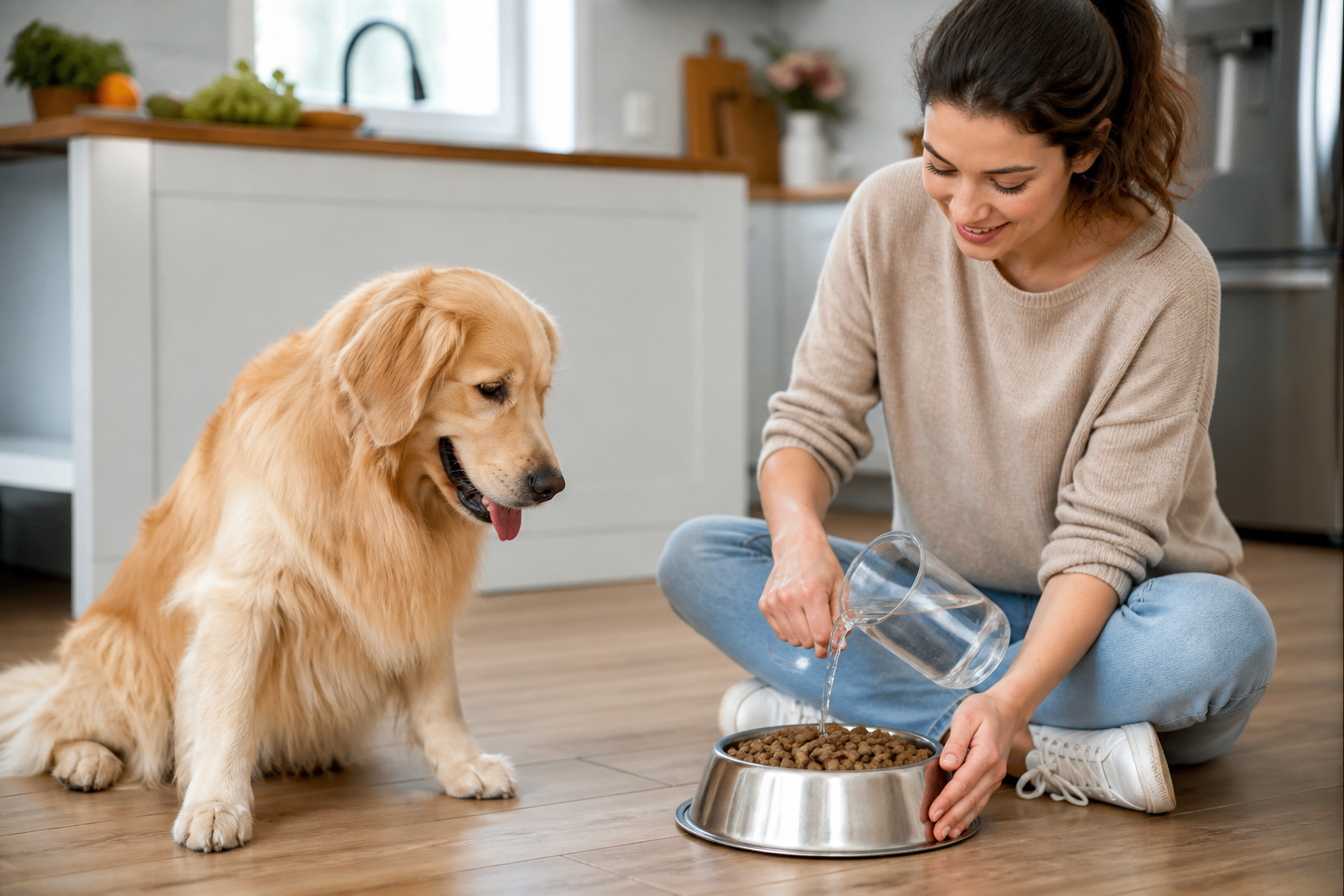
Adding liquid is the simplest way to prepare dry dog food. It changes the texture and releases aromas that make the meal more appealing. Most dogs prefer their food with a bit of "gravy" created by the moisture. You can compare suitable base foods in our dog food category.
Using Warm Water
Water is the easiest and most cost-effective liquid to use. Always use warm water rather than boiling water. Boiling water can actually destroy some of the heat-sensitive vitamins and probiotics sprayed onto the kibble after the extrusion process. Warm water helps break down the outer coating of the kibble and releases the fats, which smells delicious to a dog.
Incorporating Nutritious Broths
If your dog is uninterested in plain water, bone broth is an excellent alternative. We carry several brands like Caru and Open Farm that offer pet-safe broths. These are formulated without the high sodium, onions, or garlic found in human grocery store broths. Our dog food topper collection includes options for adding flavor and moisture.
- Start with a ratio of one part liquid to three parts kibble.
- Let the food sit for 10 to 15 minutes before serving.
- Ensure the liquid is fully absorbed or has formed a light sauce.
The Benefit of Goat Milk
For dogs with sensitive stomachs, raw goat milk is a fantastic preparation tool. It is packed with natural probiotics and enzymes that help break down the starches in dry food. It adds a creamy texture that many dogs find irresistible.
Key Takeaway: Hydrating dry food supports kidney health and makes digestion easier by allowing the kibble to expand before it reaches the stomach.
Mixing in Fresh Food and Toppers
Preparing dry food does not have to mean changing the kibble itself. You can enhance the meal by adding fresh, whole-food ingredients. This provides a variety of textures and a boost of antioxidants. For additional ideas, see what to add to dry dog food for better nutrition.
Freeze-Dried Raw Toppers
Brands like Stella and Chewy's or Vital Essentials offer freeze-dried morsels that you can crumble over the top of dry food. When you prepare these, you can either leave them crunchy or rehydrate them with a little water to create a soft pate. This is a great way to introduce the benefits of raw nutrition without a total diet change. Browse our freeze-dried dog food selection for meal and topper options.
Safe Kitchen Additions
You can also use items from your own fridge. Steamed carrots, green beans, or plain pumpkin purée are excellent for adding fiber. If you use canned pumpkin, ensure it is 100 percent pumpkin and not pumpkin pie filling, which contains dangerous spices and sugar.
- Blueberries: Add a few for a boost of antioxidants.
- Cooked Egg: A great source of high-quality protein.
- Sardines: Use ones packed in water with no added salt for healthy omega-3 fatty acids.
Vet Tip: If you are adding more than 10 percent of your dog's daily calories through toppers, you must reduce the amount of dry kibble to prevent unhealthy weight gain. Consult your veterinarian to find the right caloric balance for your dog's specific activity level.
Preparing Dry Dog Food for Senior Pets
As dogs age, their nutritional and physical needs change. A senior dog might have trouble crunching hard kibble due to gum sensitivity or tooth loss. Preparing their food specifically for these challenges can keep them eating consistently. Our guide on choosing the right dog food for senior pets offers more age-specific feeding guidance.
The Soaking Method
For seniors, you may want to soak the kibble until it reaches a sponge-like consistency. This usually takes about 20 to 30 minutes. You can use a fork to mash the softened kibble into a soft mash. This eliminates the need for heavy chewing and allows the dog to lap up the food easily.
Warming for Aroma
A dog’s sense of smell can decline with age. If a senior dog is losing interest in food, warming the prepared meal in the microwave for a few seconds can help. Be careful to stir the food and check for "hot spots" that could burn their mouth. A warm meal mimics the temperature of fresh prey and can jumpstart a fading appetite.
Managing Health Conditions
Many senior dogs require prescription diets for kidney health, weight management, or urinary issues. Our pet pharmacy offers a wide selection of prescription pet foods through our partnership with Pet's Choice. If your vet has prescribed a specific diet like Farmina Vet Life, you can still use these preparation techniques to make the prescription food more palatable.
Making Homemade Dry Dog Food from Scratch
Some owners prefer to have total control over ingredients by making their own dry food. This is often called "homemade kibble" or "dog bark." It involves blending ingredients into a paste and baking it until it is dry and crunchy.
Choosing Your Ingredients
A balanced homemade dry food should include a lean protein, a complex carbohydrate, and dog-safe vegetables. Using lean ground turkey or beef is a good start. For carbohydrates, consider lentils, brown rice, or oat flour.
The Baking Process
To prepare homemade dry food, you will need to follow a specific process to ensure it is cooked through and shelf-stable.
Step 1: Cook your proteins and grains. / Ensure all meat is browned and grains like rice or lentils are soft.
Step 2: Blend the ingredients. / Put the cooked meat, grains, and raw vegetables like carrots or spinach into a food processor and pulse until it forms a thick paste.
Step 3: Spread and bake. / Spread the paste thinly on a baking sheet lined with parchment paper. Bake at a low temperature, around 325 degrees Fahrenheit, for 45 to 60 minutes.
Step 4: Cut and dehydrate. / Remove the sheet, cut the large "cookie" into small squares, and return them to the oven at a lower temperature to finish drying out.
Balance is Critical
The biggest risk with homemade dry food is nutritional deficiency. Standard commercial kibble is formulated to meet AAFCO standards, meaning it has the exact ratio of calcium, phosphorus, and vitamins a dog needs. If you make your own food at home, you must work with a canine nutritionist to ensure you are adding the necessary supplements.
Key Takeaway: Homemade dry food allows for ingredient transparency but requires careful planning and supplementation to meet all of your dog's nutritional requirements.
Transitioning and Monitoring Your Dog
Whenever you change how you prepare dry dog food, you should monitor your dog for any digestive changes. Some dogs have very sensitive stomachs and may react to a new broth or a different texture.
Start by adding just a tablespoon of water or broth to their usual meal. If their stools remain firm and they seem to enjoy the change, you can gradually increase the amount of liquid or add other toppers. If you notice vomiting or diarrhea, go back to their original dry serving and consult your vet.
We recommend using our Autoship programme for your base dry food. This ensures you never run out of their favorite kibble while you experiment with different preparation methods. It also saves you money on every order, which helps when you are buying extra items like broths or fresh toppers.
Bottom line: Slow transitions are the best way to introduce new preparation styles without causing digestive upset.
Storage and Safety for Prepared Food
Safety is the most important part of learning how to prepare dry dog food. Once you add moisture to kibble, it is no longer shelf-stable. Bacteria thrive in warm, moist environments, and a bowl of soaked kibble is the perfect breeding ground.
The Two-Hour Rule
Never leave hydrated kibble out for more than two hours. If your dog does not finish their meal within that window, you should throw the remains away. Do not try to save soaked kibble in the fridge for the next day, as the texture becomes unappealing and the risk of spoilage increases.
Handling Homemade Dry Food
If you have baked your own dry food, it must be stored correctly. Because it does not contain the preservatives found in commercial kibble, it will mold quickly. Keep homemade dry food in an airtight container in the refrigerator for up to five days. For longer storage, you can freeze it in small batches and thaw it as needed.
Cleaning Your Bowls
When you prepare food with liquids and toppers, your dog's bowl will get much dirtier than it does with dry kibble. Wash the bowl with hot, soapy water after every single meal. This prevents the buildup of biofilm and bacteria that could make your pet sick.
Why Quality Ingredients Matter
No matter how you prepare the food, the quality of the base kibble is what provides the foundation for your dog's health. We have been operating since 2006 and carry over 500 trusted brands. We handpick every product in our Vernon Hills warehouse because we believe pets deserve the best.
When choosing a dry food to prepare, look for brands that use named meat sources rather than "meat by-products." Brands like Acana, Orijen, and NutriSource provide high-quality proteins that respond well to hydration and mixing. You can explore our selection of Acana products when comparing base foods.
Vet Tip: If your dog has chronic health issues like allergies or skin irritation, the way you prepare their food might be less important than the ingredients themselves. Talk to your vet about trying a limited ingredient diet or a prescription formula from our pharmacy to address the root cause of their symptoms.
Conclusion
Preparing dry dog food is an excellent way to improve your pet's mealtime experience and support their overall health. Whether you are simply adding warm water for better hydration or baking your own customized kibble, the extra effort shows in your dog's vitality. Remember to prioritize safety by keeping bowls clean and monitoring for any digestive changes. For those managing specific health conditions, our pharmacy through Pet's Choice is a reliable resource for prescription diets and medications. If you want to make sure you always have the best supplies on hand, consider joining the MVP Rewards programme to earn points on every purchase of food, toppers, and bowls.
FAQ
Is it better to put water in dry dog food?
Yes, adding water is generally better for most dogs because it increases their overall moisture intake. Hydrating the food can help prevent kidney issues, aid digestion by softening the kibble, and make the food smell more appetizing. It is an easy way to ensure your dog stays hydrated throughout the day.
How long should I soak dry dog food?
For a slightly softened texture, 10 to 15 minutes is usually enough time for the kibble to absorb liquid. If you are preparing food for a senior dog with dental problems, you may want to soak it for 20 to 30 minutes until it reaches a mash-like consistency. Always use warm water to speed up the process and release aromas.
Can I mix dry and wet dog food together?
Mixing dry and wet food is a great way to add variety and moisture to your dog's diet. This is often called "combo feeding" and can be very helpful for picky eaters. Just be sure to calculate the total calories from both sources to ensure you are not overfeeding your dog.
What can I add to dry dog food to make it taste better?
You can add pet-safe bone broth, plain pumpkin purée, freeze-dried raw toppers, or a small amount of cooked lean meat. Many owners also find that a splash of goat milk or a sprinkle of blueberries adds enough variety to keep their dog interested. Avoid adding human foods with salt, onions, garlic, or excessive fats.






