
 Save 15% on your 1st Autoship learn more

 Email us
 Live Chat
 FAQs
FAQs





Introduction
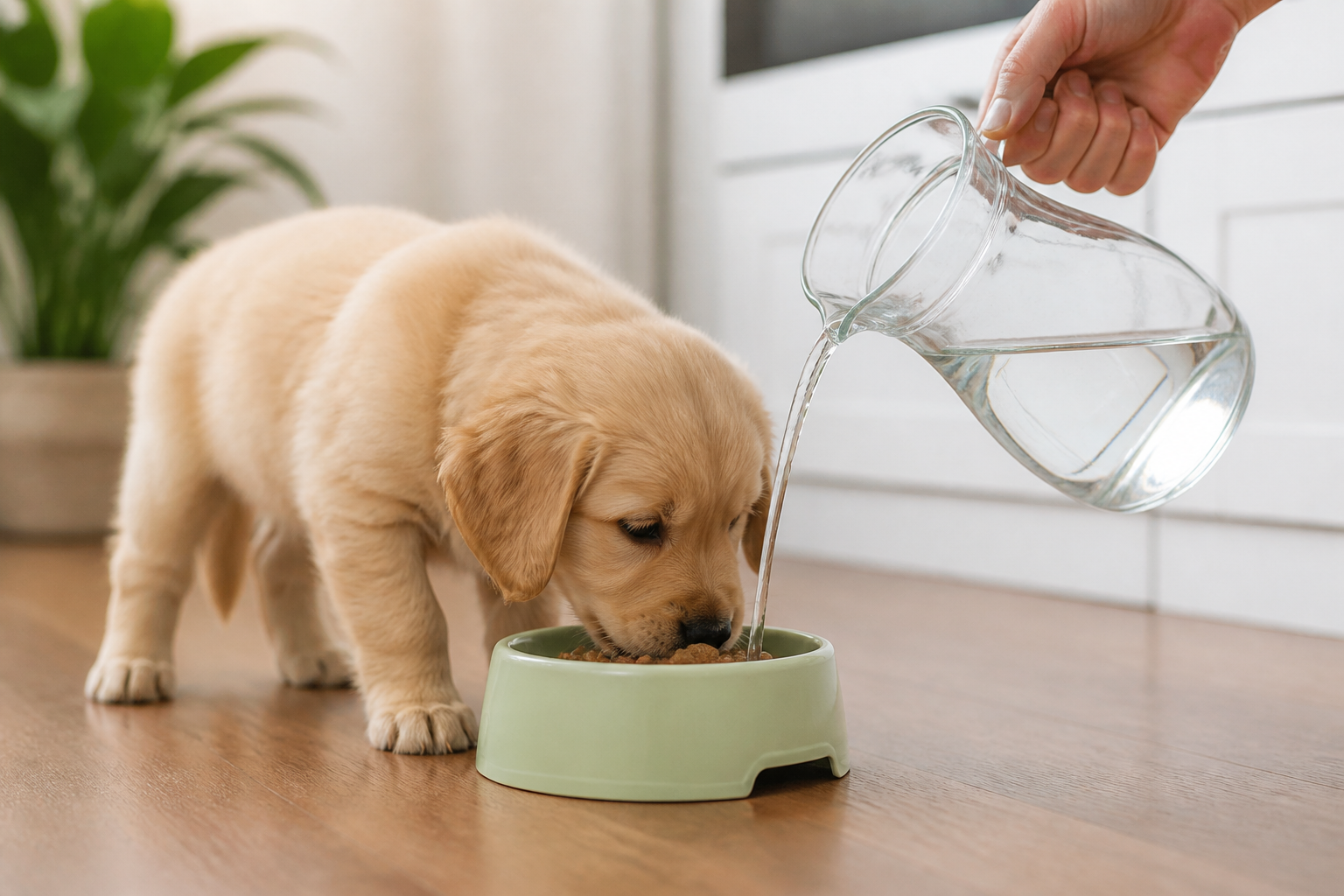
Your new puppy is likely very excited for mealtime, but you might notice them struggling to crunch through hard kibble nuggets. This is a common situation for puppies that are just starting the weaning process or those going through the peak of teething. If you are just getting started, our puppy food category is a great place to begin. Softening dry food is a simple, effective way to help your pup transition from mother's milk to solid food without hurting their sensitive gums. This guide will cover the best liquids to use, the exact steps for soaking kibble, and how to eventually move your puppy back to a full crunch. We want to ensure your puppy gets every bit of nutrition they need while keeping their belly and mouth comfortable.
Why You Should Consider Softening Puppy Food
Most puppies begin the weaning process around three to four weeks of age. At this point, their tiny "milk teeth" are just starting to emerge. These teeth are sharp but very small and not yet strong enough to handle the hard density of premium dry kibble. Softening the food creates a texture that bridges the gap between liquid milk and solid nuggets.
Teething is another major factor. Around four months of age, those baby teeth begin to fall out to make room for adult teeth. This process can cause significant gum soreness and inflammation. If your puppy suddenly stops eating or seems hesitant to chew, the kibble might simply be too painful to crunch. Softening the food allows them to eat a full meal without irritating their tender gums.
Hydration is a third important reason. Puppies are incredibly active and can become dehydrated quickly. By adding liquid to their food, you are ensuring they get extra moisture with every meal. This is particularly helpful for puppies that are not yet consistent about drinking from their water bowl. It also makes the food smell stronger, which can entice a picky puppy to start eating.
The Best Liquids for Soaking Kibble
You have several options when it comes to what you use to moisten your puppy's food. The goal is to add flavor and nutrition while achieving the right consistency.
Warm Water
Warm water is the most accessible and common choice. It is calorie-free and does not cause digestive upset. The warmth helps to release the fats and aromas in the kibble, making it smell much more appealing to a dog. Avoid using boiling water, as it can destroy some of the heat-sensitive vitamins and probiotics found in high-quality puppy formulas.
Low-Sodium Broth
If your puppy is particularly picky, using a bone broth or vegetable broth can help. However, you must be very careful with store-bought options. Most human broths contain onions, garlic, and excessive salt, all of which are dangerous for dogs. We recommend using a broth specifically formulated for pets or making your own at home using only dog-safe bones and water.
Puppy Milk Replacer
For very young puppies who are still in the early stages of weaning, puppy milk replacer is an excellent choice. It provides the familiar taste of mother's milk along with the extra calories and fats a growing pup needs. If you want a product made for this stage, PetAg Esbilac 2nd Step Puppy Weaning Food is a useful option to compare.
Goat Milk
Many pet owners prefer goat milk because it is often easier for puppies to digest than cow milk. It contains natural probiotics that support a healthy gut. For more options in this stage, our milk replacer category is a helpful place to browse.
Quick Answer: The best way to soften puppy food is to mix it with warm water or pet-safe broth in a 1:3 ratio. Let it soak for 10 to 15 minutes until it reaches a soft, oatmeal-like consistency.
Step-by-Step Instructions for Softening Food
Creating the perfect bowl of softened kibble is a simple process, but it requires a bit of patience. You want to avoid serving a bowl of "soup" where the kibble is just floating, as well as food that is still hard in the center.
Step 1: Measure the kibble. / Use the recommended amount based on your puppy's weight and age.
Step 2: Add the warm liquid. / Use roughly one part liquid for every three parts of dry food.
Step 3: Let it soak. / Leave the bowl on the counter for 10 to 20 minutes.
Step 4: Check the consistency. / Press a fork into a piece of kibble. It should crumble easily.
Step 5: Mash if necessary. / For younger puppies, use a fork to mash the soaked kibble into a smooth paste.
Step 6: Test the temperature. / Always touch the food with your finger to make sure it is not too hot before serving.
Key Takeaway: Proper soaking takes time. Plan your puppy's meal schedule about 20 minutes in advance to allow the liquid to fully penetrate the center of the kibble.
Transitioning from Soft to Dry Food
While softened food is great for weaning and teething, most owners eventually want to move back to dry kibble. Dry food is convenient, less messy, and provides a mechanical "scrubbing" action that can help keep teeth clean. If you want a related read, our weaning timeline guide is a useful companion post. The transition should be gradual to avoid upsetting your puppy's stomach.
The 8 to 12 Week Window
Most puppies are ready to start eating fully dry food between 8 and 12 weeks of age. By this time, their deciduous teeth are usually fully erupted, and they have the jaw strength to crunch through smaller puppy-sized kibble. If your puppy is doing well, you can start reducing the amount of liquid you add every few days.
Signs Your Puppy is Ready
Look for your puppy to start chewing on their toys more aggressively. If they are successfully navigating hard treats or nylon chew toys, they likely have the strength for dry kibble. You might also notice them finishing their softened food very quickly and looking for more.
Handling the Transition
Start by reducing the soaking time. Instead of waiting 20 minutes, wait only 10. The kibble will be soft on the outside but still have a bit of a crunch in the middle. If the puppy handles this well for several days, move to a 5-minute soak. Eventually, you can simply splash a tiny bit of water on the food and serve it immediately, then move to completely dry food.
Vet Tip: If your puppy experiences vomiting or diarrhea during a food transition, go back to the previous level of moisture for a few days. Consult your veterinarian if digestive issues persist or if your puppy stops eating entirely.
Managing Safety and Hygiene
One of the biggest risks of softening dry food is the speed at which it can spoil. Once you add moisture to kibble, you are creating a perfect environment for bacteria to grow.
- Never leave soaked food out for more than 30 minutes.
- If your puppy does not finish the meal, throw the leftovers away.
- Do not leave soaked kibble in the bowl to "save for later" at room temperature.
- Wash the food bowl with hot, soapy water after every single meal.
- Avoid soaking huge batches of food in advance unless you store them in the refrigerator.
If you do choose to prep a day's worth of softened food, keep it in an airtight container in the fridge for no more than 24 hours. Cold food might be less appealing to your puppy, so you may need to add a tiny splash of warm water to take the chill off before serving.
Using Toppers and Mix-ins
Sometimes a puppy is not struggling with the texture but is simply bored with the flavor. In these cases, you can use wet food or specialized toppers to soften the meal and add excitement. Mixing a spoonful of high-quality canned food with dry kibble and a little warm water creates a "gravy" that most puppies find irresistible.
Our Stella & Chewy's selection includes toppers and other meal enhancers that can help make mealtime more appealing. These can be rehydrated with water and mixed into the kibble. This adds a boost of protein and enzymes that are great for a growing puppy's development.
Bottom line: Adding a small amount of wet food or a rehydrated topper is an excellent way to soften kibble while significantly increasing the nutritional value of the meal.
When to Seek Professional Guidance
While most puppies transition through these stages easily, some may have underlying issues. If your puppy refuses to eat even very soft food, it could indicate a dental problem or a digestive disorder. Some puppies are born with persistent right aortic arch or other esophageal issues that make swallowing solid food difficult.
If you notice your puppy "regurgitating" (dropping food out of their mouth shortly after eating) or if they seem to be coughing while they eat, please see a veterinarian. If your vet determines your pup needs specialized care, our pet pharmacy can help with prescription diets and medications.
The Role of Dental Health During Growth
Even while your puppy is eating soft food, you should start thinking about their long term dental health. Soft food tends to stick to the teeth and gums more than dry kibble. This can lead to plaque buildup even in very young dogs.
Step 1: Introduce a toothbrush. / While the teeth are small, use a finger brush to get them used to the sensation.
Step 2: Use dog-safe toothpaste. / Never use human toothpaste, as it contains xylitol and fluoride which are toxic to dogs.
Step 3: Offer appropriate chews. / Once their adult teeth are in, provide rubber or nylon chews to help keep the surfaces of the teeth clean.
By starting a dental routine early, you are setting your puppy up for a lifetime of healthy smiles. Even if they are still eating softened food, a quick wipe of the gums with a pet-safe dental wipe after dinner can make a big difference. For more ideas on puppy oral care, see our dog dental and breath care category.
Choosing the Right Puppy Food
Not all kibble is created equal when it comes to soaking. Some high-density, oven-baked kibbles take much longer to soften than standard extruded kibble. If you find that your current food stays hard no matter how much water you add, you might want to try a different brand.
Look for kibble that is specifically sized for puppies. Small-breed puppy formulas usually have tiny, star-shaped or round pieces that soften very quickly. Large-breed puppy formulas have larger pieces but are often designed with a more porous structure to aid in digestion. Brands like NutriSource and Open Farm offer puppy-friendly options worth exploring.
Key Takeaway: The size and shape of the kibble will determine how long it needs to soak. Smaller, porous pieces will reach the desired consistency much faster than large, dense nuggets.
Nutritional Support and Rewards
Feeding a puppy is about more than just the main meal. During the transition to dry food, you can also use small, soft treats for training. This helps them get used to different textures without the intensity of a hard crunch.
As your puppy grows, your food needs will change frequently. We recommend joining our MVP Rewards programme to earn points on every bag of puppy food and every bottle of supplement you buy. You can also set up our Autoship programme for your favorite puppy formula to ensure you never run out. This is especially helpful during the first year when puppies seem to eat more every single day.
Conclusion
Softening dry dog food for puppies is a simple act of care that can make a huge difference in their comfort and health. Whether you are helping a young pup wean off mother's milk or supporting a teenager through the pains of teething, warm water and a little bit of time are your best tools. If you want another practical read, How to Get My Dog to Eat His Dry Food and Enjoy It is a helpful follow-up. Remember to keep things clean, transition slowly, and always prioritize high-quality ingredients. Our team at BaxterBoo is here to support you with everything from the perfect kibble to the supplements your growing dog needs. If your puppy ever requires a specialized or prescription diet to manage their growth, our pharmacy is ready to help.
- Use warm water or pet-safe broth to soften kibble.
- Soak for 10 to 20 minutes for a perfect consistency.
- Throw away any uneaten softened food after 30 minutes.
- Transition to dry kibble gradually between 8 and 12 weeks of age.
Bottom line: Start with a 1:3 ratio of liquid to kibble and adjust based on your puppy's specific chewing needs and preferences.
FAQ
Can I use a microwave to soften my puppy's food?
Yes, you can use a microwave to speed up the process, but you must be very careful. Only heat the food for 10 to 15 seconds and stir it thoroughly to eliminate "hot spots" that could burn your puppy's mouth. Always check the temperature with your finger before serving.
Why won't my puppy eat the food once it's softened?
Some puppies may dislike the mushy texture or the specific smell of wet kibble. If this happens, try using a flavored topper or a small amount of canned food to improve the taste. If they still refuse to eat, consult your vet to rule out any underlying health or dental issues. You can also browse our dog food category for other textures and formulas.
Is it okay to soak puppy food in cow's milk?
It is generally better to avoid cow's milk because many dogs are lactose intolerant. Cow's milk can cause gas, bloating, and diarrhea in puppies. Use plain warm water, low-sodium pet broth, or a specific puppy milk replacer instead for a safer nutritional boost. If you need a starting point, our milk replacer category is worth a look.
How do I know if the soaked food has gone bad?
Soaked food can spoil in as little as 30 to 60 minutes at room temperature. If the food smells sour, looks slimy, or has been sitting out since the last mealtime, throw it away immediately. Always wash the bowl thoroughly between feedings to prevent bacterial growth.






