
 Save 15% on your 1st Autoship learn more

 Email us
 Live Chat
 FAQs
FAQs





Introduction
You just brought home a new bag of premium kibble and that fresh, savory aroma hits you the moment you pull the tab. You want that first bowl to taste just as good as the last one. Proper storage is about more than just keeping the kitchen tidy. It is about protecting the nutritional integrity of the ingredients you paid for. At BaxterBoo, we know that high quality dog food is an investment in your pet's long term health. If food is stored incorrectly, it can lose its vitamins, the fats can turn rancid, or it can even grow harmful mold. This guide covers everything from choosing the right container to finding the perfect spot in your home. Our goal is to help you keep every meal as safe and nutritious as possible.
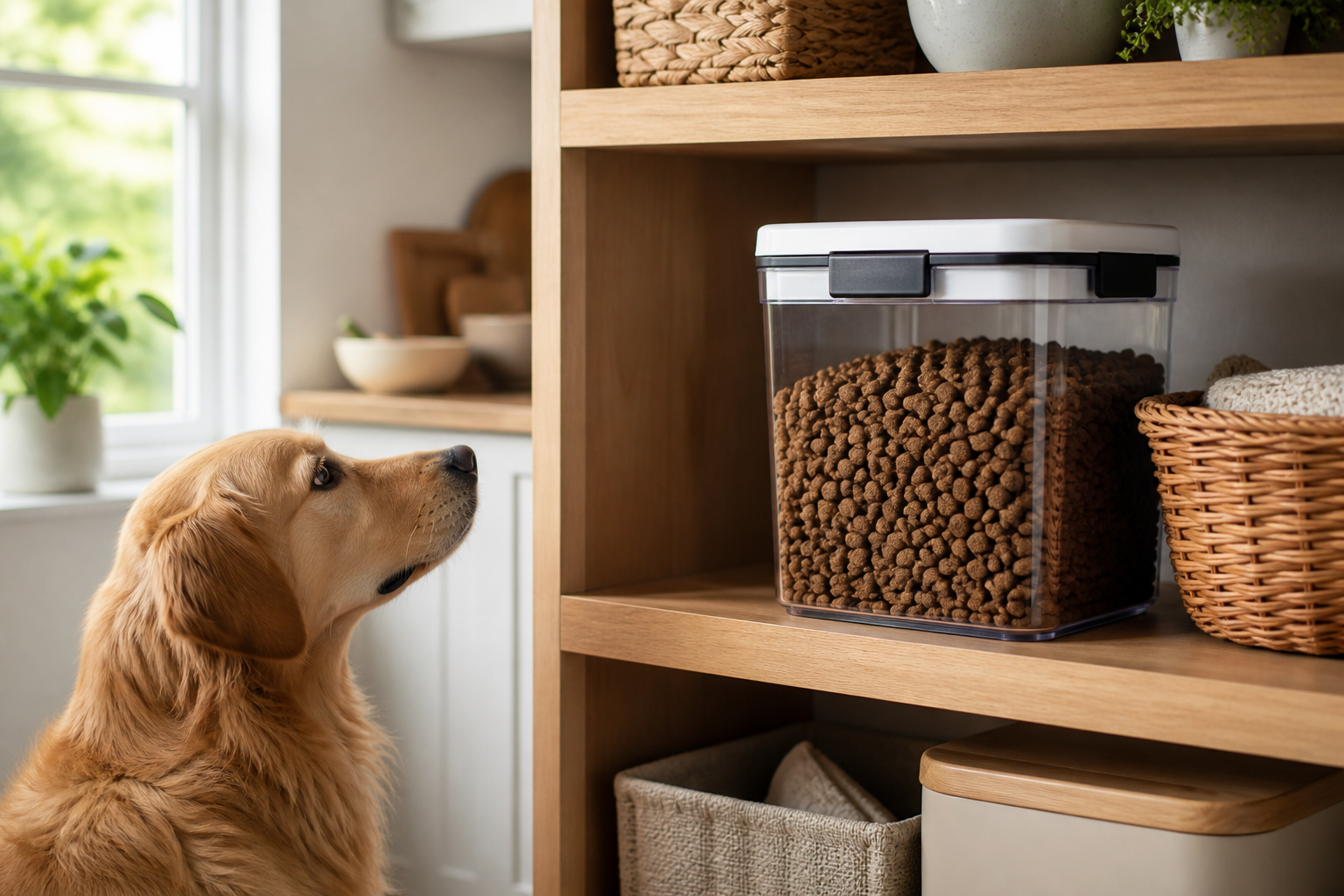
Quick Answer: The best way to store dog dry food is to keep it inside its original bag and place that bag into an airtight container. Store the container in a cool, dry place where the temperature stays below 80 degrees Fahrenheit to prevent nutrient breakdown and rancidity.
The Importance of Proper Kibble Storage
Dry dog food might look like it is shelf stable forever, but it is actually a perishable product. Most high quality kibbles are coated with fats and oils to make them palatable and provide essential fatty acids. Once you open the bag, those fats are exposed to oxygen. This process is called oxidation. Over time, oxidation causes fats to go rancid. This changes the smell and taste of the food. More importantly, it can create compounds that are unhealthy for your dog to consume.
Moisture is another major concern. If your storage area is humid, or if water gets into the container, mold can develop. Some molds produce mycotoxins, which are dangerous to dogs. Even if you cannot see the mold, it may already be affecting the quality of the food. Proper storage acts as a barrier against these environmental factors. It keeps the food crunchy, flavorful, and safe for your dog to eat every day.
Key Takeaway: Proper storage prevents oxidation and mold growth, ensuring your dog’s food remains both nutritious and tasty throughout the entire bag.
Keep the Original Bag
One of the most common mistakes pet owners make is pouring kibble directly into a plastic bin. We recommend keeping the food inside its original packaging. Pet food bags are specifically designed to protect the contents. Many use high tech liners that act as a fat barrier. This prevents the oils in the kibble from soaking into the packaging or the storage bin. When you pour food directly into a plastic container, the oils can leach into the plastic over time. These oils eventually go rancid and can contaminate the next fresh batch of food you pour in.
There is also a safety reason to keep the bag. The packaging contains vital information like the brand name, the specific formula, and the "best by" date. Most importantly, it lists the lot number and UPC code. If there is ever a product recall, you will need this information to know if your bag is affected. Without the original bag, you would have no way to verify the safety of the food in your container.
Benefits of the Original Bag
- The liner provides a superior barrier against oxygen and moisture.
- It keeps the storage container cleaner by preventing oil buildup.
- All recall and safety information stays with the food.
- It prevents the "stale oil" smell that can haunt plastic bins.
Choosing the Right Airtight Container
While the bag is the first line of defense, a secondary container is still a great idea. It provides an extra seal against air and keeps out pests like ants, mice, or pantry moths. Some dogs are very clever and can rip through a paper bag if they get hungry. A sturdy container with a locking lid prevents your dog from overeating or getting into trouble when you are not looking.
When choosing a container, look for one with a rubber or silicone gasket around the lid. This creates a true airtight seal. Many standard storage bins have loose fitting lids that let air circulate freely. This defeats the purpose of using a container for freshness. If you prefer the look of a specific bin, just make sure the entire bag of food fits inside it comfortably.
| Container Material | Pros | Cons |
|---|---|---|
| BPA-Free Plastic | Lightweight, affordable, many sizes available. | Can hold onto odors and oils if food is poured directly inside. |
| Stainless Steel | Very easy to clean, does not absorb odors, extremely durable. | Generally more expensive and heavier than plastic. |
| Glass | Non-porous, easiest to sanitize, zero chemical leaching. | Heavy and breakable; usually only available in small sizes. |
Where to Store Your Dog Food
Location is just as important as the container itself. You should store dog food in a cool and dry environment. The FDA recommends keeping the temperature below 80 degrees Fahrenheit. Excess heat is a major enemy of pet food. High temperatures speed up the degradation of vitamins and minerals. It also causes fats to go rancid much faster.
Many people store large bags of food in the garage or a backyard shed. We advise against this. Garages are rarely temperature controlled. In the summer, they can become like ovens. In the winter, the temperature fluctuations can cause condensation inside the bag. This moisture leads to mold and bacterial growth. Always find a spot inside your home, such as a pantry, a kitchen cabinet, or a dedicated mudroom closet.
Places to Avoid
- The garage: Extreme heat and humidity fluctuations damage the food.
- Under the kitchen sink: This area is often prone to dampness or leaks.
- Near the oven or dishwasher: These appliances generate significant heat.
- Unheated laundry rooms: High humidity from the dryer can affect the kibble.
Vet Tip: If you notice your dog suddenly refusing to eat their usual food, check the bag for a sour or "off" smell. Spoiled food can cause upset stomachs. Always consult your veterinarian if your dog experiences persistent vomiting or diarrhea after meals.
Handling and Hygiene Habits
Good storage habits extend to how you handle the food every day. Your hands and the tools you use can introduce bacteria into the bag. Always use a clean scoop rather than your hands or a used coffee mug. It is a good idea to wash the food scoop every few days with hot, soapy water. This prevents old fat residue from building up on the tool and transferring to the fresh food.
Another important rule is to never "top off" your food container. Many owners pour a new bag of food on top of the last few inches of the old bag. This is a mistake. The old food at the bottom will continue to age and can go rancid. It then contaminates the fresh food you just added. Always wait until the container is completely empty. Before adding a new bag, wash and dry the container thoroughly to remove any old crumbs or oils.
Cleaning Your Storage Container
Step 1: Empty the container completely. / Toss out any remaining crumbs or old bits of kibble.
Step 2: Wash with hot, soapy water. / Use a mild dish soap and a sponge to scrub the interior and the lid gasket.
Step 3: Rinse and dry thoroughly. / Any remaining moisture can cause the next bag of food to grow mold.
Identifying Spoiled Dog Food
Even with perfect storage, it is important to know the signs of spoiled food. Most dry dog food is best used within 30 days of opening the bag. After this point, even well stored food begins to lose its nutritional potency and peak flavor. If you have a small dog but buy a giant bag to save money, the food may go stale before you reach the bottom. Consider buying smaller bags that your dog can finish within a month.
Check the "best by" date before you even leave the store or when your order arrives from us. This date is set by the manufacturer to ensure the food meets its nutritional claims. Once that date passes, the vitamins may have degraded significantly. If the kibble feels unusually greasy, has a dusty white coating, or smells like old paint or sour chemicals, it is time to throw it out.
Bottom line: Freshness is a timeline. Buy the bag size that matches your dog's eating habits so the food is consumed within 30 days of opening.
For more guidance, read our article on how long dry dog food stays fresh once opened.
Managing Prescription and Specialty Diets
If your dog is on a prescription diet for a health condition, storage is even more critical. These foods are often formulated with specific nutrient levels to manage issues like kidney disease, allergies, or urinary health. If the nutrients break down due to poor storage, the food may no longer provide the therapeutic benefit your dog needs. Our pharmacy for dogs offers a wide range of FDA-approved prescription pet foods through our partnership with Pet's Choice.
When handling prescription diets, keep them strictly separated from other pet foods. This prevents cross-contamination, which is vital for dogs with severe food allergies. Always follow any specific storage instructions provided on the packaging or by your veterinarian. If you find your prescription bag is too large to finish quickly, ask your vet if a smaller size is available to ensure every bite stays fresh and effective.
Safety and Pest Prevention
Properly stored food is less likely to attract unwanted visitors. Pests like rodents and insects have a very keen sense of smell. A bag left open or a bin with a loose lid is an invitation for them to move in. Beyond the "gross" factor, pests carry diseases and can contaminate the food with droppings or larvae. Storage mites are another common issue. These tiny pests thrive in grain-based environments and can cause allergic reactions in some dogs.
Using an airtight container is your best defense against these problems. If you live in an area prone to ants, you can wipe the outside of the container with a bit of white vinegar. This disrupts their scent trails without getting chemicals near your dog's food. Keeping the storage area clean and free of spilled kibble also removes the incentive for pests to hang around your pantry.
Key Takeaway: An airtight seal protects your dog from the bacteria, parasites, and allergens that pests can introduce to their food supply.
If you are comparing formulas, explore our dog food category and our selection of NutriSource products.
Conclusion
Storing dog dry food correctly is a simple way to protect your dog's health and your household budget. By keeping the food in its original bag, using a high quality airtight container, and choosing a cool, dry location, you ensure every meal is safe. Remember to wash your scoops and containers regularly and never mix old food with a fresh batch. If you are ever worried about your dog's reaction to their food, your veterinarian is the best resource for guidance. At BaxterBoo, we want to help you make the most of the premium food you choose for your pet. Consider signing up for our Autoship programme to have fresh food delivered right when you need it. This helps you avoid storing giant bags for too long and ensures your dog always has a fresh supply of their favorite meal.
FAQ
Can I store my dog's dry food in the refrigerator?
While refrigeration can slow down the oxidation of fats, it often introduces moisture through condensation. This moisture can lead to mold growth inside the bag. It is generally better to store dry food in a cool, dry pantry at room temperature rather than the fridge.
Is it okay to pour kibble directly into a plastic bin?
We recommend keeping the kibble in its original bag and placing the entire bag inside the bin. Plastic can be porous and may absorb fats that turn rancid over time. Keeping the bag also ensures you have access to lot numbers and expiration dates in case of a recall.
How long does dry dog food stay fresh after the bag is opened?
Most experts and manufacturers recommend using a bag of dry dog food within 30 to 45 days of opening. After this window, the risk of rancidity and nutrient loss increases significantly. If you have a small dog, buying smaller bags more frequently is often the best choice for freshness.
For another perspective on freshness, read how long dry dog food stays good.
What should I do if I find bugs in my dog's food?
If you find insects like weevils or moths in the food, you should discard the entire bag immediately. These pests can contaminate the food and spread to other items in your pantry. Thoroughly clean the storage container and the surrounding area with soap and water before bringing in a new bag.






