
 Save 15% on your 1st Autoship learn more

 Email us
 Live Chat
 FAQs
FAQs





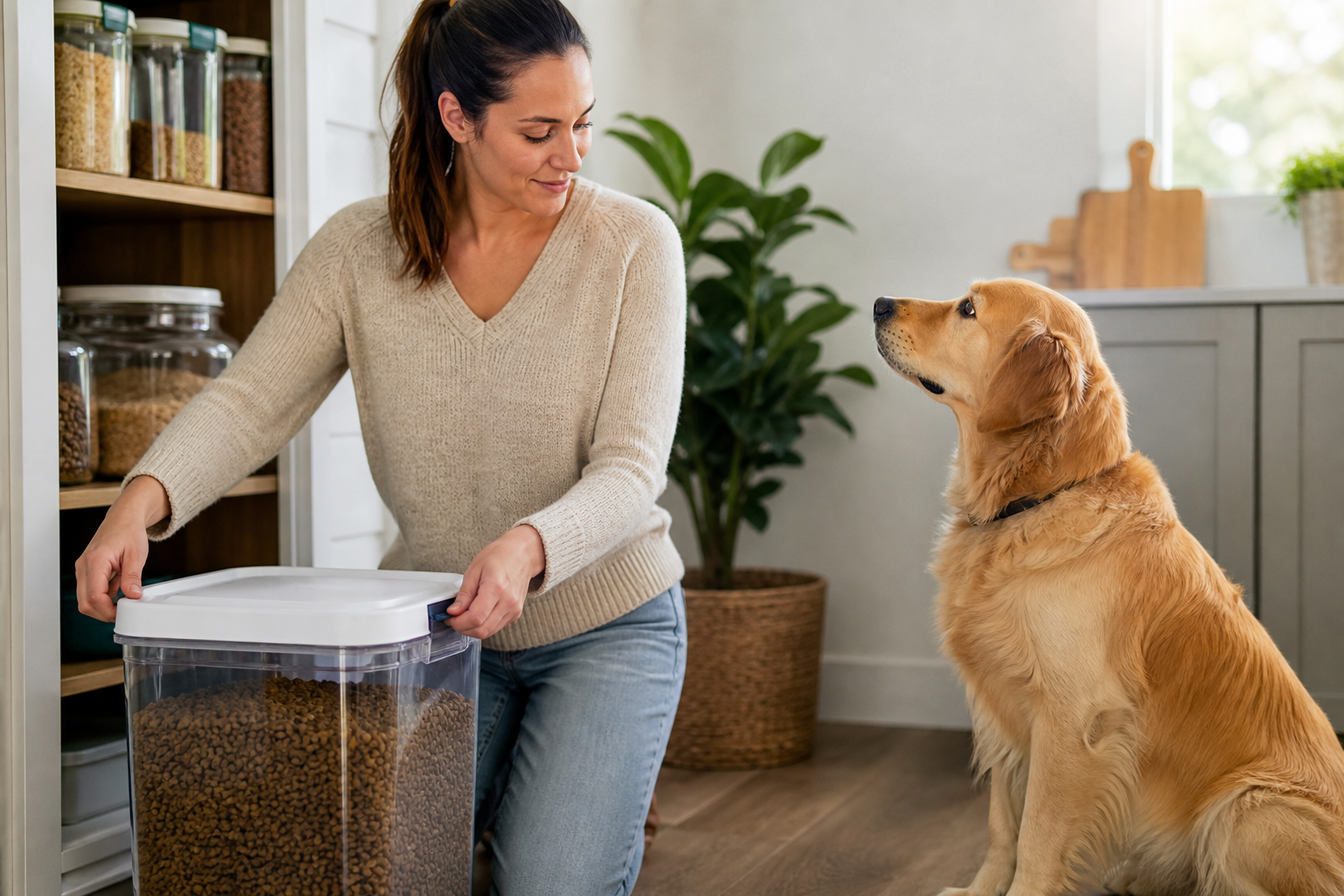
Introduction
You just hauled a fresh, heavy bag of premium kibble into the kitchen and sliced it open. That first whiff of roasted meat and grains is exactly what your dog has been waiting for. But from the very second that seal is broken, the clock starts ticking on the food's nutritional value and flavor. Many pet owners treat dry dog food like a pantry staple that lasts forever, yet kibble is a perishable product filled with sensitive fats and vitamins. At BaxterBoo, we see how much care you put into choosing the best brands, so we want to make sure that quality lasts until the very last scoop. This article covers the science of kibble oxidation, the best types of storage containers, and how to protect your dog from invisible mold or rancidity. Proper storage is about more than just convenience: it is a fundamental part of your dog's daily health.
Quick Answer: The best way to store dry dog food is to keep the kibble inside its original bag and place that entire bag into an airtight container. This provides a double barrier against oxygen and moisture while keeping important lot numbers and expiration dates handy.
Why Kibble Storage Matters More Than You Think
It is easy to assume that because kibble is "dry," it is shelf-stable in the same way as crackers or pasta. However, high-quality dog food is often sprayed with animal fats and oils after the cooking process to make it palatable and provide essential fatty acids. When these fats are exposed to oxygen, a chemical process called oxidation begins. This is the same process that causes butter to go rancid or an apple to turn brown.
Rancid fats do more than just make the food smell "off" to a sensitive canine nose. They can actually lead to digestive upset or more serious long-term health issues. Beyond oxidation, dry food is also susceptible to humidity. Excess moisture in the air can create the perfect environment for mold to grow deep inside the bag where you might not see it. Finally, there is the issue of pests. From microscopic storage mites to ants and rodents, an unsealed bag is an invitation for unwanted guests.
The Power of the Original Bag
One of the most common mistakes pet owners make is pouring the kibble directly into a plastic bin. While it looks neat, it is actually one of the worst things you can do for food freshness. The bags used by premium pet food manufacturers are highly engineered. They are often made with multi-layered barriers designed to keep oils in and oxygen out.
By keeping the food in the original bag, you create a dedicated barrier that prevents oils from seeping into the pores of a plastic container. If you pour food directly into plastic, those oils can linger and go rancid, contaminating the next fresh bag you pour in. There is also a safety component to keeping the bag.
Key Takeaway: Always keep your dog's food in its original packaging to preserve the oil barrier and maintain access to critical recall information.
Essential Information on the Packaging
If your dog ever experiences a sudden bout of stomach upset, your veterinarian will likely ask for the specific details of the food. The bag contains three vital pieces of information:
- The specific product name and formula.
- The "Best By" or expiration date.
- The lot number and UPC code.
The lot number is the only way to know if your specific bag is part of a manufacturer recall. If you have tossed the bag and poured the food into a generic bin, you lose the ability to track this safety data. At BaxterBoo, we recommend taking a photo of the lot number and expiration date every time you open a new bag, just in case.
Choosing the Right Storage Container
While the bag is the first line of defense, a secondary container is necessary to keep the bag airtight and protected from curious paws. Not all bins are created equal. You want a container that has a true gasket seal. A simple snap-on lid that does not have a rubber or silicone ring will still allow air and moisture to circulate. For practical options, explore our dog food storage and accessories.
Plastic vs. Stainless Steel vs. Glass
Plastic is the most popular choice because it is lightweight and affordable. However, plastic is porous. Over time, it can absorb odors and oils. If you choose plastic, look for BPA-free options and always use the "bag-in-bin" method mentioned above.
Stainless steel is a superior option for those who want to pour food directly into a container. It is non-porous and much easier to sanitize. It also stays cooler than plastic, which helps protect the fats in the food. Glass is excellent for smaller amounts of food or treats, as it provides a perfect air seal and does not react with the food at all.
Container Checklist
- Does it have a rubber gasket or silicone seal?
- Is it large enough to hold the entire bag without squishing it?
- Is the material food-grade and durable?
- Is the lid easy for you to open but difficult for a dog to "break into"?
Location and Temperature Control
Where you store the food is just as important as what you store it in. Dry dog food should be kept in a cool, dry environment. The ideal temperature is consistently below 80 degrees Fahrenheit.
Many people store dog food in the garage or a backyard shed to save space. This is a significant risk. Garages are subject to extreme temperature swings and high humidity. Heat accelerates the breakdown of vitamins and causes fats to turn rancid much faster. In humid climates, the moisture in a garage can cause kibble to lose its "crunch" and become a breeding ground for mold spores.
The best location is a kitchen pantry, a dedicated mudroom, or a climate-controlled closet. Keep the container off the floor if possible, perhaps on a low shelf or a rolling cart. This prevents moisture from the floor from affecting the container and makes it harder for crawling insects to find a way inside.
Vet Tip: If your dog has unexplained skin allergies or chronic itching, ask your vet about storage mites. These microscopic pests thrive in poorly stored dry food and are a common hidden allergen for sensitive dogs.
The Dangers of Topping Off the Bin
It is a satisfying chore to see the food bin getting low and top it off with a brand-new bag. However, this is a major hygiene mistake. When you "top off" a container, the old food at the bottom stays there indefinitely. This old food is the most oxidized and most likely to contain crumbs, dust, and old oils.
Every time you pour a new bag on top, you are contaminating the fresh food with the older, degrading food. This also creates a build-up of "fines," which are the tiny crumbs and dust at the bottom of the bag. These fines are highly susceptible to mold and bacterial growth.
The Cleaning Protocol
You should thoroughly clean your storage container every single time it becomes empty. Do not skip this step.
- Empty any remaining crumbs or dust into the trash.
- Wash the container with hot, soapy water.
- If you have used the container for oily food, a diluted white vinegar rinse can help cut through the residue.
- Rinse the container thoroughly to remove all soap scents.
- Allow the container to air dry completely. Even a tiny bit of trapped moisture can ruin the next bag of food.
Managing Shelf Life After Opening
Most manufacturers provide a "Best By" date that assumes the bag remains sealed. Once the seal is broken, the clock speeds up. Most veterinarians and nutritionists recommend using a bag of dry food within six weeks of opening. If you have a small dog and buy a massive 40-pound bag to save money, the food will likely be stale and nutritionally depleted long before you reach the bottom. For additional guidance, read how long dry dog food stays fresh once opened.
If you find that it takes you more than two months to finish a bag, consider switching to smaller bags. While the price per pound might be slightly higher, the health benefits of feeding fresh food are worth the investment. Alternatively, you can use our Autoship programme to have smaller, fresher bags delivered exactly when you need them.
Storing Prescription and Specialty Diets
If your dog is on a therapeutic or prescription diet for a condition like kidney disease, urinary crystals, or severe allergies, storage is even more critical. These foods are often formulated with specific nutrient ratios that are very sensitive to light and heat.
Through our partnership with Pet's Choice, we offer a full-service pharmacy that carries FDA-approved prescription diets. When managing a chronic health condition, the integrity of the food is part of the treatment. If your dog requires a specialized diet, ensure you are following the storage instructions on the bag to the letter. Prescription kibble is often more expensive, and protecting that investment ensures your dog gets the full benefit of the formulated medicine. Browse our pet pharmacy for available options.
Bottom line: Treat your dog's dry food as a fresh product with a six-week lifespan once opened.
Identifying Spoiled Dog Food
Sometimes, despite our best efforts, food goes bad. It is important to trust your senses and your dog's behavior. Dogs have a sense of smell that is significantly more powerful than ours. If your usually enthusiastic eater suddenly turns their nose up at a fresh bowl of kibble, do not force them to eat it. They may be smelling rancidity or mold that you cannot detect.
Signs of Spoiled Kibble
- A Sour or "Paint" Odor: Rancid fats often smell like old oil, wet cardboard, or even chemical paint.
- Visible Mold: Any white, fuzzy, or dark spots on the kibble are an immediate sign to discard the entire bag.
- Insects: If you see weevils, moths, or ants in the food, the seal has been compromised.
- Texture Changes: If the kibble feels sticky, oily, or unusually soft, it has likely been exposed to too much heat or moisture.
If you suspect the food is spoiled, do not risk it. Digestive upset from spoiled food can lead to expensive vet visits. Our BaxterBoo team is always here to help you find a replacement that meets your dog's needs if you need to switch brands or formulas. For more warning signs, read how to identify spoiled dry dog food.
The Role of Handling and Serving
How you handle the food daily also impacts its longevity. Every time you reach into the bag with your hands, you are introducing moisture and bacteria from your skin.
- Use a Dedicated Scoop: Always use a clean plastic or metal measuring cup.
- Wash the Scoop: The scoop should be washed as often as you wash your dog's bowls.
- Seal Immediately: Do not leave the bag open while your dog eats. Scoop the food and seal the bag or bin immediately to minimize oxygen exposure.
- Bowl Hygiene: Wash your dog's food bowl with hot, soapy water after every single meal. Old food particles left in the bowl can attract bacteria and pests.
Summary of Best Practices
Proper storage is one of the easiest ways to support your dog's long-term wellness. By protecting the nutritional integrity of their food, you ensure they get every vitamin and mineral promised on the label.
- Keep the kibble in its original bag.
- Place the bag inside an airtight container with a gasket seal.
- Store the container in a cool, dry, climate-controlled room.
- Wash the storage bin between every single bag.
- Buy bag sizes that can be finished within six weeks.
- Watch for changes in the food's smell or your dog's appetite.
If your dog has specific health needs or requires a prescription diet, our pharmacy is a great resource for FDA-approved options. You can also take advantage of the MVP Rewards programme to earn points on every bag of food and every storage container you purchase. Keeping your dog's meals fresh is a simple habit that pays off in a shiny coat, steady energy, and a very happy pup at mealtime.
FAQ
Is it okay to store dog food in the garage?
It is generally not recommended to store dog food in the garage because of extreme temperature changes and high humidity. Heat causes the fats in the food to turn rancid quickly, while humidity can lead to mold growth and pest infestations. For the best results, keep the food inside your home in a cool, dry place like a pantry.
How long does dry dog food stay fresh after the bag is opened?
Once a bag is opened, dry dog food is typically at its peak freshness for about six weeks. While it may still be safe to eat after this point, the nutritional value begins to decline as vitamins oxidize and fats break down. If you cannot finish a bag within two months, consider buying smaller bags to ensure your dog is getting the best nutrition. For portion planning, see our guide on how much dry food to feed a dog.
Should I pour the kibble directly into a plastic storage bin?
You should avoid pouring kibble directly into a plastic bin because the plastic can absorb oils that eventually go rancid and contaminate future bags of food. Instead, keep the food in its original bag and place the entire bag inside the airtight bin. This provides an extra layer of protection and keeps the manufacturing information handy in case of a recall.
How can I tell if my dog's dry food has gone bad?
The most common signs of spoiled food include a sour or chemical-like smell, visible mold, or an oily, sticky texture to the kibble. You should also pay attention to your dog's behavior. If they suddenly refuse to eat or develop an upset stomach after a meal, the food may be rancid or contaminated even if it looks okay to you.






