
 Save 15% on your 1st Autoship learn more

 Email us
 Live Chat
 FAQs
FAQs





Introduction
Standing in the pet food aisle can feel like a test of your decision-making skills. You might find yourself looking at a bag of premium kibble in one hand and a stack of flavorful cans in the other while wondering which one truly supports your dog's health. If you want to browse options as you read, start with our dog food category. At BaxterBoo, we talk to pet owners every day who are navigating these exact choices. Some dogs are notoriously picky eaters that turn their noses up at dry bits. Others are seniors who struggle with crunchy textures.
This article explores the practical differences between canned and dry dog food to help you decide what belongs in the bowl. We will look at hydration, dental health, weight management, and the convenience of each format. Both options can provide complete and balanced nutrition for your dog. The better choice depends on your pet's age, activity level, and specific health needs.
Quick Answer: Neither canned nor dry food is universally better for every dog. Canned food offers superior hydration and palatability for picky eaters, while dry kibble is more cost-effective and convenient for grazing. Many owners find that mixing the two provides the best balance of health benefits and value.
Understanding the Core Differences
The primary difference between canned and dry food is the moisture content and the way the food is processed. Wet food typically contains between 75 and 80 percent moisture. Dry kibble usually stays around 10 percent. This single factor changes how the food feels, how it smells, and how it impacts your dog's body.
Processing also varies significantly. Canned food is made by grinding protein sources and mixing them with a gravy or gel that contains vitamins and minerals. The mixture is then sealed in a can and heated to ensure it is sterile and shelf-stable. This process preserves the natural aromas of the meat.
Dry food follows a different path called extrusion. Ingredients are mixed into a dough and cooked under high pressure. The dough is pushed through a die to create specific shapes, then dried and cooled. Finally, it is often sprayed with fats or oils to make it more appealing.
Nutritional Comparison
| Feature | Canned Dog Food | Dry Dog Food |
|---|---|---|
| Moisture Level | 75 to 80 percent | 10 percent |
| Protein Content | Usually higher meat protein | Higher plant or grain protein |
| Carbohydrates | Lower overall carbs | Higher starch to bind kibble |
| Shelf Life | Short once opened (3 days) | Long once opened (4 to 6 weeks) |
| Cost | More expensive per calorie | More budget-friendly |
Why Canned Dog Food Might Be Better for Your Pet
For many dogs, the choice of canned food is driven by necessity rather than preference. The high water content is one of the most significant advantages. If your dog is a poor drinker or lives in a very hot climate, canned food provides a built-in hydration boost. This is particularly helpful for dogs with certain medical conditions.
Support for Kidney and Urinary Health
Dogs with a history of kidney disease or urinary crystals often need more water to flush their systems. The extra moisture in canned food can take some of the pressure off the kidneys. If your veterinarian has diagnosed a chronic condition, they may suggest a specialized diet. If that happens, our pet pharmacy is a helpful place to look for prescription-focused options.
Vet Tip: If your dog has been diagnosed with kidney disease, urinary issues, or diabetes, they may require a prescription diet. Our BaxterBoo pharmacy offers FDA-approved prescription pet foods and medications through our partnership with Pet's Choice to help manage these chronic conditions effectively.
Palatability for Picky Eaters
Canned food is generally much more aromatic than dry kibble. The smell of real meat and gravy is hard for most dogs to resist. This makes it an excellent choice for dogs with a decreased appetite, whether due to illness, age, or just being naturally finicky. Warming the food slightly can further enhance the scent to entice a reluctant eater.
Satiety and Weight Management
If your dog is always acting hungry but needs to lose a few pounds, canned food can help. Because it contains so much water, the food has a lower calorie density. This means your dog can eat a larger volume of food without consuming extra calories. They feel fuller after a meal, which can prevent the begging behavior that often derails a weight loss plan.
The Practical Benefits of Dry Dog Food
While canned food has many health perks, dry kibble remains the foundation of many canine diets for good reasons. It is the most convenient option for busy households and offers several unique benefits.
If you are comparing textures or brands, our dry dog food category is a smart next step. Dry food is easy to store and measure. You can keep a large bag in an airtight container for several weeks without worrying about spoilage. This is also the best choice for dogs that prefer to graze. Unlike wet food, which should be discarded if not eaten within 30 minutes, kibble can safely sit in a bowl for the day.
Dental Health Benefits
There is a long-standing debate about whether kibble cleans teeth. While it is not a substitute for brushing, some dry foods are specifically designed to reduce tartar buildup. The mechanical action of crunching on hard kibble can help scrape away some plaque. For dogs who need extra oral support, our dog dental care category can help you explore related options.
Cognitive Enrichment
Kibble is much easier to use with enrichment toys. You can put dry bits into a Kong, a snuffle mat, or a puzzle feeder to keep your dog mentally stimulated. This turns mealtime into a game, which is great for high-energy breeds or dogs that tend to get bored and destructive.
Key Takeaway: Dry food is the superior choice for convenience and mental stimulation, while canned food is often the better choice for hydration and encouraging picky dogs to eat.
Managing Senior Dog Needs
As dogs age, their nutritional and physical needs change. Many senior dogs develop dental problems or lose teeth, making it painful to crunch down on hard kibble. For these pets, the soft texture of canned food is a relief. It allows them to continue getting the calories they need without physical discomfort.
Older dogs also tend to lose some of their sense of smell. Since canned food is more aromatic, it helps them stay interested in their meals. If you have a senior dog who seems to be losing weight or losing interest in their bowl, switching to a wet diet or adding a wet topper can make a world of difference. If you are comparing premium dry food options for older dogs, our selection of Orijen products is worth a look.
The Best of Both Worlds: Mixing Wet and Dry
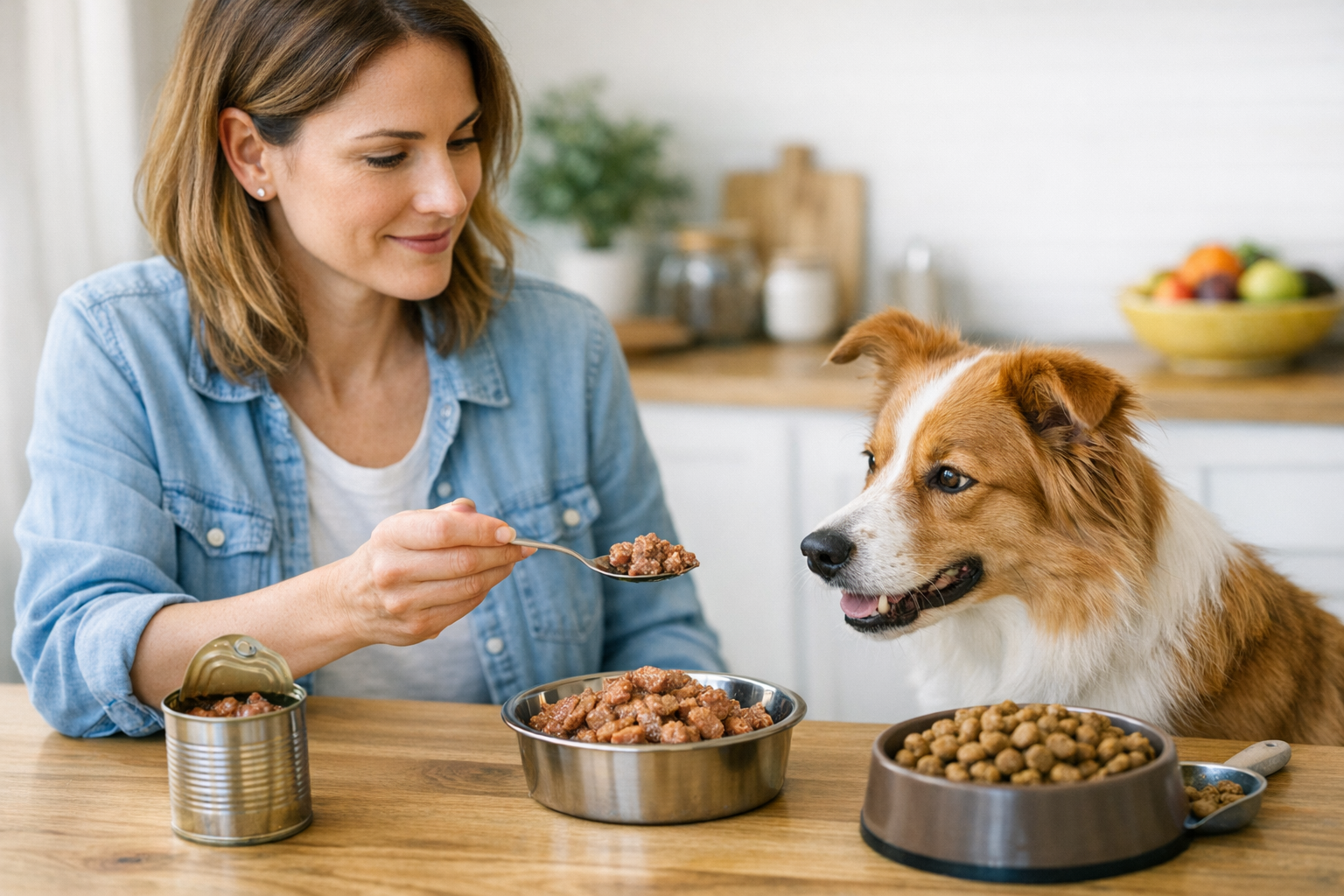
You do not have to choose just one format. Many pet owners find that a combination is the most practical solution. This is often called topping. By adding a spoonful of canned food to a bowl of kibble, you get the palatability and hydration of wet food alongside the convenience and cost savings of dry food.
If you are weighing the two formats side by side, our wet or dry food guide is a helpful follow-up.
How to Transition Properly
If you decide to switch your dog's food or start mixing formats, you must go slowly. A sudden change can lead to an upset stomach, vomiting, or diarrhea. This is because the bacteria in your dog's gut need time to adjust to new ingredients and moisture levels.
Step 1: Start with a small amount. / Mix about 25 percent of the new food with 75 percent of the old food for two days.
Step 2: Watch for reactions. / Check your dog's energy levels and stool consistency.
Step 3: Move to a half-and-half mix. / If they are doing well, feed a 50/50 split for the next three days.
Step 4: Increase the new food. / Transition to 75 percent new food and 25 percent old food for two more days.
Step 5: Complete the switch. / By day ten, you can move to 100 percent of the new diet or your desired mix ratio.
Bottom line: A slow ten-day transition is the best way to prevent digestive upset when moving between canned and dry food.
Cost Considerations and Value
Budget is a real factor for most families. Canned food is significantly more expensive per calorie than dry food. This is largely due to the weight of the water and the cost of the metal packaging. For owners of large breeds like Great Danes or Labradors, feeding 100 percent canned food can be very costly.
Dry food offers the best value for money, especially when you use our MVP Rewards programme. You can earn points on every purchase to save on future bags. Many owners of large dogs choose to feed high-quality kibble as the main meal and use canned food as a special treat or a daily topper to keep costs manageable while still providing variety.
Safety and Storage Tips
No matter which food you choose, proper storage is vital to prevent your dog from getting sick. Contaminated or rancid food can lead to serious digestive issues.
- Dry Food: Keep the bag in a cool, dry place. Once opened, it is best to use the food within six weeks. Seal the bag tightly or use an airtight container to prevent the fats from oxidizing.
- Canned Food: Unopened cans can last a long time, but check the expiration dates. Once opened, cover the can with a silicone lid and refrigerate it immediately.
- The Three-Day Rule: Any opened canned food must be used or discarded within three days. Bacteria grow quickly in moist environments, even in the refrigerator.
- Bowl Hygiene: Wash your dog's bowl with hot, soapy water after every meal, especially if you are feeding wet food. Leftover bits can attract pests or grow mold.
If freshness is a concern, this dry dog food freshness guide is a useful companion read.
Conclusion
Deciding if canned dog food is better than dry depends on your specific dog. If you have a young, healthy dog with no dental issues, high-quality kibble like Orijen or Acana provides excellent nutrition and convenience. However, if your dog is older, needs to lose weight, or requires extra hydration for kidney health, canned food is an outstanding choice.
We recommend looking at your dog's current health and your own daily routine. If you are unsure, talk to your veterinarian about your dog's caloric needs. They can help you determine the right balance. You can explore our wide selection of both wet and dry options at BaxterBoo to find the perfect fit for your pup.
- Consider canned food for hydration and picky eaters.
- Use dry food for budget-friendly grazing and puzzle toys.
- Always transition slowly over 7 to 10 days to avoid stomach upset.
- Store all food properly to maintain freshness and safety.
Key Takeaway: Balance your dog's health needs with your budget and lifestyle. Many pets thrive on a mix of both formats.
For dogs with ongoing health management needs, remember that our Autoship programme can help you keep food coming on schedule. Setting up an Autoship order can also ensure you never run out of your dog's favorite food while saving you money on every delivery.
FAQ
Can I mix canned and dry dog food every day?
Yes, mixing the two is a very common practice that provides variety and extra moisture. Just be sure to adjust the portions so you are not overfeeding, as the calories from both types can add up quickly. Your veterinarian can help you calculate the exact amount of each to maintain a healthy weight.
Is canned food bad for my dog's teeth?
Canned food is not inherently bad for teeth, but it does not provide the same mechanical scraping action as dry kibble. If you feed only wet food, it is even more important to maintain a regular dental care routine. This should include brushing your dog's teeth and providing dental treats or toys designed to reduce plaque.
Why is my dog suddenly refusing their dry kibble?
A sudden change in appetite can be caused by many things, including dental pain, illness, or even the food going stale. If your dog usually loves their kibble but now refuses it, try adding a little warm water or canned food to see if they react. If the refusal continues for more than a day or two, you should consult your veterinarian for an exam.
Does canned food cause weight gain?
Canned food actually has fewer calories per gram than dry food because of its high water content. However, because it is so palatable, dogs may be tempted to eat more of it. As long as you follow the feeding guidelines for your dog's weight and activity level, canned food is a great tool for maintaining a healthy body condition.






