
 Save 15% on your 1st Autoship learn more

 Email us
 Live Chat
 FAQs
FAQs





Introduction
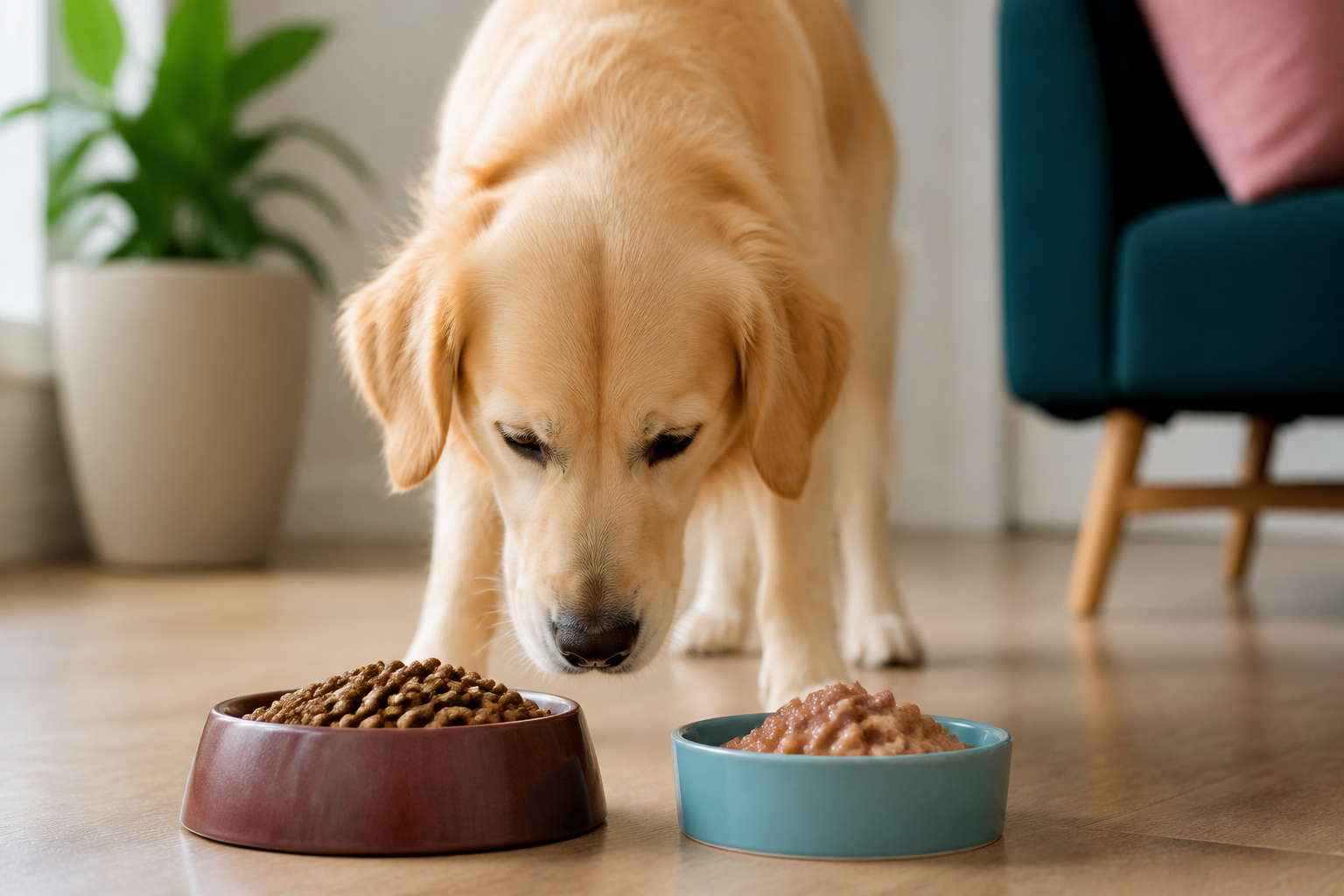
Standing in a pet food aisle can feel like solving a puzzle with too many pieces. You want the best for your dog. You see rows of colorful bags of kibble next to stacks of premium cans. One label promises dental health. Another promises hydration and gourmet flavor. It is a common moment of doubt for every pet owner. At BaxterBoo, we talk to people every day who are trying to balance nutrition, budget, and their dog's picky appetite. If you are comparing options, start with our dog food category. This article looks at the real differences between dry and wet dog food. We will explore the pros and cons of each and how to choose what fits your lifestyle. Neither option is a universal winner. The best food for your dog depends on their age, health, and personal preferences.
Quick Answer: Neither dry nor wet food is inherently better. Both provide complete and balanced nutrition if they meet AAFCO standards. Dry food offers convenience and value, while wet food provides essential hydration and higher palatability for picky eaters.
The Core Differences Between Wet and Dry Food
The most obvious difference between these two types of food is moisture. Dry dog food, or kibble, usually contains only about 10 percent water. Wet food is much higher. It often contains between 75 and 80 percent moisture. This difference affects everything from how the food is made to how it feels in your dog's mouth.
How Kibble is Made
Dry food is made using a process called extrusion. Ingredients like meat, grains, and vitamins are mixed into a dough. This dough is cooked under high pressure and pushed through small holes to create specific shapes. After the kibble dries, it is often sprayed with fats and oils to make it taste better. Many brands we carry, like our selection of NutriSource products, use high-quality ingredients in this process. This results in a calorie-dense nugget that is easy to store and serve.
How Wet Food is Made
Wet food involves a different cooking process. The meat and other ingredients are ground up and mixed with a gravy or gel. This mixture is sealed inside a can or pouch and then heated. This heating process sterilizes the food and ensures it stays fresh without the need for many preservatives. Because it stays in a liquid or semi-solid state, the aroma remains very strong. This is why many dogs get excited the moment they hear a can opener.
Key Takeaway: The primary difference between wet and dry food is the water content. This affects the texture, the smell, and how the food is preserved.
The Benefits of Feeding Dry Dog Food
Many dog owners choose dry food as their primary option. It is the most popular form of dog food in the United States for several practical reasons.
Convenience and Storage
Dry food is the winner when it comes to ease of use. You can scoop it into a bowl and leave it out for a few hours without it spoiling. This makes it a great choice for "grazers" who like to nibble throughout the day. It is also much easier to travel with. You do not need a refrigerator to keep it fresh once the bag is open.
Value for Your Budget
Kibble is generally more cost-effective. Because it is so calorie-dense, you do not need to feed as much of it by volume to meet your dog's energy needs. A large bag of high-quality dry food often lasts much longer than an equivalent dollar amount of canned food. This makes it a popular choice for owners of large breeds like Labradors or Great Danes.
Dental Support
Chewing on crunchy kibble can provide some mechanical cleaning for teeth. As the dog bites down, the friction helps scrape away a small amount of plaque. Some brands, like our selection of Royal Canin products, even design specific kibble shapes to maximize this effect. However, this is not a substitute for a toothbrush.
Vet Tip: While dry food can help reduce plaque, it does not prevent dental disease entirely. Regular teeth brushing and professional cleanings are still necessary for a healthy mouth.
Enrichment and Training
Kibble is perfect for interactive toys and training. You can put it inside a Kong or a snuffle mat to give your dog a mental workout. It is also easy to use as a low-calorie training treat. If you are working on new commands, you can use a portion of your dog's daily meal to keep them motivated without overfeeding.
The Benefits of Feeding Wet Dog Food
While dry food is convenient, wet food offers unique health and sensory advantages. For some dogs, wet food is not just a treat but a nutritional necessity.
Essential Hydration
Some dogs simply do not drink enough water. This can lead to issues with their urinary tract or kidneys. Wet food provides a significant boost to their daily fluid intake. If your dog has a history of bladder stones or kidney concerns, a high-moisture diet is often recommended. Our pet pharmacy carries prescription options for these specific health conditions.
High Palatability
If your dog is a picky eater, wet food is often the solution. It has a much stronger scent than dry kibble. This aroma appeals to a dog's natural instincts. It is also a great way to encourage a sick dog or an older dog with a fading appetite to finish their meal. Brands like our selection of Tiki Cat products or our selection of Stella & Chewy's products offer options that are incredibly enticing to fussy pets.
Easier to Chew and Digest
Dogs with missing teeth or painful gums often struggle with hard kibble. Wet food is soft and requires very little effort to chew. It is also generally lower in carbohydrates than dry food. For some dogs with sensitive stomachs, the simpler ingredient lists found in many premium wet foods can be easier to process.
Key Takeaway: Wet food is often the best choice for hydration, picky eaters, and senior dogs with dental issues.
Nutritional Comparison: Dry Matter Basis
When you look at a can of wet food, the protein percentage might look low. A can might say 10 percent protein, while a bag of dry food says 25 percent. This is confusing. The difference is the water. To compare them fairly, you have to look at the "dry matter basis." This means calculating the nutrition after all the water is removed.
Once you remove the water, many wet foods actually have higher protein and fat levels than dry foods. Dry food needs starches and carbohydrates to hold its shape during the extrusion process. Wet food does not have this requirement. This makes wet food a high-protein, low-carb option that can be beneficial for certain dogs.
Why Protein Content Matters
Protein is the building block of your dog's muscles and tissues. Active dogs or growing puppies need plenty of it. If you have an overweight dog, a higher protein diet with fewer carbs can help them feel full while they lose weight. We carry brands like our selection of Farmina Vet Life products that offer weight management solutions. These can be discussed with your vet to see if a prescription diet is right for your pet.
Choosing Based on Life Stage
A dog's nutritional needs change as they age. What worked for your puppy might not be the best choice for your senior companion.
Nutrition for Puppies
Puppies are high-energy machines. They need a lot of calories in small portions because their stomachs are tiny. Dry food is often great for puppies because it is so concentrated. However, many owners add a bit of wet food during weaning. It helps the puppy transition to solid food and ensures they stay hydrated during a rapid growth phase.
Supporting Senior Dogs
As dogs age, their sense of smell can weaken. They might also develop arthritis in their jaw or lose teeth. Wet food can be a life-saver for seniors. The strong smell helps them stay interested in food. The soft texture makes it easy to eat. If your senior dog is slowing down, look for wet foods formulated with joint support or lower calories to prevent weight gain.
Vet Tip: If your senior dog suddenly stops eating their dry food, do not just switch to wet food. Consult your veterinarian to rule out dental pain or underlying health issues like kidney disease.
The Best of Both Worlds: Mixing Wet and Dry
You do not have to choose just one. Many pet owners find that a combination of both is the most practical solution. This is often called "mixed feeding."
Benefits of Mixed Feeding
- Cost Efficiency: You can use a high-quality kibble as the base and add a scoop of wet food on top.
- Texture Variety: It makes the meal more interesting for your dog.
- Hydration Boost: You get some extra moisture into their diet without the expense of a full wet-food regimen.
- Easier Medication: Wet food is perfect for hiding pills or supplements.
How to Mix Safely
When mixing, you must be careful not to overfeed. Wet food and dry food have very different calorie counts. If you simply add a scoop of wet food to a full portion of kibble, your dog will likely gain weight.
Step 1: Check the calorie counts.
Look at the calories per cup for the dry food and calories per can for the wet food.
Step 2: Determine the ratio.
Decide if you want a 50/50 split or just a small topper. A common choice is 75 percent kibble and 25 percent wet food.
Step 3: Adjust the portions.
Reduce the amount of dry food by the equivalent calories you are adding in wet food. Your veterinarian can help you calculate the exact grams or cups needed.
Step 4: Monitor your dog's weight.
Keep an eye on their body condition. If they start looking a bit rounder, trim back the portions slightly.
Storage and Food Safety
How you store your dog's food is just as important as what you buy. Improper storage leads to rancid fats, mold, and loss of nutrients.
Keeping Kibble Fresh
Once you open a bag of dry food, the fats inside begin to oxidize. This means the food starts to go stale. For the best results, keep the kibble in its original bag. These bags are designed to keep air out. You can place the entire bag inside an airtight plastic or metal bin. Try to use up a bag within six weeks of opening it.
For a deeper look at shelf life, see our guide to dry dog food freshness.
Handling Open Cans
Wet food is highly perishable. Once a can is opened, it must be refrigerated. Use a silicone lid or plastic wrap to keep the food from drying out in the fridge. Most wet food should be used within three days of opening. If your dog does not eat their wet food within 30 minutes of it being served, you should throw the leftovers away to avoid bacterial growth.
Bottom line: Store dry food in its original bag inside a sealed bin, and always refrigerate open wet food.
When to Consider a Prescription Diet
Sometimes, standard retail food is not enough. Dogs with chronic health issues like heart disease, severe allergies, or kidney failure often need specific nutrient levels that only a prescription diet can provide.
Our pharmacy provides access to these specialized foods for dogs with ongoing health needs. If your dog is struggling with a persistent health issue, talk to your vet about whether a prescription diet is the right path. These foods require a valid prescription, which we can help you manage through our online pharmacy system.
Factors to Consider When Deciding
To help you make the final choice, ask yourself these four questions:
- What is my dog's dental health like? If they have significant dental issues, wet food or softened kibble is safer.
- Does my dog drink enough water? If they are prone to dehydration, wet food is a clear winner.
- What is my monthly budget? If you need to save money while providing high-quality nutrition, dry food is more affordable.
- Is my dog a grazer or a meal-time eater? Grazers need dry food that can sit out. Meal-time eaters can enjoy the freshness of wet food.
Making the Transition
Whenever you change your dog's diet, go slowly. A sudden switch can cause an upset stomach, diarrhea, or vomiting. This is true whether you are moving from dry to wet or just switching brands.
For a step-by-step plan, our post on how to switch from dry to wet dog food is a helpful next step.
- Days 1 to 2: 75 percent old food, 25 percent new food.
- Days 3 to 4: 50 percent old food, 50 percent new food.
- Days 5 to 6: 25 percent old food, 75 percent new food.
- Day 7: 100 percent new food.
Watch your dog's stool and energy levels during this week. If you notice any issues, slow the process down.
Conclusion
Choosing between dry and wet food does not have to be a source of stress. Both can provide a healthy, happy life for your dog. Dry food offers unmatched convenience and value. Wet food provides the hydration and flavor that many dogs crave. At BaxterBoo, we believe in providing the best options for every unique pet. Whether you choose a premium kibble from our selection of Orijen products or a savory wet food from our selection of Ziwi Peak products, the most important thing is that the food meets your dog's specific needs. Consider their age, their activity level, and any health concerns they may have.
If you find that your dog needs a more specialized diet or a regular supply of essentials, our Autoship programme is a great way to ensure you never run out of your dog's favorite food while saving money. For those managing health conditions, the MVP Rewards programme and our pharmacy are ready to support your next step.
FAQ
Is it okay to feed my dog only wet food?
Yes, it is perfectly healthy to feed your dog a diet of only wet food as long as it is labeled as "complete and balanced." This ensures it contains all the vitamins and minerals your dog needs. Just keep in mind that a wet-only diet can be more expensive and requires more attention to dental hygiene since it does not help scrape away plaque.
Can I soften dry food with water instead of buying wet food?
Adding warm water or low-sodium broth to kibble is a great way to add moisture and aroma. It makes the food easier to chew for senior dogs and helps with hydration. However, once you add liquid to dry food, you must treat it like wet food and throw away any uneaten portions after about 30 minutes to prevent spoilage.
Why does my dog get diarrhea when I give them wet food?
Wet food is often richer in fats and protein than dry food. If your dog is not used to it, the sudden change can upset their digestive system. It is also possible that the specific ingredients in that brand do not agree with your dog. Always introduce new food gradually over a week to give their stomach time to adjust.
Does dry food really keep a dog's teeth clean?
Dry food can help reduce some plaque buildup, but it is not a magic solution for dental health. Many dogs swallow kibble whole or only crack it once, which limits the cleaning effect. Think of dry food like a crunchy apple for a human: it is better than soft candy, but it still does not replace the need for regular brushing and dental checkups.






