
 Save 15% on your 1st Autoship learn more

 Email us
 Live Chat
 FAQs
FAQs





Introduction
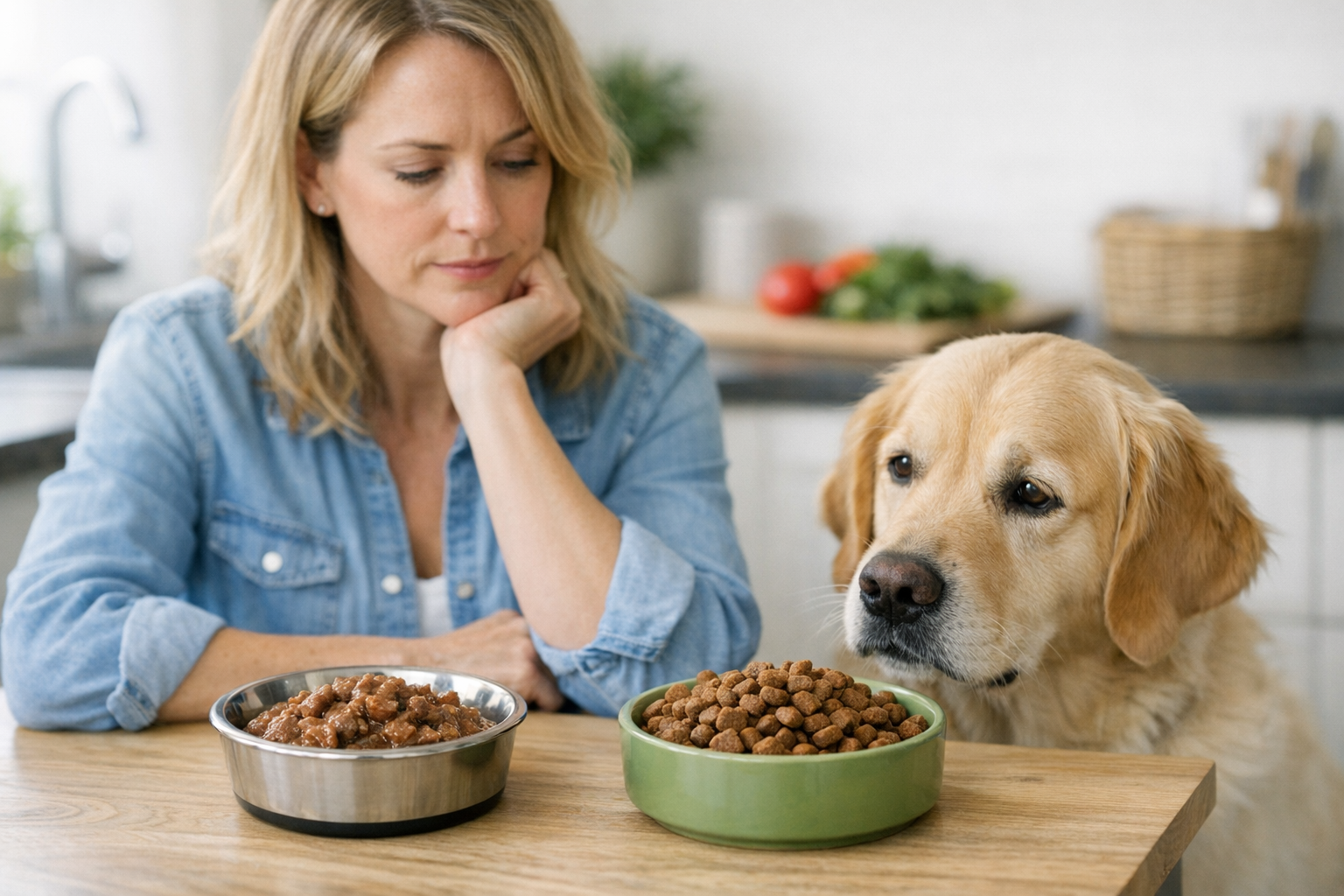
You are likely standing in your kitchen at a late hour, staring at a messy spot on the floor and wondering what went wrong. Dealing with a dog’s upset stomach is one of the more stressful parts of being a pet parent. It is messy, it is worrying, and it makes you second-guess everything in your dog's food bowl. When your dog has a bout of the runs, the first question usually involves whether their current food is helping or making the problem worse. At BaxterBoo, we have helped thousands of owners navigate these digestive hurdles since 2006. We understand that you want clear, practical advice to get your pup back to their happy, energetic self. This post covers the differences between dry and wet food during digestive upset and how to choose the right path for recovery. While hydration is a major factor, the best choice often involves a temporary shift in their daily diet.
Quick Answer: Neither standard dry nor wet food is usually the best choice for a dog with active diarrhea. Most veterinarians recommend a temporary bland diet of boiled chicken and white rice. If you must choose between regular commercial options, wet food is often better because its high moisture content helps prevent dehydration.
Dry vs. Wet: The Hydration Battle
If you are looking for a simple answer between standard kibble and canned food, the most important factor is water. Diarrhea causes a dog to lose fluids rapidly. This puts them at a high risk for dehydration, which can quickly turn a minor stomach bug into a serious medical issue. If you are comparing everyday feeding styles, our wet dog food category is a good place to start.
Wet food typically contains between 75 percent and 80 percent moisture. This high water content helps replenish what your dog is losing. For a dog that is feeling lethargic or is not visiting the water bowl enough, the moisture in canned food can be a significant benefit.
Dry food, on the other hand, usually only contains about 10 percent moisture. If your dog continues to eat only dry kibble while their body is losing water, they can become dehydrated much faster. Furthermore, dry food is often very calorie-dense and contains more complex carbohydrates. These ingredients require more work for a compromised digestive system to break down.
Why Wet Food Often Wins in the Short Term
Many owners find that wet food is gentler on the system for a few specific reasons. The aroma is much stronger than dry kibble. When a dog feels unwell, they often lose their appetite. A smelly, tasty wet food can entice them to eat when they might otherwise refuse.
Wet food is also easier to chew and swallow. While this seems minor, a dog with an upset stomach is often physically exhausted. Making the eating process as effortless as possible helps them get the nutrients they need to heal. For another take on texture and hydration, see our guide to mixing wet and dry food.
The Problem with Standard Kibble During Illness
Standard dry kibble is designed for healthy dogs with strong digestive tracts. The mechanical process of breaking down a hard nugget of food takes energy. In a dog with diarrhea, the intestines are often inflamed and moving too quickly.
Kibble also relies on binders like grains or legumes to keep its shape. While these are fine for daily health, they add bulk and complexity that an irritated gut might not be ready to handle. If the stool is already moving through the system too fast, these fillers can sometimes aggravate the lining of the colon.
The Vet Recommended Alternative: A Bland Diet
Most experts agree that the best food for a dog with diarrhea is actually a temporary move away from commercial food entirely. This is known as a bland diet. It is designed to give the digestive system a rest while providing enough energy for recovery. If you want a deeper comparison of everyday feeding choices, our post on wet versus dry dog food is a helpful companion read.
A bland diet is low in fat and low in fiber. This combination allows the stool to firm up and the intestines to slow down. It acts as a reset button for the gut.
Vet Tip: If your dog has diarrhea that lasts longer than 24 to 48 hours, or if you see blood in the stool, contact your veterinarian immediately. They can help rule out parasites or infections. A bland diet is a great home remedy for mild cases, but professional guidance is necessary for persistent symptoms.
Ingredients for Digestive Success
When you move away from standard wet or dry food, you will likely be preparing simple meals for a few days. These ingredients are the standard for canine recovery.
- Boiled Chicken Breast: Use boneless and skinless meat. Boiling removes excess fat, which is crucial because fat is hard to digest.
- Plain White Rice: Unlike brown rice, white rice is low in fiber and very easy to process. It acts as a binding agent.
- Canned Pumpkin: Use 100 percent pure pumpkin, not pie filling. It is rich in soluble fiber that absorbs excess water in the gut.
- Bone Broth: This is an excellent way to encourage a dog to drink. It provides electrolytes and is very easy on the stomach.
How to Prepare and Serve the Bland Diet
Preparing this food is simple, but you must avoid all seasonings. Do not add salt, garlic, onions, or butter. These can be toxic or further irritate the stomach.
Step 1: Boil the chicken breast until it is cooked through. Shred it into very small, manageable pieces.
Step 2: Cook the white rice until it is very soft. Some owners use a bit more water than usual to make it even easier to digest.
Step 3: Mix the chicken and rice in a 2 to 1 ratio. For every cup of rice, add half a cup of chicken.
Step 4: Serve small, frequent meals. Instead of two large meals, give your dog four to six tiny portions throughout the day. This prevents the stomach from becoming overloaded.
Bottom line: A homemade bland diet of chicken and rice is superior to both standard wet and dry food for resolving active diarrhea.
When Standard Food Isn't Enough: Prescription Diets
Sometimes a homemade bland diet is not enough. This is especially true for dogs with chronic conditions like Inflammatory Bowel Disease or severe food sensitivities. In these cases, a prescription gastrointestinal diet is often required. For dogs who need a more targeted plan, our dog healthcare digestive health category is worth exploring.
These foods are scientifically formulated to be highly digestible. They often use hydrolyzed proteins. This means the protein is broken down into such small pieces that the immune system does not recognize it as a trigger.
Our pet pharmacy for dogs carries a wide range of these specialized foods. Through our partnership with Pet's Choice, we offer FDA-approved prescription diets and medications. Brands like Royal Canin, Farmina Vet Life, and NutriSource provide options for dogs that need more support than chicken and rice can offer.
Why Use a Prescription Food?
Prescription diets are nutritionally complete. While chicken and rice are great for a few days, they lack the vitamins and minerals a dog needs for long-term health. If your dog has a sensitive stomach that flares up often, your vet might recommend staying on a prescription diet indefinitely.
These foods come in both wet and dry versions. The dry versions are processed differently than standard kibble to ensure they break down quickly in the stomach. The wet versions are formulated to be low in fat and high in essential electrolytes.
The Importance of Probiotics and Supplements
Diarrhea often wipes out the beneficial bacteria in a dog's gut. This imbalance can lead to more digestive issues even after the initial bout of diarrhea has stopped. Adding a probiotic can help restore this balance. For more ideas on supportive add-ins, our digestive health and probiotic-focused blog post covers hydration and digestion from another angle.
We carry several trusted brands for gut health. Stella & Chewy's and Open Farm offer probiotic chews and powders that are easy to add to a bland diet. These supplements contain live cultures that support the immune system and help firm up the stool.
Another useful supplement is slippery elm or pectin. These ingredients coat the lining of the digestive tract and provide a soothing effect. If your dog is prone to stress-induced diarrhea, having these on hand can be very helpful.
- Look for probiotics with multiple strains of bacteria.
- Choose supplements specifically made for dogs.
- Start with a small dose to ensure your dog tolerates it well.
- Combine probiotics with a bland diet for the best results.
Key Takeaway: Restoring gut flora with probiotics is just as important as choosing the right food for long-term recovery.
Transitioning Back to a Regular Routine
Once your dog has had solid stools for at least 48 hours, you can begin moving them back to their regular food. Do not do this all at once. A sudden switch back to heavy kibble can cause a relapse.
A gradual transition over five to seven days is the safest approach. This gives the enzymes in the gut time to adjust back to the regular protein and fat levels.
The 7-Day Transition Schedule
- Days 1 and 2: Mix 75 percent bland diet with 25 percent regular food.
- Days 3 and 4: Mix 50 percent bland diet with 50 percent regular food.
- Days 5 and 6: Mix 25 percent bland diet with 75 percent regular food.
- Day 7: Serve 100 percent regular food.
If the diarrhea returns at any point during this schedule, go back to the previous step. Wait another 24 hours of solid stools before trying to increase the regular food again. This patience prevents the cycle of digestive upset from starting over.
Managing Dehydration and Water Intake
Regardless of whether you choose wet or dry food, water intake is the most critical part of managing diarrhea. A dog that is not drinking is at risk for organ damage. You can check for dehydration by gently pinching the skin between their shoulder blades. If it does not snap back quickly, your dog needs fluids.
If your dog is reluctant to drink plain water, try adding a tablespoon of plain, low-sodium chicken broth to their bowl. You can also offer ice chips for them to lick. This provides hydration without filling the stomach too quickly.
For dogs that are severely dehydrated, your veterinarian may need to administer subcutaneous fluids. This is a common and quick procedure that can make a massive difference in how your dog feels. Always prioritize hydration over food in the first 12 hours of a diarrhea episode.
When to Contact Your Veterinarian
Most cases of diarrhea in adult dogs are caused by dietary indiscretion. This is a polite way of saying they ate something they found in the trash or in the yard. However, diarrhea can also be a symptom of more serious issues.
You should call your vet immediately if your dog is a puppy or a senior. These dogs have fewer reserves and can become dangerously ill very quickly. Small breeds are also at higher risk for low blood sugar if they stop eating.
Watch for these red flags:
- Vomiting in addition to the diarrhea.
- Blood in the stool, which can look like bright red streaks or black, tarry spots.
- Extreme lethargy or a refusal to stand up.
- Signs of pain, such as whining or a hunched back.
- A fever or very pale gums.
Vet Tip: Bring a fresh stool sample to your vet visit. This allows them to test for parasites like giardia or roundworms, which require specific medications to clear. Most standard dewormers do not cover every type of parasite.
Preventing Future Digestive Upset
Once the current crisis has passed, you can take steps to prevent it from happening again. Consistency is the key to a healthy canine gut. Avoid giving your dog table scraps, especially rich or fatty foods. If you want more practical feeding guidance, our wet-and-dry dog food blog post offers a useful next step.
Stick to high-quality brands like NutriSource, Open Farm, or Stella & Chewy's. These brands use transparent ingredient sourcing and avoid the cheap fillers that often trigger sensitivities. If you plan to switch foods in the future, always use the 7-day transition method mentioned earlier.
Consider using a slow feeder if your dog gulps their food. Eating too fast can lead to gas and digestive irritation. Keeping their feeding area clean and their water fresh also reduces the risk of bacterial infections.
Conclusion
Deciding whether dry or wet food is better for a dog with diarrhea usually results in a third option: the bland diet. While wet food is better than dry food for hydration, neither is ideal for an inflamed gut. Starting with boiled chicken and rice, providing plenty of fluids, and using probiotics will help your dog recover safely. If the issue persists, our pet pharmacy is ready to help with prescription diets through our partnership with Pet's Choice. If you prefer easier repeat ordering for the foods and supplements your dog does best on, our Autoship programme can help keep essentials coming on schedule.
Key Takeaway: Focus on hydration first, then use a bland diet to soothe the gut before slowly transitioning back to regular food.
If your dog needs specialized support, visit our Medical and Mobility section or check out the MVP Rewards programme for added value on future purchases.
FAQ
Can I give my dog scrambled eggs for diarrhea? Plain scrambled eggs can be a gentle source of protein, but they are not as effective as boiled chicken. You must cook them without any butter, oil, or milk. Many dogs have trouble digesting dairy, so ensure the eggs are completely plain before serving a small amount.
Is canned pumpkin the same as pumpkin pie filling? No, they are very different. Canned pumpkin should have only one ingredient: pumpkin. Pumpkin pie filling contains sugar, spices, and sometimes xylitol, which is highly toxic to dogs. Always check the label to ensure you are giving your pet 100 percent pure pumpkin.
How long should I wait before calling the vet? For a healthy adult dog with mild diarrhea and no other symptoms, you can wait 24 to 48 hours while trying a bland diet. However, if the dog is a puppy, a senior, or is also vomiting, you should call your vet immediately. Any sign of blood or extreme lethargy also warrants an immediate visit.
Should I withhold water if my dog has diarrhea? You should never withhold water from a dog with diarrhea. Dehydration is the most dangerous complication of digestive upset. If your dog is vomiting as well, you can offer small amounts of water or ice chips frequently rather than letting them drink a large bowl all at once.






