
 Save 15% on your 1st Autoship learn more

 Email us
 Live Chat
 FAQs
FAQs





Introduction
You are standing in the dog food aisle or scrolling through endless pages of nutrition options. You see bags of freeze dried raw nuggets promising the benefits of a wild diet with the convenience of a dry bag. It sounds like the best of both worlds for your dog. At BaxterBoo, we know that choosing the right food is one of the most important decisions you make as a pet owner. This post covers the science behind freeze drying and the nutritional benefits it offers. We also look at the safety risks and how to decide if this diet fits your lifestyle. Finding the right balance between raw nutrition and daily safety is the key to a healthy dog.
Quick Answer: Freeze dried raw food is an excellent, nutrient-dense option for many dogs because it preserves natural enzymes and vitamins without high-heat processing. However, it still carries risks of bacterial contamination. It is best used for healthy adult dogs rather than those with compromised immune systems.
What Exactly Is Freeze Dried Dog Food?
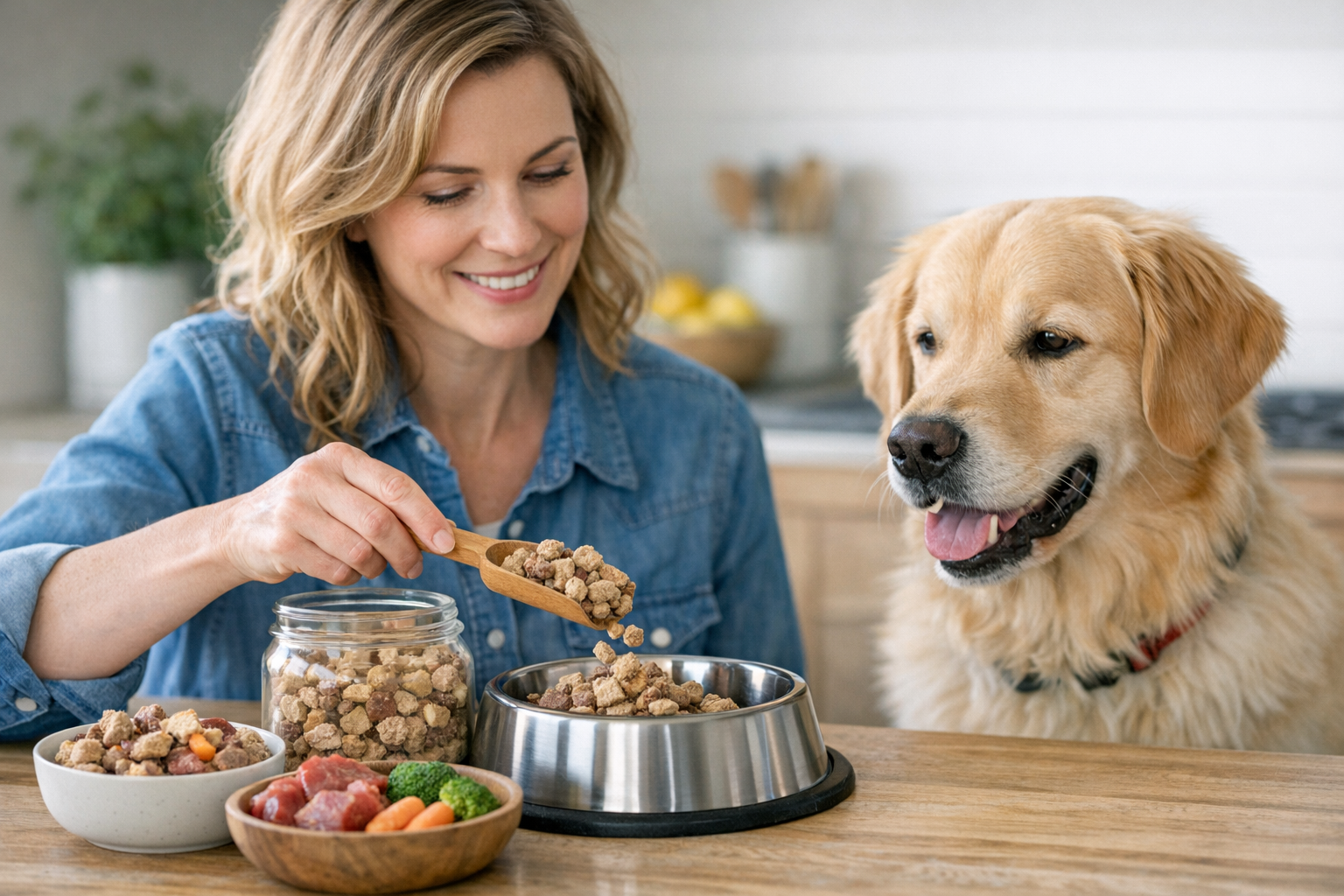
Freeze dried dog food is a shelf-stable version of a raw meat diet. Most traditional kibble is made through a process called extrusion. This involves high heat and pressure which can strip away some of the natural nutrients in meat and vegetables. In contrast, freeze drying uses a process called sublimation to remove moisture.
The food starts as raw ingredients like muscle meat, organs, and bone. Manufacturers freeze the food to a very low temperature. They then place it in a vacuum chamber. This allows the ice to turn directly into water vapor without ever becoming liquid. This method keeps the structure of the food intact. It preserves the taste, smell, and nutritional profile of the original raw ingredients.
Most of these diets are high in protein and low in carbohydrates. You will often see ingredients like grass-fed beef, cage-free chicken, or wild-caught salmon. Many brands also include organic fruits and vegetables to provide vitamins and antioxidants. Since the moisture is gone, the food is very lightweight and does not require refrigeration.
The Nutritional Benefits of Raw Ingredients
One of the biggest reasons pet parents switch to freeze dried raw is the nutritional density. Because the ingredients are never cooked, the proteins remain in their natural state. This makes them highly bioavailable. Your dog can often digest and use these nutrients more efficiently than processed proteins.
The natural enzymes found in raw meat are also preserved. These enzymes aid in the digestive process. Many owners report that their dogs have smaller, firmer stools after switching. This is usually a sign that the body is absorbing more of the food and producing less waste.
The healthy fats and amino acids in raw food support skin and coat health. If your dog has dull fur or dry skin, the high levels of omega fatty acids in freeze dried salmon or beef can make a visible difference. These nutrients stay potent because they are not damaged by the high temperatures of an oven. If you want to compare premium freeze dried options, our selection of Stella & Chewy's products is a helpful place to start.
Key Takeaway: Freeze drying preserves nearly all the vitamins, minerals, and enzymes found in raw meat, offering a more natural nutrient profile than cooked kibble.
Understanding the Safety Risks
While the nutritional benefits are high, freeze drying does not make raw meat completely sterile. This is a common misconception. When we talk to customers at our warehouse in Vernon Hills, Illinois, we always emphasize that freeze drying is a preservation method, not a cooking method.
Bacteria like Salmonella, Listeria, and E. coli can survive the freeze drying process. They essentially go into a dormant state. Once the food is rehydrated or enters a dog’s warm digestive tract, these bacteria can become active again. This poses a risk to both the dog and the humans in the household.
Healthy adult dogs usually have very acidic stomachs that can handle some bacteria. However, they can still become "shedders." This means the bacteria pass through their system and end up in their stool or saliva. If you have young children, elderly family members, or someone with a weakened immune system in your home, you must be extremely careful. If your dog has ongoing health concerns, our pharmacy for dogs is the place to explore prescription support options.
Safe Handling Checklist
- Wash your hands with warm, soapy water for 20 seconds after handling the food.
- Clean all bowls, scoops, and surfaces with a pet-safe disinfectant after every meal.
- Store the bag in a cool, dry place and keep it sealed to prevent moisture from entering.
- Avoid letting your dog lick your face immediately after they eat.
- Pick up waste in the yard promptly to prevent environmental contamination.
Is It Better Than Traditional Kibble?
Comparing freeze dried raw to kibble is not a simple win for either side. It depends on your dog’s health and your budget. Kibble is convenient and generally very safe because the cooking process kills most pathogens. It is also much more affordable for owners of large dogs.
Freeze dried raw is much more expensive because the sublimation process is costly and slow. However, it offers a level of ingredient quality that kibble often lacks. You will rarely find fillers like corn, wheat, or soy in a premium freeze dried bag. Instead, you get a concentrated source of animal protein.
Some owners choose a middle ground. They use freeze dried nuggets as a topper for high-quality kibble. This adds a boost of raw nutrition and flavor without the high cost of a full raw diet. Our selection of Open Farm products is one place to compare different feeding styles.
The Role of High-Pressure Pasteurization (HPP)
To address safety concerns, many reputable brands use High-Pressure Pasteurization. This is a cold-water pressure process. It subjects the food to thousands of pounds of pressure to kill harmful bacteria without using heat. This keeps the nutrients intact while making the raw food much safer.
When you are shopping at BaxterBoo or your local store, look for brands that openly discuss their safety testing. Many companies test every single batch for pathogens before it leaves the facility. If a brand does not mention HPP or batch testing, you may want to look elsewhere.
Safety is especially important if your dog has underlying health issues. If your pet is managing a chronic condition, always talk to your vet before changing their diet. For dogs with specific medical needs, our dog health category is a useful next step.
Vet Tip: Always consult your veterinarian before switching to a raw-based diet, especially if your dog is a puppy, a senior, or has a pre-existing health condition like kidney disease or a sensitive stomach.
How to Properly Rehydrate the Food
You can technically feed freeze dried food dry, but rehydrating it is usually better. Dogs on raw diets need adequate hydration to help process the high protein content. Adding water also brings back the natural textures and aromas of the meat.
Most manufacturers recommend adding one part warm water to every two parts of food. Let it sit for a few minutes until the nuggets soften. You can also use goat milk or bone broth for an extra nutritional punch. This is particularly helpful for picky eaters who need a little extra encouragement to finish their bowl. For a deeper walkthrough, see How to Feed Freeze Dried Dog Food for Better Health.
If you feed the food dry, make sure your dog has constant access to fresh water. Freeze dried food is extremely dry and will absorb moisture from your dog's system if they do not drink enough. Monitoring their water intake is a crucial part of feeding this diet.
Considering the Cost and Value
There is no getting around the fact that freeze dried raw is a premium product. A small bag can cost as much as a large bag of traditional kibble. For a 70 pound dog, feeding 100 percent freeze dried raw can be a significant monthly investment.
However, many owners see value in the potential for lower vet bills over time. Better digestion and a stronger immune system can lead to fewer health issues. The high calorie density also means you feed less volume than you would with a lower-quality food filled with fiber and starches.
If you are trying to stretch your budget, Discounted Dog Food: How to Feed Your Dog for Less is a smart companion read. You can also use our Autoship programme to help manage recurring purchases.
Who Should Avoid Freeze Dried Raw?
This diet is not the right choice for every dog. Puppies have very specific calcium and phosphorus requirements for bone growth. While some freeze dried foods are formulated for all life stages, many are intended for adult maintenance only. Always check the AAFCO statement on the back of the bag.
Dogs with late-stage kidney or liver disease may also struggle with the high protein levels. Their bodies have to work harder to process protein waste. In these cases, a lower-protein prescription diet from a licensed pharmacy is often the safer choice.
Finally, if your dog has a severely compromised immune system, the risk of a bacterial infection may outweigh the nutritional benefits. This includes dogs undergoing chemotherapy or those with autoimmune disorders. In these situations, a gently cooked fresh diet might provide similar nutrition with less risk.
Transitioning Your Dog Safely
You should never switch your dog's food overnight. This is true for any diet change, but it is especially important when moving from cooked kibble to raw ingredients. Their digestive tract needs time to adjust to the new protein levels and enzymes.
Step 1: Mix 25 percent of the freeze dried food with 75 percent of their current food. Do this for two to three days. Step 2: Increase the ratio to 50 percent of each for another two to three days. Step 3: Move to 75 percent freeze dried food and 25 percent old food. Step 4: If your dog's stool remains firm and they seem energetic, you can move to 100 percent of the new diet.
If you notice any vomiting or diarrhea, slow down the transition. Some dogs have more sensitive stomachs than others. A little bit of pumpkin or a probiotic supplement can help soothe the transition during the first week. For a portioning refresher, How Much Freeze Dried Dog Food to Feed Your Pet is a useful follow-up.
Final Thoughts on Freeze Dried Raw
Freeze dried raw food offers a powerful way to bring the benefits of a natural diet into your home. It provides high-quality protein and essential enzymes in a format that is as easy to serve as kibble. By choosing brands that use HPP and follow strict safety protocols, you can minimize the risks associated with raw feeding.
At BaxterBoo, we believe that every dog is unique. What works for a high-energy sporting dog might be too much for a senior lap dog. Take the time to monitor your dog's energy, coat, and digestion as you introduce new foods. The right diet should leave your pet feeling vibrant and satisfied.
If you want to keep exploring, our freeze-dried food topper collection is a natural next stop.
Bottom line: Freeze dried raw food is an excellent nutritional choice for healthy dogs if you are diligent about safe handling and can manage the higher cost.
FAQ
Is freeze dried raw food safer than frozen raw food?
Both types of food carry similar bacterial risks because neither is cooked. However, freeze dried food is often considered more convenient for owners because it does not require a defrosting period in the fridge. Many freeze dried brands also use High-Pressure Pasteurization (HPP) to reduce pathogen counts, which makes them a safer choice for many households.
Can I feed my dog freeze dried raw food every day?
Yes, as long as the bag features an AAFCO statement saying it is "complete and balanced." Some freeze dried products are intended only as toppers or treats and do not contain the full spectrum of vitamins and minerals a dog needs. If the label says it is for supplemental feeding only, you must mix it with a complete base diet to avoid nutritional deficiencies.
Do I have to add water to freeze dried dog food?
While you can feed it dry, rehydrating the food is highly recommended. Adding water ensures your dog stays hydrated and makes the food easier to digest. It also restores the natural texture of the meat, which most dogs find much more appealing than the hard, dry nuggets.
Why is freeze dried dog food so expensive?
The process of freeze drying is energy-intensive and requires specialized, expensive machinery. It takes a long time to remove moisture through sublimation compared to high-heat baking. Additionally, these foods typically use very high-quality animal proteins and organic produce, which naturally cost more than the grains and fillers found in cheaper dog foods.






