
 Save 15% on your 1st Autoship learn more

 Email us
 Live Chat
 FAQs
FAQs





Introduction
You might be standing in your kitchen right now with a bag of kibble in one hand and a measuring cup in the other. Perhaps your senior dog is struggling to crunch through those hard pellets. Maybe your puppy seems bored with their dinner. You might just want to ensure your dog is getting enough moisture during a hot Illinois summer. Many pet owners wonder if adding water to dry dog food is a helpful hack or a recipe for digestive upset.
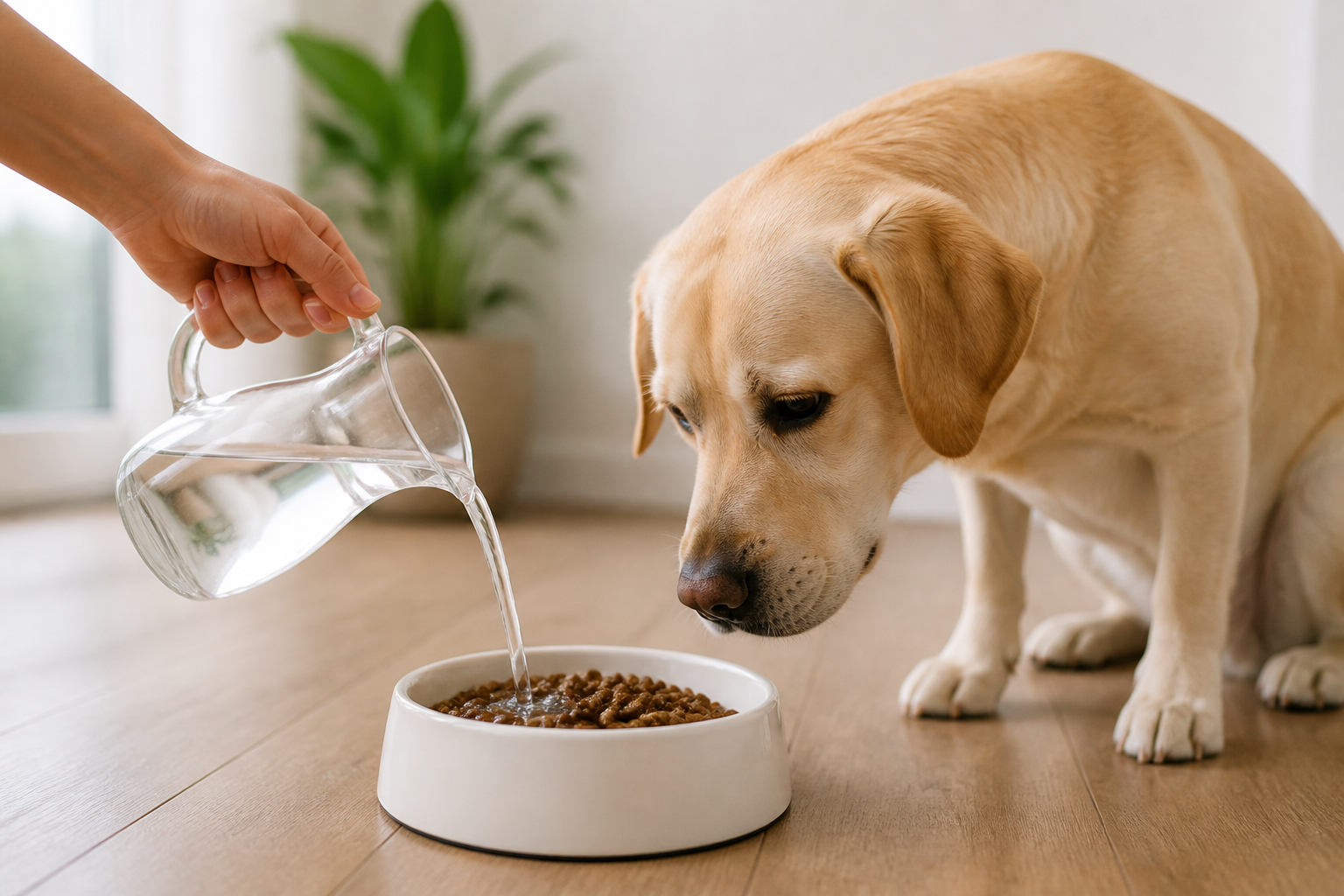
At BaxterBoo, we talk to pet owners every day who want to make mealtime better for their companions. Adding water to kibble is generally not bad. In fact, it is often a very healthy choice. However, there are specific safety rules you must follow to prevent bacteria growth and spoilage. This article covers the benefits of hydrating dry food, the potential risks, and the best ways to serve a moistened meal.
The Immediate Benefits of Hydrating Kibble
Most commercial dog food is made using a process called extrusion. This involves high heat and pressure to create shelf-stable pellets. While this makes the food convenient for us to store, it results in a very low moisture content. Most dry kibble contains only about 10 percent water. By adding a splash of filtered water to the bowl, you are returning some of that lost moisture to the meal. You can explore additional options in our dog food category.
Hydration is the most obvious benefit. Many dogs are not proactive drinkers. They may not visit the water bowl as often as their bodies require. This is especially true for active breeds or dogs living in dry climates. When you add water to their food, you ensure they take in fluids with every single bite. This support for their hydration levels can take a significant load off their kidneys and urinary system.
Quick Answer: It is not bad to add water to dry dog food. It can actually improve hydration, digestion, and palatability. You must simply ensure you do not leave the moistened food out for more than 30 to 60 minutes to avoid bacteria growth.
Improving Palatability for Picky Eaters
If your dog has started turning their nose up at their bowl, water might be the solution. Dry kibble often has a fat coating sprayed on the outside to make it smell good to dogs. Adding warm water helps release these aromas. The steam carries the scent of the proteins and fats directly to your dog's nose.
For a dog, scent is a massive part of the eating experience. A meal that smells stronger is usually more enticing. This is a great trick for dogs recovering from an illness or those who have lost some of their sense of smell due to age. It creates a natural "gravy" without the need for expensive toppers or high-calorie additives. For more mealtime ideas, read how to get your dog to eat dry food and enjoy it.
Easier Chewing for Specific Life Stages
Puppies and senior dogs often have the hardest time with standard dry food. Puppies going through the teething phase may have sore gums. Crunching down on hard biscuits can be painful for them. Softening the food with a bit of warm water makes the texture much more manageable. If you are shopping for a young dog, our puppy supplies section offers age-appropriate essentials.
Senior dogs frequently deal with dental issues or missing teeth. If you notice your older dog dropping pieces of food or eating much slower than usual, the kibble might be too hard. We see many owners of senior dogs find success by soaking the food for 10 to 15 minutes before serving. This allows the water to penetrate to the center of the pellet, making it soft and easy to gum.
Key Takeaway: Adding water is a simple way to help puppies and seniors eat comfortably. It transforms hard kibble into a soft, digestible texture that is gentle on sore gums and aging teeth.
Digestive Health and Nutrient Absorption
Adding water does more than just make the food easier to chew. It actually helps the entire digestive process. When a dog eats dry kibble, their stomach has to produce a significant amount of gastric acid and pull moisture from the surrounding tissues to break those hard pellets down. This can sometimes lead to a heavy, bloated feeling after meals.
By pre-moistening the food, you are starting the breakdown process before the food even hits the stomach. The kibble begins to expand in the bowl rather than expanding rapidly in the dog's stomach. This can be particularly helpful for dogs that tend to "inhale" their food. Softened food is harder to gulp down in large quantities. It forces the dog to lap up the meal, which naturally slows their eating pace.
- Helps food move more smoothly through the digestive tract.
- Reduces the amount of internal moisture the body must use for digestion.
- May reduce the risk of bloat in large breed dogs by preventing rapid expansion in the stomach.
- Makes nutrients more accessible for absorption in the small intestine.
Potential Drawbacks and Safety Concerns
While adding water is generally healthy, it is not without risks. The primary concern is bacterial growth. Dry dog food is designed to stay fresh at room temperature because it lacks moisture. Once you add water, you create a perfect environment for mold and bacteria like Salmonella or Listeria to thrive.
You cannot leave moistened kibble out all day. If your dog is a "grazer" who likes to take a few bites and come back hours later, adding water is a bad idea. Any uneaten portion of wet kibble should be picked up and discarded after about 30 to 60 minutes. This is especially important during the summer months when heat can accelerate spoilage. For more guidance, read how long dry dog food can stay fresh.
The Impact on Dental Health
There is a long-standing belief that dry kibble helps clean a dog's teeth by scraping away plaque. Some owners worry that adding water removes this benefit. While the "crunch" can provide some mechanical cleaning, it is often exaggerated. Most dogs swallow kibble whole or break it into only a few pieces. It does not provide the same cleaning power as a dedicated dental chew or regular brushing.
If you are worried about your dog's teeth, we recommend focusing on specialized dental products rather than relying on dry kibble alone. We carry a wide variety of dental treats and chews that can complement regular brushing. You can also consult with your veterinarian about professional cleanings if you notice significant buildup.
Mess and Maintenance
Let's be practical. Adding water is messier. Wet kibble can stick to the fur around your dog's mouth, especially if they have a long beard or floppy ears. It can also lead to more splatters around the feeding area. If your dog is a vigorous eater, you might find yourself cleaning the floor more often.
You must also be more diligent about washing the food bowl. A dry food bowl might look clean after a meal, but a wet food bowl will have a film of protein and starch. This film can quickly become a breeding ground for germs. You should wash the bowl with hot, soapy water after every single moistened meal.
Vet Tip: If your dog has a history of digestive sensitivity, introduce water slowly. Start with just a tablespoon to ensure the change in texture does not cause an upset stomach. Always use clean, filtered water to avoid introducing any contaminants.
How to Properly Add Water to Dry Food
If you want to try this with your dog, there is a right way to do it. You do not want to turn the meal into a soup that lacks any structure. The goal is usually to create a soft, sponge-like consistency or a light gravy.
Step 1: Measure your dog's standard portion of dry food. / Place it in a clean stainless steel or ceramic bowl.
Step 2: Add warm water. / Use a ratio of roughly one part water to three parts kibble. Warm water works better than cold for releasing aromas.
Step 3: Let it sit. / Allow the mixture to stand for 5 to 10 minutes. This gives the kibble time to absorb the liquid and soften.
Step 4: Stir and serve. / Give the bowl a quick stir to distribute the moisture. Serve the meal immediately while it is still fresh.
Step 5: Clean up. / Pick up any leftovers after 30 minutes. Wash the bowl thoroughly to prepare for the next meal.
Using Other Liquids for Added Nutrition
Water is the safest and most common choice, but it is not the only option. Many owners use bone broth or goat milk to add even more nutrients to the bowl. Bone broth is excellent for joint health because it contains natural collagen. Goat milk can provide a boost of probiotics for better gut health.
However, you must be careful with store-bought broths. Many broths made for humans contain onions, garlic, or excessive salt. These ingredients are toxic or harmful to dogs. Our food topper and broth selection includes options made specifically for pets.
The Honest Kitchen is one brand mentioned for pet-safe broths and food products. You can browse our selection of The Honest Kitchen products when looking for meal enhancers.
Bottom line: While water is excellent, pet-safe broths and milks can offer extra health benefits for joints and digestion.
When to Consult Your Veterinarian
Most healthy dogs will thrive with a bit of water added to their food. However, if your dog is on a prescription diet, you should check with your vet first. Some therapeutic diets are formulated with very specific concentrations of minerals. Adding large amounts of water might slightly change how those nutrients are processed.
Our pharmacy at BaxterBoo provides a wide range of prescription pet foods through our partnership with Pet's Choice. These diets are designed for conditions like kidney disease, urinary stones, or severe allergies. If your dog requires one of these specialized foods, your vet can give you the best advice on whether adding water is appropriate for their specific medical needs.
If you notice your dog is suddenly refusing food even with water added, or if they are drinking excessive amounts of water from their bowl, it is time for a checkup. These can be signs of underlying health issues like dental pain, diabetes, or kidney problems. A professional diagnosis is always the best first step.
Managing Your Dog’s Long-Term Health
Adding water to kibble is a small change that can lead to better long-term wellness. It supports the kidneys, aids digestion, and makes mealtime more enjoyable. It is one of the easiest ways to improve a standard dry food diet without a major increase in cost.
If you find that your dog prefers their food moistened, you might consider our Autoship programme. This ensures you never run out of their favorite kibble or the pet-safe broths they love. It also gives you a discount on your orders and a free MVP Gold membership. Consistency is key for a dog's digestive health, and having their food delivered on a schedule makes that easy to manage.
At BaxterBoo, we have been helping pet owners find the right balance for their animals since 2006. Whether you are looking for a premium kibble like Farmina or a hydrating topper, we handpick every product to ensure it meets our standards. Your dog's nutrition is the foundation of their health, and we are here to support you in getting it right. You can also explore our selection of Farmina products when comparing dry food options.
Key Takeaway: Hydrating dry food is a proactive way to support your dog's urinary and digestive systems. Just remember to keep things clean and never leave wet food out to spoil.
Summary of Best Practices
Caring for a dog means paying attention to the little details at mealtime. Adding water is a great tool, but it requires a few simple rules to stay safe and effective.
- Always use warm, filtered water for the best results.
- Stick to a 1:3 ratio of water to kibble to maintain some texture.
- Discard any uneaten food within an hour to prevent bacterial growth.
- Wash bowls after every meal to keep the feeding area sanitary.
- Consider pet-safe broths for dogs needing extra joint or immune support.
Adding moisture to dry food is a practical way to bridge the gap between dry kibble and a fresh or wet diet. It provides many of the hydration benefits of wet food while maintaining the affordability and convenience of dry kibble. Most dogs appreciate the extra flavor, and you can feel confident knowing you are helping their body function at its best.
FAQ
Does adding water to dry dog food cause bloat?
There is no definitive evidence that adding water causes bloat. In fact, some experts believe that pre-soaking kibble may help prevent bloat by ensuring the food expands in the bowl rather than inside the dog's stomach. If you have a large breed dog prone to this condition, it is always best to discuss feeding techniques and portions with your veterinarian.
Can I add water to my dog's food and leave it out for the day?
No, you should never leave moistened dry food out for an extended period. The moisture creates a prime environment for bacteria and mold to grow within hours. If your dog does not finish their meal within 30 to 60 minutes, pick up the bowl, discard the remains, and wash the bowl thoroughly.
Should I use hot or cold water to soften the kibble?
Warm water is the best choice because it helps release the food's natural aromas and softens the pellets faster than cold water. Avoid using boiling or very hot water, as this can burn your dog's mouth and potentially destroy some of the heat-sensitive vitamins in the food. If the water is comfortable to your touch, it is safe for your dog.
Will adding water to kibble make my dog's stool soft?
It depends on the dog, but generally, it should not cause diarrhea or very soft stools. Adding water helps with hydration and can actually improve stool consistency for dogs that are slightly constipated. If you notice a sudden negative change in your dog's bowel movements after adding water, reduce the amount you are using and consult your vet to rule out any sensitivities.






