
 Save 15% on your 1st Autoship learn more

 Email us
 Live Chat
 FAQs
FAQs





Introduction
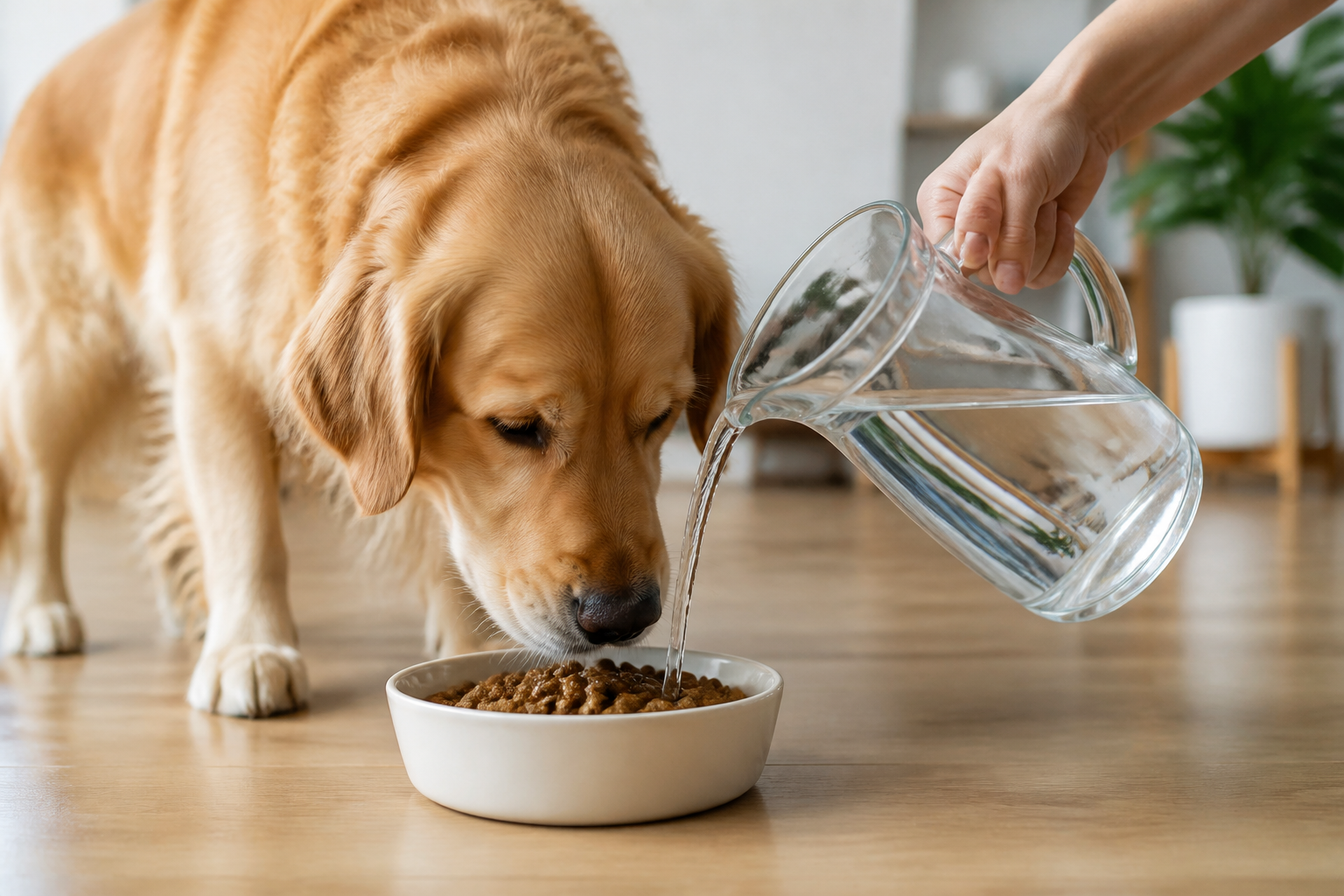
You are standing in the kitchen and your dog is staring at a bowl of dry kibble with very little enthusiasm. Maybe you have noticed your pup rarely visits the water bowl, or perhaps you are caring for a senior dog who seems to struggle with those hard, crunchy bits. Adding water to dry dog food is a simple change that can make a massive difference in your pet's daily life. At BaxterBoo, we talk to pet owners every day who want to know if this small step is actually beneficial or just a messy extra chore. This post covers the health benefits of hydration, the impact on digestion, and the safety rules you must follow to keep the meal fresh. Adding moisture to kibble is generally a great idea for most dogs when done correctly.
Quick Answer: Yes, adding water to dry dog food is highly beneficial. It improves hydration, aids digestion, enhances the aroma for picky eaters, and makes the food easier for seniors or puppies to chew.
The Importance of Hydration in a Dry Diet
Most premium dry dog food is nutrient dense, but it is also very low in moisture. Typical kibble only contains about 10 percent water. In the wild, a dog's ancestors would eat a diet that was closer to 70 percent moisture. This gap means your dog has to work harder to stay hydrated.
When a dog eats dry food, their body must pull moisture from elsewhere to help process the meal. This can lead to a state of mild, chronic dehydration if the dog does not drink enough from their water bowl. Many dogs are notoriously lazy drinkers. By adding water directly to the food, you ensure they get a significant portion of their daily fluids during mealtime. For another perspective on this feeding method, read our guide to mixing dry dog food with water.
Supporting Kidney and Urinary Health
Proper hydration is the best way to support your dog's kidneys. The kidneys are responsible for filtering waste from the blood. When a dog is dehydrated, the kidneys have to work much harder to concentrate urine and flush out toxins. Over time, this stress can contribute to more serious issues.
Increased water intake also helps prevent urinary tract infections and the formation of crystals or stones. More water means more frequent urination, which naturally flushes the bladder. If your dog has been diagnosed with a chronic urinary condition, they may require a specific prescription diet. Our pet pharmacy carries prescription pet foods and medications through our partnership with Pet's Choice to help manage these ongoing health needs.
Vet Tip: If your dog has a history of kidney stones or frequent UTIs, always consult your veterinarian before making major dietary changes. They can help you determine if a prescription diet from our pharmacy is the right path.
Improving Digestion and Reducing Bloat Risk
Digestion starts the moment food enters the mouth, and moisture plays a key role. When you add water to kibble, it begins to break down the hard structure of the pellets. This makes the food easier for the stomach to process once it is swallowed.
Slowing Down Fast Eaters
If your dog gulps their food like it is a race, they are likely swallowing a lot of air. This can lead to gas, discomfort, or even the more dangerous condition known as bloat or Gastric Dilatation-Volvulus (GDV). Adding water creates a more soup-like consistency. This forces the dog to lap up the moisture and slow down their pace. For more mealtime guidance, see our article on wetting dry dog food for better digestion and hydration.
Pre-Expanding the Kibble
Have you ever put a piece of kibble in a glass of water and watched it grow? Many types of dry food expand significantly when they get wet. If this happens inside your dog's stomach, it can cause immediate discomfort or distension. By adding water to the bowl and letting it soak for a few minutes, you allow that expansion to happen before your dog eats. This can prevent that "overstuffed" feeling that leads to lethargy after meals.
Helping Different Life Stages
Not every dog has the same dental strength or nutritional requirements. Adding moisture is particularly helpful for dogs at both ends of the age spectrum.
Benefits for Senior Dogs
As dogs age, they often develop dental issues such as broken teeth, gum disease, or general sensitivity. Crunching down on hard kibble can become painful. Many seniors will start eating less simply because the act of eating hurts. Adding warm water turns hard pellets into a soft, manageable mash. This allows older dogs to get the nutrition they need without the physical struggle. Comparing different textures? Our guide to wet and dry dog food offers additional mealtime context.
Benefits for Puppies
Puppies transitioning from milk or wet food to dry kibble often find the texture of dry food confusing or difficult. Their "baby teeth" are sharp but not always strong enough for very hard biscuits. Adding water helps bridge the gap. It creates a texture that is familiar and gentle on their developing mouths. You can also explore our puppy supplies for other age-appropriate essentials.
Appetite Stimulation for Picky Eaters
Dogs experience the world through their noses. Dry kibble does not have a very strong scent when it is cold and dry. However, adding warm water releases the fats and aromas within the food. This makes the meal smell much more appetizing. If you have a dog who has lost their appetite due to illness or age, this simple trick can entice them back to the bowl.
Key Takeaway: Adding water to kibble is a versatile tool. It helps seniors with dental pain, puppies with new teeth, and picky eaters who need a scent boost to get excited about dinner.
The Myth of Dry Food and Dental Health
A common argument against adding water is that dry food helps clean a dog's teeth. The idea is that the "crunch" scrapes away plaque. However, many veterinary dental experts compare this to a human trying to clean their teeth by eating crackers.
Most kibble is high in starch. When a dog bites a piece of dry food, it often shatters or sticks to the teeth. The starch then breaks down into sugar, which actually feeds the bacteria that cause plaque and tartar. While some specific dental-formula diets are designed with a texture that helps, standard kibble provides very little mechanical cleaning. You are much better off focusing on hydration through wet food and using dedicated dental chews or brushing for oral hygiene.
Weight Management and Satiety
If you have a dog that always seems hungry, adding water can be a useful weight-management tool. Water adds volume to the meal without adding any calories.
When the kibble soaks up water, the physical size of the meal increases. This fills the dog's stomach more effectively, sending signals to the brain that they are full. It is a great way to help a dog on a calorie-restricted diet feel more satisfied after their meal. If your dog is struggling with significant weight issues, we carry specialized weight management formulas like Farmina Vet Life, which can be ordered through our pharmacy with a vet's authorization. You can browse our Farmina selection for additional options.
Safety Rules for Adding Water
While adding water is beneficial, you cannot simply leave wet food out all day. Once you add moisture to dry food, the "shelf life" in the bowl drops significantly.
The 30-Minute Rule
Dry kibble is processed to be shelf-stable at room temperature. However, adding water creates a moist, warm environment that is perfect for bacteria and mold.
- Serve the food immediately after soaking.
- If your dog hasn't finished the meal within 30 to 40 minutes, pick up the bowl.
- Discard any uneaten moistened food.
- Never leave soaked kibble out overnight or during the day while you are at work.
Use the Right Temperature
Use room temperature or warm water. Avoid boiling water, as it can destroy some of the heat-sensitive vitamins and probiotics found in high-quality brands like Stella & Chewy's or Open Farm. Warm water is best for releasing aromas without damaging the nutritional integrity of the food.
Maintain Your Equipment
A bowl used for moistened food needs to be washed more frequently than one used for dry food. Bacteria can hide in the scratches of plastic bowls or the rim of stainless steel dishes. Wash the bowl with hot, soapy water after every single meal to prevent biofilm buildup.
Bottom line: Adding water is safe and healthy as long as you treat the resulting mixture like fresh food, discarding any leftovers after 30 minutes and washing the bowl thoroughly.
Step-by-Step: How to Properly Hydrate Kibble
If you are ready to try this at home, follow these simple steps to ensure the best results for your pup.
Step 1: Measure the portions.
Start with your dog's standard amount of dry food. Do not guess the amount, as the added volume of water can make it look like more than it is.
Step 2: Add the liquid.
A good starting ratio is one part water to two parts kibble. For example, if you feed one cup of food, add half a cup of warm water. You can adjust this based on your dog's preference for "soup" versus "mash."
Step 3: Let it soak.
Wait about 2 to 5 minutes. This gives the kibble time to absorb the moisture and expand. If you have a senior dog with severe dental issues, you may want to wait longer to achieve a softer consistency.
Step 4: Stir and serve.
Give the bowl a quick stir to distribute the moisture and any released fats. Serve it to your dog while it is still warm and fragrant.
Better Alternatives to Plain Water
While plain filtered water is excellent, you can further boost the nutritional value of your dog's meal by using other hydrating toppers. Many of the brands we carry at BaxterBoo offer specific products designed for this purpose.
Bone Broth
Bone broth is packed with collagen, glucosamine, and chondroitin, which support joint health. It is also much more flavorful than plain water. Brands like Caru or Open Farm offer dog-safe bone broths that are free from the onions, garlic, and excessive salt found in grocery store versions for humans.
Goat's Milk
Raw or fermented goat's milk is often called "universal milk" because it is so easy for dogs to digest. It is loaded with probiotics that support gut health. Adding a splash of goat's milk to dry food provides moisture along with an immune system boost.
Canned Food Mixers
If you want to provide a variety of textures, you can mix a spoonful of high-quality canned food with water to create a gravy. This is an excellent way to use the Frequent Buyer Program we offer, as many brands allow you to mix and match wet and dry formulas toward your free product rewards.
Comparison of Hydration Add-ins
| Add-in Type | Primary Benefit | Best For |
|---|---|---|
| Filtered Water | Pure hydration, zero calories | Every dog, weight management |
| Bone Broth | Joint support, high aroma | Picky eaters, senior dogs |
| Goat's Milk | Probiotics, digestive enzymes | Puppies, dogs with sensitive tummies |
| Canned Toppers | Texture variety, high protein | High-energy dogs, treat-motivated pups |
When You Might Not Want to Add Water
There are very few situations where adding water is a bad idea, but there are exceptions. If your dog is currently using a prescription dental diet specifically designed to be fed dry for mechanical scraping, adding water will negate that purpose. Always check with your vet if your dog is on a therapeutic diet.
Additionally, some dogs simply do not like the texture of soggy food. If your dog is a "grazer" who prefers to eat small amounts throughout the day, adding water is not practical due to the risk of spoilage. In those cases, it is better to stick to dry food and ensure they have multiple clean water sources around the house.
Conclusion
Adding water to dry dog food is one of the easiest ways to improve your pet's health. It supports their kidneys, aids their digestion, and makes every meal more flavorful. Whether you are helping a senior dog eat without pain or ensuring a puppy stays hydrated, this simple kitchen habit pays off in the long run. To make the most of your pet's diet, consider rotating in high-quality bone broths or goat's milk to keep them excited about their bowl.
- Always discard moistened food after 40 minutes to prevent bacteria.
- Use warm water to unlock aromas for picky eaters.
- Monitor your dog's weight, as hydrated food can help them feel fuller.
- Wash bowls after every meal to maintain hygiene.
For pets with specific health conditions that require more than just a diet change, our BaxterBoo pharmacy is here to help with professional support and prescription products. You can even set up your favorite foods and supplements on our Autoship programme to ensure you never run out of the essentials while saving on every order.
FAQ
Does adding water to dog food cause bloat?
There is no scientific evidence that adding water to kibble directly causes bloat. In fact, many experts believe that pre-soaking kibble so it expands in the bowl rather than the stomach may actually help reduce the risk of gas and distension. However, if you have a high-risk deep-chested breed, it is always best to discuss feeding techniques with your veterinarian.
How long should I let the dog food soak before serving?
For most dogs, a soak time of 2 to 5 minutes is perfect. This allows the kibble to soften slightly and release its aroma without becoming a complete mush. If your dog has specific dental issues and needs very soft food, you can let it sit for up to 10 minutes.
Can I add cold water instead of warm water?
You can use cold water, but it will not release the food's aromas as effectively as warm water. Warm water helps liquefy the fats sprayed on the outside of the kibble, making it much more enticing for the dog. Just make sure the water is not hot, as you do not want to burn your dog's mouth or destroy sensitive nutrients.
Can I leave moistened dog food out while I am at work?
No, you should never leave moistened dry food out for more than 30 to 40 minutes. The moisture combined with the starches in the food creates an environment where bacteria and mold can grow very quickly. If your dog does not finish the bowl, pick it up and discard the leftovers to keep your pet safe.






