
 Save 15% on your 1st Autoship learn more

 Email us
 Live Chat
 FAQs
FAQs





Introduction
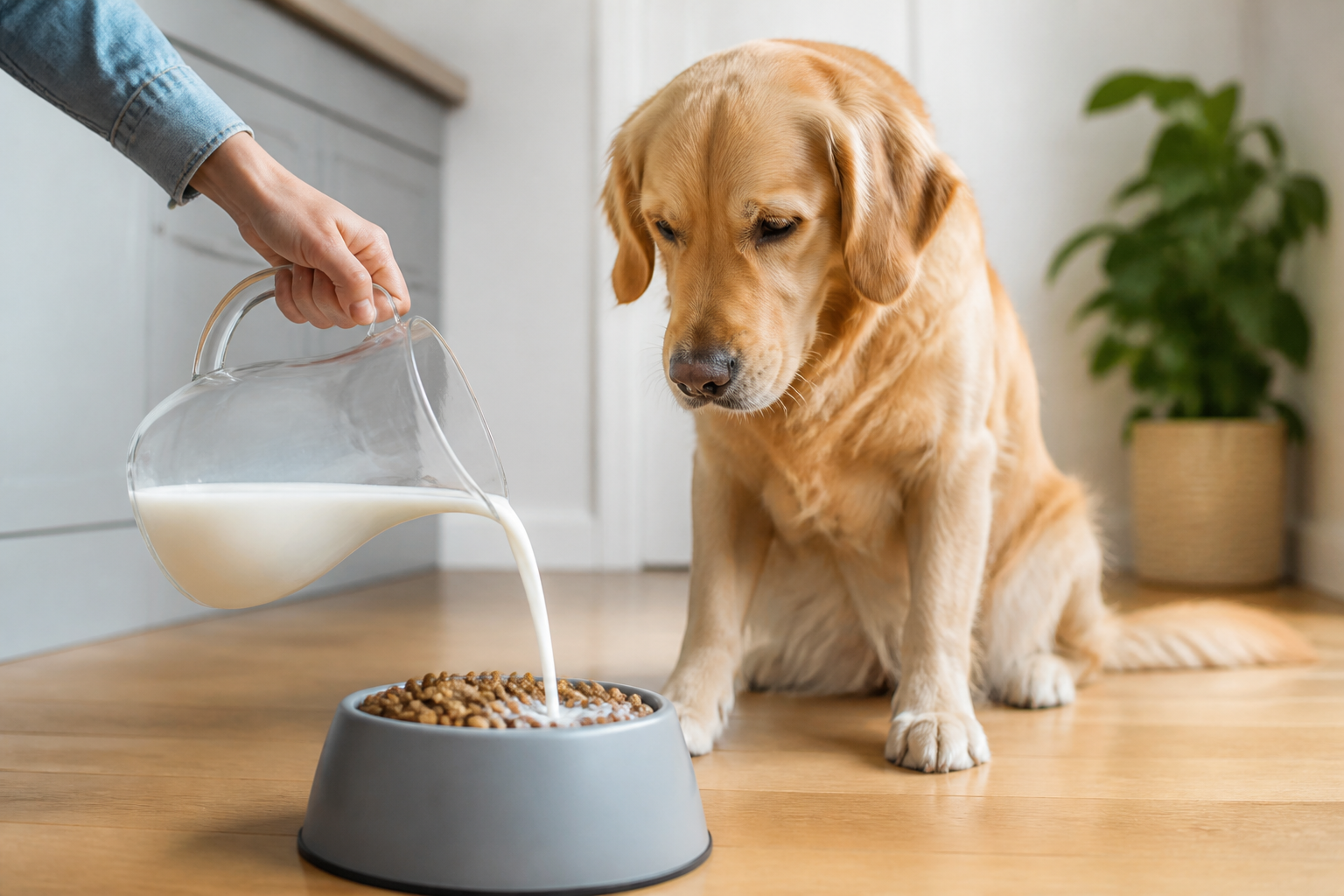
You are standing in your kitchen with a carton of milk in one hand and your dog's food bowl in the other. Maybe your dog has been acting picky lately. Perhaps you noticed the kibble looks a little dry and unappealing. It seems like a simple, healthy way to add flavor and moisture. At BaxterBoo, we hear this question often from pet parents looking to spruce up mealtime. While milk is not toxic to dogs, the answer is more complicated than a simple yes or no. Most adult dogs struggle to digest dairy, and what seems like a treat can quickly lead to an upset stomach. This article covers the risks of dairy, the symptoms of lactose intolerance, and much safer ways to hydrate your dog's dinner.
Quick Answer: While a small splash of milk is not toxic, it is generally not recommended to add it to dry dog food. Most adult dogs are lactose intolerant and will experience gas, bloating, or diarrhea after consuming dairy.
The Science of Dogs and Dairy
To understand why milk might be a problem, we have to look at how dogs digest food. When puppies are born, their bodies produce an enzyme called lactase. This enzyme is specifically designed to break down lactose, which is the sugar found in mother's milk. As puppies grow and transition to solid food, their bodies naturally stop producing high levels of lactase.
By the time a dog reaches adulthood, they usually have very little lactase left in their system. This means they cannot efficiently break down the lactose in cow's milk. Instead of being digested, the milk sits in the GI tract and ferments. This fermentation process is what causes the uncomfortable symptoms many owners see shortly after feeding dairy.
The Problem with Cow's Milk
Cow's milk is significantly different from the milk a mother dog provides. It contains a higher concentration of lactose than canine milk. When you add cow's milk to a bowl of dry kibble, you are introducing a sugar that your dog's digestive system simply is not equipped to handle. Even if your dog seems to enjoy the taste, the internal reaction can be quite different.
Key Takeaway: Most adult dogs lose the ability to digest milk after weaning. Adding cow's milk to kibble often leads to fermentation in the gut rather than healthy digestion.
Signs Your Dog Cannot Handle Milk
Every dog is an individual. Some might have a "stomach of steel" and show no signs of distress from a tiny bit of dairy. However, most will display clear symptoms of lactose intolerance. If you have recently added milk to your dog's food, watch for these signs:
- Loose stools or sudden diarrhea
- Excessive gas or a gurgling stomach
- Abdominal bloating
- Vomiting
- Abdominal pain or whining after eating
- A sudden lack of interest in their next meal
These symptoms usually appear within twelve hours of eating the dairy. If the diarrhea is severe or if your dog seems lethargic, it is time to look at their overall diet and hydration.
Vet Tip: If your dog experiences persistent diarrhea or vomiting after eating dairy, consult your veterinarian to rule out a more serious allergy or a flare-up of pancreatitis. For dogs with chronic digestive sensitivities, our pharmacy offers prescription diets through our partnership with Pet's Choice that can help manage long term gut health.
The Risks of Regular Dairy Consumption
Beyond simple stomach upset, there are other reasons to be cautious about adding milk to every meal. Milk is relatively high in fat and natural sugars. For a small dog, even a half-cup of milk can represent a significant portion of their daily calorie needs.
Weight Gain and Obesity
Regularly adding milk to dry food can lead to silent weight gain. Many pet owners do not account for the calories in the "topper" when they measure out the kibble. Over time, these extra calories contribute to obesity. This puts unnecessary strain on your dog's joints and can lead to more serious metabolic issues.
Risk of Pancreatitis
For some dogs, the high fat content in whole milk can trigger a serious condition called pancreatitis. This is an inflammation of the pancreas that is extremely painful and often requires emergency veterinary care. Dogs that are already prone to weight issues or those with a history of sensitive stomachs are at the highest risk.
Nutrient Imbalance
High-quality dry dog foods are formulated to be complete and balanced. This means they contain the exact ratio of vitamins and minerals your dog needs. When you add a significant amount of milk, you may be shifting the balance of certain minerals like calcium and phosphorus. While a tiny splash won't hurt, making milk a staple of the diet can interfere with the intended nutrition of the base kibble.
Bottom line: The risks of digestive upset and weight gain usually outweigh the minor nutritional benefits of adding cow's milk to kibble.
What About Puppies?
It is a common mistake to think that because puppies drink milk from their mothers, cow's milk is a good supplement for them. This is actually quite dangerous. Puppies have very specific nutritional requirements for growth. Cow's milk does not contain the right balance of amino acids and fats that a developing puppy needs.
If a puppy is not yet weaned or needs extra support, you should only use a dedicated puppy milk replacer. These are formulated to mimic the exact composition of canine milk. We carry several high quality puppy milk replacements at BaxterBoo that are much safer than anything in your grocery store's dairy aisle. Our puppy supplies section can also help you find age-appropriate essentials.
Step 1: Identify if the puppy is truly in need of supplemental milk.
Step 2: Choose a canine-specific milk replacer powder or liquid.
Step 3: Mix the replacer according to the package instructions to ensure the correct calorie density.
Step 4: Slowly introduce the replacer to avoid shocking the puppy's sensitive system.
Comparing Dairy and Alternatives
If you really want to add a "boost" to your dog's bowl, some dairy products are safer than others. Fermented dairy or liquids specifically made for pets are much better choices than a carton of 2% milk.
| Additive | Safety Level | Lactose Content | Benefit |
|---|---|---|---|
| Whole Milk | Low | High | Minimal (Redundant protein/calcium) |
| Plain Yogurt | Medium | Moderate | Probiotics for gut health |
| Kefir | Medium | Low | Strong probiotic boost |
| Goat Milk | High | Low | Highly digestible, rich in nutrients |
| Bone Broth | High | Zero | Excellent hydration and joint support |
Better Ways to Add Moisture to Kibble
If your goal is to make the food more appetizing or easier to chew, there are several superior alternatives to milk. These options provide the moisture your dog needs without the risk of a "blowout" in the living room. For more ideas, see our guide to wetting dry dog food for better digestion and hydration.
The Magic of Goat Milk
Goat milk is often called "liquid gold" in the pet health world. Unlike cow's milk, goat milk has smaller fat globules and lower levels of lactose. This makes it significantly easier for a dog to digest. It is packed with natural probiotics that support the immune system and gut health. Many brands, like The Honest Kitchen, offer dehydrated goat milk that you can easily mix with water and pour over kibble.
Bone Broth for Dogs
Bone broth is perhaps the best liquid you can add to dry food. It is naturally savory, which appeals to even the pickiest eaters. It is also rich in collagen and amino acids like glycine, which support joint health and the lining of the digestive tract.
When choosing a broth, make sure it is specifically made for pets. Grocery store broths for humans often contain high levels of sodium, onions, and garlic, all of which are harmful to dogs. We stock several shelf-stable and powdered bone broths designed specifically for canine safety. Explore our dog food supplement category for bone broth and other meal toppers.
Warm Water
Never underestimate the power of simple, clean water. Adding warm water to kibble releases the fats and aromas in the food, making it smell much more enticing to your dog. It also softens the texture, which is helpful for senior dogs with dental issues or puppies with small mouths.
Key Takeaway: Goat milk and bone broth provide superior nutrition and better digestibility than cow's milk.
How to Properly Hydrate Dry Food
If you decide to start adding liquid to your dog's meals, it is best to follow a consistent routine. This helps your dog's digestive system adjust to the change. For another approach to this routine, read how to mix dry dog food with water.
- Measure the kibble first. Always stick to the recommended portion for your dog's weight.
- Add the liquid slowly. Start with about one or two tablespoons. You don't want to turn the food into a soup immediately.
- Let it soak. If you are using warm water or broth, let the bowl sit for 5 to 10 minutes. This allows the kibble to absorb the moisture and soften.
- Observe the stool. For the first few days, watch your dog's bathroom habits. If things stay firm, you can continue or slightly increase the amount of liquid.
Managing Picky Eaters and Health Needs
Sometimes the urge to add milk comes from a place of frustration because a dog refuses to eat. If your dog is suddenly turning their nose up at food, it might not be a lack of flavor. It could be a sign of dental pain, nausea, or a more serious underlying condition.
While adding a topper like goat milk can help in the short term, it is important to address the root cause. If your dog is managing a chronic condition like kidney disease or severe allergies, they may need a specific prescription diet. Our pharmacy carries FDA-approved medications and therapeutic foods that can help. Through our partnership with Pet's Choice, we can help you get the exact formula your vet recommends delivered right to your door.
Vet Tip: Sudden changes in appetite should always be discussed with your veterinarian. A professional can help determine if your dog needs a change in protein source or a specialized medical diet rather than just a topper.
Why Moisture Matters in a Dry Diet
Kibble is convenient and shelf stable because it is low in moisture, usually containing only about 10 percent water. However, dogs are designed to get a significant portion of their hydration from their food. A dog on a strictly dry diet is often in a state of mild dehydration, which is why you see them drinking so much water after a meal.
By adding a healthy liquid like bone broth or water, you are helping the digestive process. Moisture helps the body break down the kibble more efficiently and ensures that nutrients are absorbed properly. It also helps flush the urinary system, which can prevent issues like kidney stones or urinary tract infections over time.
Bottom line: Adding the right kind of moisture to kibble supports long term kidney health and makes digestion easier for your dog.
Summary of Best Practices
While the occasional lick of milk likely won't cause a crisis, it is rarely the best thing for your dog's bowl. To keep your dog's tail wagging and their stomach happy, stick to these guidelines:
- Avoid cow's milk as a daily meal topper.
- Use goat milk or plain kefir for a probiotic boost.
- Choose pet-safe bone broth for flavor and joint support.
- Always introduce new liquids slowly to monitor for allergies or intolerance.
- Consult your vet if you notice signs of weight gain or digestive distress.
If you are looking for high-quality toppers or specialized nutrition, our dog food selection has options to upgrade your dog's dining experience. You can even earn rewards on these essentials through our MVP Rewards programme.
FAQ
Can I give my dog lactose-free milk?
Lactose-free milk is safer than standard cow's milk because the sugar that causes distress has been removed. However, it is still high in fat and calories, so it should only be used as an occasional treat rather than a daily addition to dry food. Always check the label to ensure there are no added sweeteners like xylitol, which is toxic to dogs.
Is goat milk better than cow milk for dogs?
Yes, goat milk is generally much better for dogs because it contains less lactose and smaller fat molecules that are easier to digest. It also provides a natural source of probiotics that help support a healthy gut microbiome. Many dogs who cannot tolerate cow's milk do very well with a splash of goat milk on their kibble.
Can adding milk to kibble cause my dog to gain weight?
Milk is calorie dense and contains natural sugars and fats that can quickly lead to weight gain if given regularly. If you choose to add any liquid other than water to your dog's food, you must reduce the amount of kibble to balance the total daily calories. Obesity in dogs leads to many health problems, so monitoring these "extra" calories is vital.
What is the safest liquid to add to my dog's food?
The safest and most beneficial liquids to add to dry dog food are plain warm water or low-sodium bone broth specifically formulated for pets. These options provide necessary hydration and enhance flavor without the risks of lactose intolerance or excessive fat intake. Water is the only calorie-free option, making it the best choice for dogs prone to weight gain.






