
 Save 15% on your 1st Autoship learn more

 Email us
 Live Chat
 FAQs
FAQs





Introduction
You fill the bowl with crunchy kibble and look at your dog. They might give it a quick sniff and walk away, or perhaps they dive in and gulp the food so fast you worry about their digestion. Maybe you have noticed your senior dog struggling to crunch those hard pellets, or you are simply worried your pup is not drinking enough from their water dish. At BaxterBoo, we hear these concerns from pet parents every day in our Illinois warehouse and through our online community. Adding water to dry dog food is a common practice that can offer significant health benefits, but it requires a few safety rules to prevent spoilage. This article covers the benefits, the potential risks, and the best ways to hydrate your dog's meal for better health and more excitement at the bowl.
Quick Answer: Yes, it is perfectly safe and often recommended to add water to dry dog food. It improves hydration, enhances the aroma for picky eaters, and makes the food easier to digest for puppies and senior dogs.
The Physical Benefits of Adding Water to Kibble
Dry dog food is convenient and shelf-stable because most of its moisture has been removed during the cooking process. Most kibble is made through extrusion, where ingredients are cooked at high heat and dried into hard nuggets. While this makes the food easy to store, it means the food is very concentrated and dry. When you add water back into the equation, you are essentially rehydrating the meal to a state that is closer to a natural diet. For more meal options, browse our dog food category.
Improved Hydration Levels
The most obvious benefit is the extra moisture. Many dogs are "lazy drinkers" who do not visit their water bowls often enough. This can lead to concentrated urine and potential issues like urinary crystals or stones. By adding water directly to the food, you ensure your dog gets a significant portion of their daily fluid intake during mealtime. This is particularly helpful during the humid Illinois summers or for dogs that are very active.
Easier Digestion and Nutrient Absorption
When a dog eats dry kibble, their body must provide the moisture to break those hard pellets down in the stomach. This moisture is often pulled from the blood supply and surrounding tissues. By pre-moistening the food, you reduce the workload on the digestive system. The food begins to break down before it even hits the stomach, which can help some dogs absorb nutrients more efficiently.
Slowing Down Fast Eaters
If you have a dog that treats every meal like a race, adding water can be a safety tool. Gulping dry kibble can lead to choking or a dangerous condition called bloat. When the food is swimming in a bit of water, it forces the dog to lap up the liquid as they eat, naturally slowing their pace. This helps prevent them from swallowing too much air and reduces the risk of regurgitation. For additional context, read our guide to dog breeds prone to bloat.
Key Takeaway: Hydrating kibble supports the kidneys and urinary tract while making the digestion process smoother for the entire gastrointestinal system.
Enhancing Palatability for Picky Eaters
We have all dealt with a dog that suddenly decides their favorite food is no longer interesting. Before you switch brands, try adding a splash of warm water. Heat helps release the fats and aromas that are locked inside the dry kibble. To a dog, whose sense of smell is far more powerful than their sense of taste, a warm, fragrant bowl of food is much more enticing than cold, hard pellets. For more ideas, see our guide to dry dog food for picky eaters.
The Power of Aroma
When you add warm water to a high-quality food like Farmina or Orijen, the scent of the proteins and fats becomes much more pronounced. To explore another option for flavorful meals and toppers, browse our selection of The Honest Kitchen products. For a senior dog with a fading sense of smell or a dog recovering from an illness, this extra aroma can be the difference between them eating their dinner or leaving it to sit.
Texture Preferences
Some dogs simply do not like the "crunch" of dry food. This is common in smaller breeds or dogs with sensitive mouths. Softening the food creates a texture similar to canned food but at a more budget-friendly price point. You can control the texture by adjusting how much water you add and how long you let it soak.
- A 1-minute soak creates a crunchy center with a soft coating.
- A 5-minute soak turns the kibble into a soft, uniform mash.
- A 10-minute soak creates a porridge-like consistency for dogs with severe dental issues.
Addressing the Potential Downsides
While the benefits are numerous, adding water is not a "set it and forget it" strategy. There are specific safety considerations you must keep in mind to keep your pet healthy.
Risk of Bacterial Growth
Dry kibble is designed to stay fresh at room temperature for hours. Once you add water, the clock starts ticking. Moisture and warmth create the perfect environment for bacteria like Salmonella or Listeria to grow. If your dog is a "grazer" who likes to take a few bites and come back later, adding water might not be the best idea unless you are willing to pick the bowl up. For additional storage guidance, read how long dry dog food stays good after opening.
Dental Health Debates
There is a common belief that dry kibble helps clean a dog's teeth by scraping away plaque. While some specialized dental diets are formulated to do this, regular kibble often shatters too quickly to provide much benefit. However, soaking the food definitely removes any mechanical cleaning effect the kibble might have had. If you choose to soften your dog's food, it becomes even more important to maintain a regular tooth-brushing routine or provide dental chews like Greenies. You can browse our selection of Greenies products.
Mess and Cleaning
Wet kibble is significantly messier than dry food. It sticks to the sides of the bowl, and if your dog has long ears or a "beard," they might carry the soggy food around the house. You will need to wash your dog's bowl with hot, soapy water after every single meal to prevent a biofilm from forming on the surface.
Vet Tip: If your dog does not finish their hydrated food within 30 to 60 minutes, you must throw it away. Never leave moistened kibble out all day, as it can lead to digestive upset or food poisoning.
Step-by-Step: How to Properly Hydrate Dog Food
If you are ready to start adding water to your dog's meals, follow these steps to ensure a safe and delicious transition.
Step 1: Measure the dry food. / Always start with your dog's standard portion of dry kibble in a clean bowl.
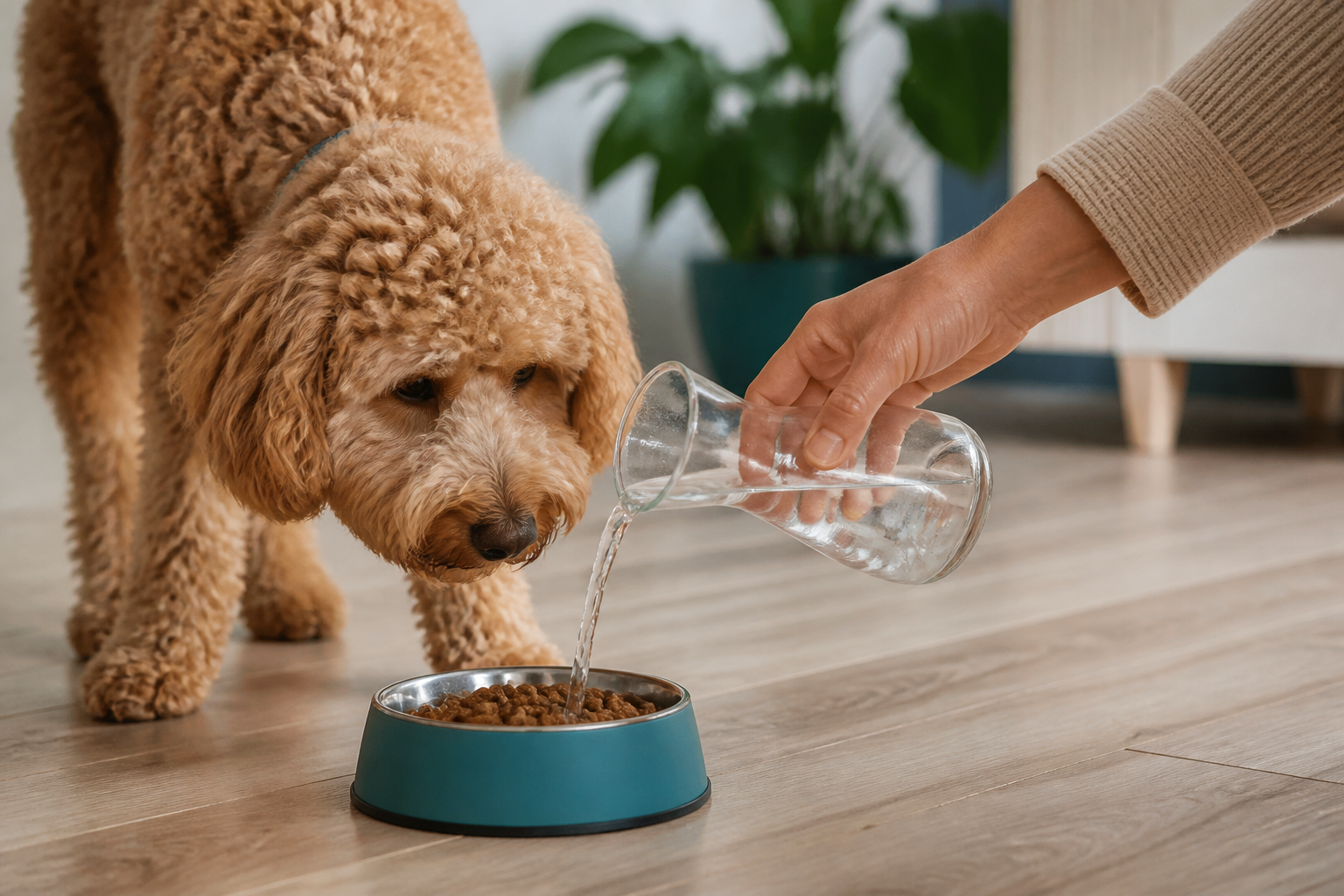
Step 2: Add warm water. / Use filtered water if possible. The water should be warm to the touch but never hot enough to burn your dog's mouth.
Step 3: Use the right ratio. / A good starting point is one-quarter cup of water for every one cup of dry food. You can add more if your dog prefers a soupier consistency.
Step 4: Let it sit. / Allow the food to soak for 3 to 5 minutes if you want the pellets to soften completely. If your dog likes a little crunch, serve it immediately after mixing.
Step 5: Monitor the meal. / Watch how your dog reacts. If they seem hesitant about the texture, start with just a tablespoon of water and work your way up over several days.
- Always use fresh water for every meal.
- Check the temperature with your finger before serving.
- Wash the bowl immediately after the dog finishes.
For another look at preparing hydrated meals, read how to wet dry dog food for better digestion and hydration.
Tailoring to Different Life Stages
The choice to add water often depends on your dog's age and specific health needs. We carry over 500 brands to support these different stages, and many of them pair perfectly with hydration.
Puppies and the Weaning Process
Puppies have small, sensitive teeth and high energy needs. When transitioning from mother's milk to solid food, a "gruel" made of puppy kibble and warm water is essential. It bridges the gap between liquid and solid nutrition, making it easier for their developing digestive systems to process the new proteins. Our puppy supplies section can help you find age-appropriate essentials.
Senior Dogs and Dental Issues
As dogs age, they may develop gum sensitivity, missing teeth, or cracked molars. Crunching on hard kibble can actually be painful for them. Softening the food allows them to continue eating the high-quality dry food they enjoy without the physical discomfort. For seniors, we also suggest looking into supplements like Senilife or Cosequin to support their overall wellness alongside their hydrated meals.
Dogs with Health Conditions
For dogs managing kidney disease or frequent urinary tract infections, hydration is a medical necessity. Your veterinarian might prescribe a specific diet from brands like Royal Canin or Farmina Vet Life. Our dog pharmacy carries many of these prescription diets and FDA-approved medications. Adding water to these specific diets is often encouraged by vets to maximize the therapeutic benefits of the food.
Healthy Alternatives to Plain Water
If you want to provide even more nutrition, you do not have to stick to plain tap water. There are several "toppers" that can make the meal even more beneficial.
Bone Broth for Dogs
Brands like The Honest Kitchen offer bone broths specifically formulated for pets. Unlike human broth, these do not contain onions, garlic, or excessive salt, which can be toxic to dogs. Bone broth adds collagen, glucosamine, and a massive burst of flavor. It is an excellent way to support joint health while hydrating the meal. Our selection of Stella & Chewy's products includes meal toppers and bone broth options.
Goat Milk
Raw or dehydrated goat milk is often called "universal milk" because it is so easy for dogs to digest. It is packed with probiotics and enzymes that support gut health. Adding a bit of rehydrated goat milk to kibble is a great way to help a dog with a sensitive stomach.
Wet Food Mixers
If you want to keep it simple, you can mix a bit of canned food from brands like Tiki Cat or Stella and Chewy's with your dry kibble and a splash of water. This creates a variety of textures and flavors that can keep a picky eater interested for years. For more ideas, read about mixing wet and dry dog food.
Bottom line: While plain water is excellent, using bone broth or goat milk can add functional nutrients like probiotics and joint support to your dog's daily routine.
When to Consult Your Veterinarian
While adding water is generally safe, changes in your dog's eating habits should always be monitored. If your dog suddenly refuses to eat dry food unless it is soaked, they may have an underlying dental issue like a broken tooth or an abscess.
If you find yourself needing to add water because your dog seems constantly dehydrated, this could be a sign of an underlying condition like diabetes or kidney issues. Our team at BaxterBoo always recommends a quick check-in with your vet if you notice sudden changes in thirst or appetite. If your vet does prescribe a specific medication or a prescription diet to manage a condition, you can easily find those through our pet pharmacy.
Vet Tip: Always mention your feeding routine during annual checkups. Your vet can give you a specific water-to-kibble ratio based on your dog's weight and any health conditions they may be managing.
Conclusion
Adding water to dry dog food is a simple, cost-effective way to improve your pet's health and mealtime enjoyment. Whether you are helping a senior dog eat more comfortably, encouraging a picky eater, or ensuring your active pup stays hydrated, a little bit of moisture goes a long way. Just remember to keep things clean, discard uneaten food promptly, and monitor your dog's dental health.
At BaxterBoo, we are here to help you find the best path for your pet. From premium kibble brands to hydrating bone broths and prescription diets in our pharmacy, we have the tools you need to keep those tails wagging. To start saving on your dog's favorite meals, consider signing up for our Autoship programme. You will get a discount on your first order and a free MVP Gold membership to help you earn rewards even faster.
FAQ
Can I use boiling water to soften my dog's food?
You should avoid using boiling water because it can destroy some of the heat-sensitive vitamins and probiotics added to the kibble. Additionally, boiling water takes a long time to cool down, increasing the risk that your dog might burn their mouth or throat if they dive in too early. Stick to warm water that is comfortable to the touch.
Does adding water to kibble cause bloat?
There is no direct evidence that adding water to kibble causes bloat; in fact, for dogs that eat too quickly, the liquid can help slow them down and reduce the amount of air they swallow. However, you should avoid vigorous exercise immediately before or after meals, regardless of whether the food is wet or dry. If your dog is a high-risk breed for bloat, discuss the best feeding methods with your veterinarian.
How long can I leave soaked dog food in the bowl?
Moistened dog food should be treated like fresh food and should not sit at room temperature for more than 30 to 60 minutes. After this window, the risk of bacterial contamination increases significantly, especially in warm weather. If your dog has not finished their meal within an hour, it is best to discard the leftovers and wash the bowl thoroughly.
Will adding water make my dog's stool soft?
When you first start adding water, you might notice a slight change in stool consistency as your dog's digestive system adjusts to the increased hydration. However, for most dogs, this change is temporary and actually leads to healthier, more regular bowel movements. If your dog develops persistent diarrhea, you should reduce the amount of water or consult your vet to rule out other issues.






