
 Save 15% on your 1st Autoship learn more

 Email us
 Live Chat
 FAQs
FAQs





Introduction
You have likely stood over your dog's bowl at least once and wondered if those hard nuggets are the most appetizing way for them to eat. Perhaps you have a new puppy with tiny teeth or an older companion who seems to struggle with the crunch. Maybe you just want to make mealtime more exciting for a picky eater. Adding water to kibble is a simple trick that can transform a dry meal into something much more palatable and hydrating.
At BaxterBoo, we see pet owners asking this question often. We know that the small details of meal preparation can make a significant difference in your dog's daily comfort and health. This post covers exactly how long to soak dry dog food, the best liquids to use, and why this simple habit might be a great choice for your pet. Soaking dry dog food is not only safe, but it can also provide several functional health benefits when done correctly.
The Short Answer: Is It OK to Soak Dry Food?
The simple answer is yes. It is perfectly fine to soak your dog's dry food in water. In fact, many veterinarians and nutritionists recommend it for various health and behavioral reasons. Dry kibble is very low in moisture, usually containing only about 10 percent water. By adding liquid, you are bringing that moisture content closer to what a dog would eat in a natural or raw diet.
Quick Answer: It is completely safe and often beneficial to soak dry dog food in water. Most experts recommend using warm water and letting it sit for 10 to 20 minutes to improve hydration, digestion, and aroma.
When you add liquid to kibble, the outer layer begins to break down almost immediately. For the moisture to reach the core of the nugget, it takes a bit more time. If you serve it too early, you have a wet crunch. If you wait too long, the food can become a soggy paste. Finding the right balance depends on your dog's preferences and the density of the food you use.
Why You Should Consider Soaking Dry Dog Food
Soaking food is not just about making it easier to chew. It serves several functional purposes that can improve your dog's quality of life. From hydration to digestive ease, the benefits are numerous for dogs of all ages. For more meal options, browse our dog food category.
Improved Hydration
Many dogs do not drink enough water throughout the day. This is especially true for active dogs or those living in warmer climates. By adding water directly to their food, you ensure they are getting a significant boost of hydration with every meal. Proper hydration supports kidney health and helps maintain a healthy coat.
Dogs with a history of urinary tract issues or kidney stones often need more water. If your dog is managing a chronic health condition, our dog pharmacy offers prescription products for veterinary-led care.
Enhanced Aroma and Flavor
Dogs experience much of the world through their sense of smell. Dry kibble straight out of the bag does not always have a very strong scent. Adding warm water releases the fats and aromas trapped in the dry nuggets. For a picky eater, this change in scent can be the difference between a full bowl and a skipped meal. This is particularly helpful for senior dogs whose sense of smell may be fading.
Digestive Support
Dry kibble expands in the stomach. When a dog eats their food too quickly, that expansion happens inside them. This can sometimes lead to discomfort, gas, or bloating. By soaking the food beforehand, you allow that expansion to happen in the bowl. This makes the nutrients more accessible and can lead to easier bowel movements.
Vet Tip: If your dog is prone to digestive upset or has a sensitive stomach, soaking their kibble can reduce the workload on their digestive enzymes. Always consult your veterinarian if your dog experiences persistent vomiting or diarrhea, as they may require a specialized prescription diet from our pet pharmacy.
Key Benefits of Soaked Kibble
- Increases daily water intake for better kidney function.
- Makes food easier to chew for puppies and senior dogs.
- Helps picky eaters by releasing natural meat aromas.
- Slows down dogs that eat too quickly.
- Allows kibble to expand before it reaches the stomach.
Key Takeaway: Soaking dry food is a versatile tool for managing hydration, encouraging picky eaters, and supporting overall digestive health.
How to Soak Dry Dog Food: A Step-by-Step Guide
To get the best results, you need a consistent process. Using the right temperature and the right ratio of liquid is key to creating a meal your dog will love. Follow these steps to ensure the food stays safe and nutritious.
Step 1: Measure the portion. / Use a consistent measurement to ensure your dog maintains a healthy weight. Check the feeding guide on your bag of Orijen, Acana, or Stella and Chewy's for the correct amount.
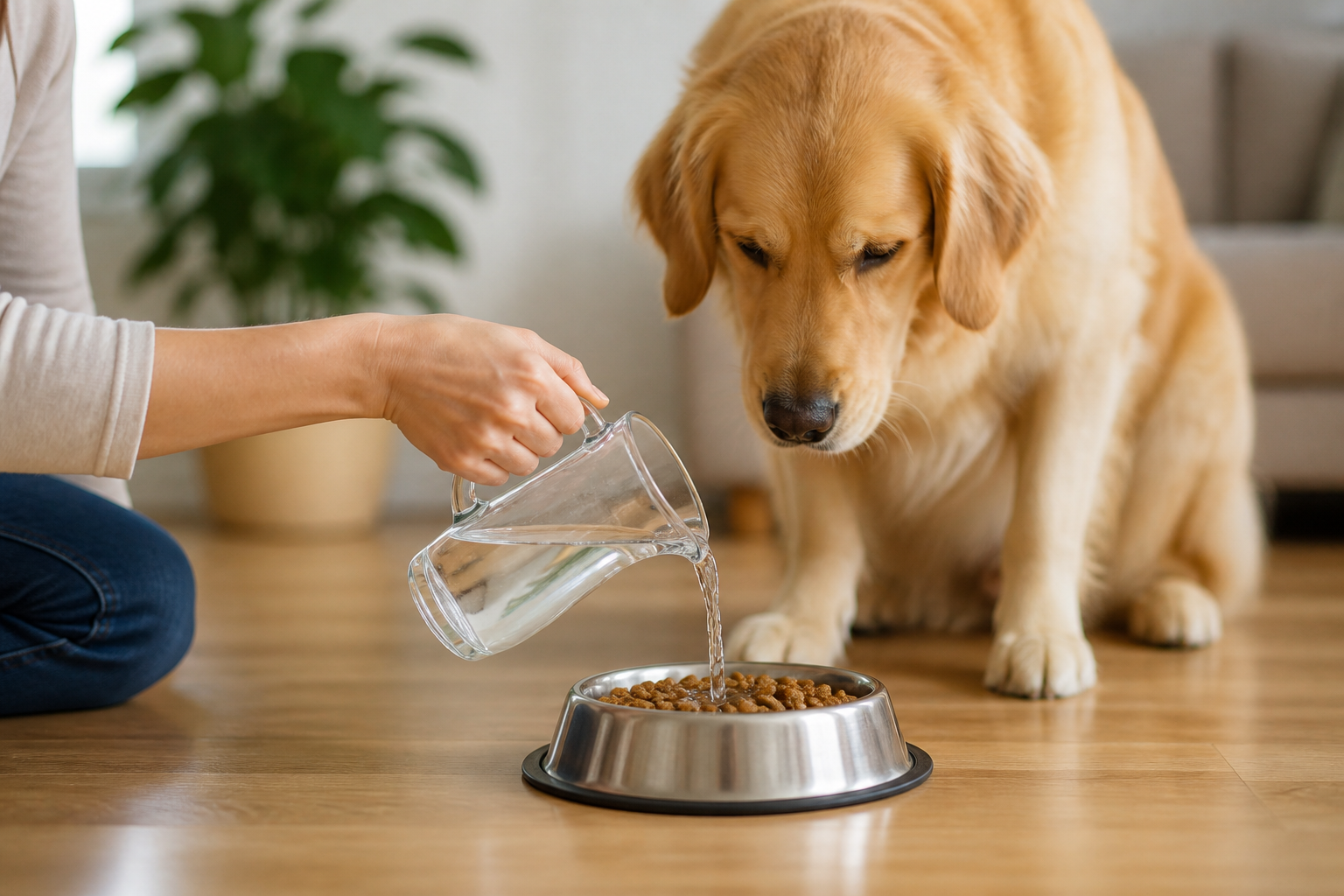
Step 2: Add your liquid. / Use a 1:1 ratio of liquid to food as a starting point. If you want a soupier consistency, add a bit more.
Step 3: Choose the right temperature. / Warm water is best. It speeds up the absorption process and helps release the food's natural aromas. Avoid boiling water, as it can damage some vitamins.
Step 4: Wait and observe. / Let the bowl sit for 10 to 20 minutes. You can cover the bowl to keep the heat in and prevent flies from landing on the food.
Step 5: Stir and serve. / Give the food a quick stir to distribute the moisture evenly. Your dog will likely enjoy lapping up the savory gravy that forms at the bottom.
Choosing the Best Liquid for Soaking
While plain water is the most common choice, it is not the only option. Depending on your dog's needs, you can use different liquids to add nutritional value or extra flavor. At BaxterBoo, we carry several mixers and toppers that can enhance this process.
Warm Water
This is the simplest and most cost effective choice. It provides hydration without adding extra calories. Always ensure the water is filtered if you have concerns about local tap quality. Warm water is more effective than cold water at breaking down the starches and releasing fats.
Bone Broth
Unsalted, onion-free, and garlic-free bone broth is a fantastic way to add collagen and minerals to your dog's diet. It is particularly good for senior dogs who need joint support. We carry options from brands like The Honest Kitchen and Open Farm that are specifically formulated for pets. Human versions often contain high levels of sodium and toxic ingredients like onions.
Goat's Milk
Raw goat's milk is often called a universal milk because it is highly digestible for most mammals. It is packed with probiotics and enzymes that support gut health. This is a popular choice for puppies or dogs recovering from an illness. It adds a creamy texture and significant nutritional value to a standard bowl of kibble.
Bottom line: While water is great for hydration, using bone broth or goat's milk can turn a standard meal into a nutritional powerhouse for your pet.
Specific Needs for Puppies and Seniors
The needs of a dog change as they move through different life stages. Soaking food is especially relevant during the two bookends of a dog's life: puppyhood and the senior years.
Transitioning Puppies to Solid Food
During the weaning phase, puppies move from their mother's milk to solid food. This is a big change for their small digestive systems. Soaking kibble until it is a mushy consistency makes it easier for them to lap up. It also mimics the moisture content of milk, making the transition less jarring. Most puppies can start eating dry kibble without water between 8 and 12 weeks of age. However, continuing to add a little water can still be beneficial for their hydration as they grow. For more guidance, read when puppies can start eating dry dog food.
Supporting Senior Dogs
Senior dogs often face dental challenges. They may have missing teeth, gum sensitivity, or dental disease that makes crunching hard kibble painful. Soaking the food removes this barrier to eating. Furthermore, senior dogs are more prone to dehydration and kidney issues.
If your senior dog is on medication for joints or heart health, our pet pharmacy can help. Through our partnership with Pet's Choice, we provide FDA-approved medications that can be delivered right to your door. Managing a senior dog's health often requires a combination of the right medication and a diet that is easy for them to consume and digest.
Common Mistakes and Safety Considerations
While soaking kibble is straightforward, there are a few pitfalls to avoid. Safety and hygiene are paramount when you introduce moisture to dry food. You can also review how to add water to dry dog food for additional mealtime guidance.
The Risk of Spoilage
Once you add water to dry food, you have essentially turned it into wet food. Wet food spoils much faster than dry food. Bacteria thrive in moist, warm environments. If your dog does not finish their meal within 30 to 60 minutes, you must pick up the bowl and discard the leftovers. Never leave soaked kibble out all day for "grazing."
Avoid Boiling Water
It might be tempting to use boiling water to speed up the soaking process. However, high heat can degrade certain vitamins and probiotics. Many premium brands like NutriSource or Farmina include temperature-sensitive nutrients that are best preserved with warm, not hot, water. Aim for a temperature that is comfortable to the touch.
Maintaining Bowl Hygiene
Soaked food leaves behind a sticky residue that dry food does not. This residue can quickly become a breeding ground for bacteria if the bowl is not washed thoroughly. You should wash your dog's bowl with soap and hot water after every single meal. This prevents the buildup of biofilm, which can cause skin irritations around your dog's mouth.
Identifying the Signs of Fermentation
If you leave soaked food out too long, it can begin to ferment. This is especially common in the summer months. Fermented food will have a sour or "off" smell. It might appear slimy or have a change in color. If you are ever in doubt about the freshness of the food, throw it out. It is not worth the risk of a stomach upset.
Key Takeaway: Treat soaked kibble like fresh food. Serve it immediately, discard leftovers quickly, and keep the bowls sparkling clean.
Factors That Change Soaking Time
Not every kibble reacts the same way to water. You may need to adjust your timing based on the specific product you use.
- Protein Density: Grain-free or high-protein recipes like those from Orijen or Ziwipeak are often denser. These may require the full 20 minutes to soften to the core.
- Kibble Size: Small breed kibble has more surface area and absorbs water very rapidly. It might be ready in as little as 5 minutes.
- Air-Puffed Kibble: Some budget-friendly brands use more air in the extrusion process. These nuggets act like sponges and soften almost instantly.
- Water Temperature: If you use room temperature water instead of warm water, expect the process to take twice as long.
Integrating Soaking into Your Routine
Consistency is key for dogs. They find comfort in knowing exactly when and how they will be fed. When you introduce soaking into your routine, try to do it at the same time every day. This helps regulate their digestive system and reduces mealtime anxiety.
If you find that your dog prefers the texture of soaked food but you are often in a hurry, consider using our Autoship programme. You can have your favorite kibble, bone broths, and even dental treats delivered on a schedule. This ensures you never run out of the supplies you need to prepare your dog's favorite meal. Plus, the MVP Rewards programme lets you earn points on every purchase, which can be used for future savings on premium brands.
The Myth of the "Kibble Crunch"
A common argument against soaking food is that dogs need the "crunch" of dry kibble to keep their teeth clean. While the abrasive texture of kibble can help scrape away some plaque, it is not a substitute for real dental care. Most dogs swallow kibble whole or break it into only a few pieces. This means the contact with the teeth is minimal.
If you are concerned about your dog's dental health, there are better ways to manage it than relying on dry food. Brushing their teeth, using dental toys, or providing specific dental treats like Greenies are much more effective. Our dental and breath care collection offers additional oral-care options.
Vet Tip: Do not rely on dry kibble for dental hygiene. If your dog has red gums, bad breath, or difficulty eating, they need a professional dental exam. Soaking food can help them eat comfortably while you wait for their appointment.
Summary of Soaking Best Practices
To wrap up, soaking dry dog food is a simple, effective way to boost your dog's health. It is especially useful for pets that need extra hydration, puppies transitioning to solids, and seniors with dental issues. By following a few safety rules, you can make every meal more enjoyable.
- Use warm water or pet-safe bone broth.
- Let the food soak for 10 to 20 minutes.
- Discard any uneaten portions after one hour.
- Wash bowls thoroughly after every meal.
- Consult your vet for any underlying health concerns or prescription diet needs.
At BaxterBoo, we are committed to helping you provide the best care for your pets. Whether you are looking for the perfect kibble from brands like Stella and Chewy's or need to manage a chronic condition through our pharmacy and Pet's Choice partnership, we are here to help.
FAQ
Does soaking dry dog food cause it to lose nutrients?
No, soaking food does not cause a loss of nutrients as long as your dog consumes the liquid along with the softened kibble. Any vitamins that might leach into the water are still ingested when the dog eats the meal. However, you should avoid using boiling water, as extreme heat can damage some heat-sensitive vitamins and probiotics.
Can I soak my dog's food overnight in the refrigerator?
Yes, you can prep soaked food in advance if you store it in the refrigerator. This is a great way to ensure the kibble is fully softened for a morning meal. However, you should never leave soaked food out on the counter overnight, as this allows dangerous bacteria to grow and could cause fermentation.
Is it okay to soak kibble if my dog has dental disease?
Yes, soaking kibble is highly recommended for dogs with dental disease. Softening the food makes it much easier for them to eat without pain. While it won't cure the dental issues, it ensures they continue to get the nutrition they need while you work with your veterinarian to address their oral health.
How much water should I add to the dry food?
A good starting point is a 1:1 ratio, meaning one cup of water for every one cup of kibble. If your dog prefers a thinner, soup-like consistency, you can add more. If they just need the nuggets to be slightly softened, you can use less. Experiment with different amounts to see what your dog enjoys most.






