
 Save 15% on your 1st Autoship learn more

 Email us
 Live Chat
 FAQs
FAQs





Introduction
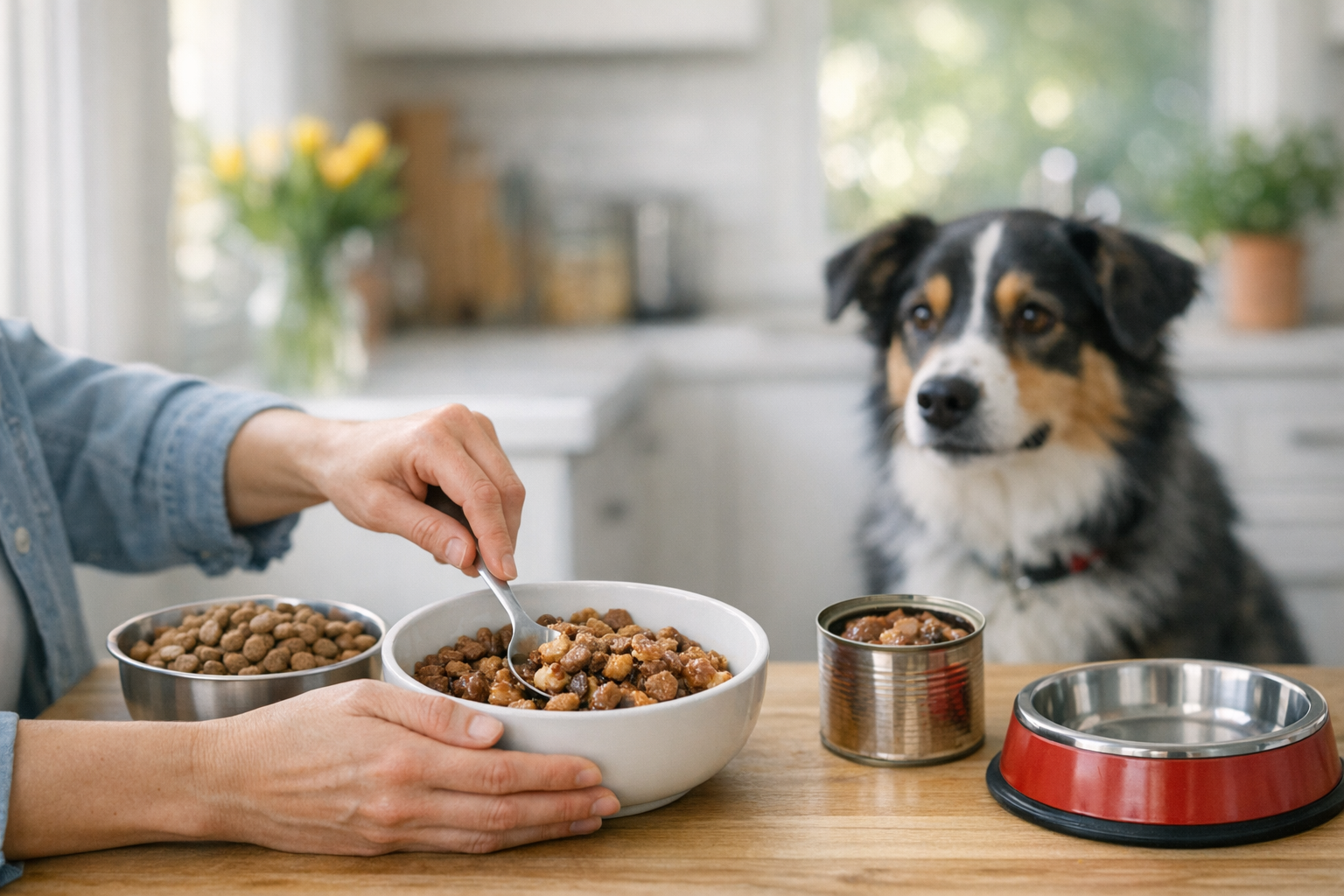
You are standing over your dog's bowl and they are staring back at you with a look of pure boredom. Maybe they have started walking away from their plain kibble or they seem to need more water in their diet. This is a common scene for many pet owners who visit our warehouse in Vernon Hills or shop with us online. At BaxterBoo, we hear from owners every day who want to make mealtime more exciting without compromising on health. The short answer is that mixing wet and dry food is not just okay. It is often a fantastic choice for your dog's hydration and appetite. This guide will walk you through the benefits of mixed feeding, the math of calorie counting, and how to safely transition your pup to a varied diet. If you want to start comparing options now, our dog food category is a great place to browse.
Quick Answer: Mixing wet and dry dog food is an excellent way to provide the dental benefits of kibble alongside the hydration and flavor of canned food. It is safe and healthy as long as both products are complete and balanced and you adjust the total portions to prevent weight gain.
The Benefits of a Mixed Diet
Feeding a combination of textures offers what many experts call the best of both worlds. Dry food is incredibly convenient and cost effective for most households. It is easy to store and can stay fresh in a bowl for longer periods than wet food. Many high quality dry foods are also formulated to help scrape away a small amount of plaque as the dog chews. This mechanical action is a helpful supplement to a regular brushing routine, and our dry dog food category makes it easy to compare formulas.
Wet food brings a different set of advantages to the table. It typically contains around 75 percent water. This is a massive boost for dogs that do not drink enough from their water bowls. It is also much more aromatic than dry kibble. When you open a can of food, the scent is immediate and strong. This helps jumpstart the appetite of dogs that have become picky or uninterested in their meals.
Improved Hydration for Kidney Health
Water is vital for every organ in your dog's body. Some dogs are simply not big drinkers. If your dog is prone to urinary tract issues or kidney stones, the extra moisture in wet food is a significant health benefit. By mixing a high moisture canned food or a pouch with their dry kibble, you ensure they are "eating" their water throughout the day.
Enhanced Palatability for Picky Eaters
If your dog has started to snub their nose at their bowl, the rich gravy or pate texture of wet food can act as a natural flavor enhancer. Rather than adding human table scraps that might cause digestive upset, mixing in a spoonful of "complete and balanced" wet food provides variety safely. The fats and proteins in wet food are often more accessible to a dog's sense of smell.
Cost Efficiency and Value
Feeding an all-wet diet to a large breed dog can become very expensive. By using dry food as the base and mixing in wet food as a topper or a portion of the meal, you get the benefits of premium canned food without the high daily cost. It allows you to stretch your budget further while still providing a high-quality culinary experience for your dog.
Key Takeaway: Mixed feeding combines the dental and cost benefits of dry kibble with the hydration and taste appeal of wet food, making it a versatile option for most healthy dogs.
Who Benefits Most from Mixed Feeding?
While most dogs can enjoy a mixed diet, certain groups of dogs see the most dramatic improvements in their quality of life.
Senior Dogs with Changing Needs
As dogs age, their senses often begin to dull. A senior dog might not be able to smell their dry kibble as well as they once did. This can lead to a lack of interest in eating, which causes weight loss and muscle wasting. Adding a smelly, warm, wet food can entice them back to the bowl. Furthermore, many senior dogs develop dental sensitivities or lose teeth. Softening their dry food with a wet mixer makes it much easier for them to chew and swallow.
Small Breeds and Dental Concerns
Small dogs are notorious for being picky eaters. They also have smaller jaws that can sometimes struggle with very large or hard kibble. Mixing a small amount of wet food helps soften the dry pieces and provides a texture that is easier for small mouths to manage.
Dogs Needing Weight Management
It might seem counterintuitive, but wet food can actually help with weight loss in some cases. Because wet food is so high in water, it has a lower "caloric density" than dry food. This means a dog can eat a larger volume of food for fewer calories, helping them feel full while they are on a restricted diet. If you are managing your dog's weight, our pet pharmacy is a useful place to look for prescription weight management diets.
Vet Tip: Always consult your veterinarian before changing the diet of a dog with chronic health issues like diabetes, kidney disease, or severe allergies. These conditions require precise nutrient ratios that must be maintained even when mixing food types.
The Math of Mixing: Avoiding Weight Gain
The most common mistake owners make when mixing food is simply adding a scoop of wet food on top of a full serving of dry food. This is a quick way to cause obesity. Every calorie counts. To do it correctly, you must subtract a portion of the dry food to make room for the wet food.
Understanding Caloric Density
Dry food is concentrated energy. One cup of kibble might contain 400 calories, while a standard can of wet food might also contain around 400 calories. If you want to replace half of the dry food with wet food, you cannot just use half a cup and half a can without checking the labels. Every brand and formula is different.
How to Calculate the Ratio
Step 1: Determine your dog's total daily calorie needs with your vet.
Step 2: Check the "kcal/kg" or "kcal/cup" on your dry food bag.
Step 3: Check the "kcal/can" on your wet food label.
Step 4: Decide on your ratio. A common starting point is 75 percent dry and 25 percent wet.
Step 5: Measure both portions exactly using a standard measuring cup and a scale if possible.
Key Takeaway: You must replace dry calories with wet calories rather than just adding them on top. Use the feeding guidelines on the packaging as a starting point, not a rule.
Safety and Nutritional Standards
When you are looking for food to mix, the most important phrase to look for on the label is "Complete and Balanced." This means the food has been formulated to provide every single nutrient a dog needs in the correct proportions.
Avoiding "Toppers" vs. Full Meals
There is a difference between a "meal mixer" and a "complete" wet food. Some products are sold as toppers or flavor enhancers. These are often just broth and meat without the added vitamins and minerals. If the label says "for supplemental feeding only," it should not make up more than 10 percent of your dog's daily calories. If it is labeled as "complete and balanced," you can use it for a larger portion of the meal.
Sticking to the Same Brand
While it is not strictly required, many experts recommend staying within the same brand when mixing. For example, if you feed NutriSource dry food, mixing it with our selection of NutriSource products ensures that the nutrient profiles are designed to work together. This is especially important for therapeutic diets.
The Role of Prescription Diets
If your dog is on a prescription diet for a condition like skin allergies or digestive issues, you must be very careful. Mixing a standard grocery store wet food into a prescription dry food can "dilute" the active ingredients that are helping your dog's condition.
Note: Our pharmacy at BaxterBoo, operated through our partnership with Pet's Choice, carries a wide variety of prescription foods. If your dog is on a therapeutic diet, always use the matching wet version of that prescription brand to ensure they are still getting their required medication or nutrient levels.
How to Successfully Transition Your Dog
Dogs have sensitive digestive systems. A sudden change in protein levels or fat content can lead to upset stomachs, gas, or diarrhea. This is especially true when moving from an all-dry diet to a mixed diet.
A Five-Day Transition Plan
- Day 1: 90 percent dry food, 10 percent wet food mixed in thoroughly.
- Day 2: 80 percent dry food, 20 percent wet food.
- Day 3: 70 percent dry food, 30 percent wet food.
- Day 4: 60 percent dry food, 40 percent wet food.
- Day 5: Your final desired ratio (e.g., 50/50 or 75/25).
Monitoring Digestion
During this week, keep a close eye on your dog's stool. If it becomes soft or if your dog seems gassy, slow down the transition. Some dogs need two weeks to adjust to the higher moisture and fat content of canned food. If you want a step-by-step companion read, our guide on how to switch from dry to wet dog food covers the transition in more detail.
Storage and Handling Safety
Wet food requires more care than dry food. Once a bag of kibble is opened, it can stay fresh in a cool, dry place for several weeks. Once a can of wet food is opened, the clock starts ticking.
Refrigeration is Non-Negotiable
Any unused portion of wet food must be covered and placed in the refrigerator immediately. Use a silicone can cover or transfer the food to an airtight glass container. Most wet foods should be used within 2 to 3 days of opening. If you notice a change in smell or color, throw it away.
The Two-Hour Rule
Unlike dry kibble, which can sit in a bowl all day (though we do not recommend "free feeding"), wet food will spoil quickly. Bacteria begin to grow as soon as the food hits the air and saliva from your dog's mouth. If your dog has not finished their mixed meal within two hours, you should pick up the bowl and discard the leftovers.
- Wash bowls after every mixed meal to prevent bacterial buildup.
- Keep open cans in the back of the fridge where it is coldest.
- Never leave wet food out in the sun or a warm room.
- Check expiration dates on cans regularly.
Exploring Different Textures
Mixing does not just mean "kibble plus mush." There are many ways to vary the experience for your dog. BaxterBoo carries a wide variety of formats to keep things interesting.
Pates and Loaves
These are the most common canned foods. They have a uniform, smooth texture. They are the easiest to mix thoroughly with kibble so that a picky dog cannot simply pick out the "good stuff" and leave the dry pieces behind.
Stews and Gravies
These contain visible chunks of meat and vegetables in a liquid base. The gravy is excellent for soaking into the kibble and softening it. This is a favorite for dogs that like to lap up their food.
Freeze-Dried Raw Mixers
Brands like Stella and Chewy's or Vital Essentials offer freeze-dried raw nuggets. These are technically dry but are designed to be rehydrated with water or broth before mixing. For more options in this category, our freeze-dried food category is a helpful place to browse.
Pouches and Toppers
Pouches are often smaller and perfect for a single-serving topper for small dogs. They are easy to open and do not require refrigeration of leftovers because there usually are none.
Key Takeaway: Experiment with different textures like pates, stews, and freeze-dried mixers to see what your dog prefers. Each offers unique benefits for hydration and engagement.
When to Avoid Mixing
While mixed feeding is great for most, it is not for every dog. If your dog has a history of severe pancreatitis, the higher fat content in many wet foods could trigger an episode. If your dog is prone to bloating, adding a large amount of wet food or water to their meal might lead to them eating too quickly and gulping air.
If you are using food as part of a training routine, dry kibble is much easier to use as a reward than messy wet food. In these cases, you might choose to feed a mixed meal for dinner but stick to dry kibble for breakfast and training sessions.
The Financial Side of Mixed Feeding
We know that pet care costs can add up. That is why we offer several ways to save while providing high-quality nutrition. Our MVP Rewards programme allows you to earn up to 5 percent back on every purchase, including your favorite wet and dry food brands.
If you find a combination your dog loves, our Autoship programme is a great way to ensure you never run out. You can save on your first order and maintain a consistent feeding schedule without having to remember to reorder every month. This is particularly helpful for wet food, which can be heavy to carry from a store. We deliver it right to your door from our warehouse.
Bottom line: Mixing wet and dry food is a cost-effective way to provide premium nutrition and variety without the high price tag of an all-wet diet. For more budget-friendly meal ideas, our discounted dog food guide is a smart next read.
Summary of Mixing Best Practices
To ensure your dog stays healthy and happy with their new mixed diet, keep these points in mind:
- Always use "Complete and Balanced" foods.
- Adjust your portions to account for the calories in both food types.
- Transition slowly over 5 to 7 days to avoid stomach upset.
- Store opened wet food in the refrigerator and use it within 72 hours.
- Wash bowls thoroughly after every meal.
- Consult your vet if your dog has underlying health conditions.
Mixing food is more than just a culinary upgrade. It is a way to support your dog's kidney health, keep their teeth functional, and ensure they actually enjoy their time at the bowl. Whether you are helping a senior dog maintain their weight or trying to convince a picky puppy to eat, the combination of wet and dry food is a proven strategy for success. If you want more ideas for moisture-rich meal support, our how to wet dry dog food guide is another useful companion read.
FAQ
Can I mix two different brands of dog food?
Yes, you can generally mix different brands of dry and wet food as long as both are labeled as complete and balanced for your dog's life stage. However, if your dog has a sensitive stomach or a therapeutic need, sticking to the same brand is safer. This ensures the nutrient levels do not clash or become unbalanced.
Does mixing wet food with dry food cause dental problems?
No, mixing wet food into a diet does not automatically cause dental issues. While dry kibble provides some mechanical cleaning of the teeth, it is not a substitute for regular brushing. As long as you maintain a dental care routine, the addition of wet food will not harm your dog's oral health.
How much wet food should I add to my dog's dry food?
A common ratio is 75 percent dry food and 25 percent wet food, but this depends on your dog's specific needs. You must check the calorie count on both labels to ensure you are not overfeeding. For example, if your dog needs 1,000 calories a day, you would provide 750 calories of dry food and 250 calories of wet food.
Can I leave mixed dog food out all day?
No, you should never leave food that contains wet ingredients out for more than two hours. Wet food spoils quickly and can attract bacteria or pests once it is exposed to the air. If your dog does not finish their meal in one sitting, pick up the bowl and discard the leftovers to keep your pet safe.






