
 Save 15% on your 1st Autoship learn more

 Email us
 Live Chat
 FAQs
FAQs





Introduction
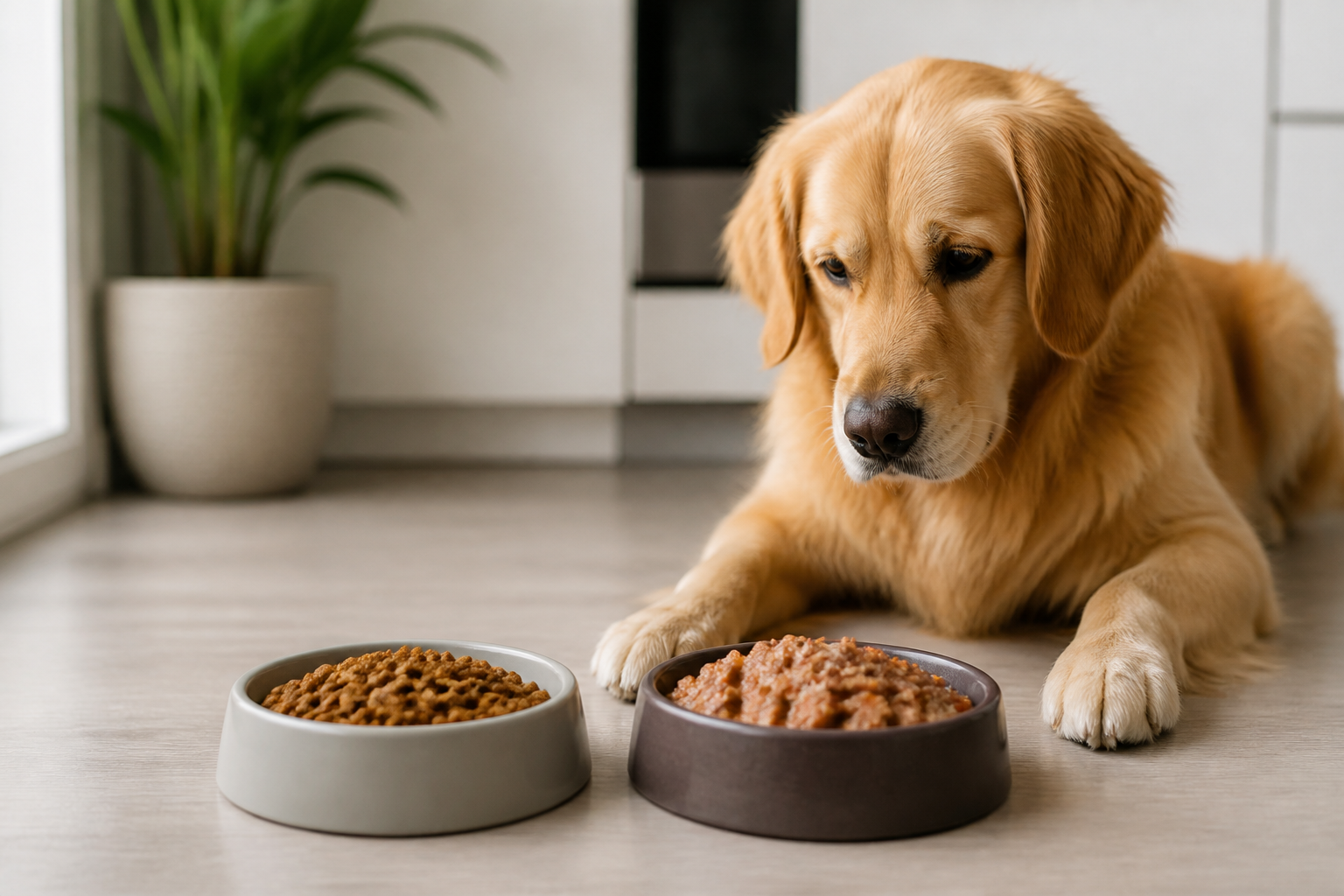
Standing in a pet food aisle or scrolling through endless online listings can feel like a test you did not study for. You want the best for your dog, but the sheer variety of cans, bags, and pouches is enough to make any owner hesitate. You might notice your dog seems bored with their current bowl, or perhaps you are welcoming a new puppy and want to start them on the right paw. At BaxterBoo, we have spent years helping pet owners navigate these exact choices. We know that every dog has unique needs based on their age, health, and activity level. This guide will break down the differences between wet and dry food to help you decide which is right for your home. We will look at nutrition, convenience, and how to choose based on your dog's specific health goals.
Quick Answer: Neither wet nor dry food is universally better for every dog. Wet food offers higher moisture and better flavor for picky eaters, while dry food provides convenience, cost savings, and support for dental health. The best choice depends on your dog's age, dental status, and specific hydration needs.
Understanding the Manufacturing Process
The main difference between these two food types starts long before the bowl. It begins with how the food is processed. This determines the texture, the moisture level, and even the shelf life of the product.
Wet dog food usually begins with ground protein sources. These are mixed with a gravy or sauce that contains essential vitamins, minerals, and often grains or vegetables. Once the mixture is combined, it is sealed in a can or pouch and sterilized using heat. This process ensures the food stays fresh without the need for heavy synthetic preservatives while it remains sealed. The result is a product with a very high moisture content, often between 75% and 78%.
Dry dog food, or kibble, follows a different path. The ingredients are mixed into a dough and then cooked under pressure. This dough is pushed through an extruder, which creates the specific shapes we recognize as kibble. After the shapes are formed, they go through a drying process to remove most of the water. Finally, the kibble is often sprayed with fats or oils to make it taste better and to provide necessary fatty acids. Dry food typically contains only about 10% moisture.
Key Takeaway: The primary difference between wet and dry food is the moisture content, which is a direct result of how the food is cooked and packaged.
The Benefits of Wet Dog Food
Wet food is often the go to choice for dogs who need a little extra encouragement at mealtime. Because it is cooked in its own juices, it has a much stronger aroma than dry kibble. This scent is very appealing to dogs, especially those whose senses might be dulling as they age.
Superior Hydration
One of the biggest advantages of wet food is the water content. Many dogs do not drink enough water throughout the day. This can be a concern for dogs with a history of urinary tract issues or kidney concerns. If your vet has recommended increasing your dog's fluid intake, wet food is a practical way to sneak extra hydration into their day.
Weight Management and Satiety
Wet food can also be a helpful tool for dogs that are always hungry. Because it is mostly water, wet food is less calorie-dense by volume than dry food. This means your dog can eat a larger portion of wet food without consuming as many calories as a smaller portion of kibble. The extra volume helps them feel full, which can reduce begging between meals.
Ease of Chewing
For senior dogs or those with dental issues, the soft texture of canned food is a relief. If a dog has missing teeth or painful gums, crunching down on hard kibble can be a deterrent to eating. Wet food requires very little chewing, making it an accessible option for dogs with oral health challenges.
Vet Tip: If your dog is struggling with chronic health issues like kidney disease or severe allergies, a prescription wet food might be necessary. Our pet pharmacy carries prescription diets that your veterinarian can help you select.
The Benefits of Dry Dog Food
Dry food remains the most popular choice for many American households for several practical reasons. It is generally the most cost-effective way to feed a dog, especially if you have a large breed that requires a lot of calories.
Dental Health Support
When a dog chews on crunchy kibble, the mechanical action helps scrape away a small amount of plaque and tartar. While it is not a replacement for regular teeth brushing or professional cleanings, it provides a daily bit of maintenance for the gums and teeth. Many owners prefer this over wet food, which can sometimes stick to the teeth and contribute to buildup if not managed.
For a deeper look at oral care, our dog health category is a helpful next stop.
Convenience and Storage
Dry food is incredibly easy to manage. You can measure out the exact amount your dog needs and leave it in the bowl for several hours without it spoiling. This makes it ideal for "grazers" who prefer to eat small amounts throughout the day. Once a bag is opened, it can stay fresh for weeks if stored in a cool, dry place inside an airtight container.
Mental Enrichment
Kibble is much easier to use with puzzle toys and slow feeders. If you have a high-energy dog, putting their dry food into a dispensing toy can provide 20 minutes of mental exercise. You cannot easily do this with wet food without creating a significant mess.
Bottom line: Dry food is the winner for convenience, cost, and basic dental support, making it a staple for busy families and large dogs.
Comparing Nutrients: The Dry Matter Basis
When you look at the labels on a can of wet food and a bag of dry food, the numbers can be misleading. A can might say it has 8% protein, while a bag of kibble says 25%. This does not mean the dry food has more protein. The difference is the water.
To truly compare the two, you have to look at the "Dry Matter Basis." This means looking at the nutrients once all the water is removed. When you do the math, you often find that wet food actually has a higher protein and fat content than dry food on a dry matter basis. This is because dry food requires more carbohydrates, like grains or potatoes, to hold the kibble shape together during the cooking process.
- Wet Food: Usually higher in protein and fat; lower in carbohydrates.
- Dry Food: Usually higher in carbohydrates; moderate protein and fat.
If your dog is on a high-protein diet or needs to avoid excess carbohydrates, wet food might actually be the better nutritional fit. Our dry dog food selection is a useful place to compare formulas.
Is One Better for Specific Life Stages?
The stage of your dog's life plays a major role in which food you should choose. Their nutritional needs change as they grow from a playful puppy to a sleepy senior.
Puppies
Puppies have very high energy needs and small stomachs. They need nutrient-dense food that supports bone and brain development. Many owners start with a mix of both. The wet food ensures they are getting enough calories and protein, while the dry food helps them get used to different textures.
If you are shopping for a young dog, our puppy shop can help you narrow the options.
Adults
For a healthy adult dog with no specific medical issues, the choice often comes down to owner preference and budget. Many people find that a high-quality dry food provides everything their dog needs.
Seniors
Senior dogs often benefit the most from a transition toward more wet food. As dogs age, their appetite may decrease. Their sense of smell fades, and they may develop dental pain. Wet food addresses all of these issues. It smells stronger, tastes better, and is easier to eat.
Key Takeaway: While both types can work for all ages, wet food is often particularly helpful for senior dogs who have lost interest in their kibble.
For more on older dogs, our post on should senior dogs eat wet or dry food? is a useful companion read.
The Strategy of Mixing Wet and Dry Food
You do not have to choose just one. In fact, many pet owners find that "topping" dry kibble with a few spoonfuls of wet food provides the best of both worlds. This is a great way to make a meal more exciting without the high cost of feeding a 100% wet diet.
Benefits of mixing include:
- Added moisture for hydration.
- Improved taste for picky eaters.
- Lower overall cost than an all-canned diet.
- Better texture variety.
If you decide to mix, you must be careful with calories. It is easy to accidentally overfeed your dog by adding wet food on top of their normal dry portion.
For practical step-by-step guidance, see our post on how to switch from dry to wet dog food.
How to Safely Transition or Mix Foods
Step 1: Consult your vet to find your dog's ideal daily calorie count. This ensures you are not causing weight gain.
Step 2: Start small. If you are adding wet food, replace a portion of the dry food rather than just adding it on top.
Step 3: Watch for digestive changes. Any time you change a dog's diet, their stomach needs time to adjust. A slow transition over 7 to 10 days is best.
Step 4: Monitor their weight. Check their ribs and waistline every few weeks to make sure the new balance is working.
Note: If your dog experiences persistent upset stomach during a food change, consult your veterinarian to rule out any underlying sensitivities.
Storage and Safety Tips
Proper storage is the only way to keep your dog's food safe and nutritious. Each type of food has different requirements.
Dry Food Storage
Keep kibble in its original bag if possible. These bags are designed to keep out moisture and light. Place the entire bag inside a plastic or metal airtight bin. Try to use the bag within six to eight weeks of opening. If the food smells "off" or sour, the fats may have gone rancid, and you should throw it away.
Wet Food Storage
Once a can is opened, it must be refrigerated. Use a silicone can cover or plastic wrap to keep it airtight. Opened wet food should be used within three to five days. Never leave wet food out in a bowl for more than an hour or two, as it can quickly grow bacteria in warm environments.
When to Talk to Your Veterinarian
While most healthy dogs do fine on either food, some situations require professional advice. If your dog has a chronic condition, their diet is part of their medical treatment.
You should consult a vet if:
- Your dog suddenly stops eating their usual food.
- Your dog has recurring urinary tract infections.
- Your dog is significantly overweight or underweight.
- Your dog has severe skin allergies or chronic ear infections.
Our pet pharmacy offers specialized prescription diets for dogs with specific health needs.
Cost Considerations and Value
Budget is a real factor for every pet owner. Generally, dry food is much more economical. A large bag of high-quality kibble can last a medium-sized dog a month or more. Wet food, because it is mostly water, requires you to buy much more volume to get the same amount of nutrition.
For owners of large dogs, a 100% wet food diet can be very expensive. In these cases, using wet food as a "topper" or a special treat is a great way to provide variety without breaking the bank. You can also save money by using our Autoship programme. This allows you to schedule regular deliveries of your favorite brands like NutriSource or Stella and Chewy's, ensuring you never run out while also saving on each order.
Comparing Wet vs. Dry Dog Food
| Feature | Wet Dog Food | Dry Dog Food |
|---|---|---|
| Moisture Content | High (75-78%) | Low (10-12%) |
| Shelf Life (Opened) | 3-5 days (refrigerated) | 6-8 weeks (airtight) |
| Palatability | Very High (aromatic) | Moderate |
| Dental Benefits | Minimal | Helps reduce plaque |
| Convenience | Lower (requires refrigeration) | High (can be left out) |
| Cost | Higher per serving | Lower per serving |
| Best For | Seniors, picky eaters, hydration | Large breeds, budget, dental health |
Summary of Recommendations
Choosing between wet and dry food does not have to be an all-or-nothing decision. Most dogs thrive on a high-quality dry food, but many benefit from the added moisture and taste of wet food.
- Choose Wet Food if: Your dog is a picky eater, a senior with dental pain, or needs more hydration due to kidney or urinary issues.
- Choose Dry Food if: You want a cost-effective, convenient option that supports dental health and works well with puzzle toys.
- Consider a Mix if: You want to give your dog the taste of wet food while maintaining the budget and dental benefits of dry kibble.
Our MVP Rewards programme is a great way to earn points on every food purchase, whether you choose cans or bags. You can earn up to 5% back, which helps make premium nutrition more affordable for your family.
Conclusion
The debate over wet versus dry food usually comes down to your dog's individual needs. There is no single answer that fits every household. If your dog is healthy, happy, and maintaining a good weight, you are likely already making a great choice. If you are looking to make a change, remember to do it slowly and keep your vet in the loop.
To help you get started with a new diet, we offer a $10 reward on your first order of $39 or more when you sign in at checkout. Whether you are looking for grain-free kibble or a savory canned stew, our selection of NutriSource products and selection of Stella & Chewy's products can help you find the right fit.
Bottom line: Focus on the quality of the ingredients rather than just the format of the food, and always ensure your dog has access to plenty of fresh water.
FAQ
Can I mix wet and dry food together in the same bowl? Yes, mixing them is a very common practice that many dogs enjoy. It adds variety and moisture to the meal while keeping costs manageable. Just be sure to calculate the total calories to avoid overfeeding, as the extra calories from the wet food can lead to weight gain if you do not reduce the kibble portion.
Does dry dog food actually clean a dog's teeth? Kibble provides some mechanical scraping that can help reduce the buildup of plaque and tartar, but it is not a cure for dental disease. It is much more effective than wet food, which can stick to the teeth. However, regular tooth brushing and professional veterinary cleanings are still necessary for long-term oral health.
Why is wet dog food so much more expensive than dry? Wet food is more expensive because of the higher cost of packaging (cans versus bags) and the fact that you are paying for a high percentage of water. Because it is less calorie-dense, you have to buy a larger volume of wet food to provide the same amount of energy as a smaller bag of dry kibble.
How long can I leave wet food in my dog's bowl? You should not leave wet food out for more than two hours at room temperature. Because it has high moisture and protein content, it can quickly become a breeding ground for bacteria. If your dog does not eat it within that time, it is best to throw the remainder away and wash the bowl.






