
 Save 15% on your 1st Autoship learn more

 Email us
 Live Chat
 FAQs
FAQs





Introduction
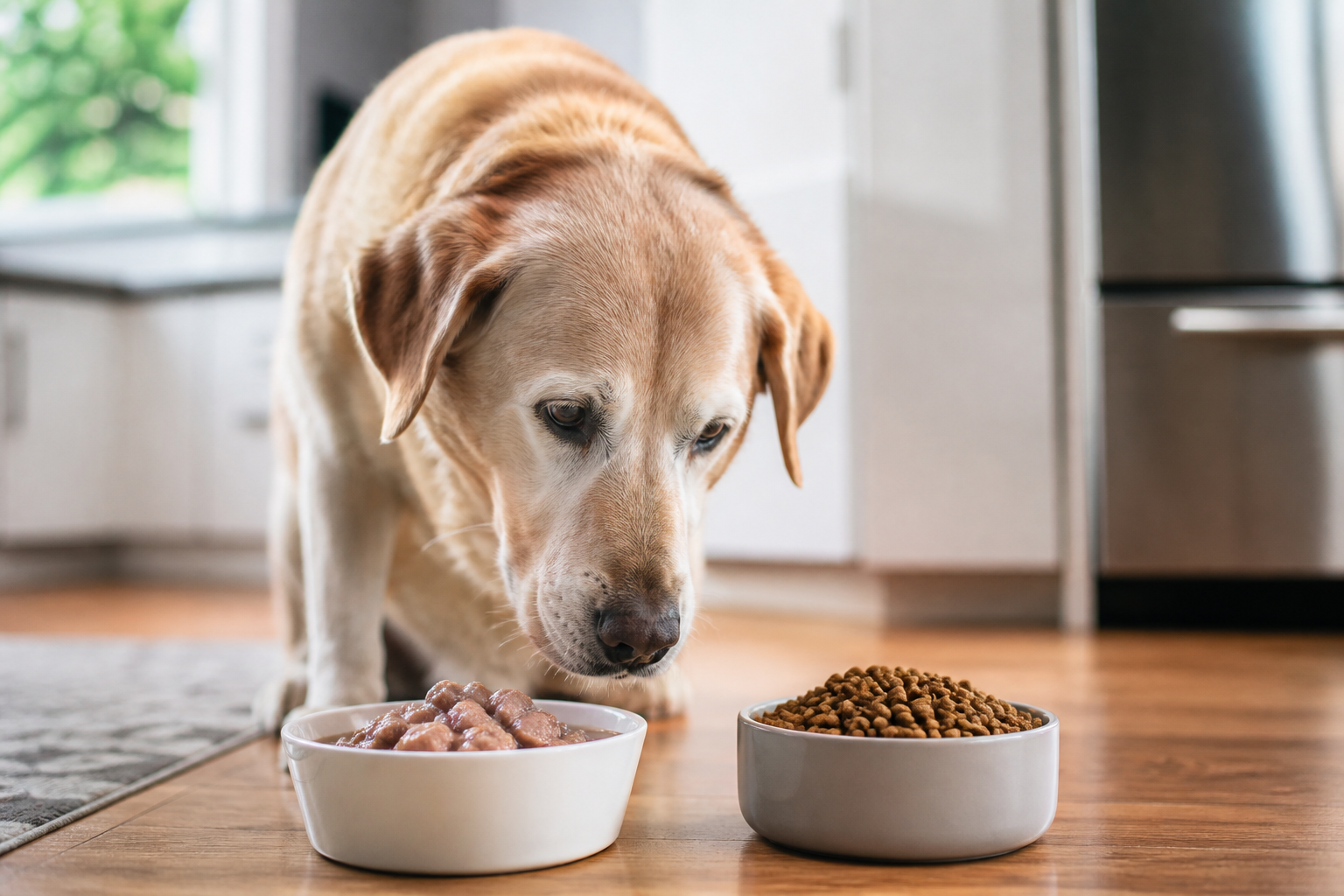
You might notice your dog is moving a bit slower during your morning walks. Maybe their once-enthusiastic dash to the food bowl has turned into a slow stroll. These subtle changes often signal that your companion is entering their golden years. At BaxterBoo, we know that nutrition is the most important tool you have to support a senior dog through these life changes. Choosing between wet and dry food is a common crossroads for pet owners. Some dogs need the crunch of kibble for dental health. Others require the high moisture and soft texture of canned food to manage health conditions or missing teeth. This guide explains the benefits of both formats to help you decide what belongs in your senior dog’s bowl. The best choice depends entirely on your dog’s dental health, weight goals, and underlying medical needs.
Quick Answer: Neither format is strictly better for every senior dog. Wet food is often ideal for dogs with dental pain or hydration needs, while dry food provides convenience and mechanical dental cleaning. Many owners find a combination of both offers the best balance of hydration and nutrition.
Understanding the Needs of an Aging Dog
As dogs age, their internal systems change just as much as their grey muzzles. Their metabolism usually slows down. This makes weight management a primary concern for many owners. However, very old dogs may actually struggle to keep weight on. Their ability to digest protein and fats can decrease over time. This means the quality of the ingredients matters more than ever.
Senior dogs also face a higher risk of dehydration. Their thirst drive can diminish. This puts extra strain on their kidneys and urinary tract. Joints also become a focus. Inflammation can make it harder for them to stand or walk to their bowl. We carry a wide range of senior dog food options from brands like Farmina and Royal Canin that address these specific life stage concerns.
Vet Tip: Schedule a wellness checkup including blood work once your dog reaches senior status. This helps identify kidney issues or early signs of disease that may require a specific prescription diet. Our pet pharmacy carries FDA-approved prescription pet foods through our partnership with Pet's Choice for these specific medical needs.
The Benefits of Wet Food for Seniors
Wet food is a popular choice for older dogs for several practical reasons. The most obvious benefit is the texture. If your dog has lost teeth or suffers from gum sensitivity, crunching through hard kibble can be painful. This pain can lead to a refusal to eat, which causes rapid weight loss and weakness.
Superior Hydration
Wet food typically consists of 75 percent to 80 percent moisture. For a senior dog with declining kidney function, this extra water is vital. It helps flush toxins from the system and supports urinary tract health. If your dog is not a big drinker, switching to canned food is an easy way to increase their fluid intake without a struggle.
High Palatability
A dog’s sense of smell and taste can dull with age. This often leads to a picky appetite. Wet food is much more aromatic than dry kibble. Warming it up slightly can release even more scent. This encourages dogs with a low appetite to finish their meals. Brands like Tiki Cat and Stella and Chewy’s offer high-protein wet options that appeal to even the most stubborn senior eaters.
Better Satiety
Wet food has more volume but fewer calories per ounce compared to dry food. This is helpful for senior dogs prone to obesity. They can eat a larger portion and feel full without consuming too many calories. It is a simple way to manage weight while still making the dog feel satisfied at mealtimes.
The Case for Dry Dog Food
Dry food remains the most convenient and cost-effective way to feed most pets. For a healthy senior dog with strong teeth, kibble still offers significant benefits. Many owners prefer it because it is easy to store and does not spoil as quickly as open cans.
Dental Health Support
The mechanical action of chewing dry kibble can help scrape away some plaque and tartar. While it does not replace a professional dental cleaning, it provides daily friction that wet food lacks. This is particularly useful for dogs who still have most of their teeth and are not prone to heavy tartar buildup. Our dog dental care category is a helpful place to explore related supplies.
Convenience and Cost
Kibble is generally more affordable when you look at the cost per serving. It also allows for "grazing" if your dog prefers to eat small amounts throughout the day. You can leave dry food out without the immediate risk of bacteria growth that comes with wet food.
Mental Enrichment
Dry food is much easier to use with enrichment toys. You can put kibble into slow feeders or puzzle toys. This keeps your senior dog’s mind sharp. Cognitive decline is a real concern for aging pets. Using their mealtime as a brain exercise is a great way to support their mental health.
Key Takeaway: Wet food excels at hydration and palatability for picky seniors. Dry food is superior for convenience and provides some mechanical cleaning for the teeth.
When to Consider a Prescription Diet
Sometimes, the choice between wet and dry food is dictated by a medical condition. Many senior dogs develop issues that require more than just "senior" labeled retail food. Common conditions include:
- Chronic Kidney Disease (CKD)
- Congestive Heart Failure
- Diabetes Mellitus
- Severe Food Allergies
- Advanced Osteoarthritis
In these cases, your veterinarian may prescribe a therapeutic diet. These foods are formulated with precise levels of minerals like phosphorus and sodium. Our pharmacy at BaxterBoo provides access to these specialized prescription diets through Pet's Choice. Whether your vet recommends a wet or dry prescription formula, we can help you get it delivered to your door.
Comparing Wet and Dry Food for Seniors
| Feature | Wet Food | Dry Food |
|---|---|---|
| Moisture Content | Very High (75-80%) | Low (Around 10%) |
| Ease of Chewing | Excellent for dental issues | Can be difficult for sore gums |
| Shelf Life | Short once opened | Long and stable |
| Aroma/Taste | Strong and appealing | Mild |
| Caloric Density | Low (Good for weight loss) | High (Good for weight gain) |
| Dental Cleaning | None | Minimal mechanical scraping |
The Best of Both Worlds: Hybrid Feeding
You do not always have to choose just one format. Many pet owners find success with hybrid feeding. This involves using dry kibble as the base and adding a wet food topper. This method provides the dental benefits of kibble while adding the aroma and hydration of wet food.
How to Transition Safely
If you decide to change your dog’s diet, do it slowly. A senior dog’s digestive system is often more sensitive than a younger dog's. Rapid changes can cause upset stomachs or diarrhea. For additional guidance, read how to switch from dry to wet dog food.
Step 1: Mix 25 percent of the new food with 75 percent of the old food. / Do this for two to three days while watching for changes in stool or energy. Step 2: Increase to a 50/50 split for another three days. / Ensure your dog is still eager to eat and not showing signs of gas. Step 3: Move to 75 percent new food and 25 percent old food. / Continue this for two days before moving to 100 percent of the new diet.
Managing Weight in Senior Dogs
Weight management is a delicate balance. Carrying extra pounds puts massive stress on aging joints. This can lead to a cycle of pain and decreased mobility. If your dog is overweight, wet food is often the better choice because of its high water content. It allows the dog to feel full while consuming fewer calories.
If your senior dog is losing weight unexpectedly, dry food might be better. It is more calorically dense. You can also look for high-protein options from brands like Orijen or Acana to help maintain muscle mass. Muscle wasting is common in older dogs. Keeping protein levels high is essential for their strength. A Farmina senior dry food formula is one option to compare with other senior diets.
Key Takeaway: Use wet food to help an overweight dog feel full. Use high-protein dry food to help a thin dog maintain muscle and weight.
Practical Tips for Feeding Senior Dogs
Feeding an older dog involves more than just the food in the bowl. Small adjustments to your routine can make a big difference in their comfort.
- Raise the Bowl: If your dog has arthritis in their neck or shoulders, bending down to the floor can be painful. Use an elevated feeder to bring the food to their level.
- Add Warm Water: If you use dry food but your dog is starting to struggle with the texture, add a little warm water or low-sodium broth. This softens the kibble and releases more aroma. For more ideas, see how to wet dry dog food for better digestion and hydration.
- Small, Frequent Meals: Some seniors find it hard to digest one or two large meals. Breaking their daily intake into three or four smaller portions can be easier on their digestive tract.
- Watch the Treats: It is easy to over-treat an aging dog. Ensure that treats do not make up more than 10 percent of their daily caloric intake.
Bottom line: Tailor the feeding method to your dog’s specific mobility and digestive comfort to ensure they enjoy their meals.
Common Nutritional Additives for Seniors
Many senior dog foods come pre-loaded with supplements. However, you may need to add more depending on your dog's health. Look for ingredients like glucosamine and chondroitin for joint support. Omega-3 fatty acids from fish oil are also excellent. They help reduce inflammation and support brain health.
We offer a variety of supplements from brands like Cosequin and Zesty Paws. These can be added to either wet or dry food. If your dog is on medication for a chronic condition, always check with your vet before adding new supplements. Our pharmacy is a great resource for managing these ongoing health needs.
Signs Your Dog Needs a Food Change
How do you know if it is time to switch from dry to wet or vice-versa? Watch for these specific signs:
- Dropping Kibble: If your dog picks up dry food and then drops it, they might have a painful tooth.
- Increased Thirst: If your dog is constantly at the water bowl, they may need the extra hydration from wet food.
- Dull Coat: A dry, flaky coat can indicate a need for more healthy fats, often found in high-quality canned foods.
- Lethargy: If they seem less energetic after eating, the food might be too hard for them to digest easily.
If you notice sudden weight loss, a total loss of appetite, or frequent vomiting, consult your veterinarian immediately. These could be signs of underlying health issues rather than just a preference for a different food texture.
Why Quality Matters More Than Format
Whether you choose wet or dry, the quality of the ingredients is the most important factor. Avoid foods with vague "meat by-products" or excessive fillers like corn and soy. Senior dogs need easily digestible proteins like chicken, turkey, or fish.
At BaxterBoo, we handpick the brands we carry to ensure they meet high nutritional standards. We look for formulas that prioritize real meat and beneficial fiber sources like pumpkin or sweet potato. A high-quality diet can help manage common senior issues like constipation and muscle loss.
Vet Tip: Check the protein source on the label. Senior dogs actually need more high-quality protein than younger adults to prevent muscle wasting. Do not fall for the myth that seniors need low-protein diets unless they have specific kidney issues.
Summary of Senior Dog Nutrition
Choosing the right food for your senior dog is a deeply personal decision. It requires balancing their health needs with your daily routine and budget.
- Wet food is best for hydration, dental pain, and picky eaters.
- Dry food is best for convenience, dental maintenance, and mental enrichment.
- Hybrid feeding offers a balanced approach for many healthy seniors.
- Prescription diets are necessary for managing specific chronic illnesses.
By paying close attention to your dog’s changing body and appetite, you can adjust their diet to keep them comfortable. Our goal at BaxterBoo is to provide you with the products and knowledge to make these years as vibrant as possible. Whether you need a standard senior kibble or a specialized prescription formula from our pharmacy, we are here to support your dog’s journey.
FAQ
Is wet food better for a senior dog's kidneys?
Wet food is often recommended for dogs with kidney concerns because of its high moisture content. Proper hydration is critical for flushing the kidneys and maintaining urinary health in older dogs. However, if your dog has been diagnosed with kidney disease, your vet may recommend a specific prescription wet food with controlled phosphorus levels.
Can I soften dry dog food with water for my senior dog?
Yes, adding warm water or a pet-safe broth to dry kibble is an excellent way to help a senior dog eat. This makes the food easier to chew for dogs with dental issues and increases their overall water intake. It also enhances the smell of the food, which can help stimulate the appetite of a picky eater.
Why is my senior dog suddenly picky about their dry food?
Sudden pickiness in a senior dog is often related to dental pain or a declining sense of smell. They may find the hard texture of dry food painful to chew, or they may simply no longer find the scent enticing. It is important to rule out medical issues with a vet visit, as a loss of appetite can also signal underlying health problems.
Does dry food really keep a senior dog's teeth clean?
Dry food provides some mechanical scraping that can help reduce tartar, but it is not a substitute for dental care. Many senior dogs chew their food minimally, which limits the dental benefits of kibble. Regular tooth brushing and professional veterinary cleanings remain the most effective ways to manage your senior dog's oral health.






