
 Save 15% on your 1st Autoship learn more

 Email us
 Live Chat
 FAQs
FAQs





Introduction
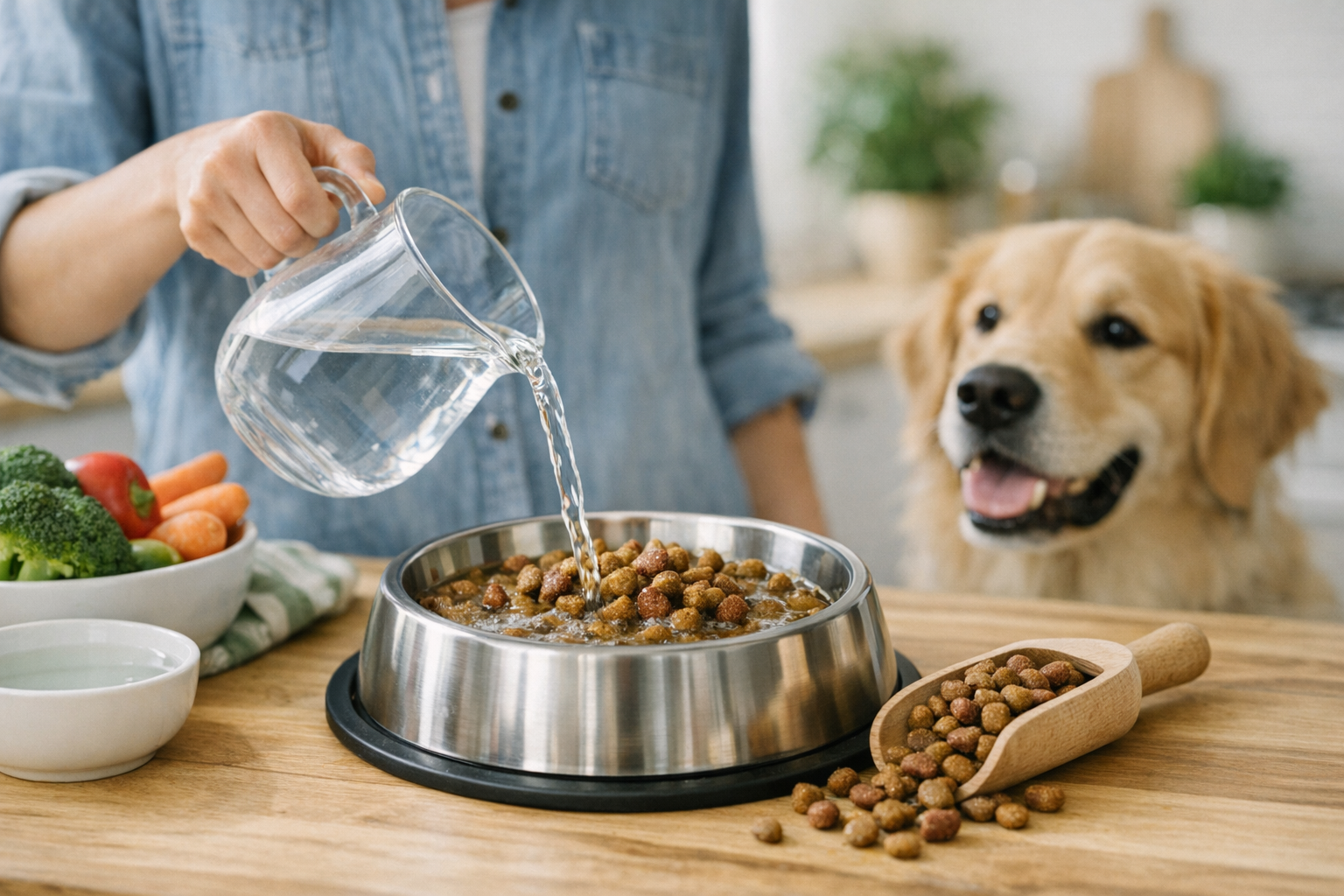
You might find yourself standing over your dog's bowl, watching them sniff their kibble and walk away without a bite. Or perhaps you have a senior dog who seems to struggle with the hard texture of dry food. These moments lead many pet owners to wonder if a simple splash of water could solve the problem. In our dog food category, we talk to pet owners every day who are looking for ways to make mealtime more enjoyable and nutritious for their dogs. Adding water to dry food is a common practice that can offer several benefits, from better hydration to enhanced flavor. This guide will cover the pros and cons of moisturizing kibble, how to do it safely, and when it might be time to consider a different approach. Adding water to dry dog food is generally safe and often beneficial as long as you follow basic food safety steps.
Quick Answer: Yes, you can mix dry dog food with water to improve hydration, enhance aroma, and make kibble easier to chew. It is especially helpful for picky eaters, puppies, and senior dogs with dental issues, provided the food is served immediately and not left to sit.
The Benefits of Adding Water to Kibble
One of the most immediate reasons to add water to a dog's meal is to increase their daily fluid intake. Many dogs are notorious for not drinking enough water from their bowls, which can lead to concentrated urine or more serious kidney concerns over time. By incorporating moisture directly into the food, you ensure your dog gets a healthy dose of hydration with every meal.
Texture is another significant factor. For a puppy transitioning to solid food, hard kibble can be tough on sensitive gums. If you're shopping for age-appropriate meals, our puppy food category is a helpful place to start. Similarly, senior dogs with missing teeth or gum disease often find crunchy pellets painful to chew. Softening the food with a little liquid allows these dogs to eat comfortably and maintain their weight.
The scent of the food also changes when you add water. Most dry dog food has a fat coating that releases a stronger aroma when it becomes damp or warm. For a picky eater or a dog with a fading sense of smell, this increased scent can be the difference between a skipped meal and a finished bowl. If that sounds familiar, our related guide on what dry dog food is best for picky eaters may give you more ideas.
Key Takeaway: Adding water to kibble is a simple way to boost hydration and make meals more attractive to dogs that have a low thirst drive or reduced appetite.
Potential Drawbacks and Safety Concerns
While adding water is helpful, it does change how you manage your dog's feeding routine. The biggest risk is spoilage. Dry kibble is shelf-stable because it has very low moisture content. Once you add water, you create a perfect environment for bacteria and mold to grow. This is particularly important during the summer months or in warm climates. You cannot leave moistened food out all day for a dog to graze on.
There is also the matter of dental health. Many people choose dry food because the mechanical action of chewing hard kibble can help scrape a small amount of plaque from the teeth. When you soak the food until it is mushy, you lose this minor benefit. If your dog only eats softened food, you will need to be even more diligent about their regular dental care routine, including brushing and professional cleanings.
Finally, consider the mess. Wet kibble can get stuck in long facial hair or ears, and enthusiastic eaters might splash the mixture onto the floor. If the mixture dries on the side of the bowl or the kitchen tile, it becomes much harder to clean than dry crumbs.
How to Safely Mix Water and Dry Food
If you decide to try this with your dog, doing it correctly ensures they get the most benefit without any digestive upset.
Step 1: Measure the dry food. / Use your regular measuring cup to ensure you are providing the correct portion for your dog's weight and activity level.
Step 2: Add filtered water. / Start with a small amount, such as two to three tablespoons per cup of kibble. Use filtered water to avoid adding unnecessary chlorine or minerals to their diet.
Step 3: Use warm, not hot, water. / Warm water helps release the food's natural aromas more effectively than cold water. Never use boiling or very hot water, as this can burn your dog's mouth and may degrade some of the heat-sensitive vitamins in the food.
Step 4: Let it sit for a few minutes. / Give the water about five to ten minutes to soak into the kibble. This results in a uniform texture rather than just having a puddle at the bottom of the bowl.
Step 5: Clean the bowl immediately. / Once your dog finishes, wash the bowl with soap and hot water. Any leftover damp food should be thrown away after 30 to 60 minutes to prevent bacterial growth. A slow feed dog bowl can also help keep mealtime calmer if your dog eats too quickly.
Vet Tip: If your dog is on a prescription diet for a medical condition like kidney disease or urinary stones, consult your veterinarian before adding water. They may want you to use a specific amount of liquid or recommend a prescription wet food instead.
When to Consider Alternatives Like Bone Broth
Plain water is the most cost-effective option, but it is not the only way to hydrate dry food. Many owners at BaxterBoo prefer using bone broth specifically formulated for pets. Unlike human broth, pet-safe versions do not contain onions, garlic, or excessive salt, which can be toxic or harmful to dogs.
Bone broth provides added nutrients like collagen and amino acids that support joint health and digestion. It also offers a much stronger flavor profile than plain water. This is an excellent choice for dogs recovering from an illness or those who need a little extra encouragement to finish their meals. You can also browse our food topper collection for other mealtime enhancers.
Another option is mixing wet canned food with dry kibble. This provides a variety of textures and can be more convenient than waiting for water to soak in. We often recommend this for owners who want the dental benefits of dry food combined with the high moisture and protein content of wet food.
Managing Special Life Stages and Health Needs
The decision to add water often depends on your dog's life stage. Puppies frequently benefit from "kibble soup" when they are first learning to eat solids. It bridges the gap between their mother's milk and the crunch of adult food. If you're comparing options for younger dogs, our article on when puppies can eat dry dog food is a useful follow-up.
Senior dogs are the other group that benefits most. As dogs age, they may develop cognitive changes or a decreased interest in food. The extra smell and softer texture can make mealtime less of a chore. For seniors managing chronic health issues, the extra hydration supports kidney and bladder function. Our senior dog food collection is a natural next step if you want to compare age-focused recipes.
Key Takeaway: Tailoring the moisture level of food to your dog's age and physical ability can improve their quality of life and ensure they receive proper nutrition throughout their senior years.
If your dog has a specific health condition, you might be using a therapeutic diet. Our pet pharmacy carries a wide range of prescription pet foods and medications. These foods are designed to manage issues like food allergies, weight management, and digestive sensitivities. Always check with your vet before adding water to a therapeutic diet, as the moisture level can sometimes affect how the nutrients are absorbed.
Transitioning and Monitoring Your Dog
Any time you change how you feed your dog, you should watch for changes in their digestion. Adding water increases the volume of the food in the stomach, which might make some dogs feel full faster.
If your dog has a history of bloat or deep-chested anatomy, talk to your vet about the best feeding practices. While adding water was once thought to help prevent bloat, some modern research suggests that very fast eating or certain types of moistened food might actually be a risk factor for some individuals. A slow feeder bowl can be used even with moistened food to help your dog eat at a safer pace.
Watch your dog’s stools as well. While the extra hydration is usually good, a sudden increase in water intake can sometimes lead to softer stools during the first few days. If the diarrhea persists or your dog seems uncomfortable, go back to dry feeding and consult a professional.
- Start with a small amount of water to test your dog's interest.
- Monitor their weight to ensure they are still eating their full portions.
- Check their gums and teeth regularly for any signs of redness or plaque buildup.
- Maintain a consistent feeding schedule to prevent food from sitting out.
Bottom line: Adding water is a safe way to enhance mealtime, but it requires a commitment to cleanliness and immediate serving to keep your dog healthy. If you're looking for an easy way to keep kibble and toppers coming on a routine, our Autoship programme can help.
Conclusion
Mixing water with dry dog food is a practical solution for many common feeding challenges. It helps dehydrated dogs get the fluids they need, makes kibble easier for seniors and puppies to manage, and can entice even the most stubborn picky eaters. We recommend starting with warm, filtered water and ensuring you never leave the mixture out long enough to spoil. If your dog needs a more specialized diet or a higher level of flavor, consider exploring our selection of pet-safe bone broths or wet food toppers. For those managing long-term health conditions, our pharmacy is available to help with prescription diets and medications.
Key Takeaway: Moisture is a vital part of canine nutrition, and adding it to dry food is an easy, effective way to support your dog's overall wellness. If you want to make every purchase work harder for your budget, our MVP Rewards programme is another smart next step.
FAQ
How much water should I add to my dog's dry food?
A good rule of thumb is to start with about one-quarter cup of water for every cup of dry kibble. You can adjust this based on your dog's preference; some dogs like a thick gravy consistency, while others prefer the food to be completely softened into a mash. Always ensure the food doesn't become so diluted that your dog struggles to finish the nutrient-dense portion of the meal.
Can I use hot water to soften my dog's kibble faster?
It is best to use warm water rather than boiling or hot water. High temperatures can cause painful burns to your dog's mouth and throat if they start eating before it cools. Additionally, excessive heat can break down some of the fragile vitamins and minerals that are sprayed onto the outside of the kibble during the manufacturing process.
Does adding water to dry food cause bloat in dogs?
The relationship between moistened food and bloat is complex and often depends on the specific dog and the type of food. In some cases, adding water can prevent a dog from "inhaling" their food too quickly, while in others, it might cause the kibble to expand in the stomach. If you have a high-risk breed, it is essential to discuss your specific feeding plan with your veterinarian.
How long can I leave moistened dry food in the bowl?
You should remove and discard any uneaten moistened food after 30 to 60 minutes. Because the water introduces moisture to a protein-rich environment, bacteria can begin to multiply rapidly, especially in warm indoor temperatures. Regular cleaning of the food bowl after every meal is necessary to prevent the buildup of biofilm and harmful pathogens.






