
 Save 15% on your 1st Autoship learn more

 Email us
 Live Chat
 FAQs
FAQs





Introduction
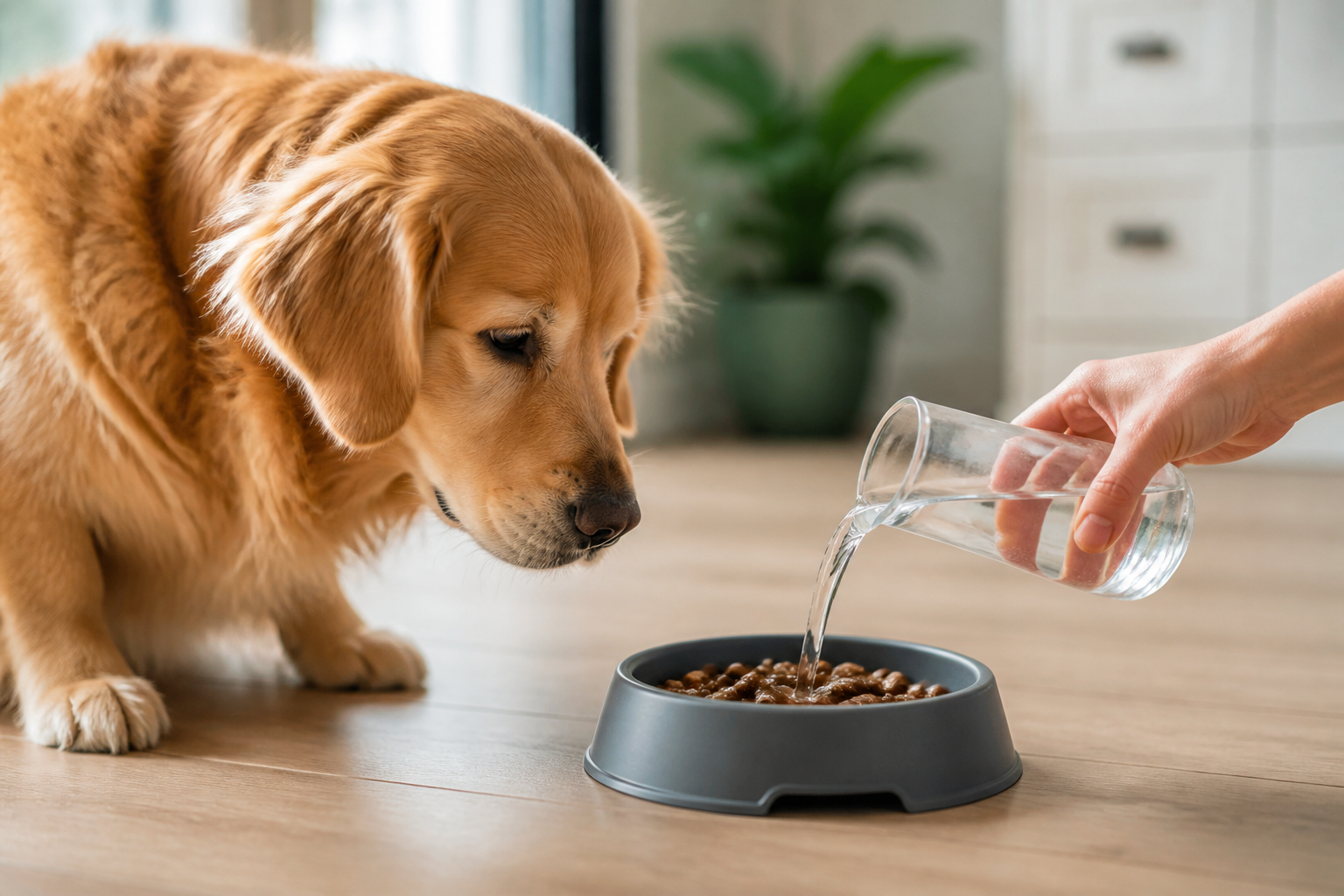
You stand in your kitchen and watch your dog stare at a bowl of dry kibble. Maybe they nudge a few pieces around or walk away entirely. You might wonder if a simple splash of water could make that meal more appealing or even healthier. This is a common question for many pet owners who want to ensure their dogs stay hydrated and well nourished. At BaxterBoo, we see this often with picky eaters, teething puppies, and senior dogs.
Adding liquid to dry food seems like a simple fix, but it changes the texture, aroma, and even the safety of the meal. This post covers the benefits of hydration, the potential risks of bacteria, and how to do it safely. You will learn whether a simple water soak or a nutrient-rich broth is the right choice for your dog.
Quick Answer: Hydrating dry dog food is generally beneficial for increasing water intake and improving palatability. However, you must serve it immediately to avoid bacterial growth and consult your vet if your dog has underlying health issues.
Why Hydration Matters for Dogs
Water is the most important nutrient in your dog’s diet. A dog's body is roughly 70 percent water. Every major organ and biological process relies on it. While most dogs drink from their water bowl, some do not consume enough moisture to stay fully hydrated. This is especially true for active dogs or those living in warm climates.
Kibble is very dry by design. Most dry dog foods contain only about 10 percent moisture. In contrast, canned food or raw diets often contain 70 percent or more. By adding water to the bowl, you are helping your dog meet their daily hydration goals without forcing them to drink more plain water. For more options, browse our dog food category.
Supporting Kidney and Bladder Health
Proper hydration is essential for flushing toxins from the body. When a dog is well hydrated, their kidneys can filter waste more efficiently. Diluted urine also reduces the risk of crystals or stones forming in the bladder. If your dog has a history of urinary issues, your veterinarian might even recommend a specific prescription diet. Our dog pharmacy carries specialized medications and prescription support.
Aiding the Digestive Process
Some owners find that adding water helps their dogs digest food more easily. The moisture softens the hard pellets before they hit the stomach. This may help the body break down the nutrients faster. For dogs that tend to "inhale" their food, the added liquid can also act as a natural speed bump. It forces them to lap up the moisture and chew the softened bits rather than swallowing whole kibbles.
Boosting Palatability for Picky Eaters
If you have a dog that turns their nose up at dinner, hydration might be the answer. Dry kibble is often coated in fats and flavor enhancers to make it smell good. When you add warm water to these pellets, it releases those aromas.
Dogs experience the world through their noses. A warm, fragrant meal is much more enticing than a cold, dry one. This is a great trick for dogs recovering from an illness or those with a naturally lower appetite. For additional ideas, read our guide to dry dog food for picky eaters.
Releasing Hidden Aromas
The heat from warm water helps to volatilize the fats on the surface of the kibble. This creates a gravy-like consistency that coats every piece. Even a small amount of liquid can turn a boring meal into a sensory experience for your dog.
Better Texture for Specific Needs
Some dogs simply do not like the crunch of dry food. This can be due to preference or physical discomfort. Softened food provides a consistent texture that is easier to manage.
Key Takeaway: Adding warm water to kibble releases aromatic fats and creates a gravy that can entice picky eaters and support hydration.
Life Stage Considerations
The decision to hydrate food often depends on your dog's age. Different life stages come with different physical challenges that moisture can solve.
Teething Puppies
Puppies have small, sensitive mouths. When they are losing their baby teeth and their adult teeth are coming in, chewing hard kibble can be painful. This often leads to "finicky" behavior that is actually just a response to discomfort.
Soaking the kibble for 15 to 20 minutes before feeding creates a mash. This allows the puppy to get the calories they need for growth without hurting their gums. It also ensures they are getting extra water during a high energy stage of life. Visit our puppy collection for age-appropriate essentials.
Senior Dogs and Dental Issues
As dogs age, they often develop dental disease or lose teeth. Hard kibble can be difficult for them to grind down. Many senior dogs also experience a decline in their sense of smell and taste.
Hydrating the food solves both problems. It makes the food easy to chew and boosts the smell. If your senior dog has stopped eating their dry food, try adding warm water before assuming they are just being picky.
Vet Tip: If your dog suddenly stops eating dry food but will eat soft food, schedule a dental checkup. They may have a cracked tooth or gum disease that requires professional care.
Potential Downsides of Hydrating Kibble
While hydration has many pros, it is not always the best choice for every dog. There are a few scientific and practical concerns to keep in mind.
The Risk of Bacterial Growth
The biggest concern with wet kibble is spoilage. Dry food is processed to be shelf stable because it has very little moisture. Once you add water, you create a perfect environment for bacteria to grow. Salmonella and Listeria thrive in warm, moist environments.
If you add water to the bowl and your dog does not finish it, you cannot leave it out. Bacteria can begin to multiply within 30 to 60 minutes. This is especially dangerous in the summer or in warm kitchens.
Impact on Dental Health
There is a long standing belief that dry kibble helps clean a dog's teeth through mechanical abrasion. While this effect is often overstated, soft food certainly provides no "scrubbing" action. If you switch to a fully hydrated diet, you must be more diligent about brushing your dog's teeth or providing dental chews.
Changes to the Gut Microbiome
Some studies have looked at the effects of water softened food on dog health. One study involving beagles suggested that softened food might actually lead to higher levels of certain pathogenic bacteria in the feces compared to dry food. It also showed a slight increase in cortisol, which is a stress hormone. While this does not mean you should never hydrate food, it does mean you should monitor your dog for any signs of digestive upset, such as loose stools or gas.
Bottom line: Hydrated kibble must be treated like fresh food. Serve it immediately and discard any leftovers to prevent bacterial contamination.
How to Hydrate Dog Food Safely
If you decide to start hydrating your dog's food, do it systematically. Randomly dumping cold water into the bowl may cause your dog to reject the meal.
Step 1: Use Filtered Water
Use the same quality of water you drink. If your tap water has a strong chlorine smell or high mineral content, your dog might notice.
Step 2: Control the Temperature
Use warm water, not boiling water. Boiling water can destroy some of the vitamins and minerals added to the kibble. It also poses a burn risk to your dog's mouth. Warm water is best for releasing aromas and softening the pieces quickly.
Step 3: Determine the Ratio
Start with a small amount. A good starting point is one part water to four parts kibble. If your dog likes it, you can move toward a 50/50 split.
Step 4: Let it Soak
Do not serve it the second the water hits the bowl. Let it sit for at least 10 minutes. This allows the water to penetrate the center of the kibble. This creates a uniform texture rather than a crunchy center with a wet outside.
Step 5: Clean the Bowl
This is the most important step. Because of the bacterial risk mentioned earlier, you must wash the bowl with hot, soapy water after every single meal.
Moving Beyond Plain Water
Water is the easiest way to hydrate, but it is not the only option. Many owners use other liquids to add nutritional value.
Bone Broth for Dogs
Bone broth is a powerhouse of nutrition. It contains collagen, glucosamine, and amino acids. These are excellent for joint health and gut integrity. Stella & Chewy's Bountiful Bone Broth Dog Meal Topper is one option formulated for pets.
Do not use human bone broth. Broth made for people usually contains onions, garlic, and high levels of salt, all of which are toxic or unhealthy for dogs. Always choose a pet specific broth.
Goat Milk and Toppers
Goat milk is another popular choice. It is often called "universal milk" because it is highly digestible for many species. It provides probiotics that support immune health. You can also find liquid toppers designed to be poured over dry food to increase both moisture and calorie count.
Mixing with Wet Food
If your dog needs more moisture but you do not want to use water or broth, consider a "kibble plus" approach. Mixing a few tablespoons of high quality wet food with the dry kibble provides a variety of textures. Brands like Stella and Chewy's or The Honest Kitchen offer mixers that integrate perfectly with dry diets. You can also read about mixing dry dog food with wet food.
| Liquid Option | Primary Benefit | Best For |
|---|---|---|
| Warm Water | Hydration & Aroma | Everyday use, budget-friendly |
| Bone Broth | Joint & Gut Support | Seniors, active dogs |
| Goat Milk | Probiotics & Digestion | Puppies, sensitive stomachs |
| Wet Food Mixer | Texture & Protein | Picky eaters |
When to Consult Your Veterinarian
Changing a dog's diet should always be done with care. While adding water is generally safe, it can mask symptoms of larger health problems.
If your dog is refusing dry food, they might have a medical issue. This could include:
- Dental pain or abscessed teeth.
- Gastrointestinal distress.
- Kidney or liver disease.
- Nausea from a new medication.
If you are hydrating food because your dog seems perpetually dehydrated, your vet needs to check for conditions like diabetes or Cushing's disease. Our pharmacy carries medications for these chronic conditions once your vet provides a diagnosis.
Key Takeaway: Always rule out medical reasons for a loss of appetite before relying on food hydration to get your dog to eat.
Practical Tips for Busy Owners
Hydrating food takes a little more time than just scooping kibble. If you have a busy schedule, you can still make it work.
- Prep the liquid ahead of time: Keep a container of dog safe broth in the fridge.
- Use a slow feeder: If the softened food makes your dog eat too fast, a slow feeder bowl can help prevent choking.
- Try Autoship: If you find a specific broth or wet food mixer your dog loves, use our Autoship program. You will save on every order and never run out of your dog's favorite meal enhancers.
Note: If you travel with your dog, dry food is easier. Do not start a hydration routine right before a trip unless you are prepared to maintain it on the road.
Summary of the Hydration Debate
Deciding whether to hydrate your dog's food comes down to their individual needs. For many, it is a simple way to improve health and mealtime enjoyment.
- Hydrate if: Your dog is a senior, a puppy, a picky eater, or prone to urinary issues.
- Do not hydrate if: Your dog grazes throughout the day or if you cannot commit to cleaning the bowl after every meal.
- The middle ground: Use a small amount of warm water or broth once a day rather than at every meal.
Our MVP Rewards program is a great way to earn points on these purchases. You can use those rewards toward new bowls, high quality kibble, or those specialized bone broths.
Conclusion
Hydrating your dog's dry food is a practical way to support their overall wellness. It bridges the gap between the convenience of kibble and the health benefits of a high moisture diet. Whether you choose plain filtered water or a nutrient-dense bone broth, the goal is the same: a happy, hydrated, and well-fed companion.
Remember to watch for changes in your dog's digestion and keep those bowls clean. If your dog’s eating habits change significantly, always seek professional advice from your veterinarian.
- Start with warm, filtered water or pet-safe broth.
- Serve the meal immediately and discard any leftovers.
- Monitor your dog's teeth and gum health.
- Explore prescription options in our pharmacy for specific health needs.
For more specialized nutrition options, check out our full collection of dog food and mixers to find the perfect fit for your pet.
FAQ
Can I use cold water to hydrate my dog's food?
Yes, you can use cold water, but it will take much longer to soften the kibble. Warm water is generally preferred because it releases the fats and aromas that make the food more appetizing to your dog. Cold water may also be less appealing to dogs with sensitive teeth.
Does adding water to dry food cause bloat?
There is no definitive evidence that adding water directly causes bloat, but some studies suggest that foods containing citric acid should not be moistened. If your dog's food lists citric acid as a preservative, consult your vet before hydrating it. For most dogs, adding a moderate amount of water is considered safe and may even slow down fast eaters.
How long can I leave hydrated kibble in the bowl?
You should never leave hydrated kibble out for more than 30 to 60 minutes. Once moisture is added to the dry food, it becomes a breeding ground for harmful bacteria like Salmonella. If your dog does not finish their meal within an hour, discard the remains and wash the bowl thoroughly.
Is bone broth better than water for hydrating food?
Bone broth offers additional nutritional benefits that plain water does not, such as collagen and minerals that support joint and gut health. It also has a much stronger flavor which is helpful for very picky eaters. However, you must ensure the broth is specifically made for dogs and contains no onions, garlic, or excessive salt.






