
 Save 15% on your 1st Autoship learn more

 Email us
 Live Chat
 FAQs
FAQs





Introduction
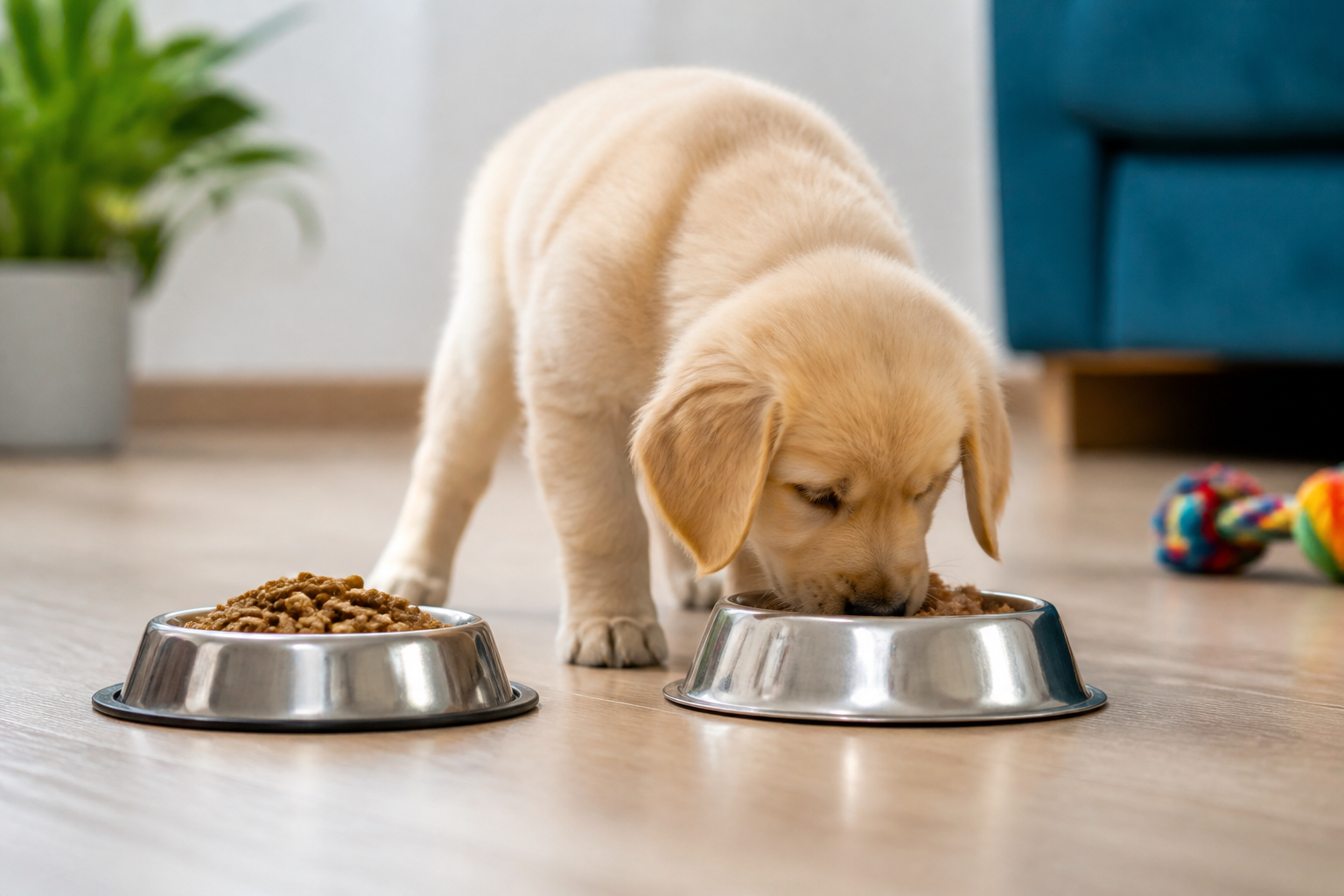
Standing in the pet food aisle can feel like a test you did not study for. You want your new puppy to have the best start in life, but the wall of cans and bags makes the choice difficult. You might wonder if those soft chunks in gravy are better for small teeth or if crunchy kibble is necessary for growth. If you are just getting started, our puppy food category is a helpful place to begin. Choosing between wet and dry food involves more than just a price tag or a fancy label. It is about hydration, dental health, and meeting the high energy needs of a growing dog. This article explores the benefits of each option to help you decide which bowl filler is right for your home.
Quick Answer: Puppies can thrive on both wet and dry food as long as the label states it is formulated for growth or all life stages. Wet food offers better hydration and is easier on teething gums, while dry kibble is more cost-effective and supports dental hygiene. Many owners choose to mix both to provide a variety of textures and flavors.
Understanding the Nutritional Needs of a Puppy
Puppies are not just small dogs. They are biological machines working overtime to build bone, muscle, and brain tissue. Because they grow so fast, they require more calories, protein, and fat than adult dogs. Any food you choose must meet the standards for growth set by the Association of American Feed Control Officials. If you want a broader place to compare options, our dog food category can help you sort by style and recipe.
The main difference between wet and dry options is the water content. Wet food often contains around 75 to 80 percent moisture. Dry food usually sits between 10 and 12 percent. This difference changes how much your puppy needs to eat to get the right amount of nutrients.
Caloric density is another factor. Kibble is very concentrated. A small scoop of dry food often has more calories than a large can of wet food. If you have a large breed puppy that needs to eat a lot, relying only on cans can become difficult. On the other hand, a tiny toy breed might struggle to eat enough hard kibble to meet their needs.
Key Takeaway: Always look for a nutritional adequacy statement on the package. It should specifically mention that the food is designed for puppies or for "all life stages" to ensure your pet gets the right vitamins and minerals.
The Benefits of Wet Puppy Food
Many puppies find wet food much more exciting than dry pellets. The cooking process for canned food preserves the natural scent of the meat. This makes it a great choice for puppies that are picky eaters or those who are feeling stressed in a new environment. For more perspective on balanced feeding, our guide to mixing dry dog food with wet food is a useful next step.
Hydration Support
If your puppy does not drink much water from their bowl, wet food can fill the gap. Proper hydration is vital for kidney function and digestion. It also helps keep their skin and coat healthy. Puppies are prone to playing hard and forgetting to stop for water, so getting moisture through their meals is a helpful safety net.
Gentleness During Teething
Puppies lose their baby teeth between four and six months of age. During this time, their gums can be very sore and inflamed. Biting down on hard kibble might actually be painful for them. Wet food is soft and requires very little chewing. It allows them to eat comfortably even when their mouth is tender.
Satiety and Weight Management
Wet food takes up more room in the stomach because of the water content. This helps a puppy feel full without overconsuming calories. If you have a puppy that always seems hungry, wet food can help them feel more satisfied after a meal. This is also helpful for breeds that are prone to early obesity.
Bottom line: Wet food is an excellent tool for hydration and palatability, especially during the difficult teething phase.
The Benefits of Dry Puppy Food
Dry kibble is the most common choice for many households for several practical reasons. It is processed by mixing ingredients into a dough, cooking it, and then pushing it through a machine to create specific shapes. If you want to explore a popular premium option, our selection of Orijen products is a good place to look.
Dental Health
When a puppy crunches on a hard piece of kibble, the mechanical action helps scrape away a small amount of plaque. While it is not a replacement for brushing, it can help slow down the buildup of tartar. Brands like Royal Canin or Farmina often design their kibble shapes specifically to encourage chewing, which is better for oral hygiene.
Convenience and Cost
Dry food is easier to store and typically costs less per serving. You can buy a large bag and it will stay fresh for weeks if kept in an airtight container. It also does not spoil quickly if left in the bowl. If your puppy is a "grazer" who likes to eat a few bites and then go play, kibble is much safer to leave out for a few hours than wet food.
Mental Stimulation
Kibble is very easy to use with training and puzzle toys. You can put dry pieces into a Kong or a slow feeder to make your puppy work for their meal. This provides essential mental exercise and slows down fast eaters. You cannot easily put wet stew into a rolling puzzle ball without making a massive mess.
Vet Tip: If your puppy eats their dry food too fast, they may swallow a lot of air or risk choking. Use a slow-feeder bowl or add a splash of warm water to the kibble to slow them down and make the food more aromatic.
Comparing Wet and Dry Puppy Food
| Feature | Wet Dog Food | Dry Dog Food |
|---|---|---|
| Moisture Content | High (75-80%) | Low (10-12%) |
| Shelf Life (Opened) | 2-3 days (refrigerated) | Several weeks (airtight) |
| Price Point | Generally higher | Generally lower |
| Ease of Chewing | Very easy | Requires effort |
| Dental Benefit | Minimal | Provides some cleaning |
| Aroma | Very strong | Mild |
The Hybrid Approach: Mixing Wet and Dry
You do not have to choose just one. Many pet parents find that a mix of both provides the best results. This is often called "topper feeding" or "mixed feeding." By adding a spoonful of wet food to a bowl of kibble, you get the dental benefits of the crunch and the hydration of the moisture. If you want a deeper breakdown, our blog post on how to switch from dry to wet dog food walks through the process.
This approach also prepares your puppy for the future. If they ever need to take medication, it is much easier to hide a pill in wet food if they are already used to eating it. It also prevents them from becoming too picky. A puppy that only eats one texture may refuse to eat if you ever have to switch their diet for medical reasons later in life.
How to Mix Correctly
When mixing, you must be careful not to overfeed. You cannot simply add a full can of wet food on top of a full serving of kibble. This will lead to rapid weight gain. You should replace a portion of the dry food with an equivalent amount of wet food based on calorie counts.
Step 1: Check the calorie count. / Look at the packaging for both the wet and dry food to see how many calories are in a cup or a can. Step 2: Determine the ratio. / Decide if you want to do a 50/50 split or just use the wet food as a small topper. Step 3: Adjust the portions. / If you add 100 calories of wet food, you must remove 100 calories of dry food from the bowl.
Key Takeaway: Mixing wet and dry food offers a balance of nutrition, hydration, and dental care while keeping mealtime interesting for your puppy.
Transitioning Between Food Types
If you decide to switch from wet to dry, or vice versa, you must go slowly. A puppy’s digestive system is very sensitive. A sudden change can lead to an upset stomach, vomiting, or diarrhea. Our guide to puppies eating dry dog food is a helpful companion if you are moving toward kibble.
We recommend a transition period of at least seven to ten days. Start by mixing about 25 percent of the new food with 75 percent of the old food. Every two days, increase the amount of new food slightly while decreasing the old food. This gives the healthy bacteria in your puppy's gut time to adapt to the new ingredients and textures.
If you notice your puppy having soft stools, slow down the process. Stay at the current ratio for a few extra days until their digestion stabilizes. If the upset stomach persists or your puppy seems lethargic, it is time to call your veterinarian.
Vet Tip: During any food transition, keep an eye on your puppy's energy levels and skin. Sometimes a new protein source or a different processing method can trigger allergies. Your vet can help determine if a specific ingredient is causing a reaction.
When Health Concerns Change the Menu
Sometimes the choice between wet and dry is made for you by a medical need. If your puppy develops a sensitive stomach, your vet might suggest a specific prescription diet. These diets are often available in both formats, but wet versions are sometimes easier to digest during a flare-up. For prescription options, our pet pharmacy is the place to check.
For puppies with urinary issues or those who are prone to kidney stones, the extra moisture in wet food is often a medical necessity. Conversely, if your puppy has a jaw deformity or specific dental issues, a softened kibble or a specialized dental diet might be the better path.
Considerations for Breed Size
The size of your puppy at maturity should influence your choice. Large breed puppies, like Great Danes or Labradors, have very specific requirements for calcium and phosphorus. They need to grow slowly to avoid joint problems. Because they eat so much, many owners find that a high-quality dry kibble is the most practical way to ensure they get the right nutrients without breaking the bank. If you want to compare a brand built for everyday feeding, our selection of NutriSource products is worth a look.
Small and toy breeds, like Chihuahuas or Yorkies, have tiny mouths and high metabolisms. They can sometimes struggle to chew standard-sized kibble. They are also more prone to low blood sugar if they skip a meal. For these tiny dogs, a very palatable wet food or a size-specific small-breed kibble is often the best choice to ensure they eat enough throughout the day.
Bottom line: Match the texture and caloric density of the food to your puppy's current size and their expected adult weight.
Managing Mealtime Behavior
Whether you choose wet or dry, how you feed is just as important as what you feed. Puppies thrive on routine. We suggest feeding your puppy three to four small meals a day rather than one large one. This keeps their energy levels stable and prevents their tiny stomachs from becoming too full.
If you use wet food, do not leave it in the bowl for more than thirty minutes. It can attract flies and grow bacteria quickly at room temperature. For dry food, you have more flexibility, but we still recommend scheduled mealtimes. This makes it easier to track how much your puppy is eating and helps with house training. A puppy that eats on a schedule will usually need to go outside on a schedule.
Making the Final Decision
There is no single right answer for every dog. Your lifestyle, budget, and the puppy's individual preferences all play a role. If you want the convenience of kibble, you can always use a brand like NutriSource or Orijen and add a little warm water to make it more appealing. If you prefer the benefits of wet food, brands like Tiki Cat or Stella and Chewy's offer excellent nutrient profiles.
Consider your daily routine. If you are home and can manage multiple canned feedings, wet food is great. If you need to use automated feeders or want to use food for training, dry kibble is the winner. Most importantly, keep an eye on your puppy's growth and coat quality. A happy, energetic puppy with clear eyes and a shiny coat is the best sign that you have chosen the right food.
We invite you to explore our selection of trusted brands to find the perfect fit. Our MVP Rewards programme can help you save on every purchase, and our Autoship option ensures you never run out of your puppy's favorite meal.
FAQ
Can I give my puppy wet food every day? Yes, you can feed your puppy wet food every day as long as it is a "complete and balanced" formula designed for growth. It provides excellent hydration and is very palatable for most puppies. Just be sure to monitor their weight and follow the feeding guidelines on the label to avoid overfeeding.
Is dry food better for a puppy's teeth than wet food? Dry food provides a slight dental benefit because the crunching action can help scrape away some plaque. However, it is not a cure for dental disease and should not be the only way you care for your puppy's mouth. Regular teeth brushing and professional vet cleanings are still necessary regardless of the food type you choose.
How do I know if my puppy likes their food? A puppy who likes their food will usually approach the bowl eagerly and eat the entire portion within a few minutes. You should also look for physical signs of health, such as consistent energy, a shiny coat, and firm, regular stools. If your puppy consistently turns their nose up at their bowl, they may prefer a different flavor or a change in texture from dry to wet.
Can I soften dry kibble with water for my puppy? Yes, adding warm water or a pet-safe broth to dry kibble is a great way to make it easier to chew and more aromatic. This is particularly helpful for very young puppies transitioning from milk or for those who are currently teething. Let the water sit for a few minutes so the kibble can soak up the moisture before serving.






