
 Save 15% on your 1st Autoship learn more

 Email us
 Live Chat
 FAQs
FAQs





Introduction
You just brought home a new puppy and set down a bowl of high quality dry kibble. Your puppy sniffs the bowl, nudges a single piece of food with their nose, and then looks up at you with confusion. This is a common moment for many new pet parents. At BaxterBoo, we often speak with owners who are worried about their puppy's appetite or their ability to chew hard biscuits. You might wonder if adding a splash of water is a helpful trick or a bad habit, and our guide on mixing dry dog food with water covers the same mealtime basics in more detail. This article explains the benefits of moistening kibble, the safety rules you must follow, and when your puppy is ready for a full crunch. Understanding how moisture impacts nutrition and digestion will help you set your puppy up for a healthy first year.
Quick Answer: Adding water to dry dog food for puppies is generally beneficial because it aids hydration and makes kibble easier to chew during teething. It can also enhance the aroma for picky eaters. However, you must serve the food immediately and discard leftovers to prevent bacterial growth.
The Early Days of Puppy Nutrition
Puppies go through incredible physical changes in their first few months of life. They transition from their mother's milk to solid food very quickly. This shift usually happens between three and four weeks of age. During the weaning process, breeders often create a "gruel" by mixing warm water or milk replacer with dry kibble.
This mixture bridges the gap between liquid and solid nutrition. It allows the puppy's digestive system to adapt slowly. Most puppies can handle softened food quite well. The extra moisture mimics the consistency they are used to. It also ensures they do not get dehydrated during the stressful period of weaning.
If you have just brought your puppy home at eight weeks old, they are likely already eating solid food. However, the move to a new home is a major life event. Stress can decrease a puppy's appetite. Their stomach might feel sensitive. Adding water can make their regular meals feel more like comfort food.
Benefits of Adding Water to Puppy Kibble
There are several practical reasons to reach for the water pitcher at mealtime. While dry kibble is designed to be a complete meal on its own, a little hydration can go a long way.
Improved Hydration Levels
Puppies are very active and have high metabolic rates. They need more water per pound of body weight than adult dogs. Some puppies are "lazy drinkers" who do not visit the water bowl as often as they should. By adding water directly to their food, you guarantee they are getting a significant amount of moisture with every meal. Proper hydration supports every bodily function. It helps the kidneys filter waste and keeps joints lubricated.
Support for Teething Gums
Around three to four months of age, puppies begin to lose their baby teeth. Their adult teeth start to push through the gums. This process is often painful. Your puppy's gums may be red, swollen, or even bleeding slightly. Chewing on hard, abrasive kibble can be uncomfortable during this stage. Softening the food with water allows them to eat without pain. This ensures they continue to get the calories they need for growth even when their mouth is sore.
Enhancing Aroma and Palatability
Dogs experience the world primarily through their sense of smell. Dry kibble is often coated in fats and flavor enhancers to make it appealing. When you add warm water to the bowl, it releases these aromas. The steam carries the scent of the proteins and fats to the puppy's nose. For a picky eater or a puppy that seems bored with their food, this simple change can make the meal much more enticing.
Better Digestion and Slower Eating
Some puppies act like every meal is their last. They gulp down dry kibble without chewing. This can lead to "regurgitation," where the food comes back up almost immediately because it was swallowed with too much air. Adding water creates a heavier, softer texture. It is harder for a puppy to inhale wet food than dry pellets. The moisture also starts the breakdown process of the starches in the kibble. This can make the food easier for a young digestive tract to process.
The Potential Downsides of Wetting Dry Food
While there are many benefits, you must be aware of the risks involved. Adding water changes the nature of the food from a shelf-stable product to a perishable one.
The Risk of Bacterial Growth
Dry kibble is processed to have a very low moisture content. This prevents mold and bacteria from growing. The moment you add water, you create a perfect environment for pathogens. If wet kibble sits at room temperature for too long, it can begin to ferment. Bacteria like Salmonella or Listeria can multiply rapidly.
Dental Health Considerations
There is a long standing belief that dry kibble cleans a dog's teeth through abrasion. While some specialized dental diets do this, standard kibble usually crumbles too quickly to provide much benefit. However, soaking the food removes what little scraping action there was. If you choose to soak your puppy's food long-term, you must be more diligent about other forms of dental care, including our dental treats and toothbrushes. We carry various dental treats and toothbrushes to help manage plaque if your puppy prefers soft food.
Mess and Maintenance
Wet food is simply messier. It can get stuck in a puppy's facial hair or on their ears if they have long, floppy ears. It also requires you to wash the food bowl after every single meal. Dry kibble bowls can sometimes be wiped out, but a bowl that held wet food must be scrubbed with soap and hot water. This prevents the buildup of old, fermented food particles that could make your puppy sick.
Vet Tip: If your puppy is consistently refusing dry food even when it is moistened, consult your veterinarian. Lack of appetite can be a sign of dental issues, parasites, or underlying health conditions. Your vet can also recommend prescription puppy diets if your pet has a sensitive stomach.
How to Correctly Add Water to Dry Dog Food
If you decide to moisten your puppy's meals, you should follow a specific process to ensure the food is safe and tasty. Do not just pour a glass of water over the bowl and serve it immediately.
Step-by-Step Guide to Soaking Kibble
Step 1: Measure the dry food. / Use the exact amount recommended for your puppy's age and weight. Place it in a clean stainless steel or ceramic bowl.
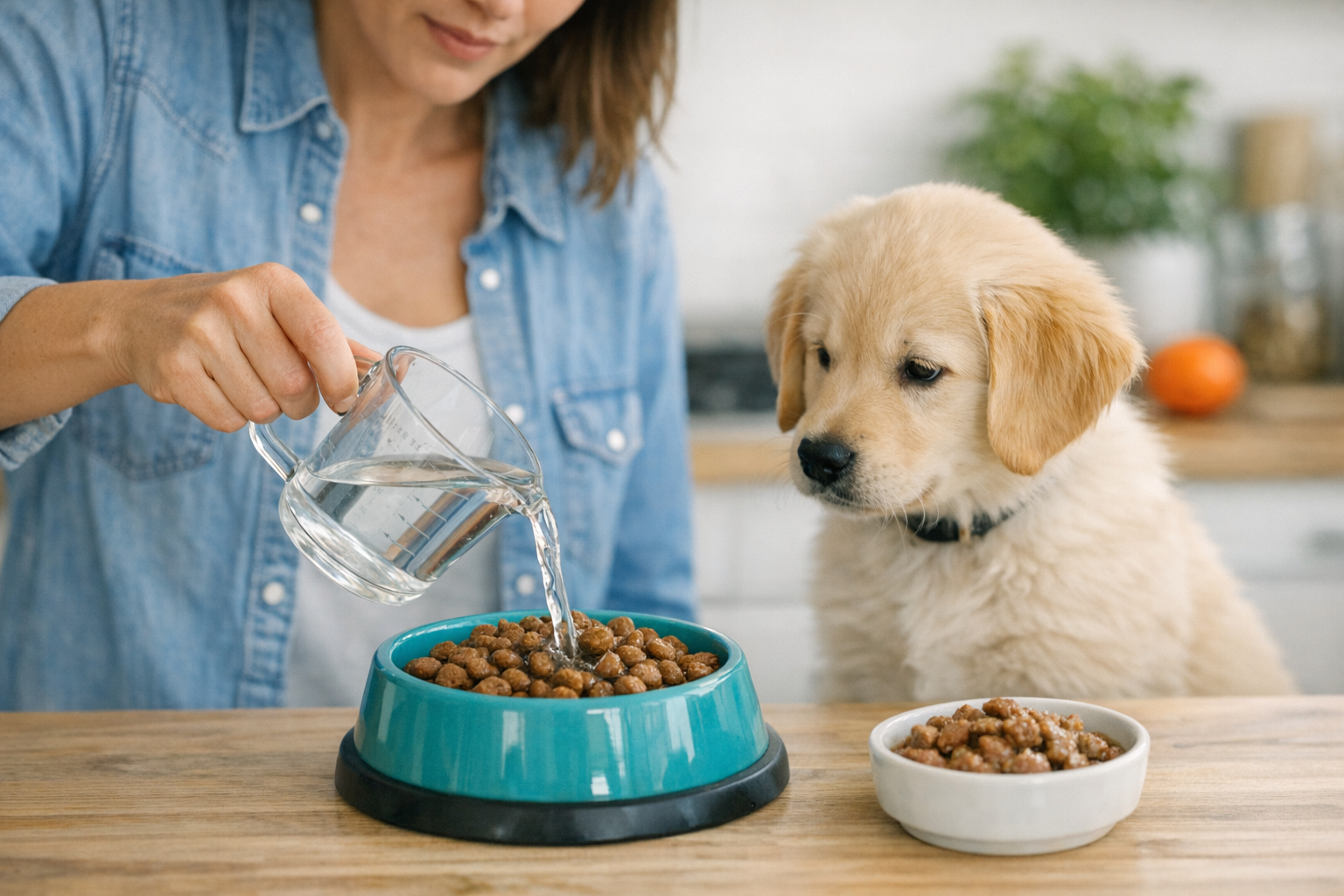
Step 2: Add warm water. / Use filtered water if possible. The water should be warm to the touch but never hot. Boiling water can destroy some of the vitamins and probiotics added to the kibble.
Step 3: Use the right ratio. / A good starting point is one part water to four parts kibble. For example, if you feed one cup of food, add a quarter cup of water.
Step 4: Let it sit. / Allow the mixture to stand for about 10 to 15 minutes. This gives the kibble time to absorb the moisture and soften through to the center.
Step 5: Stir and serve. / Give the food a quick stir to distribute the moisture. Serve it to your puppy immediately while it is still fresh and fragrant.
Key Takeaway: Always use warm water rather than hot or cold. Warm water releases the most aroma without damaging the nutritional integrity of the puppy food.
When to Stop Soaking Puppy Food
Most owners wonder when their puppy should move to fully dry food. There is no one-size-fits-all answer, but there are general milestones to look for.
The 8 to 12 Week Window
Typically, puppies are physically capable of eating dry food by the time they are eight weeks old. This is the age when most puppies move to their forever homes. If your puppy is eating well and does not seem to have trouble with the texture, you can offer dry food. If they struggle, you can continue to soak it until they are 12 weeks old.
Signs Your Puppy is Ready for Crunch
Watch your puppy's behavior during mealtimes. If they are eagerly chewing on hard rubber toys or nylon bones, their jaw strength is likely sufficient for dry kibble. You might also notice them trying to steal a piece of dry food from an adult dog's bowl. These are signs that they are ready for the transition.
The Gradual Transition Method
Do not switch from fully soaked food to fully dry food overnight. This can cause digestive upset. Instead, reduce the amount of water you use over the course of a week, and our puppy weaning timeline is a helpful companion read.
- Day 1-2: Use your normal amount of water.
- Day 3-4: Reduce the water by half.
- Day 5-6: Add just a tiny splash of water.
- Day 7: Offer the food completely dry.
Alternative Liquid Add-ins
Water is the most convenient and cost-effective option, but it is not the only thing you can add to a puppy's bowl. At our warehouse in Vernon Hills, we stock several supplements that can boost the nutrition of a puppy's meal, including items from our food topper collection.
Bone Broth for Dogs
Bone broth is an excellent alternative to plain water. It is packed with collagen, amino acids, and minerals that support joint health and gut integrity. The Honest Kitchen makes bone broths specifically for pets. These do not contain the high sodium, onions, or garlic found in human broths. You can use bone broth in the same ratio as water to provide an extra nutritional punch.
Goat Milk
Raw or dehydrated goat milk is often called "universal milk" because it is so easy for different species to digest. It contains natural probiotics that help build a healthy microbiome in a puppy's gut. Adding a bit of goat milk to dry kibble can help puppies who have frequent bouts of diarrhea or gas.
Canned Food Mixers
You can also use a small amount of wet canned food as a "topper" or mixer. This provides the moisture and aroma of soaked kibble without the waiting time. Mixing a spoonful of Royal Canin or Stella and Chewy's wet food into the dry kibble is a great way to transition a picky eater toward solid food.
| Liquid Option | Primary Benefit | Preparation Needed |
|---|---|---|
| Filtered Water | Hydration | None |
| Warm Bone Broth | Joint & Gut Support | Heating |
| Goat Milk | Probiotic Support | Thawing or Reconstituting |
| Low-Sodium Broth | Palatability | None |
Safety and Hygiene Rules
Feeding wet or soaked food requires a higher level of kitchen hygiene. If you are a busy owner, you must make sure you can commit to the cleanup.
The 30-Minute Rule
Never leave moistened kibble out for more than 30 minutes. If your puppy does not finish their meal in that timeframe, pick up the bowl and throw the leftovers away. Do not put wet kibble back in the refrigerator to save for later. The risk of contamination is too high for a young puppy's developing immune system.
Cleaning the Bowls
Biofilm can form quickly on the surface of dog bowls. This is a slimy layer of bacteria that is hard to see but can cause illness. When you feed soaked food, you should use stainless steel bowls. These are less porous than plastic and easier to sanitize. Wash the bowl after every meal using hot, soapy water or run it through the dishwasher.
Storing Your Dry Food
Even if you add water to the food, the dry kibble in the bag must stay fresh. Keep your puppy food in its original bag and place that bag inside an airtight container. This provides a double barrier against moisture and pests. Never add water directly into the large bag of dog food. Only add liquid to the individual serving in the bowl.
Bottom line: Hygiene is the most important factor when adding water to kibble to prevent foodborne illness in your puppy.
Using the BaxterBoo Pharmacy for Special Needs
Some puppies have health conditions that make their diet more complicated. If your veterinarian has diagnosed your puppy with a specific allergy or a chronic digestive issue, they may prescribe a therapeutic diet.
Our pet pharmacy carries a wide range of FDA-approved medications and prescription pet foods through our partnership with Pet's Choice. If your vet recommends a prescription diet from brands like Royal Canin or Farmina Vet Life, you can easily fulfill that through us. These specialized diets are often formulated to be highly palatable, but you should always ask your vet before adding water or mixers to a prescription food. Sometimes the specific texture is part of how the food works, especially for weight management or dental health.
Frequently Asked Questions About Puppy Food
Our team handles many questions about puppy care every day. Here are the most common inquiries regarding moistening dry food.
Can I soak puppy food in milk?
You should avoid using regular cow's milk because many puppies are lactose intolerant. It can cause severe diarrhea and gas. If you want to use a milk product, choose a specific puppy milk replacer or a small amount of goat milk designed for pets. These options provide the creaminess puppies love without the digestive upset.
Does soaking kibble cause more plaque?
Soaking kibble does not necessarily cause more plaque, but it removes the minor mechanical cleaning that dry food might provide. Since most puppies do not chew kibble thoroughly anyway, the difference is often small. The best way to prevent plaque is through regular tooth brushing and using vet-approved dental wipes or treats.
Is it okay to use cold water?
Cold water will not hurt your puppy, but it will not help as much as warm water. Cold water takes much longer to soften the kibble and does not release the aromas that entice a puppy to eat. Warm water is more effective at making the food palatable and easier to digest.
Can I prepare soaked food in advance?
You should not prepare soaked food more than a few minutes before serving. If you soak it for hours or overnight, you risk fermentation and bacterial growth. If you are in a rush in the morning, you can measure the dry food the night before, but do not add the water until you are ready to put the bowl on the floor.
Conclusion
Adding water to your puppy's dry food is a simple, effective way to support their health during their first year. It ensures they stay hydrated, helps them manage the pain of teething, and makes their meals more enjoyable. While it requires a bit more cleanup and attention to timing, the benefits for a growing dog are significant. Remember to keep mealtimes short and clean the bowls thoroughly to keep your puppy safe from bacteria. If you notice persistent changes in your puppy's eating habits or stool consistency, always consult your veterinarian for professional guidance.
- Use warm filtered water or pet-safe bone broth.
- Stick to a 1:4 ratio of liquid to kibble.
- Discard any uneaten wet food after 30 minutes.
- Clean bowls with hot, soapy water after every use.
To find the best nutrition for your growing dog, explore our full collection of premium puppy food. You can also sign up for our Autoship program to save on every order and ensure you never run out of your puppy's favorite kibble.
FAQ
How long should I let the water soak into the kibble?
You should let the food soak for about 10 to 15 minutes to achieve a soft consistency. This is long enough for the water to reach the center of the pellets without allowing the food to become dangerously cold. If you are in a hurry, five minutes will soften the edges, but the center will remain crunchy.
Will adding water to food help my puppy gain weight?
Adding water does not change the calorie count of the food, but it can help a puppy eat more if they were previously refusing dry kibble. By making the food more appetizing and easier to chew, you ensure the puppy consumes their full daily portion. If your puppy is underweight, talk to your vet about high-calorie puppy supplements or prescription growth diets.
Should I add water to kibble if my puppy has diarrhea?
If your puppy has an upset stomach, adding warm water can help prevent dehydration, which is a major risk with diarrhea. You might also consider using a plain bone broth or adding a probiotic supplement to the water. However, if diarrhea lasts more than 24 hours, you must take your puppy to the vet to rule out parasites or viruses like parvo.
Can I add water to my puppy's food every day?
Yes, you can add water to your puppy's food for every meal if they prefer it that way. There is no medical reason that a dog must eat dry, crunchy food as long as they are getting a balanced diet. Many owners continue to add a splash of moisture throughout the dog's entire life to encourage hydration and long-term kidney health.






